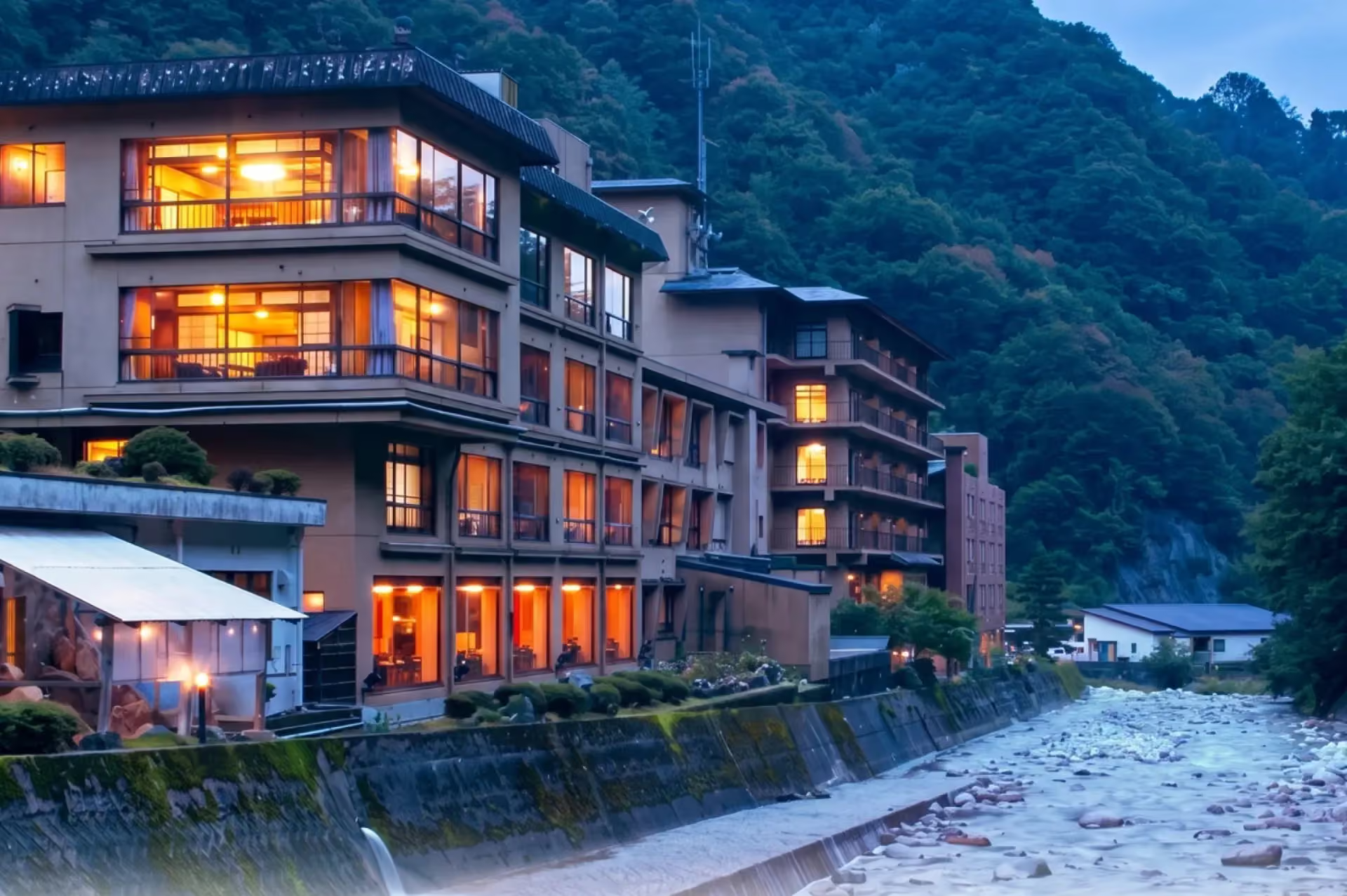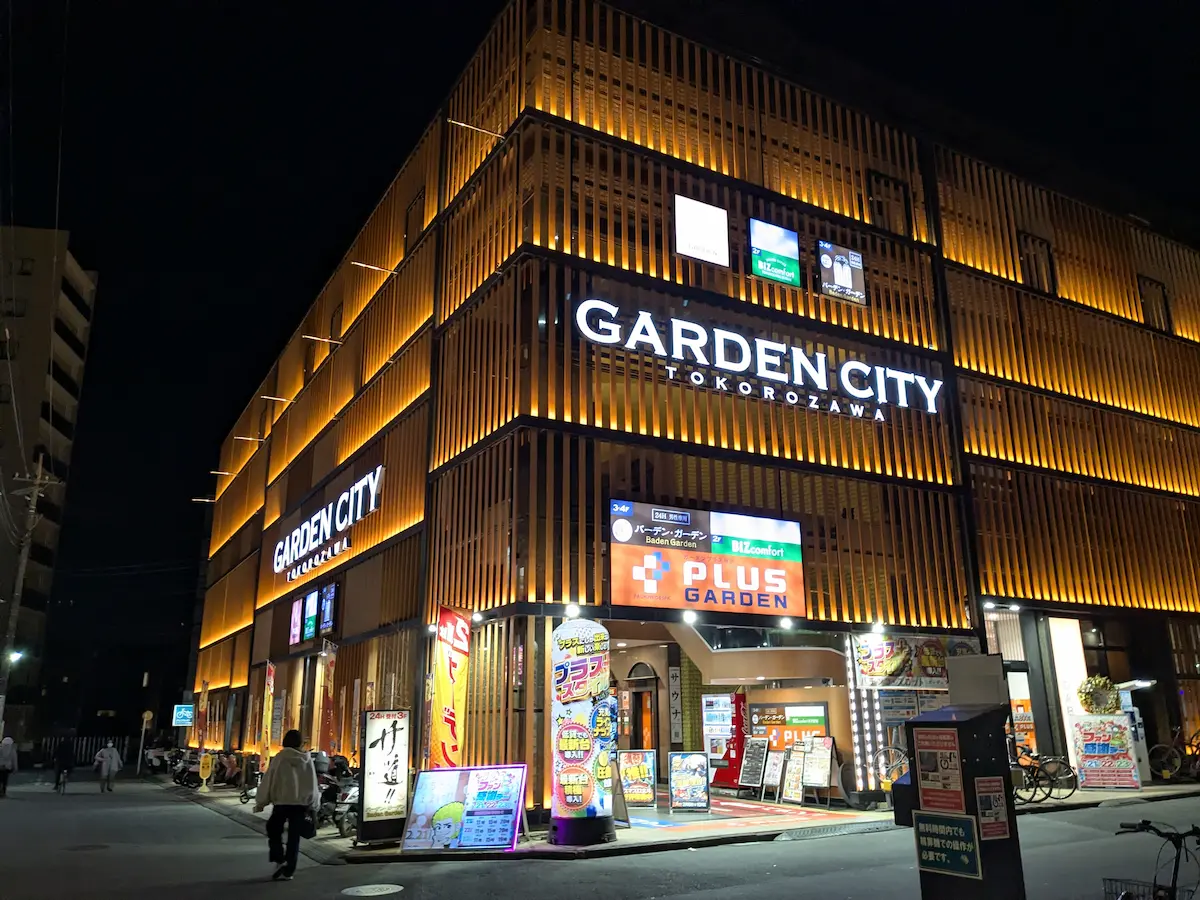
I arrived at Baden Garden at 7 p.m. That morning I had visited Onsen Balcony King & Queen, and afterward had plans to meet someone — all in all, I’d had a wonderful day, so by the time I arrived here my spirits were running quite high.
Baden Garden has a sauna built from Kelo wood, known in Finland as the jewel of timber. Kelo refers to pine trees that have naturally died standing after living 200 to 300 years in the harsh cold of Scandinavia and similar climates. It cannot be produced artificially — only trees that have dried naturally for decades after dying on their own become Kelo. Furthermore, Kelo is found almost exclusively in the extreme cold regions of Finland, northern Russia, and northern Sweden, and cannot be obtained in Japan. For these reasons, it trades at prices that are incomparably higher than ordinary sauna wood, and with the added cost of importation, only a handful of facilities in Japan can offer the experience. It is this rare Kelo sauna that has made Baden Garden one of the most talked-about facilities in the country.
Baden Garden also offers accommodation, so tonight I planned to enjoy the sauna and stay over. After checking in, I made my way to the large communal bath. I changed in the locker room reserved for guests and stepped inside. Columns reminiscent of ancient Rome lined the space, with various baths arranged around them. It was more compact than the photos had led me to imagine. There is no natural hot spring. To the left of the entrance was the sauna room — the legendary Kelo sauna I’d heard so much about. After washing up, I was ready to indulge to my heart’s content.
The real appeal of Kelo is, above all else, its rich and distinctive fragrance. The Kelo saunas I’d visited in the past at Kobe Sauna and Sauna Tokyo had offered an aroma of the highest order — so what would Baden Garden have in store? I stepped into the sauna room with chest full of anticipation, already imagining the scent that was about to fill my nostrils. But what greeted me was something entirely different from what I’d envisioned. I couldn’t identify what aroma was being used, but there was a faint, generic fragrance in the air, and the distinctive scent of Kelo was nowhere to be found. Even pressing my nose close to the wood itself, I couldn’t detect any of that rich, characteristic smell.
There may also be a structural issue at play. The sauna at Baden Garden has a single room divided into two areas — one built with Kelo and one with hinoki cypress. As a result, Kelo and hinoki share the same space. My personal preference would be to keep them separate, as each wood has its own fragrance and heat convection characteristics, and mixing them feels like a bit of a waste. More to the point, the whole appeal of Kelo lies in the rich aroma that emanates from the material itself, and I couldn’t help but raise an eyebrow at the decision to use an aroma so completely at odds with that in a Kelo sauna.
The heat convection in the sauna room also left something to be desired — the temperature felt far lower than what the thermometer indicated. Whether it was due to low humidity or poor heat circulation I couldn’t say, but even after a long session I couldn’t get my body properly warmed through. While sweating is important in a sauna, raising your core body temperature matters even more, and in a sauna with poor heat convection and low humidity, it’s easy to sweat without your core temperature actually rising. I think they should reconsider the placement of the air intake and exhaust vents, increase the frequency of the automatic löyly, and perhaps even add an automated ventilation system to improve air circulation after each löyly.
The cold plunge bath was 12°C, which is quite cold, and the use of premium binchotan charcoal gave the water a pleasantly soft quality. However, because my body hadn’t been adequately heated in the sauna, the plunge felt more cold than refreshing — the chill hit before any sense of exhilaration could. This reminded me that colder isn’t always better; the temperature of the cold bath needs to be balanced with the heat of the sauna. Given the current state of the sauna at Baden Garden, I’d say around 17°C would be the ideal water temperature.
On the whole, the experience turned out quite different from what I had imagined. To add to that, a yakuza-looking man covered head to toe in tattoos was sitting there with an air of intimidation, and being the timid soul that I am, I spent the entire visit in a rather tense and self-conscious state of mind — which was another disappointment. I called it a day after just 2 sets and went to have dinner.
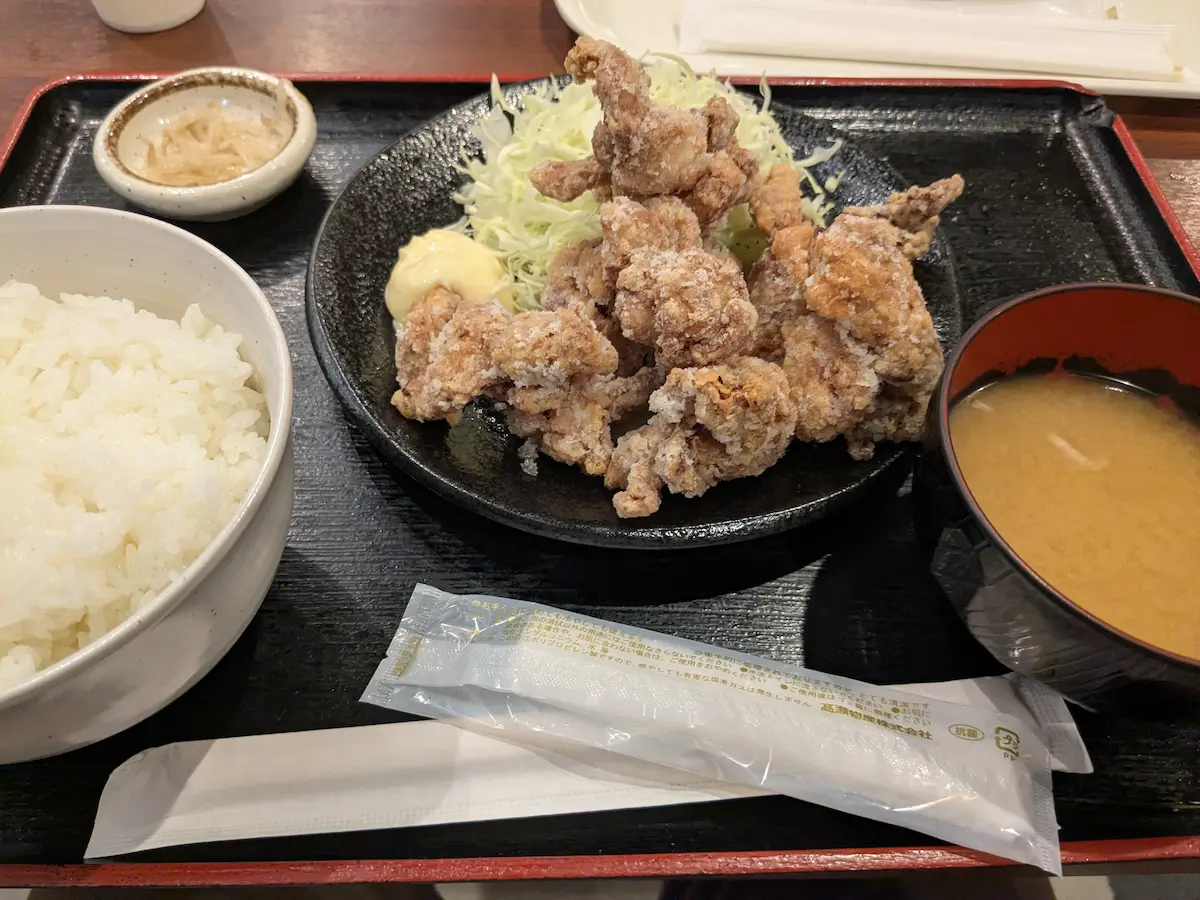
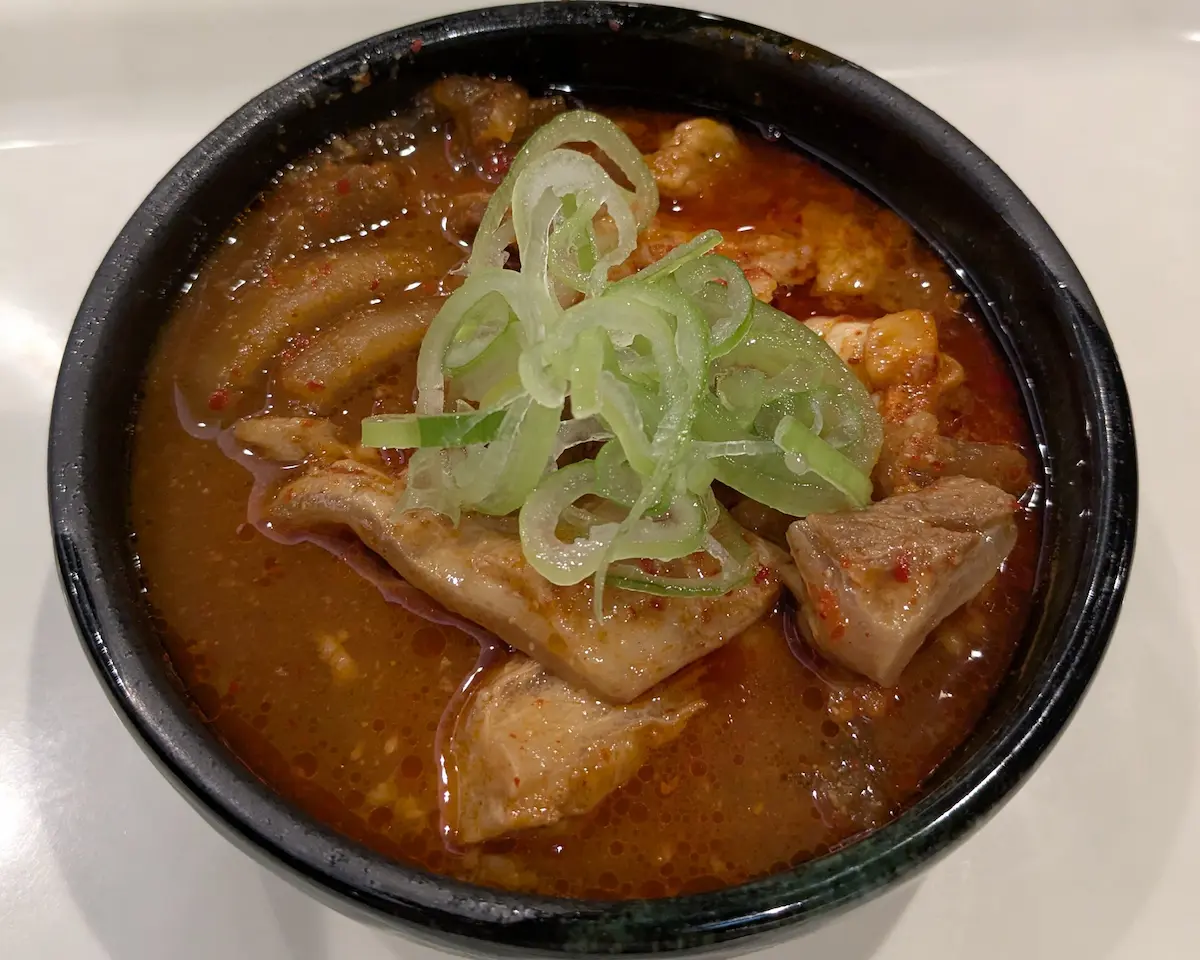
The karaage chicken set meal and beef tendon stew I ordered at the restaurant were both excellent. The karaage in particular was carefully prepared with a well-seasoned soy-based marinade that really came through in every bite.
My sauna journey continues beyond today — tomorrow morning I plan to visit Spadium Japon in Higashikurume, Tokyo. Since it’s operated by the same company as Onsen Balcony King & Queen, I have no doubt it will be a wonderful facility. Filled with anticipation for what the experience might bring, I drifted off to sleep.