Ehime Imabari City
Imabari's Shimanami Onsen featuring a jet-black sumi sauna and tea löyly
Shimanami Onsen Kisuke no Yu is a combined bathing and capsule hotel facility in Imabari, Ehime Prefecture. It is conveniently located a two-minute walk from JR Imabari Station. The highlight of the men's baths is the jet-black "sumi sauna," whose walls are finished with a blend of Nara sumi and shibu-sumi, and an open-air sauna hut where guests can enjoy self-löyly using green tea produced in Shingu Village. The women's baths feature a 'mikan sauna' decorated with Tobe-yaki ceramics and an automatic löyly sauna; both areas integrate Ehime's local materials and crafts into the facility's design. The spring water is a calcium-sodium chloride hot spring, and the facility includes one of western Japan's largest high-concentration carbonated baths and Japan's first carbonated electric bath. It is a flagship bathing facility at the gateway to the Shimanami Kaido.
The hot spring that wells up in Imabari is a calcium-sodium chloride spring. Its highly saline, hypertonic nature helps mineral components penetrate the body and leaves salt on the skin that reduces sweat evaporation, producing a strong heat-retention effect. Known as a 'hot spring of heat,' this chloride spring helps prevent chill after bathing and may be effective for improving sensitivity to cold. The spring water is used in multiple baths, including the Bihada no Yu rock bath (semi-open-air) and as the base water for the high-concentration carbonated bath. Its mildly alkaline quality leaves skin feeling smooth after bathing.

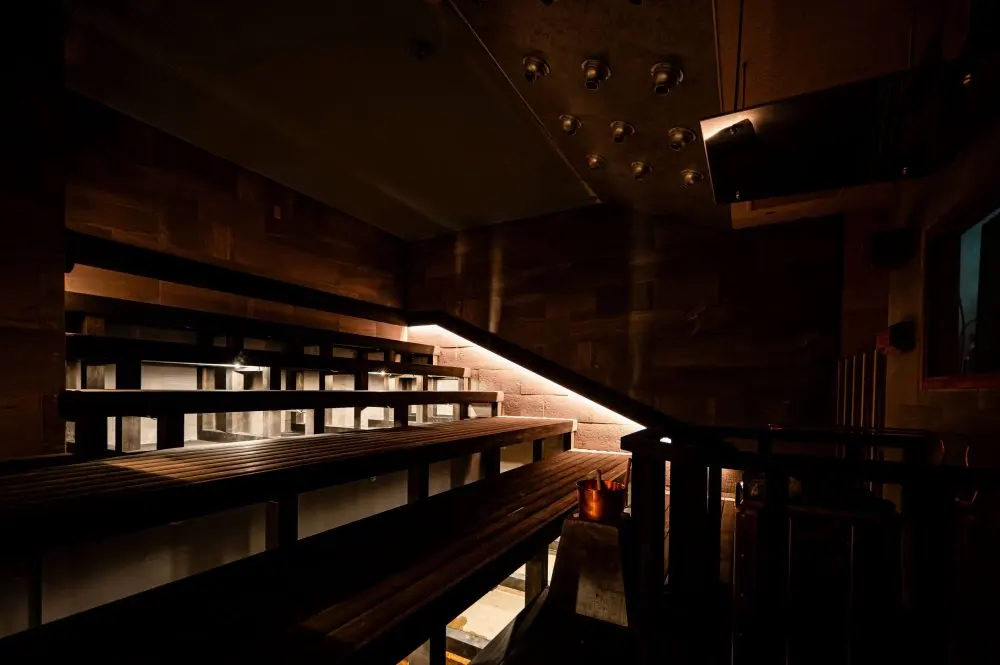
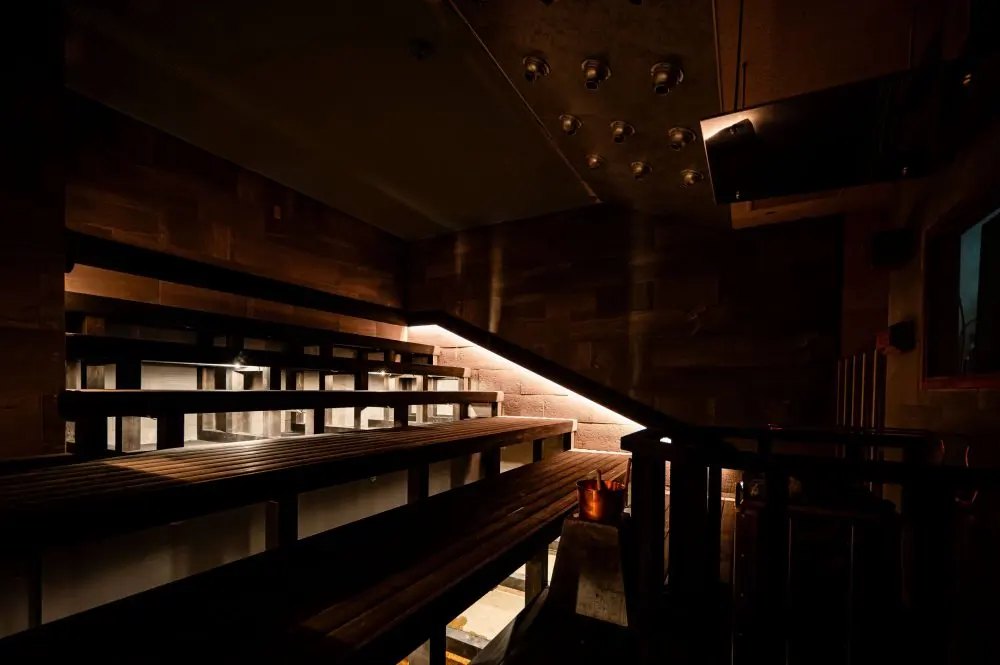
A stadium-style sauna that fuses Finnish smoke sauna elements with Japanese aesthetics. The interior is wrapped in jet-black walls finished with a blend of Nara sumi and shibu-sumi, creating a unique sense of solemnity and weight not found elsewhere. The sauna stones are original Kikuma-tile stones called Onimaru and Onidama, developed jointly with the long-established Koizumi Seigawara kiln in Kikuma Town, Imabari, now in its tenth generation. At :00 and :30 each hour, one of the industry's largest blowers activates the Fuujin Heat Wave, instantly transforming the room into an intensely hot space with automatic löyly. The sauna also supports self-löyly, and regular aufguss events are held by staff.

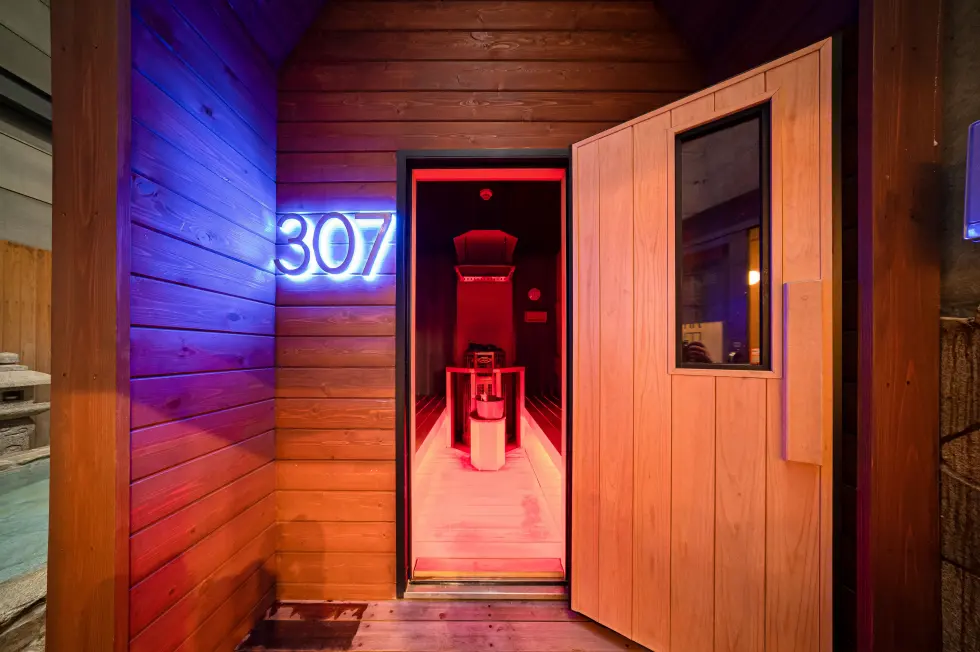
A small Finnish-style sauna hut set in the open-air area. It is equipped with a custom stove engineered to maximize löyly by optimizing sauna stone size, evaporation speed, and heat source. Its signature feature is the tea löyly using green tea from Shingu Village: when hot sauna stones are doused with the green tea, steam rich in catechins spreads, offering a relaxation wrapped in the aroma of tea.

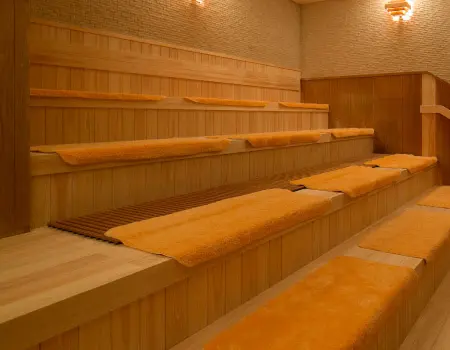
The main sauna in the women's bathing area. In addition to an auto-löyly at :30 each hour, the Fuujin Heat Wave (automatic löyly) runs at :00 and :30 every hour between 7:00 and 23:00. The far-infrared heater provides gentle heat that warms the body from deep within, and the humidity rises sharply after automatic löyly to promote sweating. During aufguss events, staff also deliver heat waves to guests.

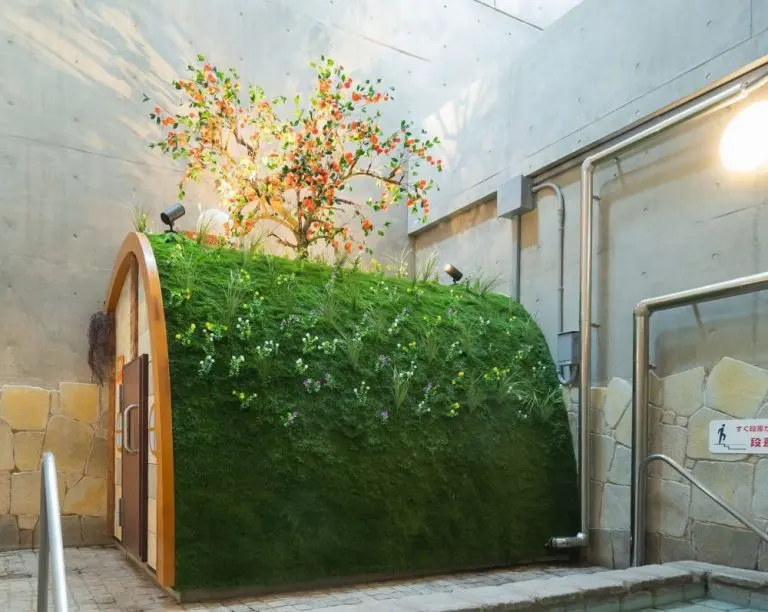
A women-only steam sauna filled with Ehime's nature and craft. A very high-humidity mist of 80–100% mimics the Hijikawa arashi, the morning mist that flows down the Hijikawa River, and moisturizes the skin. The exterior is styled after Keshima, an outlying island of Imabari, and the roof displays a Setoka citrus tree. Surrounded by delicate Tobe-yaki patterns and accompanied by soundscapes of mikan groves, the sauna experience evokes the depth of Ehime culture.
Irregular Holidays
Ehime Imabari City
Imabari's Shimanami Onsen featuring a jet-black sumi sauna and tea löyly
Shimanami Onsen Kisuke no Yu is a combined bathing and capsule hotel facility in Imabari, Ehime Prefecture. It is conveniently located a two-minute walk from JR Imabari Station. The highlight of the men's baths is the jet-black "sumi sauna," whose walls are finished with a blend of Nara sumi and shibu-sumi, and an open-air sauna hut where guests can enjoy self-löyly using green tea produced in Shingu Village. The women's baths feature a 'mikan sauna' decorated with Tobe-yaki ceramics and an automatic löyly sauna; both areas integrate Ehime's local materials and crafts into the facility's design. The spring water is a calcium-sodium chloride hot spring, and the facility includes one of western Japan's largest high-concentration carbonated baths and Japan's first carbonated electric bath. It is a flagship bathing facility at the gateway to the Shimanami Kaido.
The hot spring that wells up in Imabari is a calcium-sodium chloride spring. Its highly saline, hypertonic nature helps mineral components penetrate the body and leaves salt on the skin that reduces sweat evaporation, producing a strong heat-retention effect. Known as a 'hot spring of heat,' this chloride spring helps prevent chill after bathing and may be effective for improving sensitivity to cold. The spring water is used in multiple baths, including the Bihada no Yu rock bath (semi-open-air) and as the base water for the high-concentration carbonated bath. Its mildly alkaline quality leaves skin feeling smooth after bathing.

A stadium-style sauna that fuses Finnish smoke sauna elements with Japanese aesthetics. The interior is wrapped in jet-black walls finished with a blend of Nara sumi and shibu-sumi, creating a unique sense of solemnity and weight not found elsewhere. The sauna stones are original Kikuma-tile stones called Onimaru and Onidama, developed jointly with the long-established Koizumi Seigawara kiln in Kikuma Town, Imabari, now in its tenth generation. At :00 and :30 each hour, one of the industry's largest blowers activates the Fuujin Heat Wave, instantly transforming the room into an intensely hot space with automatic löyly. The sauna also supports self-löyly, and regular aufguss events are held by staff.

A small Finnish-style sauna hut set in the open-air area. It is equipped with a custom stove engineered to maximize löyly by optimizing sauna stone size, evaporation speed, and heat source. Its signature feature is the tea löyly using green tea from Shingu Village: when hot sauna stones are doused with the green tea, steam rich in catechins spreads, offering a relaxation wrapped in the aroma of tea.

The main sauna in the women's bathing area. In addition to an auto-löyly at :30 each hour, the Fuujin Heat Wave (automatic löyly) runs at :00 and :30 every hour between 7:00 and 23:00. The far-infrared heater provides gentle heat that warms the body from deep within, and the humidity rises sharply after automatic löyly to promote sweating. During aufguss events, staff also deliver heat waves to guests.

A women-only steam sauna filled with Ehime's nature and craft. A very high-humidity mist of 80–100% mimics the Hijikawa arashi, the morning mist that flows down the Hijikawa River, and moisturizes the skin. The exterior is styled after Keshima, an outlying island of Imabari, and the roof displays a Setoka citrus tree. Surrounded by delicate Tobe-yaki patterns and accompanied by soundscapes of mikan groves, the sauna experience evokes the depth of Ehime culture.
Irregular Holidays