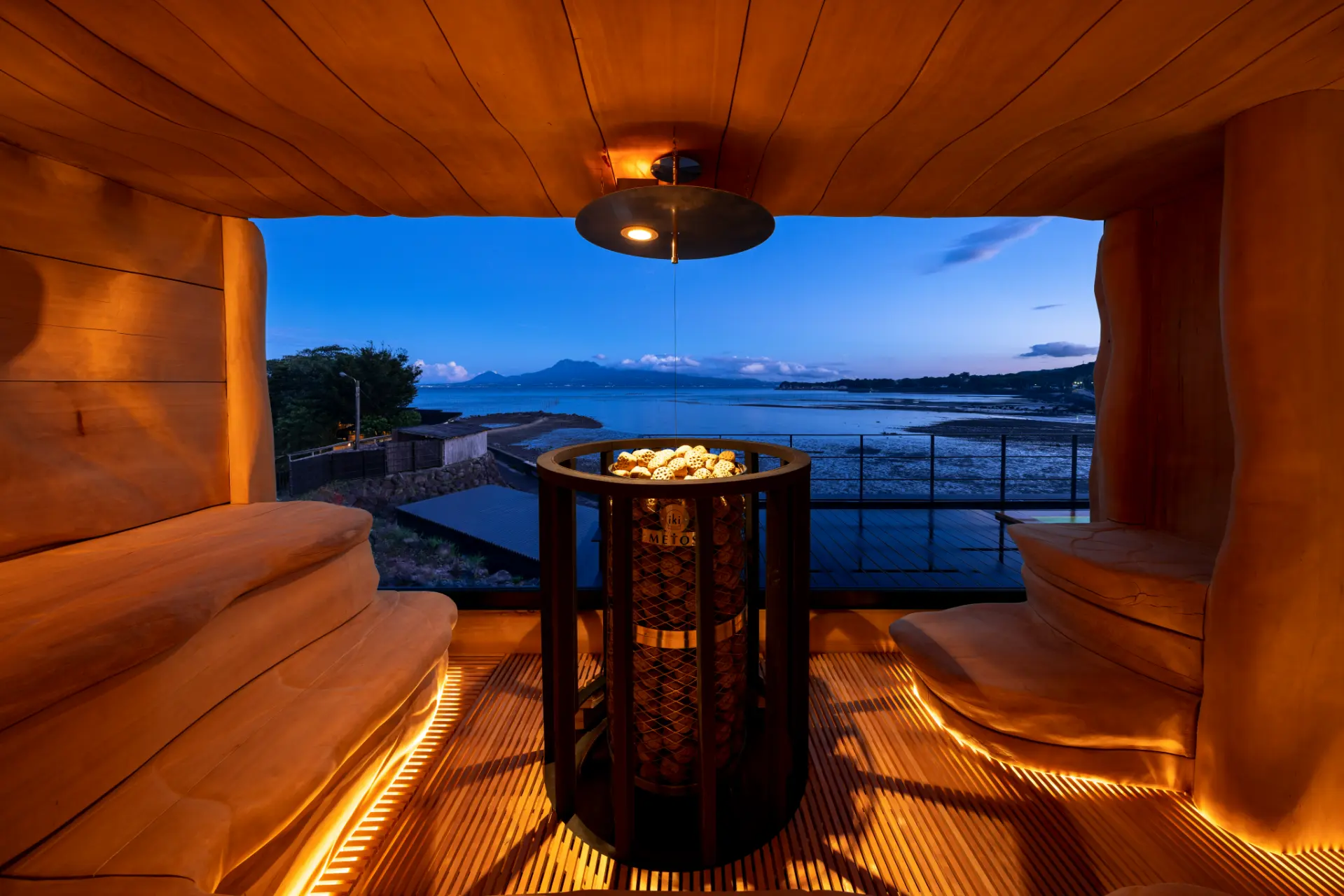
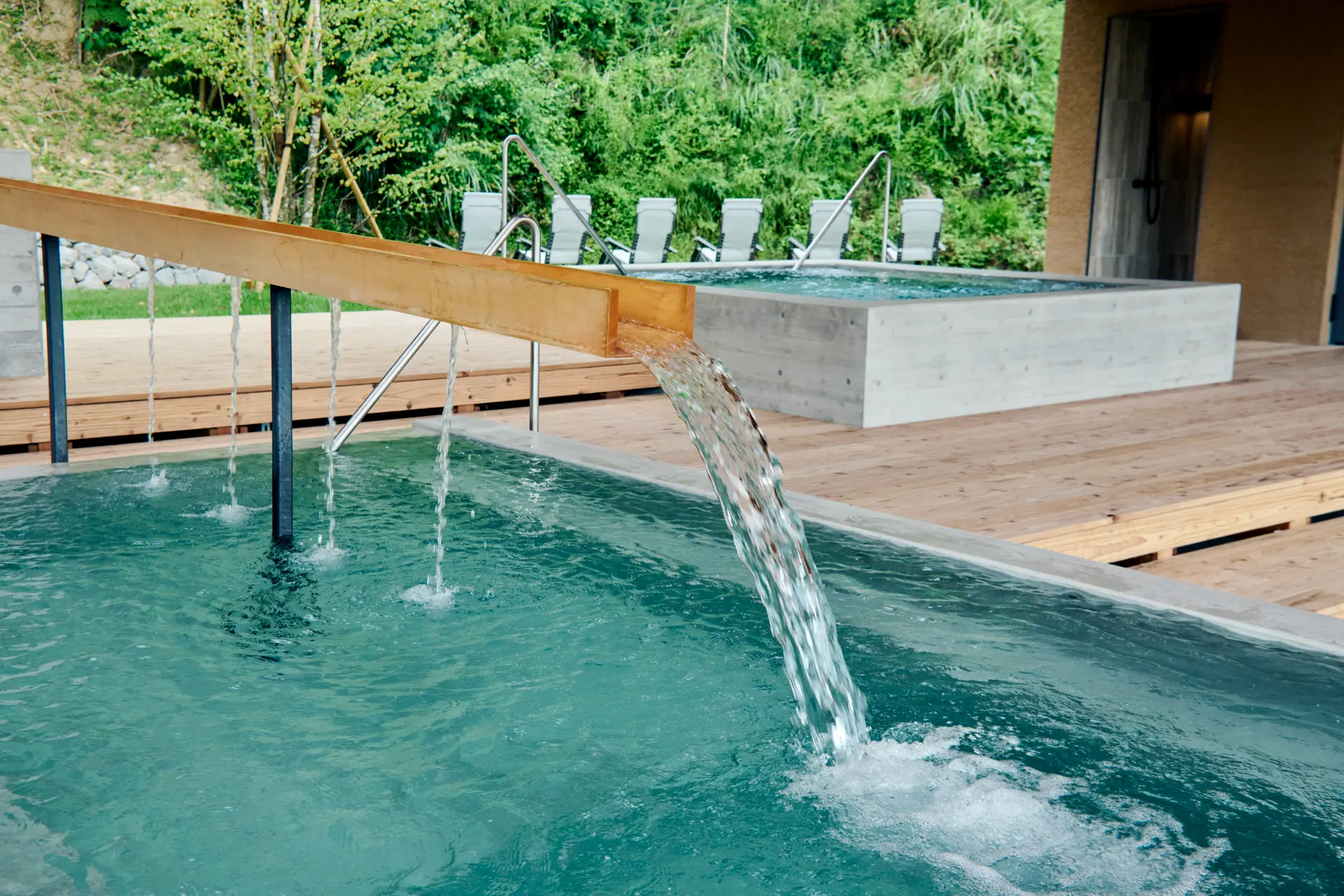
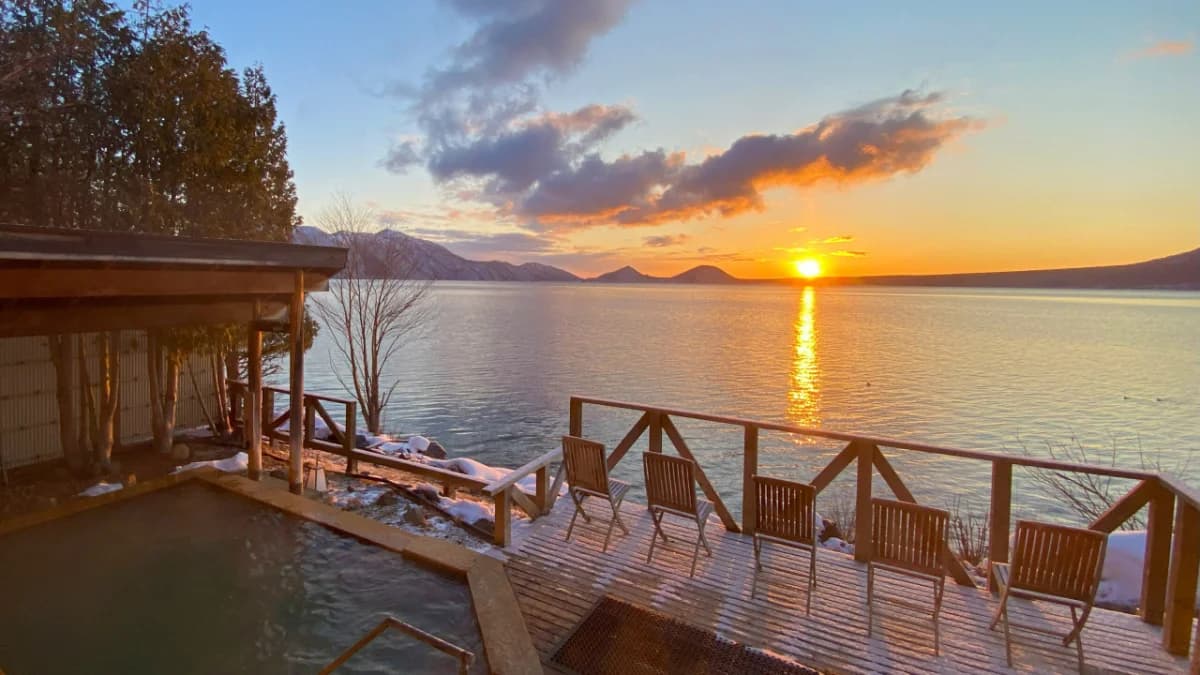
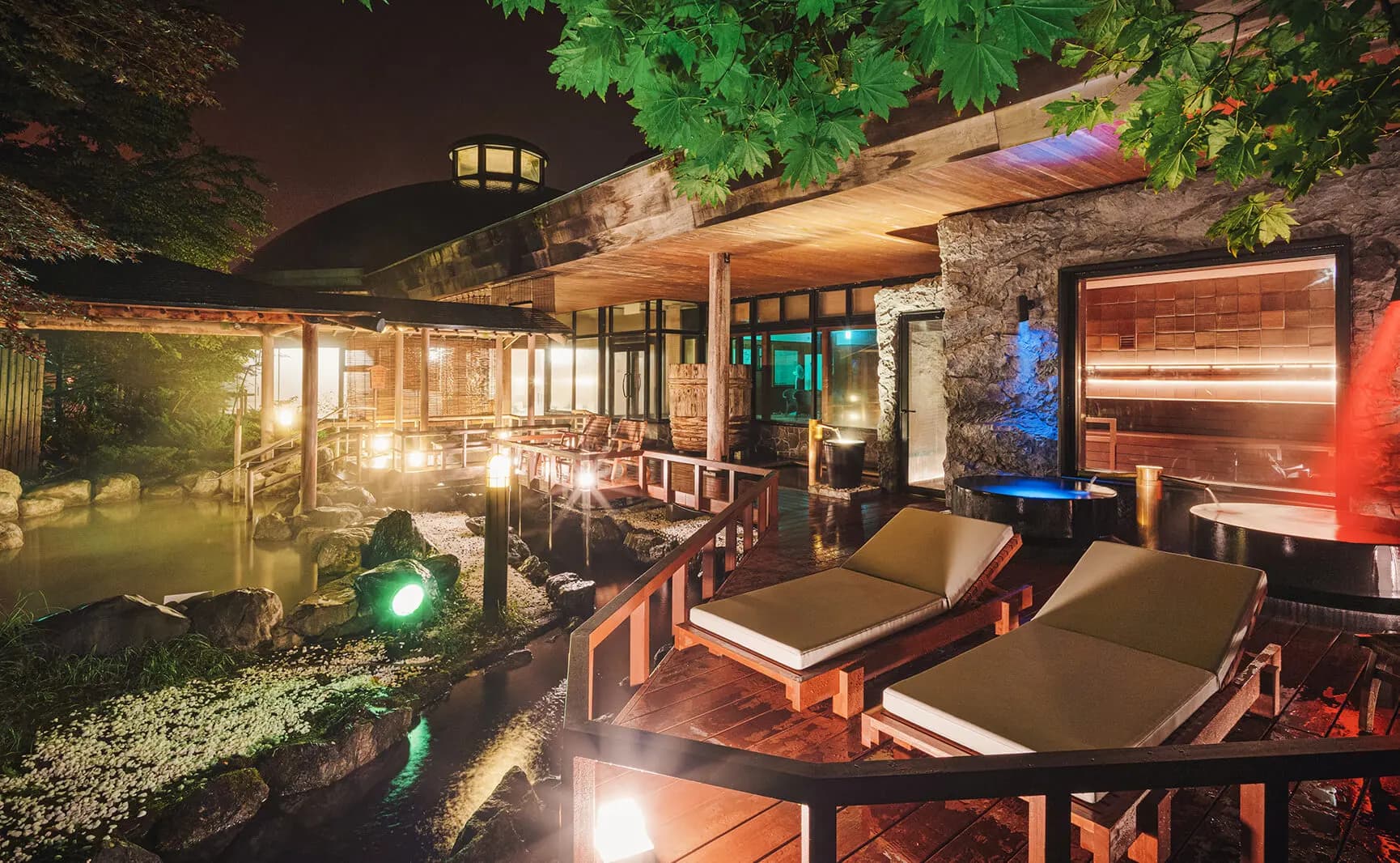
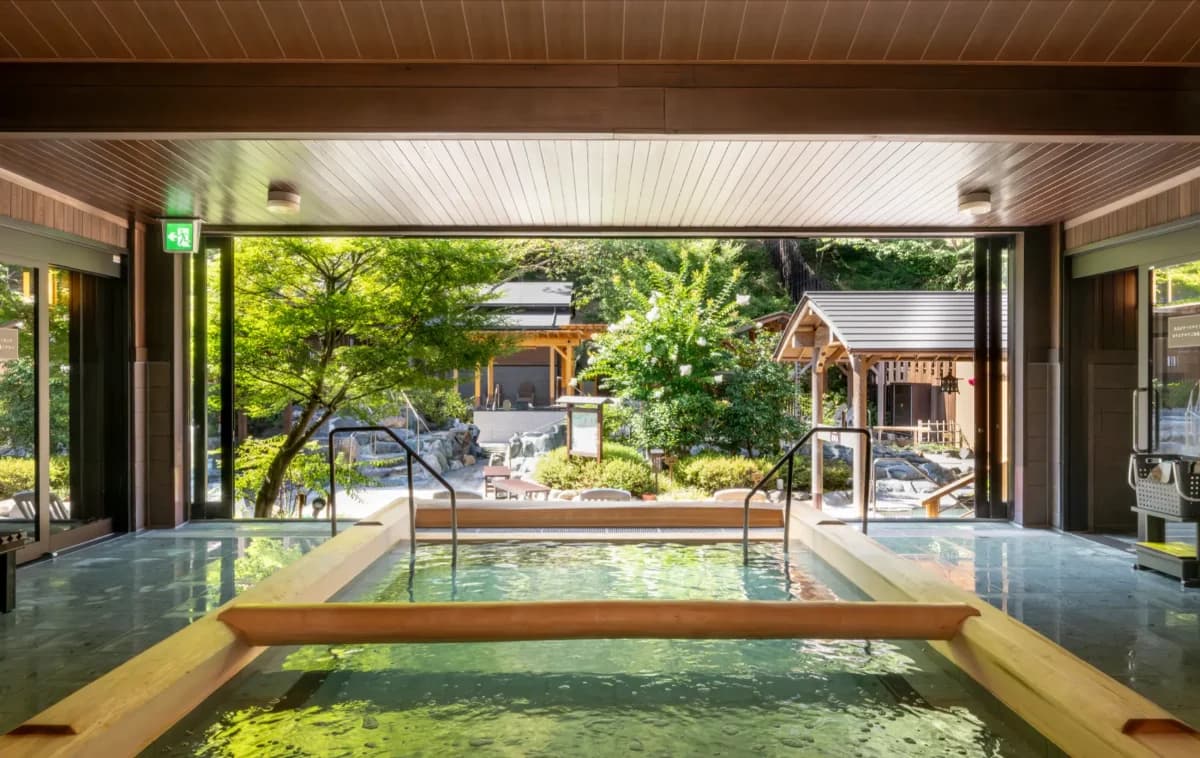
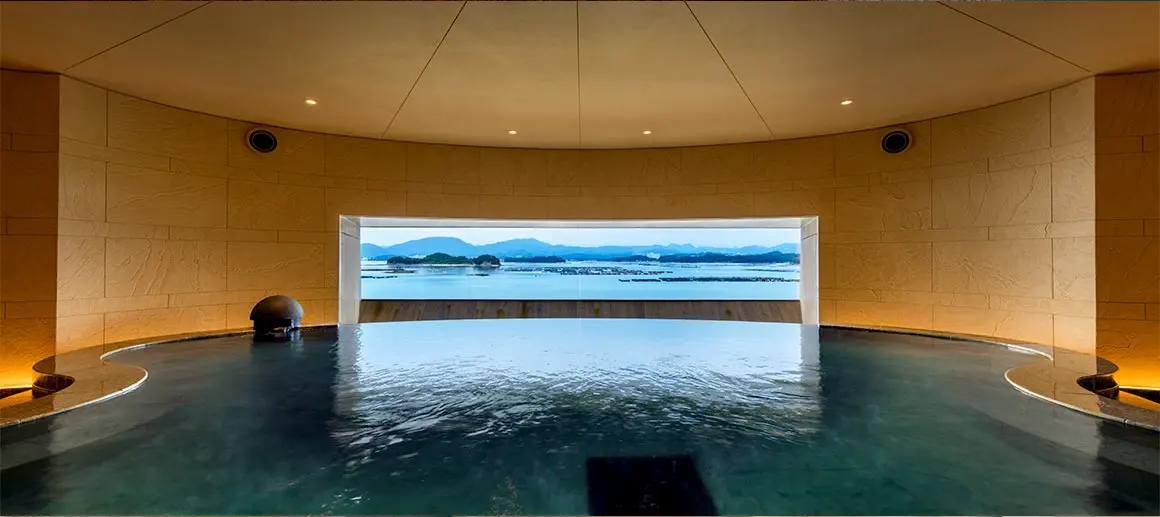
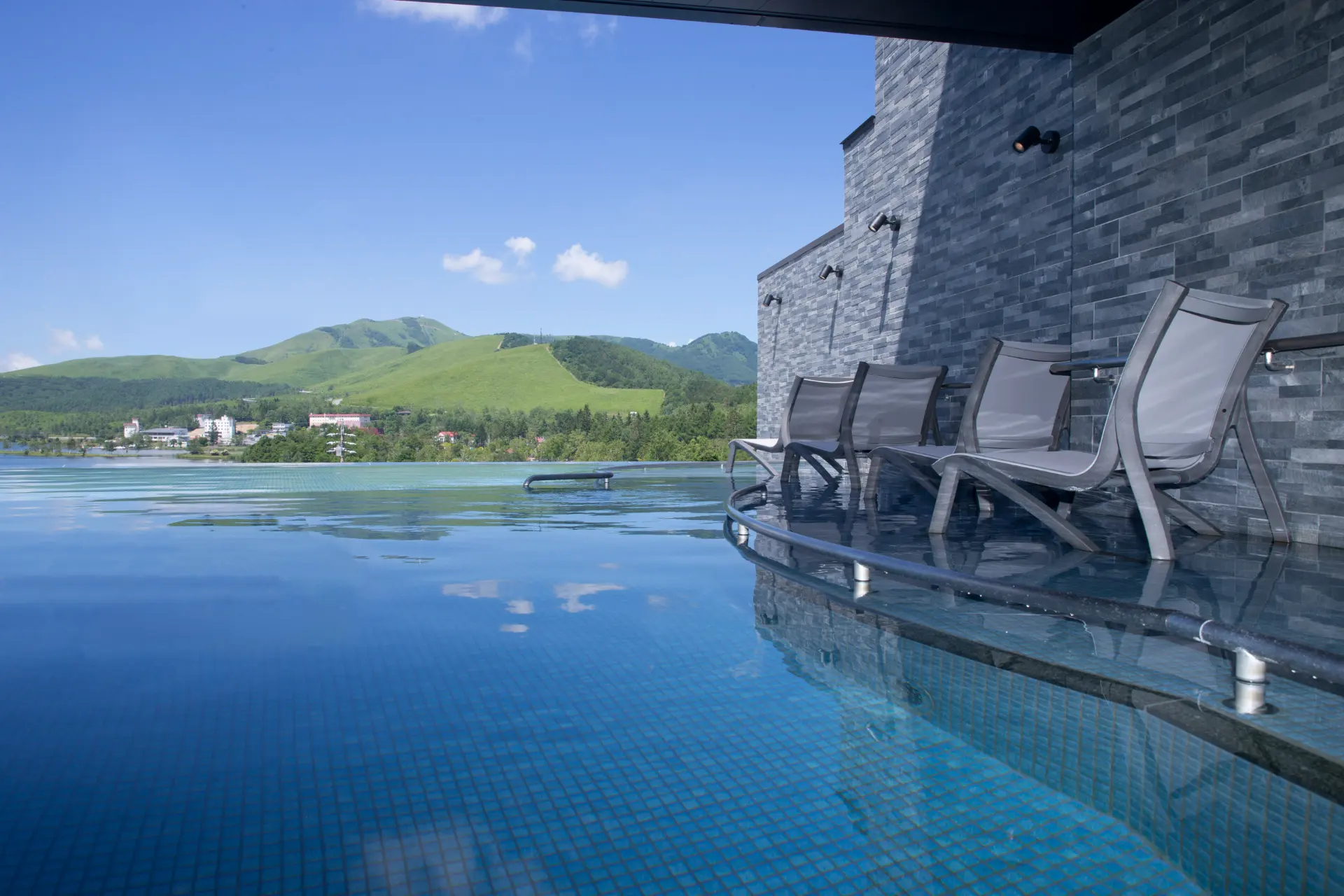
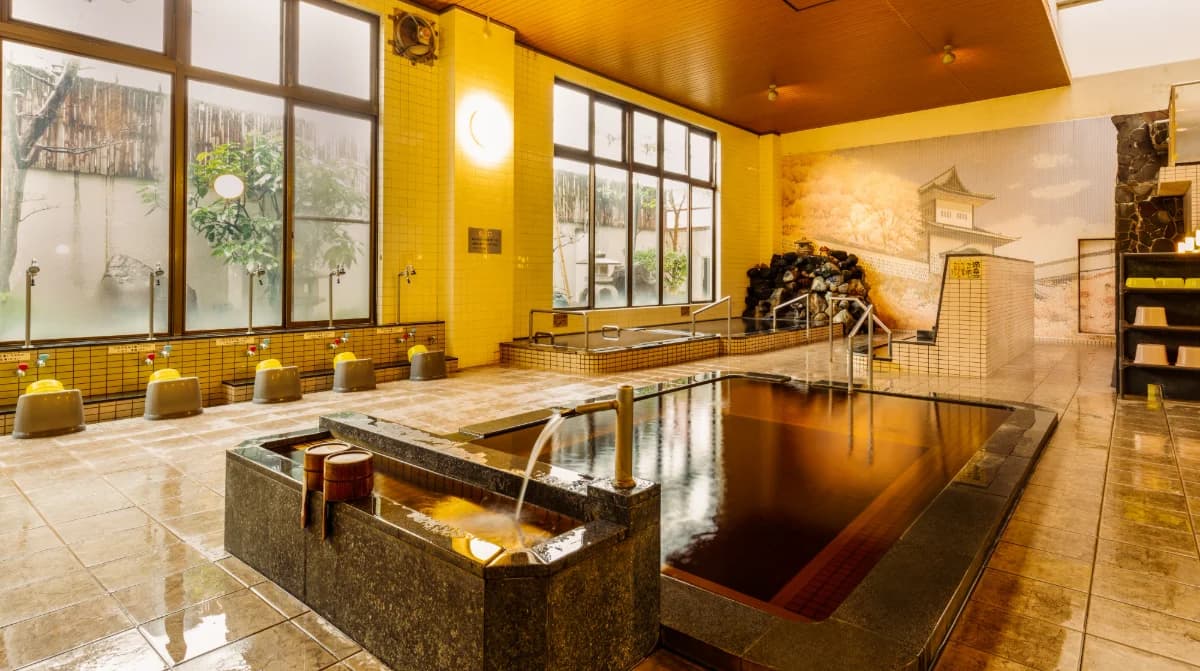
The satisfaction of an onsen is not determined by the quality of the water alone. Japanese hot spring architecture designs the bathing experience itself, including the scenery, materials, light, and flow. More often than not, buildings are designed so that attention turns to nature and the water rather than to the architecture itself.
This article organizes common ideas in Japanese hot spring architecture from the perspectives of materials, scenery, open-air baths, and regional character, together with real examples designated as cultural properties.
What does hot spring architecture design?
Hot spring architecture is not just the building of a bathing facility. It is a way of designing the entire onsen experience, including the bath, guest rooms, corridors, garden, and even the direction of the windows. Even with the same spring quality, the impression changes greatly depending on how the space is made. This is why the atmosphere of the building matters so much when choosing a hot spring inn.
There are also cases where this value has been officially recognized. Dogo Onsen Honkan in Matsuyama was designated in 1994 as Japan's first Important Cultural Property for a public bath. Centered on the main building completed in 1894, it consists of four structures and is still operating today as a public bath. It is a symbolic example of hot spring architecture, treated as cultural heritage in its own right.
Common materials: wood and stone
In Japanese hot spring architecture, wood and stone strongly shape the impression. Wood creates warmth and softness, while stone adds weight and a sense of place. In a hinoki bath, even the scent of the material becomes part of the experience.
Wood is favored not only for its visual warmth. The aged texture of wood is also valued, and the passage of time can become part of its appeal. Many modern facilities use glass and concrete, but natural materials are often combined with them so the space does not feel too stark.
Sukiya design and borrowed scenery
In hot spring inn architecture, the influence of sukiya style is often discussed. This style reflects the aesthetics of the tea ceremony and is characterized by simplicity free from rigid formality, as well as the use of natural materials such as cedar, cypress, and bamboo.
For example, Kanaguya's Saigetsuro in Shibu Onsen, Nagano, is a four-story wooden inn building that was registered as a Registered Tangible Cultural Property in 2003. The Agency for Cultural Affairs describes it as a good example of hot spring inn architecture, praising its many sukiya-style design details in both exterior and interior that create an extraordinary space.
The way scenery is incorporated is also important. The idea of borrowed scenery, which brings mountains and trees outside the garden into the garden composition as a background, is often used in hot spring architecture as well. The direction of windows and open-air baths determines which views are shown and how, shaping the quality of the experience.
The open-air bath as a device
The open-air bath is one of the defining elements of Japanese hot spring architecture. Unlike an indoor bath, it brings air, sound, temperature, and scenery into the experience. It is not simply a bathtub placed outside; it is a mechanism that weakens the boundary of the building and brings it closer to nature.
It is also a surprisingly recent feature. The rise of open-air baths as a major added value for ryokan is said to have begun in the late 1980s. Before that, large indoor baths were the norm. Today, many inns offer both indoor and open-air baths.
Hoshi Onsen Chojukan in Gunma had three buildings registered as Registered Tangible Cultural Properties in 2006. Its famous Hoshino Yu bathhouse, built in 1895, places the tub on naturally emerging bedrock and combines a cypress-bark roof with half-circle Western-style windows to create a unique atmosphere. It is known as a perfect example of the unity of bath and architecture.
Light and circulation are part of the experience too
In hot spring facilities, subdued lighting is preferred. This is not only for atmosphere but also to make the space feel calm and comfortable. In facilities that bring in soft natural light, the impression changes from morning to noon to evening.
Circulation is also part of the design. Easy movement from changing room to bath, from indoor bath to open-air bath, and from guest room to public bath enriches the experience, especially when the path opens up with views as you walk. Since an onsen experience does not end in the tub alone, corridors, gardens, and rest areas are all designed as part of it.
Regional character and modern architecture
Hot spring architecture is not the same across Japan. In snowy regions, roofs and enclosure methods stand out. Sukayu Onsen's Hiba Sennin Buro in Aomori and Hakkoda is a bathhouse building representing hot spring architecture in heavy-snow areas, with a vast space of about 160 tatami mats constructed entirely from hiba wood.
There are also modern reinterpretations by contemporary architects. Hoshinoya Karuizawa, which opened in 2005 and was designed by Rie Azuma, is based on the concept of a valley village and places the guest room buildings around a waterscape in a scattered layout. Rather than imitating traditional architecture, it is known as a modern interpretation of Japanese architecture and landscape.
If we organize representative hot spring architecture, the range extends from cultural properties to contemporary buildings.
| Architecture | Location | Category | Features |
|---|
| Dogo Onsen Honkan | Matsuyama, Ehime | Important Cultural Property (1994) | The first public bath designated as an Important Cultural Property. Four structures centered on the Meiji-era main building |
| Kanaguya Saigetsuro | Shibu Onsen, Nagano | Registered Tangible Cultural Property (2003) | Four-story wooden building. A ryokan structure with refined sukiya-style design |
| Hoshi Onsen Chojukan | Minakami, Gunma | Registered Tangible Cultural Property (2006) | Hoshino Yu was built in 1895. Bath and architecture are one |
| Sukayu Hiba Sennin Buro | Hakkoda, Aomori | — | A hot spring inn bathhouse built entirely from hiba wood, with a space of about 160 tatami mats |
| Hoshinoya Karuizawa | Karuizawa, Nagano | — (opened in 2005) | A scattered layout that modernly reinterprets the idea of a valley village |
Traditional ryokan tend to emphasize tatami rooms, wooden construction, and the calm of the garden, while modern facilities often highlight glass surfaces and scenery. Rather than asking which is better, it is wiser to choose according to the purpose of the trip. Why Japanese people place such value on onsen is covered in Why Japanese Onsen Are Special, and the history of bathing culture is covered in The History of Japanese Bathing Culture.
Frequently asked questions
Are there buildings in hot spring architecture that have been designated cultural properties?
Yes. Dogo Onsen Honkan was designated in 1994 as the first Important Cultural Property for a public bath, and Kanaguya Saigetsuro in Shibu Onsen (2003) and Hoshi Onsen Chojukan (2006) are Registered Tangible Cultural Properties.
What is borrowed scenery?
It is a gardening technique that incorporates scenic elements such as mountains and trees outside the garden into the background as part of the garden composition. In hot springs, it is applied to designs that make the views from windows and open-air baths the main feature.
When did open-air baths become common?
They are considered a relatively new feature, having spread widely as added value for ryokan from the late 1980s onward. Before that, large indoor baths were the norm.
When choosing a hot spring inn, what part of the architecture should I look at?
Materials such as wood and stone, how the views from windows and open-air baths are presented, how light is brought in, and the flow of movement. Paying attention to what the building is trying to show makes the differences between inns easier to understand.
Summary
The defining feature of Japanese hot spring architecture is that it designs the time spent in the water by including materials, the way scenery is incorporated, open-air baths, restrained light, and even the experience of walking through the space. Some buildings, like Dogo Onsen Honkan and Hoshi Onsen, remain as cultural properties, while others, like Hoshinoya Karuizawa, offer modern reinterpretations. The satisfaction of an onsen is not determined by spring quality alone. By focusing on what the building is trying to show, you can broaden your perspective when choosing a hot spring inn.
Sources