
Tips for a Successful TripIndividual Concerns & Considerations
Hot Spring Trips with Elderly Parents: Stay and Tips
Traveling to hot springs with elderly parents? Choose a stay with easy access, short indoor routes, multiple bathing options, and low-meal burden. Practical booking checks, accessibility, Western-Japanese rooms, in-room dining, and rest-heavy itineraries.
Published: Apr 16, 2026
Tips for a Successful TripIndividual Concerns & Considerations
Hot Spring Trips with Elderly Parents: Stay and Tips
Traveling to hot springs with elderly parents? Choose a stay with easy access, short indoor routes, multiple bathing options, and low-meal burden. Practical booking checks, accessibility, Western-Japanese rooms, in-room dining, and rest-heavy itineraries.
Published: Apr 16, 2026
If you are taking elderly parents on a hot spring trip, the basics are not the fame of the resort or the scenery, but choosing a place that won’t leave them exhausted by moving around, has short indoor routes, offers multiple bathing options, and makes meals less burdensome. In Japanese hot spring inns, the walking distance after arrival is often surprisingly long, and satisfaction tends to depend on how comfortably you can spend the time after check-in. This article organizes what to confirm before booking and how to spend the day so parents get less tired.
This article offers general information on choosing accommodation and how to spend your stay, and is not medical advice. Older adults have a relatively higher risk of accidents while bathing, and the safe range varies depending on existing conditions and how they feel that day. If you are unsure, do not push your own judgment; prioritize your doctor’s advice. Bathing safety, including contraindications, heat shock, and bathing accidents, is covered in detail in Hot Spring Safety Precautions.
Choose by whether they can spend time comfortably after arrival, not by fame
For visitors to Japan, it is tempting to prioritize famous hot spring towns or scenic inns. But when traveling with elderly parents, what matters most is how they will move around after arrival. Slopes in the hot spring district, long walks to the entrance, and buildings without elevators all drain energy.
The key is not proximity to tourist spots, but whether your parent can get through the day without becoming tired. Even a grand public bath or a room with a great view will go unused if it is too much trouble to reach. First choose an inn where moving around and resting are easy, then add sightseeing on top of that.
Points to check before booking
Photos and reviews alone make it hard to tell whether a place is easy for an elderly parent to use. If you contact the property directly before booking and confirm the points below, you can greatly reduce the burden on the day. The table below matches what to check with why it matters.
| Check point | Why it matters |
|---|---|
| Distance from the station and whether shuttle service is available | If the final stretch is long or full of slopes, they may be tired before even reaching the inn. Shuttle service can reduce walking distance |
| The route to the entrance, including stairs and slopes | Even if you arrive by car, steps or slopes to the entrance can be a burden. This is especially important for wheelchair or cane users |
| Whether there is an elevator inside the building | Inns with a lot of atmosphere often have many stairs or split levels. If your room, bath, and dining area are on different floors, moving around becomes harder |
| Distance from the room to the public bath and dining area | Even a nice bath is hard to use if it is far away. Check whether the routes are on the same floor or close by |
| Room type: Japanese room, Western-Japanese room, beds, or chair seating | If sitting on the floor or getting in and out of futons is difficult, a room with beds or chairs is usually easier to use |
| Handrails, chairs, steps, and anti-slip measures in the bath area | Older adults have a higher risk of slipping or becoming overheated in the bath. These features affect peace of mind |
| Meal style, such as in-room dining or private dining, and the start time | Compared with a large dining hall, in-room or private dining makes it easier to keep your own pace. You should also check whether you can arrive in time for an earlier dinner |
| Whether there is a private bath or a bath in the room | Even if the public bath feels intimidating, having an option you can use at your own pace reduces the need to push yourself |
Most of these can be answered by phone or email. Japan’s tourism authorities are promoting accessibility information for accommodations, and more properties now publish facility details on municipal or official hotel websites. Still, whether a property suits your parent’s walking ability and health condition is best confirmed directly.
Make it a priority not to get exhausted by travel
When traveling with elderly parents, how easy it is to reach the hot spring area has a major impact on satisfaction. Check first whether it is close to a Shinkansen or limited express station, whether there is a shuttle from the station, and whether transfers are minimal. The longer the journey, the less energy remains for sightseeing or bathing once you arrive.
If you are going by car, it is also wise to check the distance and steps from the parking area to the entrance. Even a few dozen meters can feel like a burden when there is a lot of luggage. Reducing the strain of arrival is one of the most effective ways to make the whole day easier.
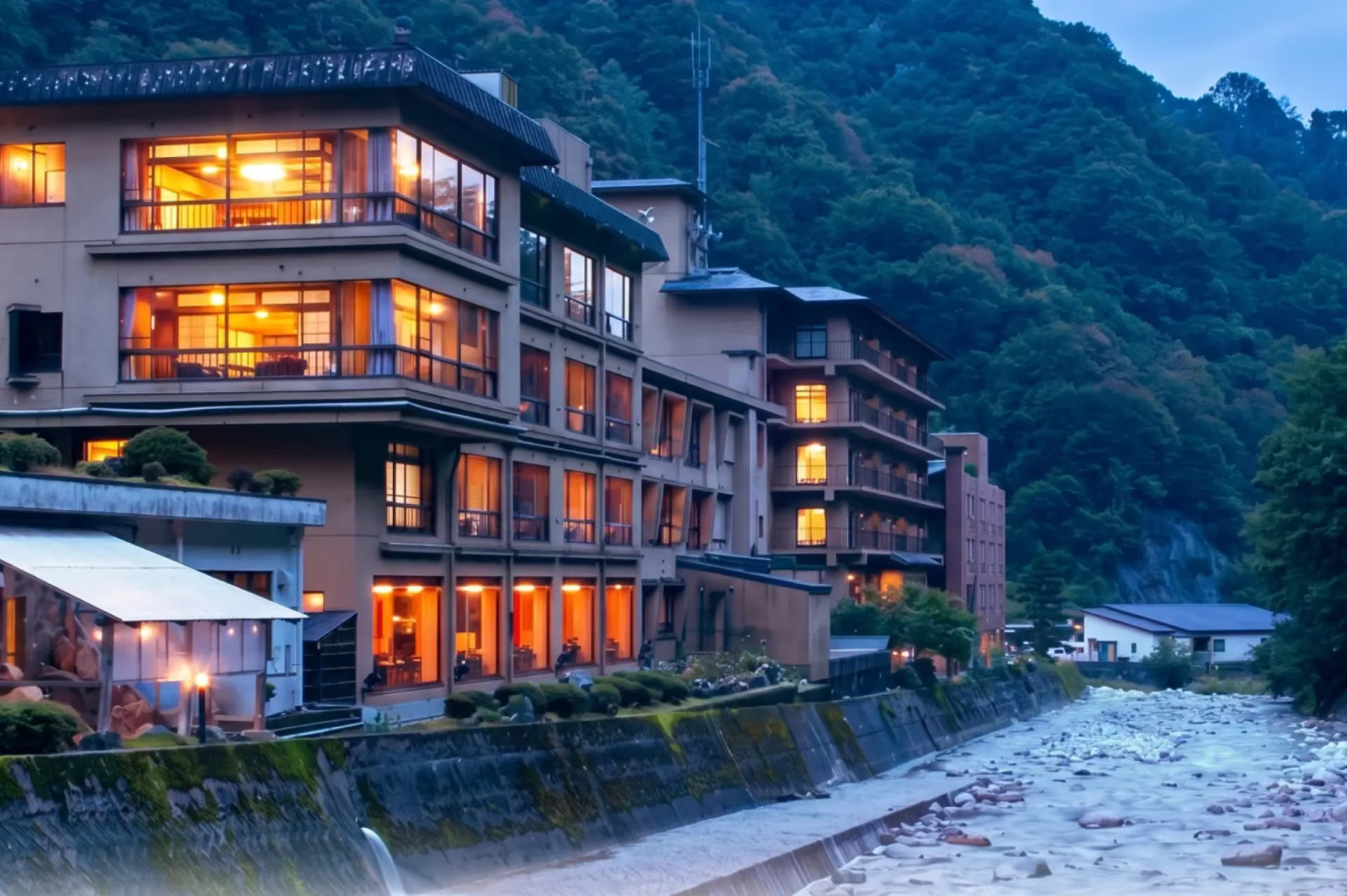
Check steps and walking distance inside the building
Japanese hot spring inns tend to have more stairs and steps the more atmospheric they are. Even if the place has a traditional feel, repeated trips between the room, dining area, and public bath become a burden if the routes are long or include stairs.
Before booking, check whether there is an elevator, where the room is located, and how far it is to the dining area and bath. If possible, choose a room on a floor close to the bath or a barrier-free room with fewer steps. It is not the age of the building itself that matters most, but whether there are ups and downs along the way.
Don’t insist on just one bathing style
Japanese hot spring inns often center on the public bath, but when traveling with elderly parents, an inn that offers private baths or baths in the room can reduce strain. Depending on health and mobility, there is no need for every family member to use the same bath at the same time. The table below summarizes which bathing styles are more or less suitable.
| Bathing style | Good points for elderly parents | Things to watch for |
|---|---|---|
| Public bath | Spacious and open, and often equipped with washing areas and handrails | It may be far from the room, and there may be steps in the changing room or bath area. Crowds can make it hard to relax |
| Private bath | For family use only, easy to accompany someone, and can be used at your own pace | Often requires a reservation and a fee. If it is deep inside the building or in a separate annex, walking increases |
| Bath in the room, such as an open-air or indoor bath | Almost no walking, easy to use for short periods at any time, and convenient for resting | The tub may be small and the washing space cramped. Facilities should be checked in advance |
It is fine for some people to prefer the public bath, others to find a bath in the room easier, and others to feel more comfortable in a private bath with accompaniment. The more bathing options an inn has, the easier it is to adapt to each family member’s condition.
Also, older adults have a relatively higher risk of bathing accidents. Be mindful of heat shock caused by temperature differences between the changing room and bath, feeling faint from staying too long in very hot water, and slipping on wet floors. Guidelines for water temperature, duration, and safe bathing methods are covered in Hot Spring Safety Precautions and How Long and How Often to Use Hot Springs. For choosing bathing styles based on family composition, see How Different Families Should Use Hot Springs.
Choose the room by route, not size
For trips with elderly parents, the layout is often more important than room size: how easily can they move to the toilet, sink, bed, and seating area? A Japanese-style room may look calm, but sitting on the floor and getting up from futons can strain the knees and back.
A Western-Japanese room, a room with beds, or a room with chairs and a table is often easier to use because getting up and sitting down is simpler. It is also worth checking whether there are handrails, whether the toilet is in the room, and whether they can avoid using the hallway at night. Photos may convey the atmosphere, but actual comfort is determined by the route you take inside the room.
Reduce the burden of meal style and timing
Meals can be a burden in every way: walking to the venue, the type of seating, and the start time. In-room dining or private dining allows you to eat at your own pace without worrying about others, and it also makes it easier to pause if needed. A large dining hall with simultaneous service can be difficult if moving to the seat or sitting on the floor is hard.
In Japanese hot spring inns, dinner times are sometimes fixed early, such as 5:30 p.m. to 6:00 p.m., so arriving late can make things feel rushed. It is better to check in early and plan the trip so there is time to rest once before dinner. Whether the dining area has chairs also helps reduce the strain of sitting.
Leave room in the itinerary and build in more rest
If you try to pack sightseeing, bathing, meals, and walks into one trip, elderly parents can easily become overwhelmed. Checking in early, taking a breather in the room, and allowing more time for bathing and rest often leads to higher satisfaction in the end. Keep the schedule flexible and avoid cramming too much into one day.
Family members do not all need to do the same things. If one person rests in the room while another goes to the bath first, and everyone spends time within a comfortable range, the parents will feel less pressure and the family atmosphere will be calmer. If you want time for just two people to bathe quietly, How to Choose a Couple-Friendly Private Bath Inn and How to Book a Private Bath may also help.
Frequently asked questions
Can parents with weak legs and back still stay at a hot spring inn?
Yes. If you choose an inn with an elevator, a room on a floor close to the bath, a room with beds or chairs, and a bath area with handrails, it becomes much easier even if walking is a concern. Before booking, it is reassuring to confirm steps, routes, and handrails directly.
What if the public bath feels intimidating?
Choose an inn with a private bath or a bath in the room so there is less walking and you can bathe at your own pace with someone accompanying you. If you use the public bath, choose a quiet time and be careful of temperature differences between the changing room and bath as well as slipping on wet floors. Bathing safety is explained in detail in Hot Spring Safety Precautions.
What should I check before booking?
Distance from the station and whether shuttle service is available, steps to the entrance, elevators inside the building, the route from the room to the bath and dining area, room type, handrails and steps in the bath area, and the meal style and start time. Most properties will answer if you ask directly. Whether the place suits your parent’s walking ability and health condition is best confirmed in person rather than by photos alone.
What should I do if I am worried about my parent while they are bathing?
The basics are to check in often, avoid long bathing sessions, and watch for signs of feeling faint or unsteady. Private baths and baths in the room make it easier to stay nearby and notice problems quickly. For guidance on water temperature and bathing time, refer to How Long and How Often to Use Hot Springs.
How can I find a barrier-free inn?
You can check facilities that publish their equipment on official hotel websites, on accessibility information from the tourism authorities or local governments, or through JNTO’s accessibility information. If there is no listing, or if you have specific needs, the most reliable approach is to contact the inn directly and confirm steps, handrails, and room type.
Summary
When traveling to hot springs with elderly parents, the basics are not the fame of the area, but choosing a stay with easy movement, short indoor routes, multiple bathing options, and meals that are not too burdensome. Checking distance from the station, shuttle service, elevators, routes to the bath and dining area, room type, handrails and steps in the bath area, and meal style and timing before booking can greatly reduce the burden on the day.
If you keep the itinerary flexible, check in early, build in plenty of rest, and accept that everyone does not need to do the same thing, both parents and family can spend the trip comfortably. Older adults have a relatively higher risk of accidents while bathing, so please pay attention to temperature differences, feeling faint, and slipping, and check information on bathing safety if you have any concerns before you go.
