Health & BenefitsHealth & Benefits
Japanese Aufguss Guide: Event Flow and First-Time Tips
Want to join a Japanese sauna aufguss event? Learn what happens on the day, who the heat performer is, how strong the show can be, and the basic etiquette for beginners.
Published: Dec 22, 2025
Health & BenefitsHealth & Benefits
Japanese Aufguss Guide: Event Flow and First-Time Tips
Want to join a Japanese sauna aufguss event? Learn what happens on the day, who the heat performer is, how strong the show can be, and the basic etiquette for beginners.
Published: Dec 22, 2025
Japanese heatwave events, also called aufguss, are performances where staff pour water or aromatic water on sauna stones to create steam, then fan that heat toward participants with towels or fans. Unlike a sauna session where you sit quietly at your own pace, this is a participatory experience with a set program, music, shouts, and a strong sense of shared energy. In short, even first-timers can join, but because the perceived heat rises sharply, it is safest and most practical not to aim to finish everything and instead enjoy it within your limits.
The meanings, origins, and differences between the words löyly, the steam-making stage, and aufguss, the stage of sending that steam, are explained in detail in The Difference Between Löyly and Aufguss. This article does not repeat the terminology. Instead, it focuses on what actually happens when you join a Japanese heatwave event, how the experience varies by facility, and the basic entry tips and etiquette for beginners.
This article provides general information. During a heatwave event, the perceived temperature can rise suddenly, putting strain on the heart and blood pressure. Do not treat it as a test of endurance. If you feel unwell, leave halfway through. If you are not feeling well, have just finished a long bath, or have been drinking alcohol, skip the event or keep your stay very short.
What Happens at a Heatwave Event
Japanese heatwave events generally unfold like a short stage show with a fixed schedule. Staff enter the sauna room, pour water or aromatic water on the sauna stones to raise steam, and quickly increase the humidity in the room. Then they swing towels or fans in a large motion and direct the heated air toward each participant. As steam circulates and hot air hits you directly, the perceived temperature rises clearly even if the room temperature itself stays the same.
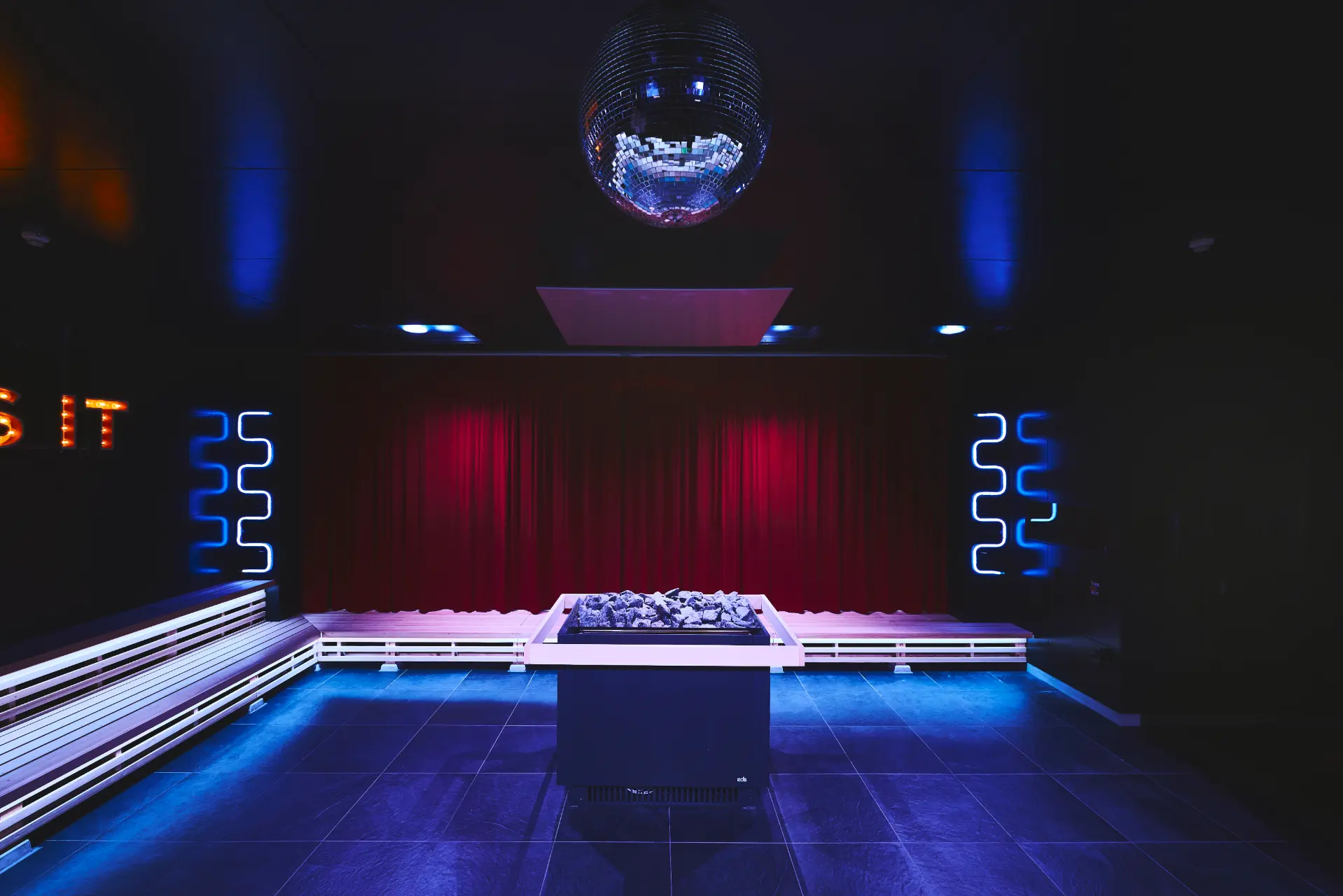
At many facilities, music, shouted cues, and towel performance are added to the experience. Staff hype up the room, participants may respond with applause or voices, and the atmosphere becomes completely different from a quiet meditation-style sauna. It often creates a strong sense of unity, and some people visit specifically for that feeling.
The flow varies by facility, but a typical event begins with an explanation of seating positions and rules, followed by several rounds of towel fanning over a set period before it ends. It is reassuring to check in advance how long it lasts, whether you can leave partway through, and whether there are designated seats.
The Japanese Role of the Heat Performer
In Japan, the staff who lead these events are sometimes called heat performers. They create steam, send hot air with towels, and handle the pacing and presentation, making them a key factor in the character of each facility. The role can be seen as a uniquely Japanese development of the kind of performance associated with aufguss, cultivated within Japanese sauna culture.
Heat performers have very different styles. Some emphasize intense heat and dramatic impact, while others focus on fragrance, music, and atmosphere, making the event more about mood than raw heat. Even when the sign says the same thing, the experience can vary greatly depending on who is leading it. There is no nationwide standardized certification system, so it is best to think of the pace and presentation as differing by facility and staff.
That is why, when choosing a facility, it is more practical to look at the actual format and intensity rather than just the name of the event. Whether you prefer a gentle flow or a more intense show will affect which place suits you best.
Event Intensity Varies Widely
Even though they are all called heatwave events, the intensity can differ greatly from one facility to another. Some sessions are relatively calm, with steam raised gently and hot air delivered softly. Others are large-scale productions where the heat performer swings a towel vigorously and builds excitement with music and shouts. A label such as aufguss or a löyly event alone does not tell you which type it is.
If it is your first time, choosing a gentler session or a facility where it is easy to leave halfway through lowers the barrier to entry. If you check the facility guide or ask staff in advance, you can find out whether the heat is strong, how long it lasts, and whether leaving during the event is allowed. Looking at the content rather than the name is the most useful way to enjoy a heatwave event without overdoing it.
How Beginners Should Join
For beginners, the most important goal is not finishing the event but ending it without feeling ill. Because the perceived heat rises quickly compared with an ordinary sauna session, people who are not used to heat may find it hard to stay in. Keeping the following points in mind makes participation safer.
- Sit near the entrance. Hot air feels stronger toward the back or upper benches, so choose a place that is easier to leave and feels gentler.
- It is okay to leave halfway through. Do not aim to stay until the end; leave if it becomes too much.
- Do not set finishing as your goal. Prioritize ending the session without harming your body over experiencing the full drama.
- Hydrate beforehand. You lose fluids quickly through sweating, so drink before entering.
- Do not join on a bad day. If you are sleep-deprived or feeling unwell, it is wise to skip it.
- A cold plunge bath is not required. If you dislike it, there is no need to force yourself; a lukewarm shower or a rest break is fine.
These are precautions based on the basic way of using a sauna. For general sauna entry tips, see How to Use a Sauna. For the sensation often called totonou after sauna bathing, see What Does Totonou Mean?.
Etiquette for Participation
Because a heatwave event is something that multiple participants enjoy in the same space at the same time, following the facility's flow is important for both safety and etiquette. Seat assignments may be given to help distribute hot air evenly and keep movement paths safe. If instructions are provided, follow them and do not move on your own.
When leaving partway through, use the instructed route and exit quietly so you do not disturb staff or other participants. Since hot air is moving strongly while the heat performer is fanning, it is safer to wait for a break in the flow rather than rush out. Rules about filming and talking vary by facility, so just follow the announcement made before the event. In short, the key is to go with the flow and not push yourself.
How It Differs from Self-Löyly
The contrast to a heatwave event is self-löyly, where the user quietly pours water on the stones themselves. Both belong to sauna culture, but the experience is quite different. The table below helps you think about which suits you better.
| Item | Heatwave Event (Aufguss) | Self-Löyly |
|---|---|---|
| Flow | Staff-led and scheduled | Freely adjusted at your own pace |
| Heat | Direct hot air makes the perceived temperature rise quickly | You control the amount of steam, so it can stay gentler |
| Atmosphere | Music, shouts, and a strong sense of unity | Quiet and meditative |
| Leaving | Exit during breaks in the flow via the instructed route | You can leave whenever you want |
| Best for | People who enjoy performance, impact, and shared energy | People who want to relax quietly at their own pace |
Neither is better. Choose according to your condition and preference that day. If you want impact and unity, choose a heatwave event. If you want quiet relaxation, choose self-löyly. For the specific steps, amount, and frequency for pouring water yourself, see How to Do Self-Löyly.
A Japanese Evolution of Sauna Culture
Japanese heatwave events have developed uniquely within facility culture while incorporating löyly from Finland and the performance style of aufguss developed in German-speaking regions. The format of turning it into a timed show, the role of the heat performer, and the performance element with music and shouted cues are not simply imported from overseas. They have been refined in Japanese facilities as participatory events.
That is why, in reality, people who prefer the original quiet style of löyly and people who enjoy highly theatrical heat events coexist. Rather than thinking one is correct and the other is not, it is better to see them as different ways of enjoying the same sauna culture, which also broadens your options when choosing a facility.
FAQ
What is a heat performer?
A heat performer is the Japanese term for the person who leads a heatwave event by pouring water on sauna stones to create steam and fanning hot air toward participants with towels or similar tools. They often handle the pacing and presentation as well, so they strongly shape the character of the facility. There is no nationwide standardized certification system, and styles range from people who emphasize intense heat to those who focus on fragrance and atmosphere. The relationship to the term aufguss is covered in The Difference Between Löyly and Aufguss.
Can beginners join a heatwave event?
Yes, but the key is not to overdo it. Because the perceived heat rises sharply compared with a normal sauna session, it is safer to sit near the entrance, leave halfway through if it feels too hard, and avoid making it your goal to stay until the end. Drink water in advance, and if you are not feeling well, skip the event. Prioritize finishing without feeling sick over finishing the whole session.
Do I have to use a cold plunge bath to enjoy a heatwave event?
No. A cold plunge bath is not required, and if you do not like it, there is no need to force yourself. Rinsing off with a lukewarm shower or resting until your body settles is perfectly fine. The important thing is not to push your body too hard with heat, and it is enough to stay within what feels comfortable for you.
Is it rude to leave halfway through?
No. Because the perceived heat rises suddenly during a heatwave event, leaving partway through is expected as part of the safety setup. When you leave, avoid doing so while the heat performer is fanning and quietly exit during a break in the flow using the instructed route. Not overdoing it matters more than finishing.
Do the contents of heatwave events differ by facility?
Yes, quite a lot. Some sessions gently raise steam, while others feature vigorous towel work, music, and shouted cues. The intensity varies widely. A name such as aufguss or a löyly event alone does not tell you how intense it will be, so checking the duration, heat level, and whether you can leave halfway through makes it easier to find a facility that suits you.
Conclusion
Japanese heatwave events, or aufguss, are participatory performances where staff create steam and send hot air with towels, and people enjoy them together with music, shouted cues, and a strong sense of shared energy. The heat performers who lead them are a uniquely Japanese presence, and their styles vary from emphasizing strong heat to emphasizing atmosphere, helping define each facility's character. Because the intensity differs greatly by facility, it is more practical to choose based on content rather than name.
Beginners can enjoy these events without overdoing it by sitting near the entrance, leaving halfway through if needed, not aiming to finish, hydrating beforehand, skipping it on bad days, and remembering that a cold plunge bath is not required. Whether you choose the intensity of a heatwave event or the quietness of self-löyly depends on your condition and preference that day. For terminology, see The Difference Between Löyly and Aufguss. For how to pour water yourself, see How to Do Self-Löyly.
Sources
Japan's Finest Onsen & Sauna, 64 places — a paid web magazine
A trip to Japan you may take once. Which onsen and sauna will make it the best experience?
The more you research, the longer the list gets, and the less you know which ones are truly good. One editor traveled all of Japan, bathing in onsen and sauna, and kept only the 64 that stayed with him — one full spread each, with what he felt there and why he would go back.
One of them opens free.