
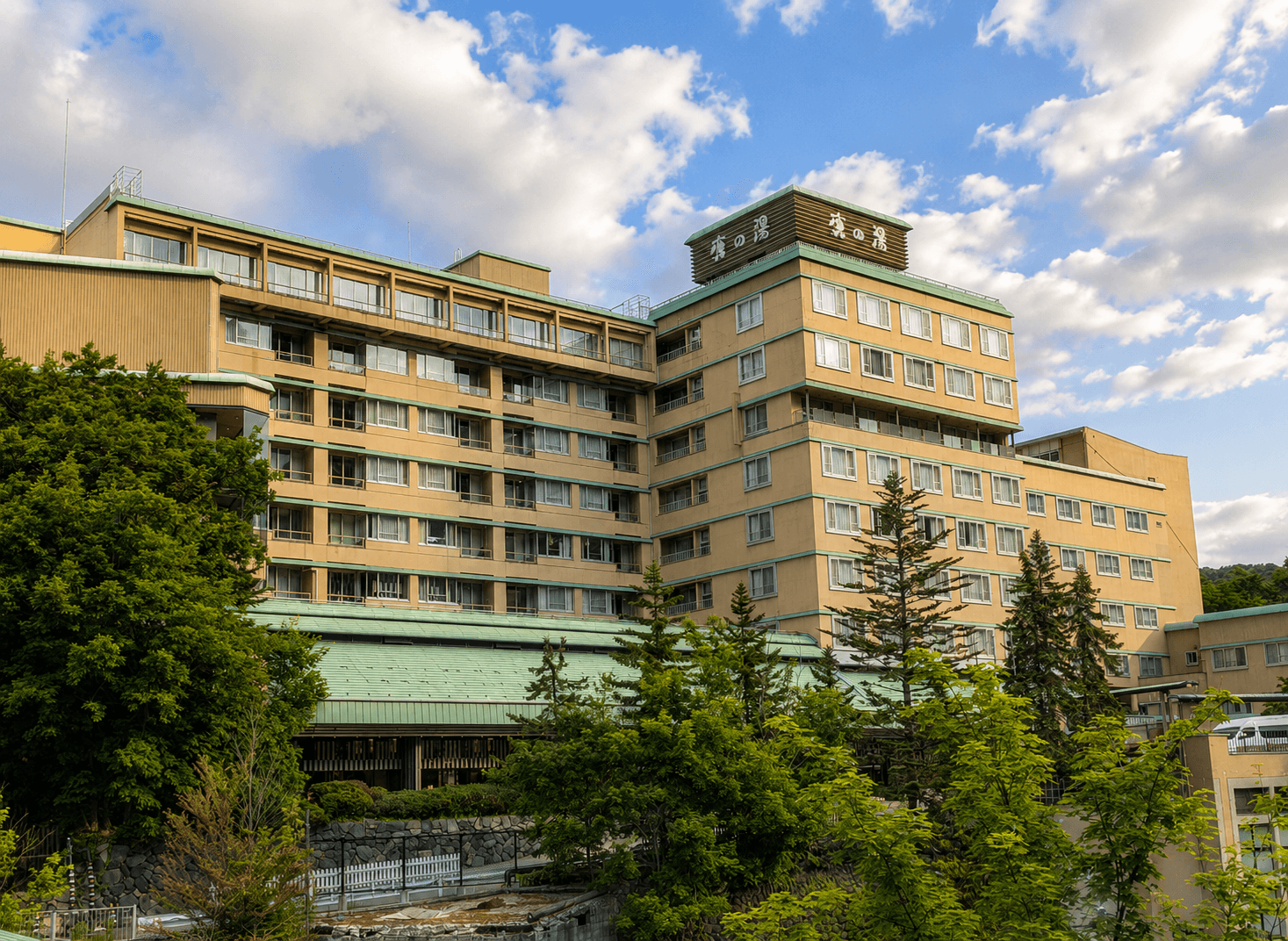
I am standing in front of the building.
This is the final destination of my Hokkaido hot spring and sauna journey — Jozankei Shikanoyu.
Among the many establishments in Jozankei Onsen, this hotel stands out for its sheer scale. It carries itself with a composed dignity, the quiet refinement of a long-established institution that has accumulated years of history. I passed through the entrance, completed check-in at the front desk, and was shown to a guest room overlooking the Jozankei valley. I unpacked my bags and spent a few moments gazing out at the fresh green valley spreading beyond the window. A truly magnificent view.
Or so I thought — five minutes later, I was unconscious. A nap.
No exploring the hotel grounds, no sightseeing nearby. First, a nap. Because for me, the highest priority is enjoying the hot springs and sauna to the fullest. My body, after traveling from one of Hokkaido's finest hot springs to the next, had accumulated fatigue — pleasant, but undeniable. When exhausted, neither the heat of the sauna nor the cold of the water bath can be savored to their full potential. In that case, sleep first. Only by recovering one's energy does the evening session become something truly exceptional. Visiting one extra tourist attraction simply cannot compare, for me, to the value of this one nap.
I slept for about two hours and woke up at 5 p.m. Thanks to the deep sleep, my energy had fully recovered. There was still time before dinner, so I took my time preparing for a bath.
Incidentally, I had deliberately booked the latest available dinner time slot that evening. The reason is simple: I wanted to visit the main bath hall during a quieter hour. At Japanese hotels and ryokan, dinner often begins around 6 p.m. And for most guests, the typical pattern is to enjoy the hot springs from around 4 p.m., then head straight to dinner and drinks. Which means the peak congestion falls between 4 and 6 p.m. — that is the conclusion I have drawn after staying at countless establishments. Work backwards from there, and the ideal time slot reveals itself.
At 6 p.m., I headed to the main bath hall right on schedule — and sure enough, the early dinner crowd was just filing out in a group. Exactly as planned. Not bad reading, if I do say so myself.
The main bath hall turned out to have a rather elaborate design. Two floors: the changing room on the second floor, and from there you descend a spiral staircase down to the bathing area on the first floor. That staircase sets a wonderful mood. With each step down, the presence of hot springs — steam and something between sulfur and mineral — grows thicker, and anticipation builds whether you want it to or not.
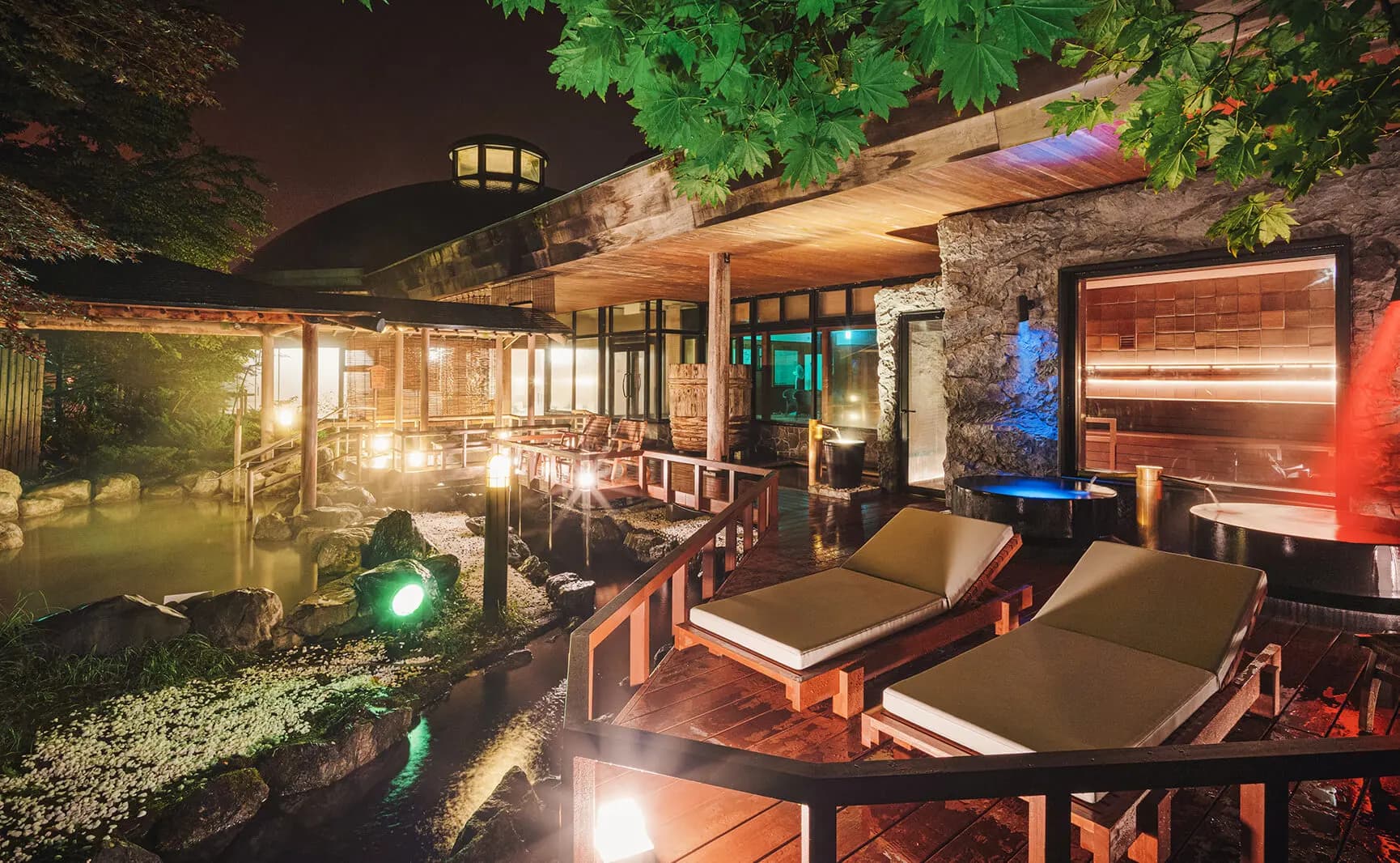
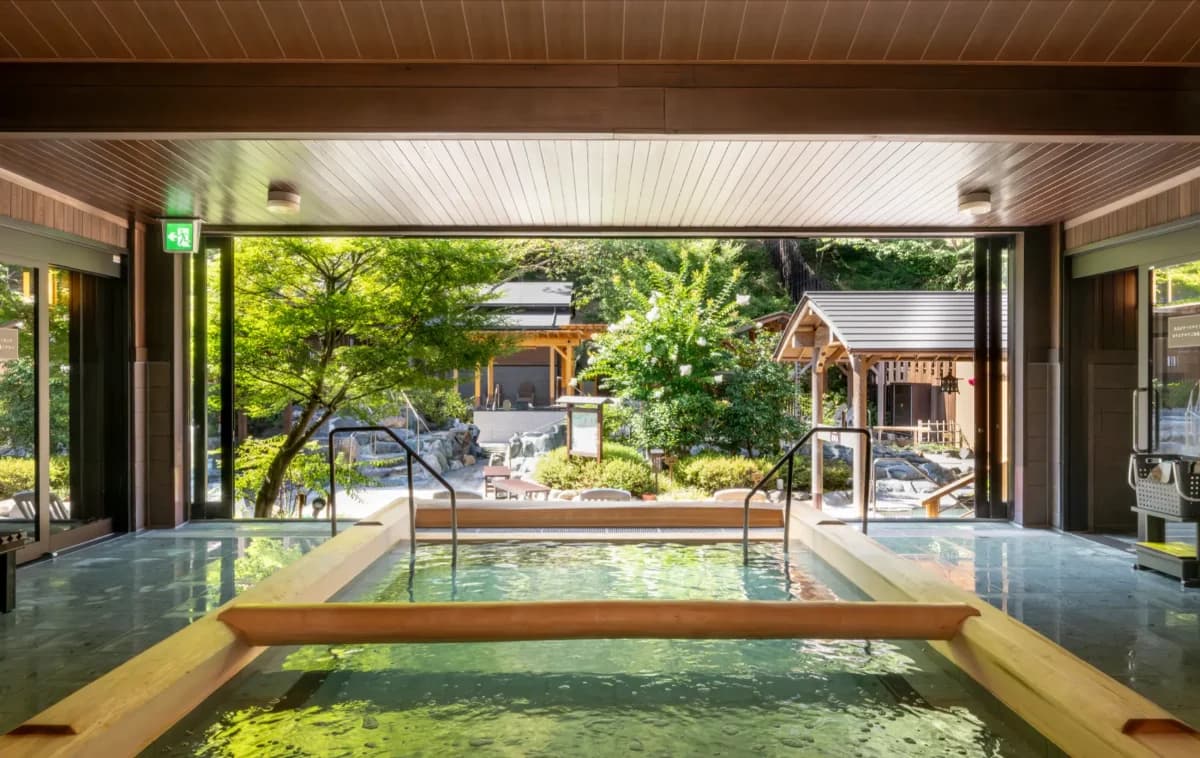
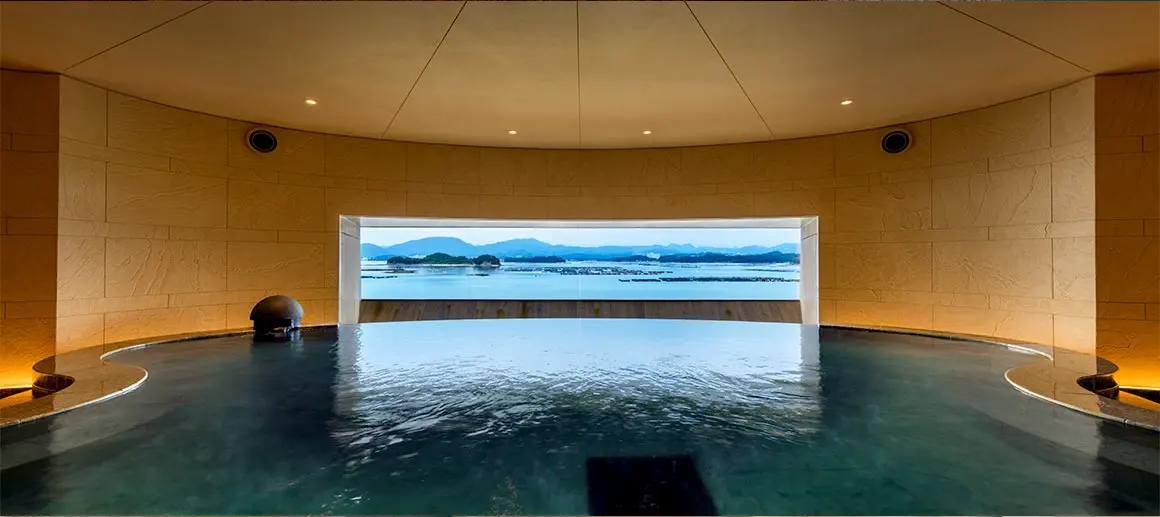
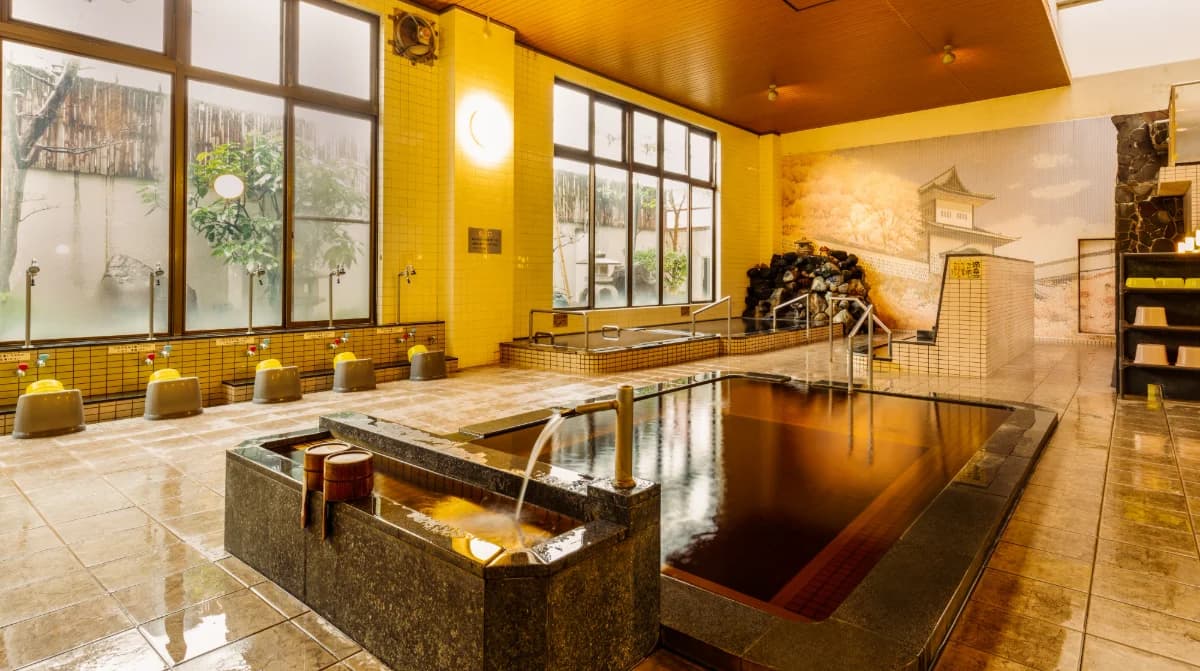
Stepping onto the first floor, I found a space that truly deserved to be called a distinguished hot spring. The ceiling soared up two stories, the expansive indoor bath brimmed with Jozankei spring water flowing in constantly, and the steam that rose from it drifted all the way up to the high ceiling, creating an almost otherworldly atmosphere. Both the indoor bath and the outdoor area had chairs positioned at key spots, with a well-thought-out flow designed to let you unwind properly after the sauna and cold plunge.
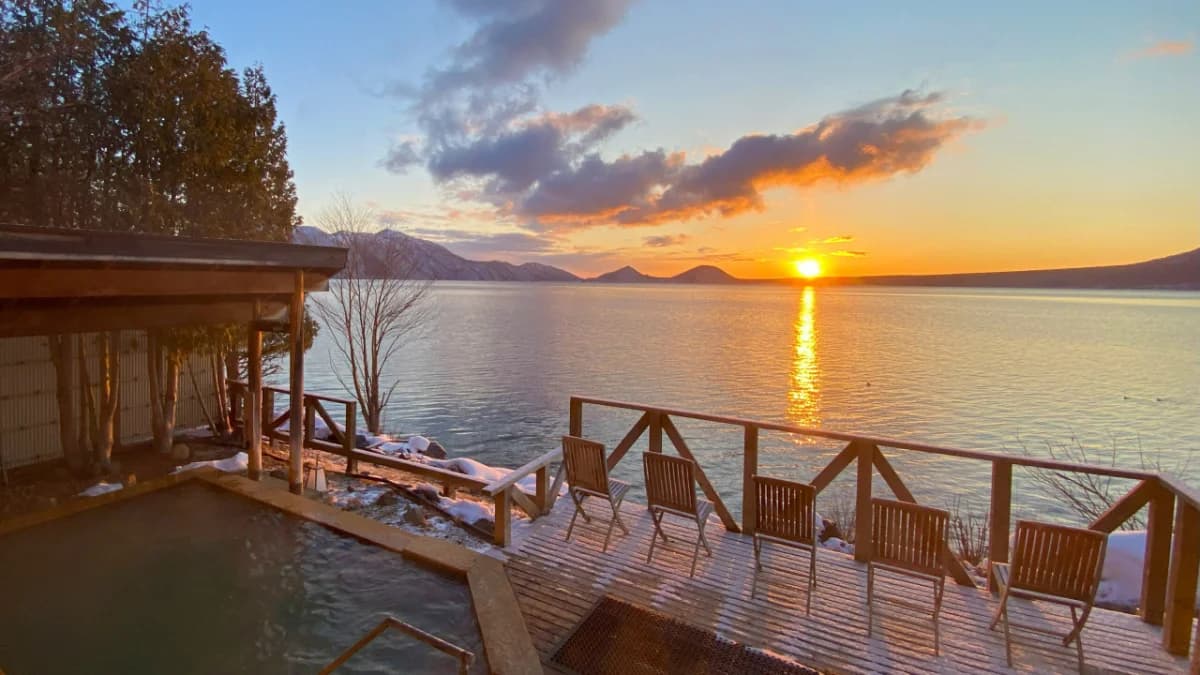
I first moved to the outdoor bath and eased myself gently into the celebrated waters of Shikanoyu. The name Shikanoyu — meaning "the deer's bath" — comes from the legend that wild deer, wounded in the forest, would soak in these waters to heal their injuries. The moment I entered, all the tension drained from my body at once. It felt as though locks on each individual cell were being released, one by one, in sequence. As I listened to the murmur of the Toyohira River flowing just beside me, the inside of my body ignited like a flame. That is the power of Jozankei Onsen.
Allow me to say a little more about Jozankei Onsen here. The spring type is sodium chloride, and because the salt that clings to the skin prevents sweat from evaporating, it is also known as the "hot spring of heat." Once warmed, the heat lingers — it is a spring that warms you from the very core. Its history is long: in 1866, an ascetic monk named Bisen Jozan, guided by the Ainu people, is said to have reached the source of the spring. And what is especially remarkable is the volume of flow. The water still surges naturally from cracks in the riverbanks and the bedrock of the riverbed to this day, exceeding 8,600 liters per minute — one of the largest volumes of naturally flowing hot spring water in Japan. This is not water drawn up by human hands; it is water that the earth itself continues to bring forth by its own will. Thinking of it that way, the gratitude I feel for this single bath deepens all the more.
At a spring as distinguished as this, the body warms so thoroughly that you could go straight to the cold plunge without visiting the sauna at all. Since I was here anyway, I decided to ease myself into the 16°C cold plunge bath before heading to the sauna — a way of preparing for the first set. Warmed in the finest spring, finished with natural water. Even before reaching the sauna, the first hints of totonou were already showing themselves.
And now, at last, the sauna.
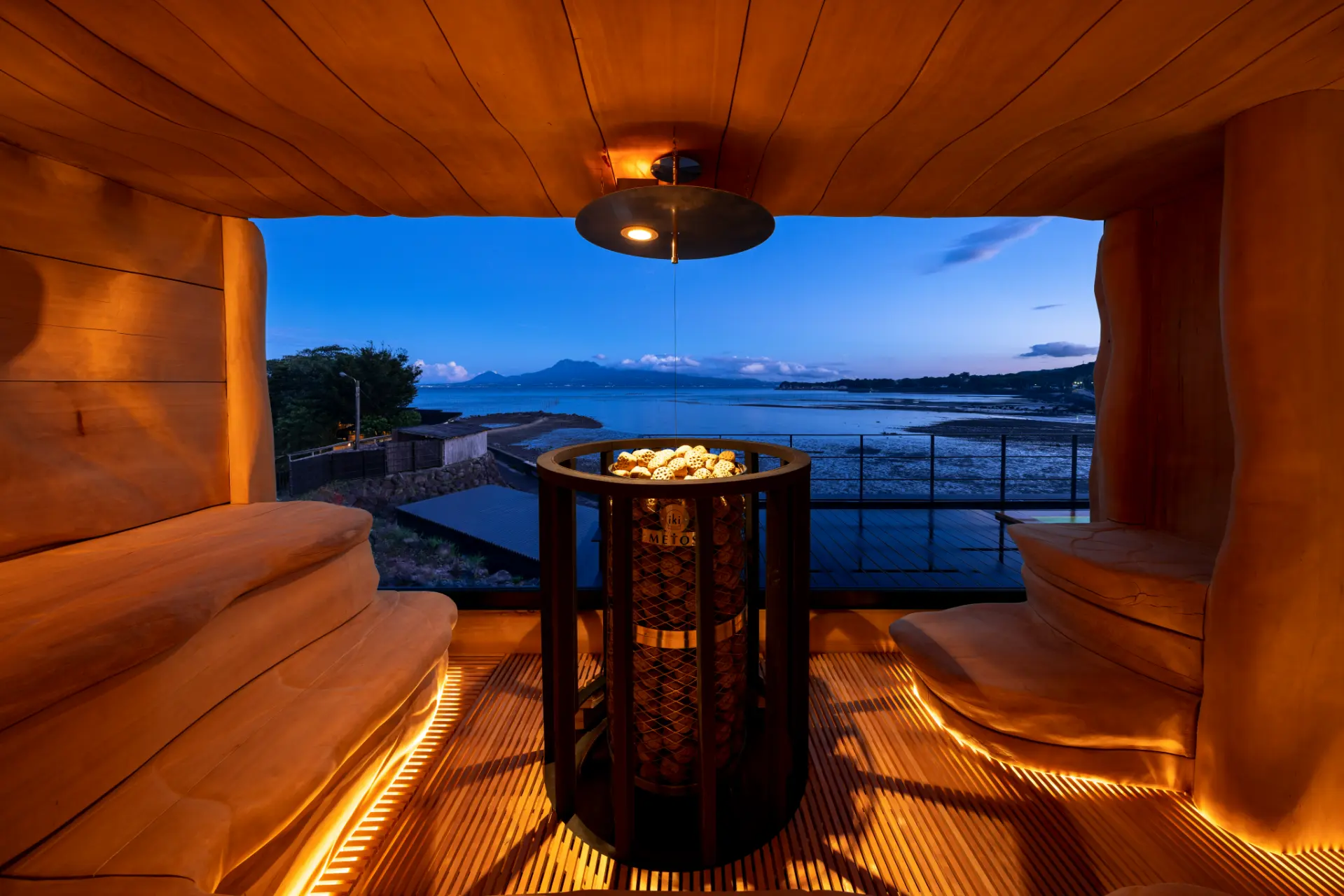
The moment I opened the sauna room door, the beauty of its design stirred something in me. But there was no time to linger on admiration — I was immediately struck by the intensity of the high-temperature setting. The room temperature: 105°C. On top of that, the auto-löyly system, which pours generous amounts of water over the sauna stones, keeps the humidity high, making the perceived temperature extraordinary. I always make it a point of principle to take the top bench in a sauna — but on this day, the heat was so fierce that I honestly surrendered and sat down on the middle tier.
There were only two other people in the sauna besides me. In a space filled with silence, only the ferocious heat pressed in. And yet, from a speaker inside the room, pleasant background music played softly. As I gave my ear to that music, something curious happened — a little ease crept in, bit by bit. Surrender to the heat, give your awareness over to the sound. This, too, is one way to enjoy a sauna.
The centerpiece of this sauna room is the METOS iki stove, enthroned at the front. More than 600 kg of sauna stones are stacked upon its massive frame, and water poured onto the top transforms instantly into steam. Auto-löyly fires every twenty minutes, filling the room with an ideal level of humidity. But what catches the eye above all is the bench design. It zigzags its way up to the top tier in a staggered, stadium-like formation. Unlike a conventional sauna where everyone faces the same direction, this zigzag structure means that where you sit and which way you face naturally varies from person to person. It is a genuinely interesting design — and beautiful to look at as well.
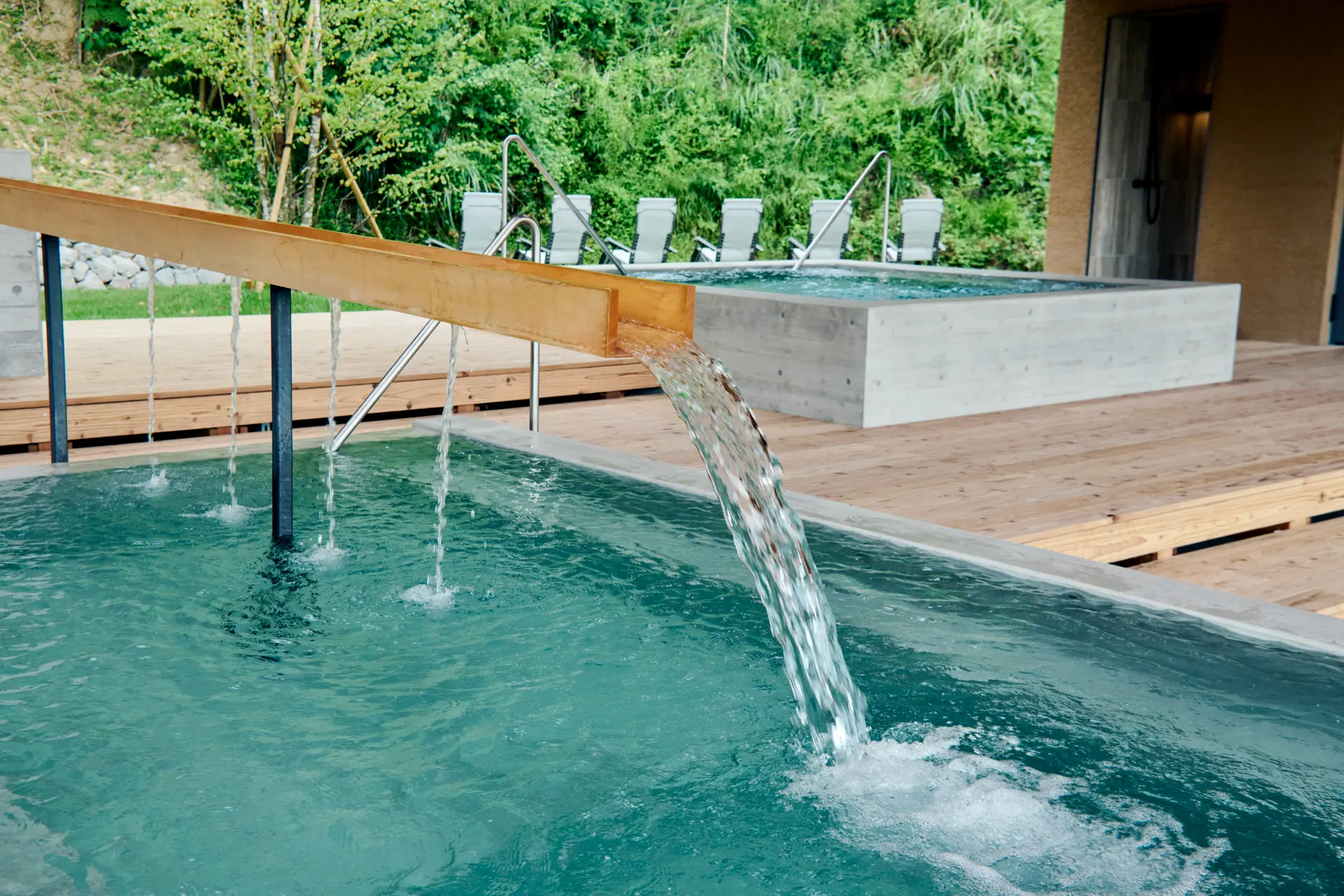
Once the body had been pushed to its limit in the heat, it was time for the long-awaited cold plunge. The cold water here is a luxurious experience: raw spring water from the headwaters of the Toyohira River, flowing straight through in an unheated, natural stream. Two temperature options are available: 16°C and 9°C. The 16°C pool uses the stream water at its natural temperature; the 9°C pool is chilled to bone-freezing coldness by a chiller unit. Which one to choose was never in question. The 9°C pool. You climb a small staircase to enter, and it is remarkably deep. When I sank my whole body in, the cold was there — yet somehow it also felt soft. That is the texture of natural water against the skin. Strangely, despite the 9°C chill, I felt I could stay in indefinitely. The body, heated through and through in the 105°C sauna, was being cooled to its very core in one swift plunge. This exhilaration is, without question, addictive.
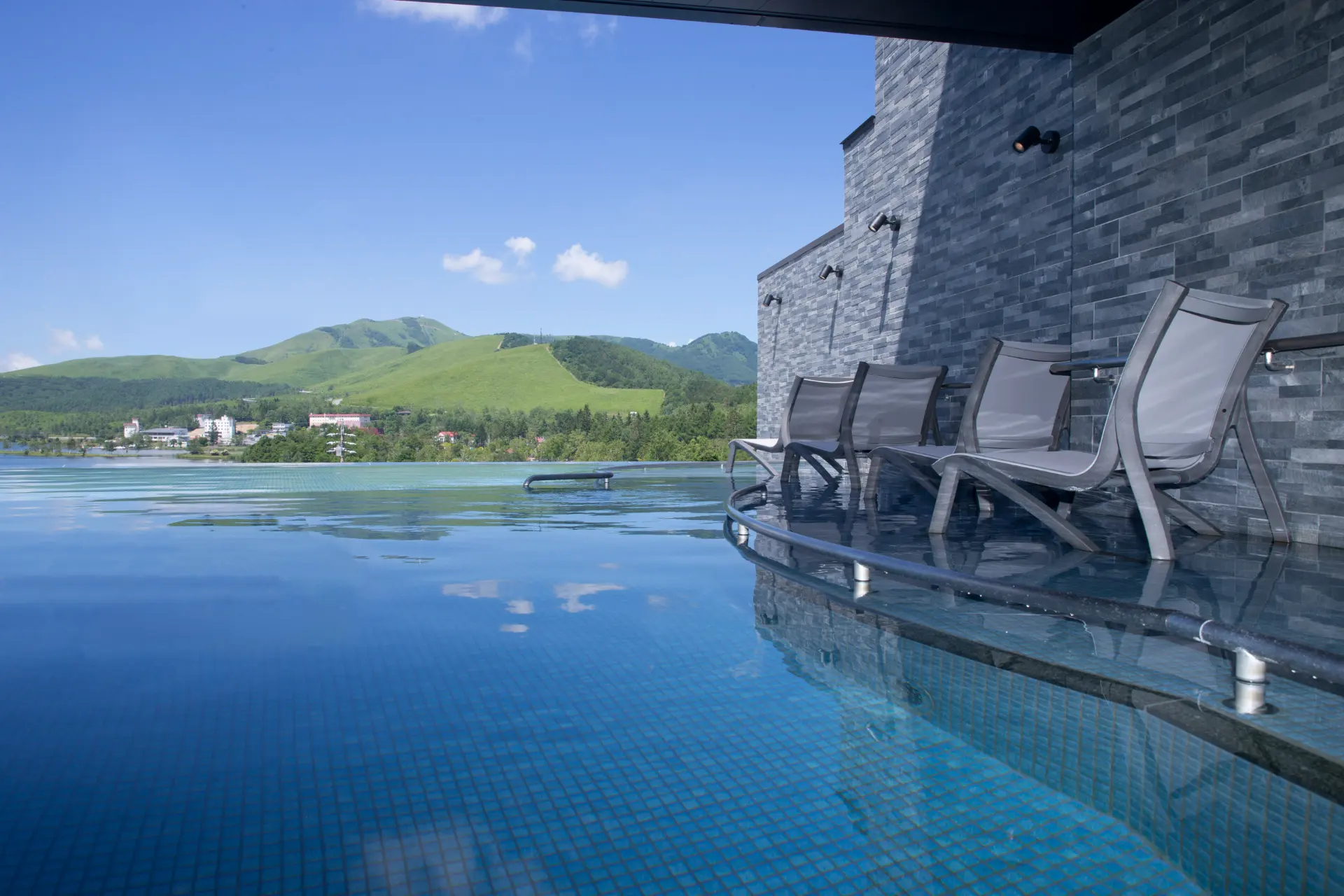
I moved straight to the outdoor area and surrendered my full weight to an infinity chair. I could feel my heart, which had been pounding fiercely, calming down — slowly, steadily, beat by beat. The temperature gap between sauna and cold plunge was nearly 100°C. It is precisely this enormous swing that delivers the overwhelming pleasure of the outdoor rest. Listening to the sound of the Toyohira River below, I felt the outline of my body begin to dissolve, little by little. The cool air of the Hokkaido valley moved gently across my flushed skin.
For the second set, I began in the outdoor hot spring bath. A truly distinguished spring is a strange thing — without even thinking about it, your body is drawn toward the water as if pulled in. You want to soak in it again and again, forever. While immersed in this water, you feel instinctively that you would not fall ill — and that if you did, you would surely be cured. Japan has an ancient tradition called toji — soaking in hot springs over an extended period to heal illness — and the number of people said to have recovered their health in these very waters is beyond counting. That is how much power a hot spring can hold. This may be the first and last time in my life I soak in the waters of Jozankei. I am going to savor them completely.
In the end, that day I enjoyed the hot spring just as much as the sauna — if not more. In every set, I first eased myself slowly into the celebrated spring water, warmed through completely, and then headed to the searing sauna. This flow, uniquely suited to Jozankei Shikanoyu, had become fully established within me. Warm in the hot spring, heat in the sauna, finish with natural water. Could there be a greater luxury than this?
The evening session was now complete.
All that remained was to eat a delicious meal and sleep soundly. And tomorrow morning, I would sink into this celebrated water one final time before leaving Hokkaido behind. Thinking these thoughts, I drifted off to sleep that night with a feeling of deep contentment.
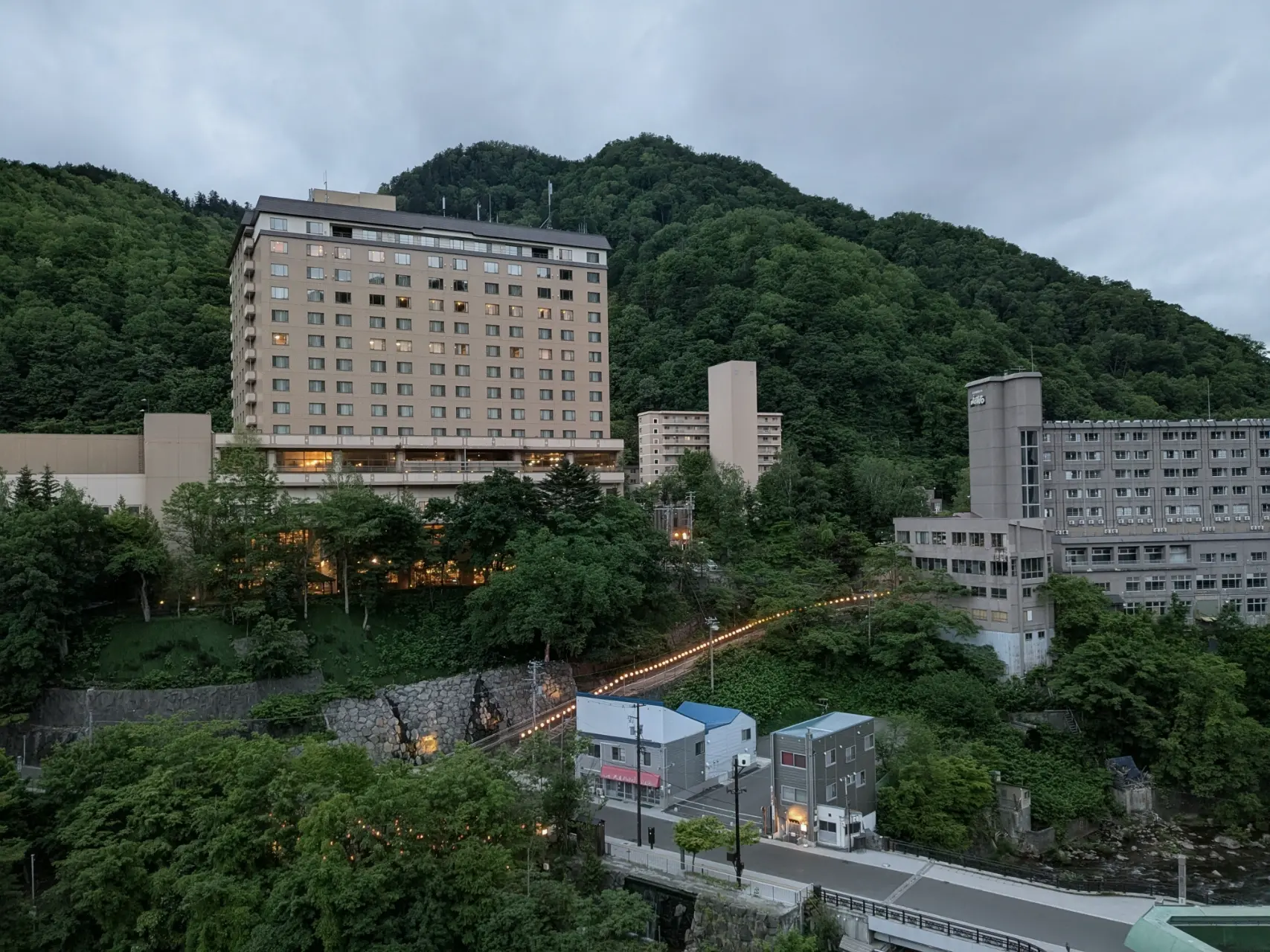
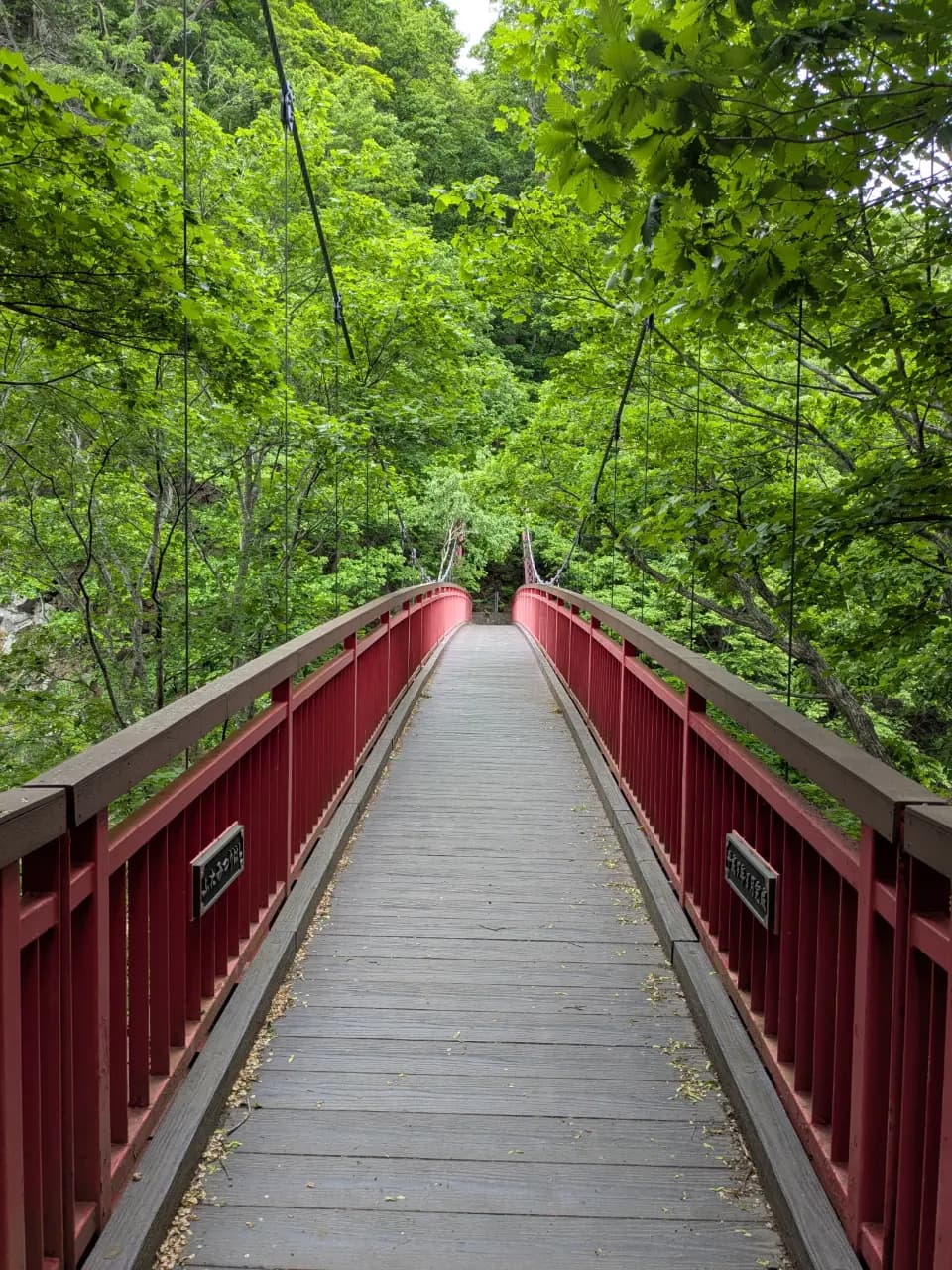
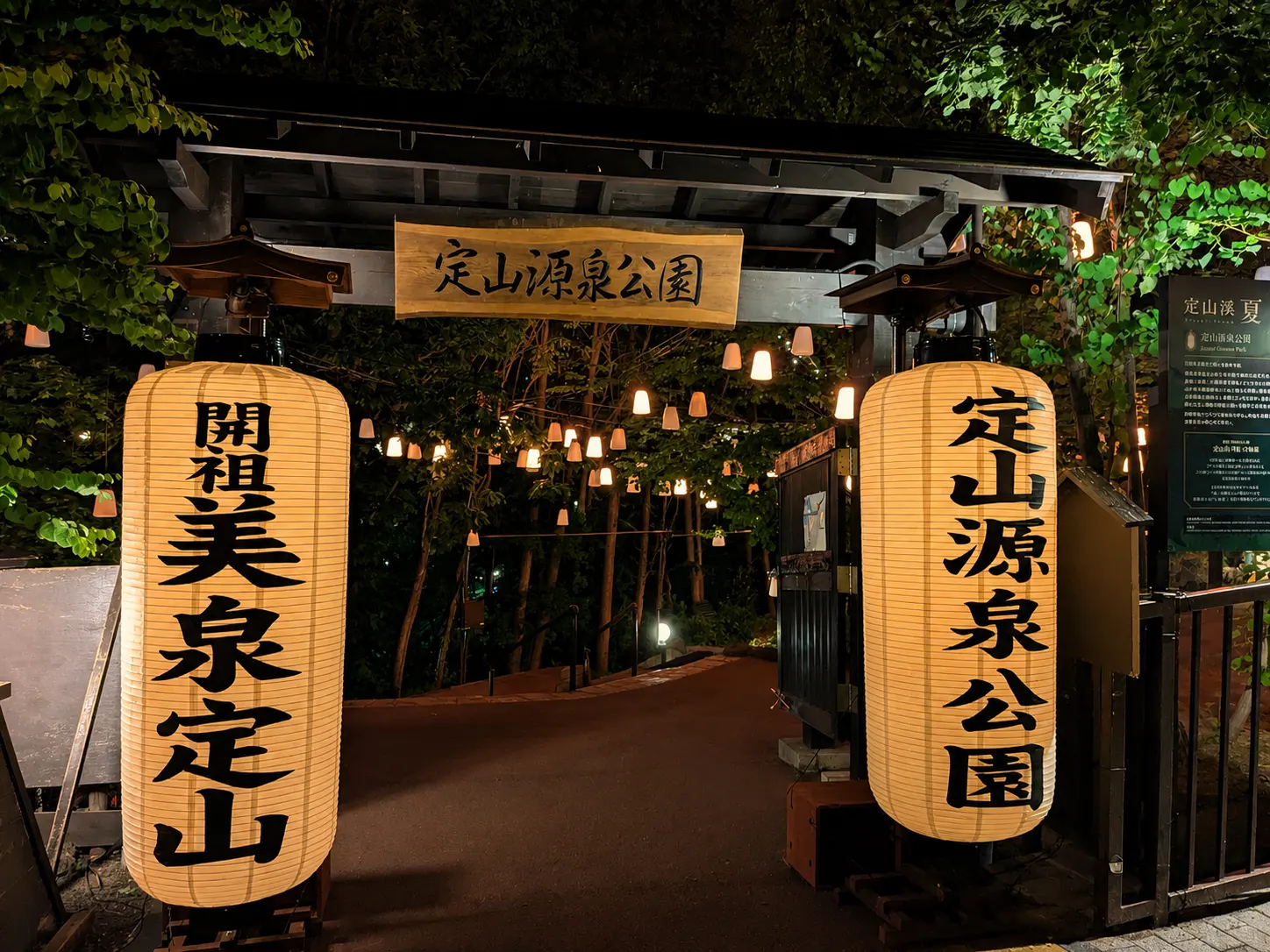
The next morning, I woke up sharply at 5 a.m. Conveniently, the main bath hall also opens at 5 in the morning. Glancing sideways at the morning scenery of Jozankei visible from my room window, I stepped forward without hesitation toward the bath hall.
The main bath hall at Jozankei Shikanoyu operates on a system where the men's and women's sides swap between evening and morning. In other words, the bath I entered this morning was different from the one I used the night before. The basic layout is shared, but the sauna had an entirely different concept. Last night's bath featured a 105°C zigzag stadium-style sauna, while this morning's sauna had a much gentler setting — around 85 to 90°C by feel. The design of the sauna room was also different: an iki stove placed in the center, with benches arranged in a circle around it. That circular configuration caught my eye immediately. To experience two saunas with such distinctly different personalities within a single stay at the same establishment — what a wonderfully indulgent arrangement.
And then, above all, there is the celebrated spring water of Shikanoyu. Waking up in the morning and having the first event of the day be a soak in these famous waters. There is nothing quite so pleasant as that. The night before, the hot spring had gently loosened the tension in each and every cell of my body. But in the morning it was the reverse — the spring seemed to be softly knocking on each cell, rousing a body that had been asleep. A strange sensation. Perhaps because of that, simply soaking in the water felt as though energy was welling up inside me, visibly and rapidly.
Energized by the celebrated spring, two sets of sauna and cold plunge. The finest possible start to a morning. There was nothing left undone. I could leave Hokkaido with no regrets.
On this journey, I had indulged in superb hot springs, saunas, cold plunge baths, and the great natural landscapes of Hokkaido to the fullest extent imaginable. The trip began at Marukoma Onsen Ryokan on the shores of the mystical Lake Shikotsu, then continued to Midori no Kaze Resort Kitayuzawa in Date City, Noboribetsu Grand Hotel in the volcanic Noboribetsu Onsen with its whiff of hell valley, and Toyako Manseikaku Hotel Lakeside Terrace by the shores of Lake Toya with its pleasant lakeside breeze — and finally I moved on to Jozankei Onsen, closing the journey at Jozankei Hotel Millione and then here, at Jozankei Shikanoyu. Distinguished spring upon distinguished spring, celebrated water upon celebrated water, exceptional sauna upon exceptional sauna — this journey is now drawing to its conclusion.
And yet — Hokkaido is vast. Everything I was able to visit on this trip covers only a tiny fraction of this enormous land. So I will surely find my way back here before long. Hakodate, Niseko, Obihiro, Kushiro, Shiretoko — I have already confirmed that many more celebrated springs and exceptional saunas exist in those places. On the flight home, I had already begun planning a new journey that would surpass even this one.