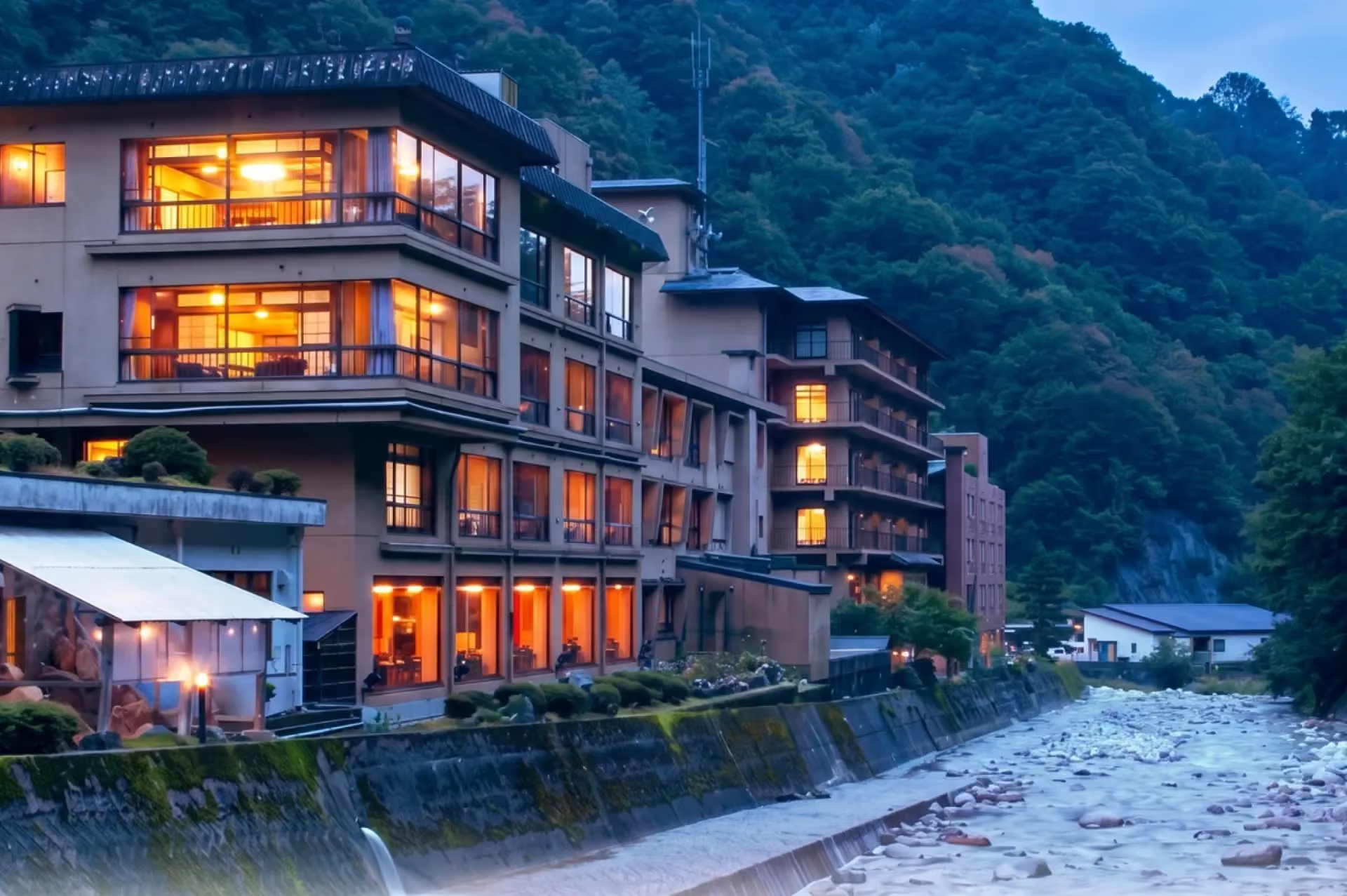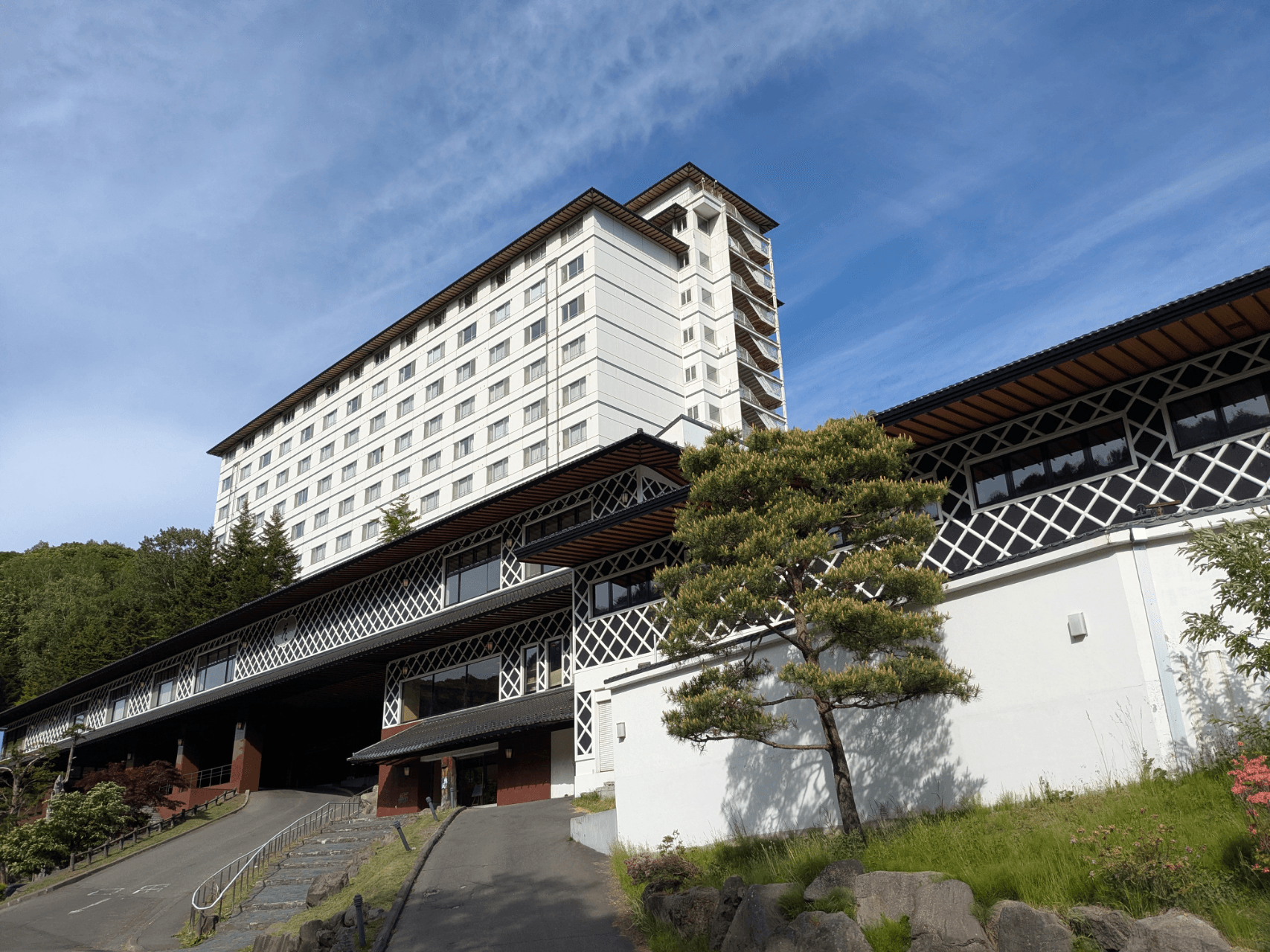
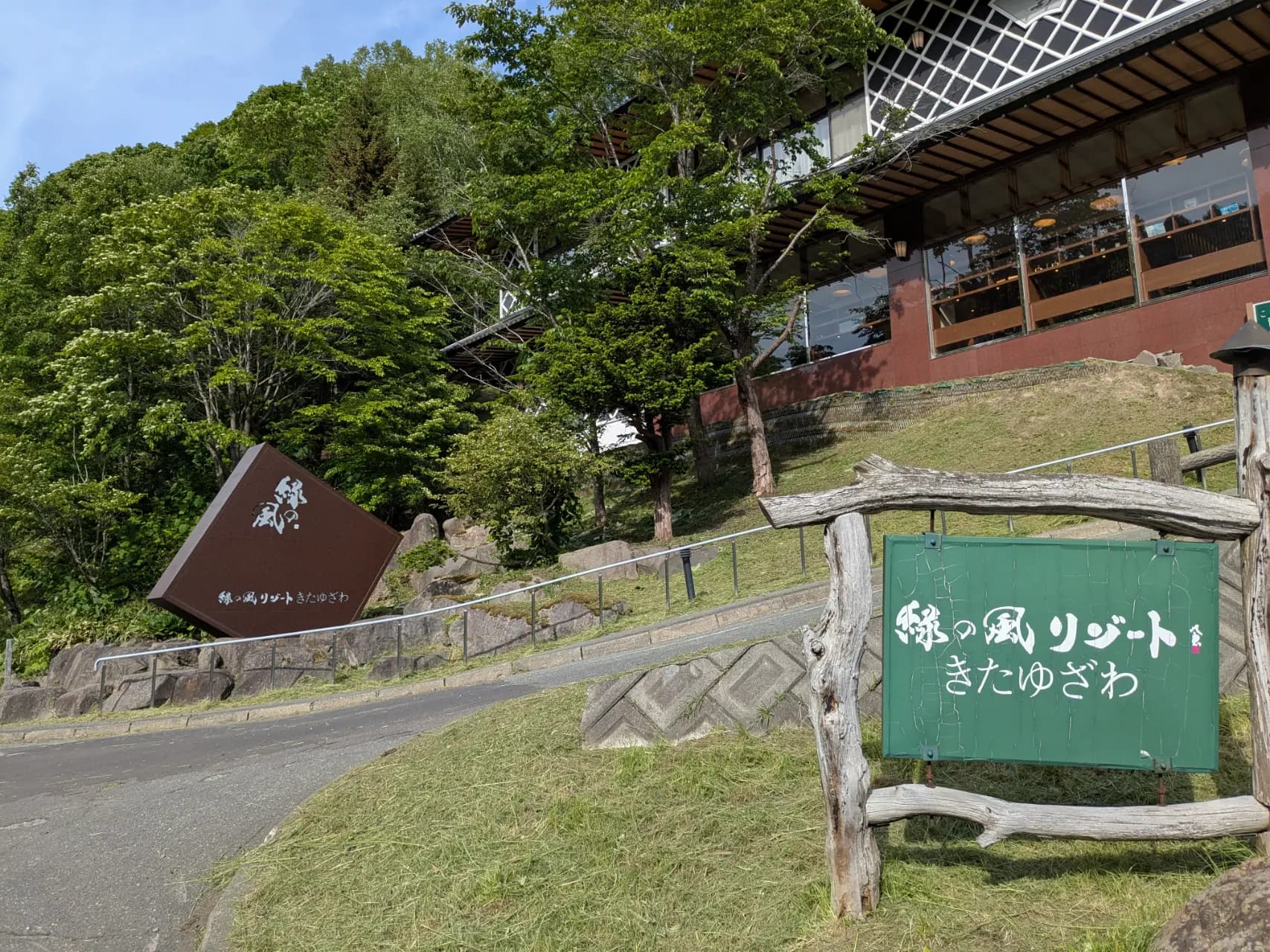
That morning, as the first leg of my Hokkaido sauna journey, I had soaked in the breathtaking view of Lake Shikotsu at Marukoma Onsen Ryokan, settling into a perfect state of totonou. From there, I drove straight to Midorikaze Resort Kitayuzawa in Date City, Hokkaido.
This facility was another place I had stumbled upon while researching Hokkaido saunas, and the moment I found it, I felt an irresistible urge to visit. Two saunas with entirely different concepts — Hamon (Ripples) and Mizusuji (Water Streams) — a cold plunge bath fed by clear, natural river water polished by Hokkaido’s wilderness, a free-flowing hot spring outdoor bath of overwhelming scale, and a world enveloped by untouched nature. I was captivated by all of it and had been eagerly looking forward to today’s visit.
I checked in just after 3 p.m. and decided to take a nap in my room first. A sauna trip is more physically demanding than one might expect. By resting and recovering, I could enjoy the evening session at full capacity. After an hour of deep sleep, I finally headed to the large communal bath.
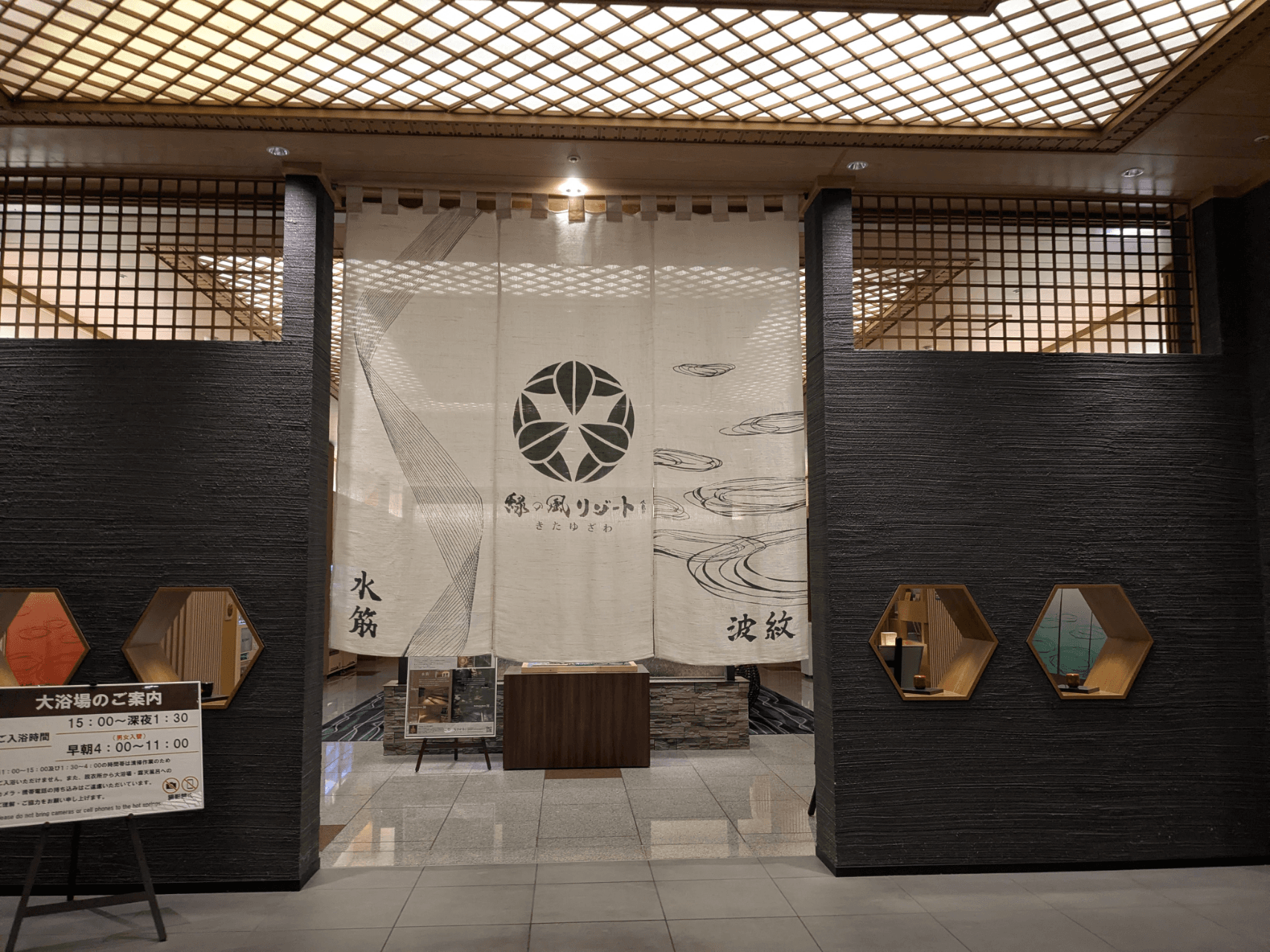
That day, men had access to the Hamon sauna area.
The moment I stepped into the changing room, I was struck by its sheer size. It was so spacious that you could practically build a decent sento in just that room alone. With all the room to breathe, I didn’t have to worry about awkward proximity to other guests — I could use the lockers with total ease.
When I stepped into the bathing area, an enormous space stretched out before me, with giant bathtubs lined up one after another. Each individual tub could probably fit dozens of people. The indoor bath area featured three massive pools at different temperatures, plus a waterfall bath, sauna, cold plunge bath, and a relaxation space.
Astonishingly, the entire bathing facility was spread across two floors. The changing room and indoor baths were on the second floor, and taking the stairs down to the first floor revealed a second indoor bath area — and beyond that, a vast open-air bath.
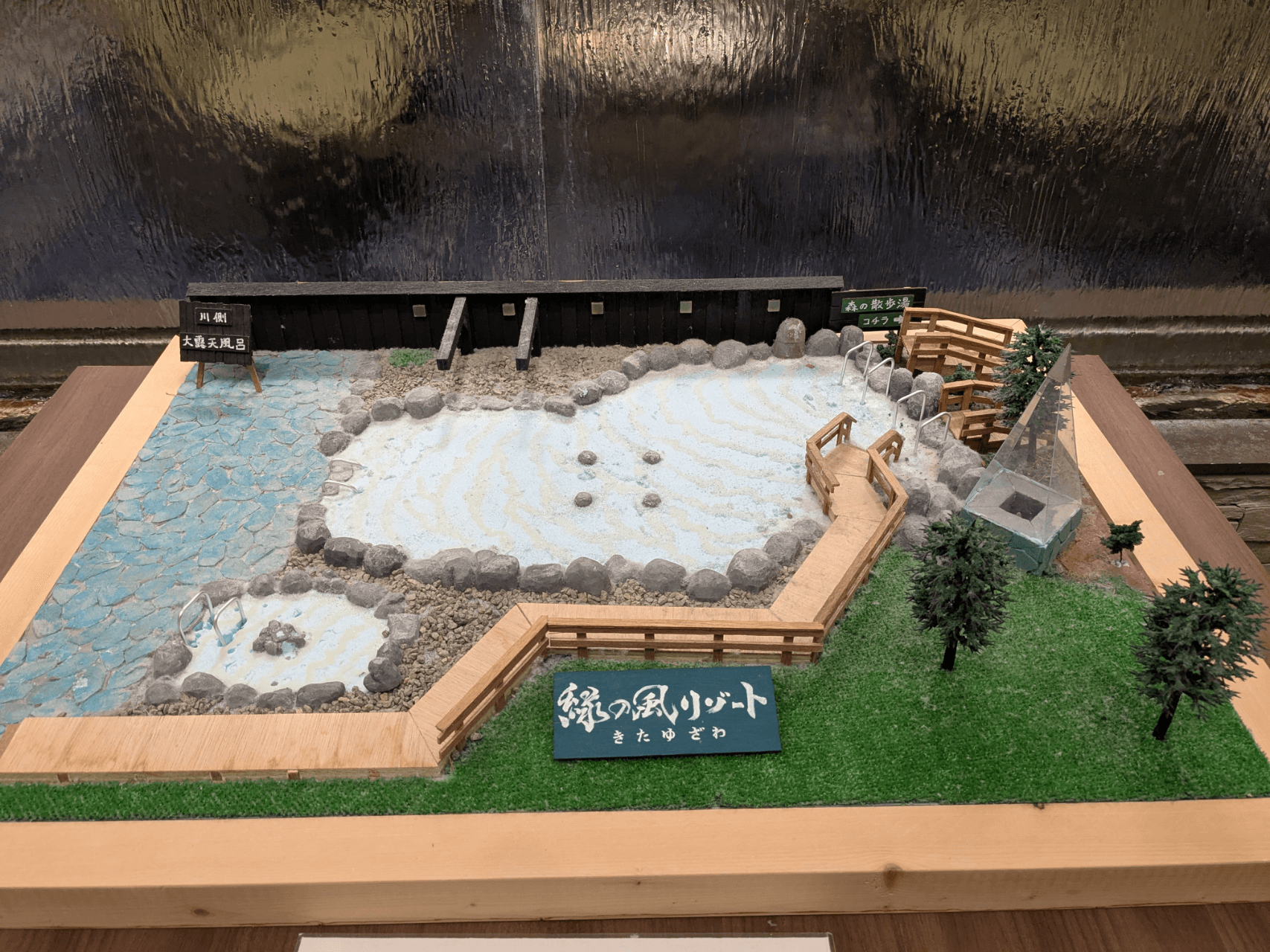
The moment I laid eyes on the open-air bath, I was speechless. I had never seen an outdoor bath this enormous. Surrounded by mountains on all sides, with the fresh green leaves of white birch trees filling the grounds, a massive rock bath that could easily hold around 200 people sat at the center of it all — fed by a continuous flow of hot spring water. Beyond the rock bath, deeper into the birch forest, was the Mori no Sanpoyû (Forest Stroll Bath) area, where some 20 differently scented baths were scattered throughout the trees.
Just taking in the layout of the facility was enough to feel overwhelmed by its richness. And since it was a weekday evening, there were only about 10 other guests in the entire bath — this vast space was essentially all mine. I reined in my excitement and started by washing myself clean.
For the day, I had decided to split the experience into two parts: one for enjoying the hot springs, and one for the sauna.
The non-sauna bathing options were so exceptional that it would have been a real shame to skip the bath-hopping entirely.
First, I warmed up in the indoor natural hot spring, then made my way down to the outdoor bath on the first floor. The massive rock bath was, indeed, completely mine. I waded to the center of it, submerged myself in the hot spring, and gazed up at the sky, taking in the surrounding forest. An extraordinary sense of liberation and healing washed over me. Just soaking in this rock bath alone made the trip entirely worthwhile. The free-flowing hot spring gently dissolved all the fatigue of the journey.
After the rock bath, I wandered through the birch forest, enjoying the scattered bath-hopping experience. Various tubs offering different scents were arranged throughout, and from every single one, you could look up through the trees while you soaked. In urban super sentos, trees might be planted as decorative elements beside outdoor baths — but what existed here was a real forest. Becoming one with nature must mean exactly this kind of experience.
By the time I had soaked to my heart’s content and returned to the second-floor sauna area, 45 minutes had already passed. Out here in Hokkaido’s grand natural setting, perhaps it was time to let go of any sense of time altogether. In daily life and even in regular sauna visits, I’m always at least partly aware of the clock — but on this trip, there’s no need for that. I would simply lose myself completely in the hot springs and sauna, for as long as it took.
Now, at last, it was time for the sauna.
I opened the door to the sauna room called Hamon. Inside, I was greeted by a serene darkness dominated by black tones and a pleasant, enveloping heat. The temperature was around 90°C — already high — but the humidity was exceptionally elevated as well. There were two reasons for this. First, self-service löyly was available. Second, there was an installation beside the sauna stove that resembled a suikinkutsu — a traditional Japanese underground water jar. Hot spring water flowed ceaselessly into a hollowed-out section of a massive stone, overflowing and spreading across the surrounding floor. This water kept the humidity inside at an ideal level.
Adding to the atmosphere, a light flickered every 12 seconds, marking time like ripples spreading across a water’s surface, while the sight of water being poured onto the stones added a quiet elegance to the room. There was also a device inspired by the shishi-odoshi (deer scarer) of Japanese gardens — when water accumulated, a bamboo tube would tilt, spill its water, and snap back with a resonant clack that echoed pleasantly through the room. Simply feeling the presence of water sounds and watching the rippling light was enough to send my mind into a deep state of relaxation. Having a shishi-odoshi inside a sauna room was a first in all my years of sauna-going.
Leaving the sauna, I headed to the cold plunge bath. Here, too, the water was natural. It was drawn from the source of a river running near the hotel — clean, refreshing water honed by Hokkaido’s great wilderness. The water temperature was around 18°C, varying naturally with the seasons. The moment I submerged myself, a smooth, gentle sensation enveloped my entire body. There was no sharp, biting cold — this was the kind of exquisite cold plunge bath you could stay in indefinitely. After cooling my body thoroughly, I moved to the meditation room adjacent to the sauna, called Zen.
This indoor relaxation space offered an even rarer experience.
I entered a dim private room kept at around 15°C and lay face up on a mat. Then, from a kettle-like device mounted above, cold water droplets began to fall — drip by drip — onto my forehead. The concept was inspired by the Indian traditional therapy known as Shirodhara. With each drop landing on my forehead, the distracting thoughts in my mind were washed away, my thinking grew clearer, and I felt as though I could reach a state of complete nothingness. I personally love taking outdoor air baths in the rain, and this sensation was remarkably close to that feeling of raindrops falling on a body perfectly cooled by the cold plunge. All five senses sharpened, and I was guided into a state of deep meditation. How long I lay there in that indoor air bath, I genuinely couldn’t say. I had stopped looking at the clock long ago.
I slowly rose and repeated the same cycle — sauna followed by Shirodhara indoor air bath — for a second set and a third. Then I decided to wrap up sauna activities for the time being. The reason I say “for the time being” is that I fully intended to return after dinner. The nighttime atmosphere of that vast open-air bath was something I absolutely had to experience.
Dinner was served buffet-style, but with a well-equipped live kitchen and a diverse spread of Japanese, Western, and Chinese dishes. Through the large windows of the dining hall, I could gaze out at a lush, green forest — beautiful nature visible from every angle. The name Midorikaze (Green Wind) truly suited this hotel perfectly. I ate as much of whatever I liked and left feeling completely full and deeply content.
After dinner, I rested in my room for a while before heading back to the large communal bath.
I warmed up briefly in the indoor bath, then went down to the open-air bath on the first floor. The nighttime atmosphere was extraordinary. Modern lighting glowed in the darkness, creating a fantastical world entirely different from what I had seen in the evening. I submerged myself in the middle of the vast rock bath and looked up at the night sky. The contrast between the cool night breeze and the warm hot spring water — what better way could there be to end a day?
After savoring the hot springs, I returned to my room, and all that remained was to sleep.
The next morning, the men’s and women’s areas would switch, and I would be able to enjoy the baths and sauna of the Mizusuji area. What kind of experience would that other sauna — where flowing streams of water wind through the space — bring? I drifted off to sleep with that anticipation warm in my chest, looking forward to heading straight to the large bath the moment I woke up.