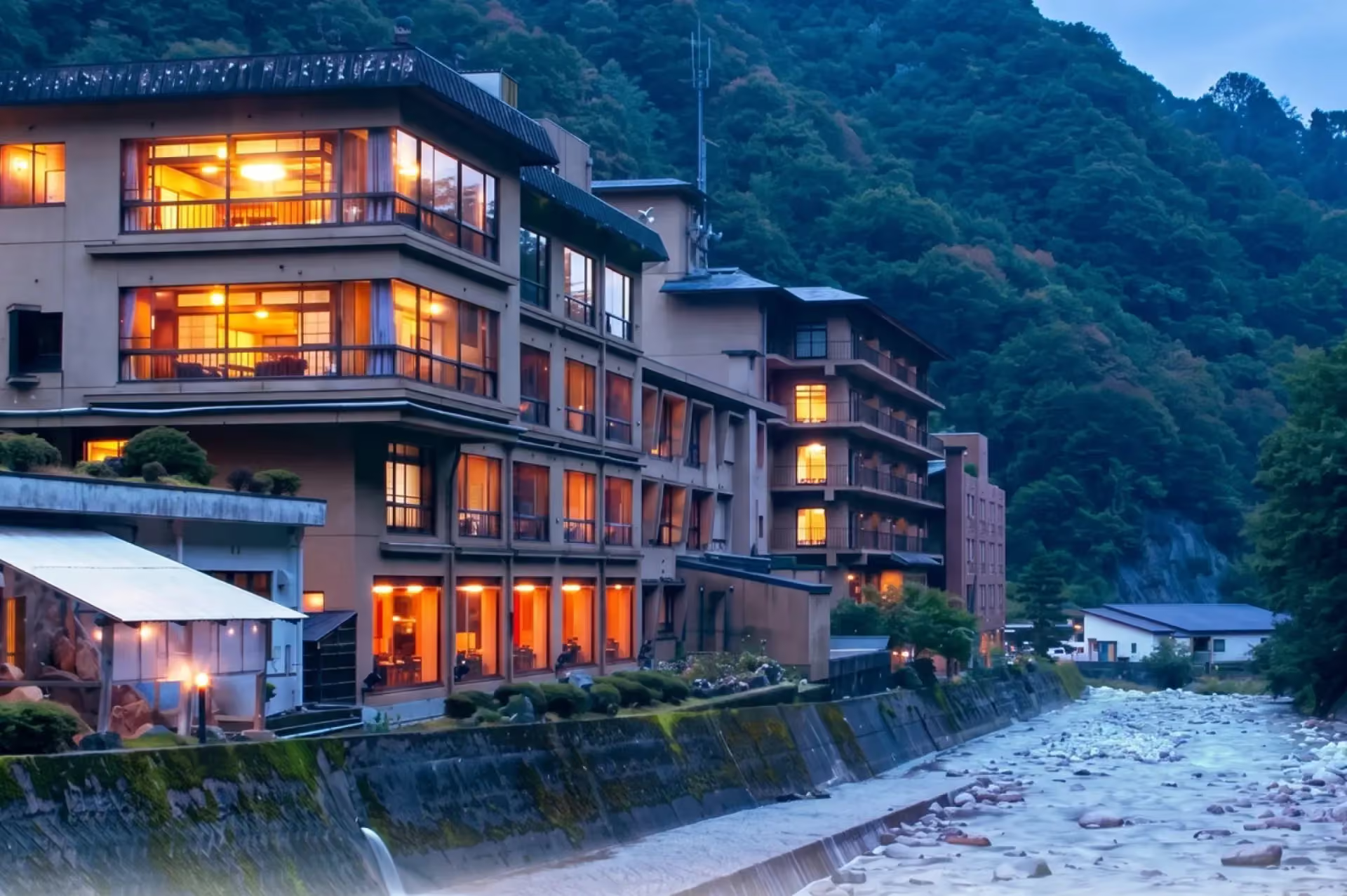
Spring Quality & ScienceSpring Quality Details
Carbonated Hot Springs: Features and Famous Baths
What is a carbonated hot spring? Learn the standard of 1,000 mg/kg or more of free carbon dioxide set by Japan’s Ministry of the Environment. Discover how tiny bubbles form on the skin, why these baths are served lukewarm, famous hot springs like Nagayu, and the difference between natural and artificial carbonated baths.
Published: Dec 24, 2025
Spring Quality & ScienceSpring Quality Details
Carbonated Hot Springs: Features and Famous Baths
What is a carbonated hot spring? Learn the standard of 1,000 mg/kg or more of free carbon dioxide set by Japan’s Ministry of the Environment. Discover how tiny bubbles form on the skin, why these baths are served lukewarm, famous hot springs like Nagayu, and the difference between natural and artificial carbonated baths.
Published: Dec 24, 2025
A carbonated hot spring is one of the 10 therapeutic spring types, with a spring quality that contains a certain amount or more of carbon dioxide in the hot spring water. It is generally called a carbonated spring. When you soak in the water, tiny bubbles cling to your body and hands and feet, and that is the clearest sign. Because of this, it is sometimes described as a ramune bath.
In short, these bubbles are carbon dioxide dissolved in the water that adheres to the skin, and it is the easiest-to-understand feature of a carbonated hot spring. On the other hand, naturally occurring high-concentration carbonated springs are rare in Japan, and because carbon dioxide escapes when the water is too hot, they are often offered as lukewarm baths. In this article, we organize the definition, how the bubbles form, representative famous baths, the differences between natural and artificial springs, and bathing precautions, based on the Ministry of the Environment’s standards. For the full picture of the 10 spring types, see the Guide to Onsen Spring Types; here we focus only on carbonated hot springs.
This article provides general information and does not guarantee any specific therapeutic or health benefits. If you have an existing condition or are not feeling well, do not overdo it and follow your doctor’s or the facility’s guidance.
What Is a Carbonated Hot Spring? The Standard Is Based on Free Carbon Dioxide
Whether a spring is classified as a carbonated hot spring depends on how much carbon dioxide is dissolved in the water. Under the Ministry of the Environment’s Mineral Spring Analysis Guidelines, a carbonated hot spring that qualifies as a therapeutic spring is defined as a hot spring containing 1,000 mg or more of free carbon dioxide per 1 kg of hot spring water. If a bath displays a sign saying “carbonated hot spring” or “spring containing carbon dioxide,” it means the water meets this standard.
Under Japan’s Hot Springs Act, water containing 250 mg/kg or more of free carbon dioxide is recognized as a hot spring. To be called a carbonated hot spring as a therapeutic spring, it must contain four times that amount, or 1,000 mg/kg or more. So if you see “carbonated hot spring” on a sign, you can think of it as water with a very high carbon dioxide content. If it also contains iron, it may be introduced in the context of iron-rich hot springs as a carbonated iron spring, and even among carbonated hot springs, the appearance and feel can vary.
Why Do Bubbles Stick to the Skin?
The bubbles in a carbonated hot spring are carbon dioxide dissolved in the water that adheres to the body surface and appears as tiny bubbles. It works on the same principle as the small bubbles that cling to the inside of a glass of carbonated drink. Carbon dioxide dissolved in high concentration in the water emerges as bubbles at the skin, which acts as the interface.
However, how the bubbles appear can vary by person and by facility. Depending on the carbon dioxide concentration, water temperature, how long it has been exposed to air, and the structure of the bath, there may be days when many bubbles are visible and days when there are fewer. Since carbon dioxide leaves the water over time, fresher water tends to produce bubbles more easily. You cannot simply say that “few bubbles means it is not real.” Also, moving your body vigorously while bathing can make the bubbles come off, so soaking quietly makes it easier to observe them.
Why Are They Often Served Lukewarm?
Carbonated hot springs are often used at relatively lukewarm temperatures. This is because the higher the water temperature, the more easily carbon dioxide escapes from the water. In hot water, the carbon dioxide escapes as a gas, making it hard to preserve the high concentration. Conversely, the lower the temperature, the more likely carbon dioxide is to remain dissolved, so lukewarm water is better for enjoying the bubbles and the carbonated feel.
For that reason, carbonated hot springs are not rarely found in tubs that are close to body temperature or slightly cooler. People who like hot baths may find them underwhelming, while those who want to soak slowly in a warm bath often find them ideal. For the feel of lukewarm baths, see the classification of onsen by temperature.
Carbonated hot springs are sometimes described as promoting circulation and warming the body, or as “the bath for the heart,” but these are general expressions used for therapeutic springs, and this article does not make any definitive claims about effects. The indicated benefits of therapeutic springs are intended for repeated use over a certain period, and individual differences are large. Especially for people who are concerned about the heart or blood pressure, do not take those expressions at face value; prioritize a reasonable bathing time and check your condition carefully.

Why Natural Carbonated Hot Springs Are Rare in Japan, and Famous Examples
Naturally occurring high-concentration carbonated hot springs are not common in Japan. Japan has active volcanic activity and spring water often becomes hot, but as noted above, carbon dioxide does not dissolve easily in hot water. Because only limited places satisfy the conditions for water to emerge with lots of carbon dioxide underground without becoming too hot, they are rare overall. For how hot springs emerge, see How Hot Springs Rise to the Surface. In Europe, including Germany, natural carbonated springs are known to be relatively common.
Among them, Nagayu Onsen in Oita Prefecture is widely known as a representative natural high-concentration carbonated spring in Japan. The table below summarizes representative examples.
| Hot spring area | Location | Features |
|---|---|---|
| Nagayu Onsen | Oita Prefecture | Known for one of Japan’s highest carbon dioxide concentrations in the hotter range, and often introduced as Japan’s best carbonated spring. It also contains iron and has long been loved as a carbonated iron spring |
| Funagoya Onsen | Fukuoka Prefecture | Long known as a mineral spring containing carbon dioxide, and appreciated for its lukewarm baths and drinking-spring culture |
The features listed here are only examples, and even within the same hot spring area, the composition and concentration differ by source. The most reliable way to check is to look at the posted spring quality name or the hot spring analysis sheet to see which type the water belongs to.
Natural Carbonated Springs vs. Artificial Carbonated Springs
In recent years, it has become more common to see baths labeled “high-concentration carbonated spring” or “artificial carbonated spring” at super sento and day-use bath facilities. These use circulation systems and other devices to dissolve carbon dioxide into the water artificially. Home carbonated bath additives work on the same idea.
The difference between natural and artificial is whether carbon dioxide dissolved naturally and emerged from the ground, or was dissolved later by artificial means. The carbon dioxide itself is the same whether natural or artificial. The table below summarizes both.
| Item | Natural carbonated hot spring | Artificial carbonated spring |
|---|---|---|
| Source of carbon dioxide | Naturally dissolved into the water underground | Dissolved later using equipment or bath additives |
| Spring quality name | If standards are met, it can be called the therapeutic spring “carbonated hot spring” | No therapeutic spring name is assigned (often not a hot spring) |
| Availability | Naturally high-concentration springs are rare | Widely available even in urban bath facilities |
| Other minerals | May also contain iron or other minerals | Basically dissolves only carbon dioxide |
For travelers, it is more practical to check how much bubbling and carbonation you can feel and what temperature range the bath uses, rather than whether it is natural or artificial. Natural does not automatically mean better, and artificial does not automatically mean lower value. At the same time, natural carbonated springs found in different regions have their own appeal, rooted in local mineral combinations and history.
Bathing Tips and Precautions
In a carbonated hot spring, you can feel the bubbles and carbonation more easily by soaking quietly rather than moving around busily. Even though the water is often lukewarm, do not let your guard down; if you stay in too long, your body will still get tired even at a lower temperature. Even if it feels easy to stay in for a long time, do not push yourself, and leave the bath while watching for dizziness or fatigue. The basic bathing method is the same as for other spring types: rinse off before entering and drink water before and after bathing. Older adults, people with existing conditions, and especially those concerned about the heart or blood pressure should also check Precautions Before Bathing in Hot Springs.
Compared with hot springs with strong odors or colors such as sulfur springs, carbonated hot springs are often nearly colorless and clear, but they are a rare spring type where you can feel a difference through the skin. You can search for facilities with carbonated springs from the facility list.
Frequently Asked Questions
Are carbonated hot springs and carbonic springs the same?
They refer to almost the same thing. “Carbonated hot spring” is the official spring quality name used in the Ministry of the Environment’s Mineral Spring Analysis Guidelines, while the older term “carbonic spring” is more commonly used in everyday language. They are also sometimes introduced as a ramune bath.
What are the bubbles that stick to the skin?
They are carbon dioxide that had been dissolved in high concentration in the water and then adhered to the body surface as tiny bubbles. It works on the same principle as bubbles clinging to the inside of a glass of carbonated drink, and the amount of bubbling depends on the water’s concentration, temperature, and freshness.
Why are lukewarm baths so common?
Because carbon dioxide escapes from the water more easily at higher temperatures. If the water is too hot, the carbonation escapes, so to make the most of the bubbles and carbonated feel, these baths are often served at lukewarm temperatures.
Do natural and artificial carbonated springs have different effects?
The carbon dioxide itself is the same whether it is natural or artificial. However, only natural carbonated hot springs that meet the standards can be given a therapeutic spring name, and artificial carbonated springs do not receive one. This article does not make any definitive claims about effects.
They are called “the bath for the heart.” Are they safe?
Expressions like “promotes circulation” or “the bath for the heart” are customary ways of speaking, and this article does not make any definitive claims about effects. Especially if you are concerned about the heart or blood pressure, do not apply those expressions to yourself and stay in too long. Keep your bathing time reasonable, and if you feel unwell, get out immediately.
Summary
A carbonated hot spring is a therapeutic spring containing 1,000 mg/kg or more of free carbon dioxide, and the clearest sign is the tiny bubbles that cling to the skin. Because carbon dioxide escapes easily at high temperatures, it is often served lukewarm. In Japan, where volcanic activity is active, naturally occurring high-concentration carbonated springs are rare, and places like Nagayu Onsen in Oita are well known. Artificial carbonated springs, which have become more common in recent years, dissolve carbon dioxide afterward and do not receive a spring quality name, but they let you easily enjoy the carbonation experience.
For travelers, it is enough to understand how the bubbles form, why the water is served lukewarm, and the difference between natural and artificial springs. It is important not to make definitive claims about benefits and to bathe safely according to your condition. For the full picture of each spring type, see the Guide to Onsen Spring Types.
Sources
- Ministry of the Environment, Mineral Spring Analysis Guidelines (Revised 2014)
- [Ministry of the Environment, Protection and Use of Hot Springs — Definition of Hot Springs] (https://www.env.go.jp/nature/onsen/point/)
- [Japan Spa Association, Various Types of Hot Spring Qualities] (https://www.spa.or.jp/onsen/501/)