
Spring Quality & ScienceSpring Quality Details
What Is a Sulfate Spring? Key Traits, Types, and Safe Bathing
What is a sulfate spring? Based on the Ministry of the Environment’s standard of at least 1,000 mg/kg of sulfate ions, this guide explains the differences between gypsum, mirabilite, and epsomite springs, their clear appearance, the meaning of “wound springs,” and bathing precautions.
Published: Dec 24, 2025
Spring Quality & ScienceSpring Quality Details
What Is a Sulfate Spring? Key Traits, Types, and Safe Bathing
What is a sulfate spring? Based on the Ministry of the Environment’s standard of at least 1,000 mg/kg of sulfate ions, this guide explains the differences between gypsum, mirabilite, and epsomite springs, their clear appearance, the meaning of “wound springs,” and bathing precautions.
Published: Dec 24, 2025
A sulfate spring is one of the 10 types of therapeutic hot springs, with a water quality that contains a certain amount or more of sulfate ions. Under the Ministry of the Environment’s standard, it refers to hot spring water containing 1,000 mg or more of sulfate ions (SO₄²⁻) per 1 kg of water. If a bathhouse displays labels such as “sulfate spring” or “sodium sulfate spring,” the water meets this standard.
What is important to remember here is that the names of sulfate springs also include the type of cation associated with the sulfate ion. For example, they may be listed as “calcium sulfate spring,” “sodium sulfate spring,” or “magnesium sulfate spring,” and these differences in cations correspond to the traditional names gypsum spring, mirabilite spring, and epsomite spring.
Another characteristic of sulfate springs is that they are difficult to identify by appearance alone. Unlike sulfur springs that may be cloudy white or iron springs that appear reddish-brown, sulfate springs are often colorless and transparent. Their scent is also mild, so it can be hard to distinguish them from ordinary hot springs just by looking at the water on site. The surest way is to check the posted spring quality name or the hot spring analysis sheet.
Main types of sulfate springs: their nature depends on the cation
Traditionally, sulfate springs have been divided into three names depending on the type of cation combined with the sulfate ion. You do not need to memorize the chemistry in detail, but knowing the equivalent names makes facility labels easier to read.
| Type (current name) | Traditional name | Main cation | Relative presence and trend in Japan |
|---|---|---|---|
| Calcium sulfate spring | Gypsum spring | Calcium | Relatively common. Often introduced as having a gentle bathing feel |
| Sodium sulfate spring | Mirabilite spring | Sodium | Relatively common. Sometimes said to provide warmth after bathing |
| Magnesium sulfate spring | Epsomite spring | Magnesium | Rare in Japan and not often encountered |
In practice, many springs are complex mixtures of multiple components, and you may see long labels such as “sodium-calcium sulfate-chloride spring.” As a traveler, it is easiest to first confirm whether sulfate is the main component, then see which cation is dominant to get a sense of the bathing feel.
How is a sulfate spring different from other spring types?
The character of a sulfate spring lies in its composition rather than flashy appearance. Comparing it with simple hot springs and chloride springs, which are easy to confuse it with, helps clarify its position.
| Spring type | Appearance | Scent | Tendency |
|---|---|---|---|
| Sulfate spring | Often colorless and transparent | Mild | Sulfate ion is the main component. The type is defined by the cation |
| Chloride spring | Colorless to lightly colored | Mild to salty | Chloride ion is the main component. The salt content often makes the water feel warm after bathing |
| Simple hot spring | Colorless and transparent | Nearly odorless | Dissolved components do not meet the standard. Mild and easy to bathe in |
All three have a calm appearance, so they are difficult to distinguish just by looking at the bath water on site. That is why, for sulfate springs, checking the posted information and analysis sheet is the first step to enjoying the spring quality. If you want to appreciate the freshness of the source and whether the water is diluted or heated, it is also worth reading What Is Gensen Kakenagashi?.
Why is it called a “wound spring”?
Sulfate springs have long been called “wound springs” because they have been popular as therapeutic baths for a long time. According to the Ministry of the Environment’s guidance, the generally listed bathing indications for sulfate springs include cuts, peripheral circulatory disorders, sensitivity to cold, depression, and dry skin. This is why the name became established in many regions.
However, these indications are based on repeated use over a period of time, like a spa cure, and do not guarantee results from a single bath. Individual reactions vary widely, and this article does not claim specific effects. In particular, taking the name “wound spring” literally and exposing open wounds or areas under treatment to the water is not appropriate. If you have a wound or are undergoing treatment and feel uncertain, it is safer to prioritize medical advice rather than relying on hot springs on your own.
Bathing feel
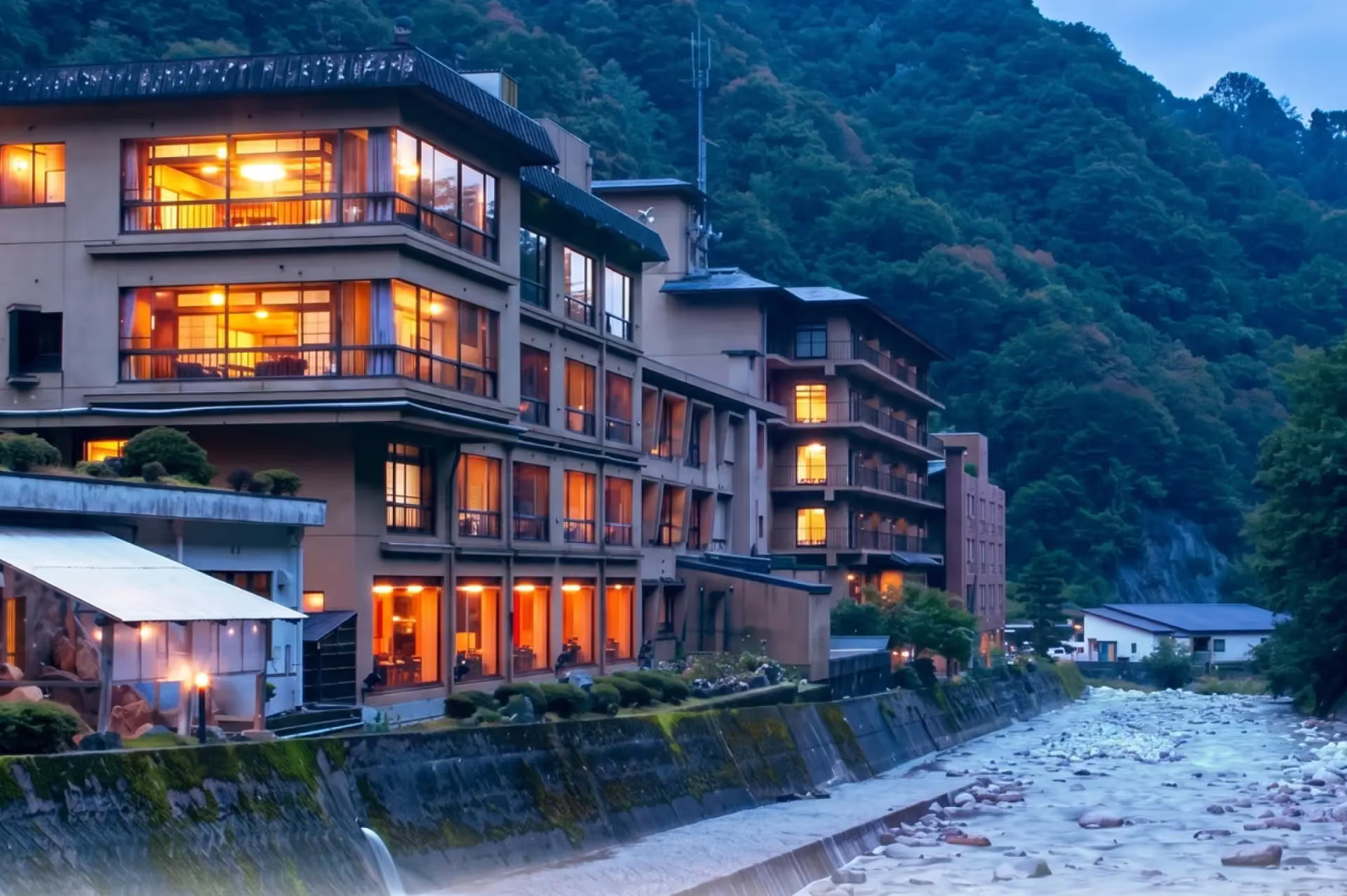
Sulfate springs often have little strong odor and a calm appearance. Rather than having the obvious character of sulfur springs or iron springs, they are easier to understand as a type where you notice the difference in how warm you feel afterward or how the water feels on your skin.
Even if not as obvious as chloride springs, some people feel that their bodies do not cool down as easily after bathing. This tendency is especially associated with mirabilite springs (sodium sulfate springs), but experiences vary from person to person, so it cannot be stated definitively. On the other hand, in facilities with high spring temperatures, the water may warm your body more than expected, so it is safer to start with a short bath rather than staying in too long right away.
Because the water is gentle, those expecting a strong sensation or cloudy water may find it underwhelming. In that case, comparing it with sulfur springs, iron springs, or carbonated springs, which have stronger individual character, can actually make the calmness of sulfate springs easier to appreciate.
Representative hot spring areas
Sulfate springs are distributed throughout Japan. Hoshi Onsen in Gunma, Akiu Onsen in Miyagi, and Yumura Onsen in Hyogo are well known, but many of them are complex springs that also contain chloride or bicarbonate components. For that reason, even among sulfate springs, the impression can differ greatly from one region to another.
| Hot spring area | Location | Tendency |
|---|---|---|
| Hoshi Onsen | Gunma Prefecture | A calcium-sodium sulfate spring system. Known for its secluded mountain inn |
| Akiu Onsen | Miyagi Prefecture | A complex spring with chloride components. A historic spa destination |
| Yumura Onsen | Hyogo Prefecture | A high-temperature sodium-bicarbonate, sulfate, and chloride spring system |
The spring qualities and tendencies listed here are only examples, and the composition can differ from one source to another even within the same hot spring area. When choosing a destination, it is easier to avoid disappointment if you also check whether it is gensen kakenagashi, whether there is dilution or heating, and whether the temperature suits you.
Precautions when drinking the water
Sulfate springs are sometimes introduced as drinking springs as well. The Ministry of the Environment’s guidance generally lists the following drinking indications for sulfate springs: biliary dysfunction, hypercholesterolemia, and constipation. However, this applies only to facilities where drinking is permitted; not all sulfate springs can be drunk.
Drinking should be done only at places with dedicated drinking facilities and where drinking is clearly permitted. The amount and frequency also vary by facility, and the water may not suit you depending on your health condition or medical history. Rather than casually drinking source water as part of sightseeing, always follow the guidance on site. Bathing and drinking are completely different uses, and it should also be remembered that soaking in the water does not mean you will gain the same indications as drinking it.
Frequently asked questions
What are sulfate springs said to be good for?
According to the Ministry of the Environment’s guidance, the generally listed bathing indications include cuts, peripheral circulatory disorders, sensitivity to cold, and dry skin, while the drinking indications include biliary dysfunction, hypercholesterolemia, and constipation. However, these indications are based on repeated use over a certain period, and this article does not claim effects. Individual responses vary greatly, so excessive expectations are not advisable.
What is the difference between gypsum spring and mirabilite spring?
Both are sulfate springs, but the cation combined with the sulfate ion is different. Gypsum spring is the traditional name for calcium sulfate spring, while mirabilite spring is the traditional name for sodium sulfate spring. Mirabilite springs are sometimes said to provide warmth after bathing, but experiences vary from person to person. Magnesium sulfate springs are called epsomite springs and are relatively rare in Japan.
Is it okay to bathe if I have a wound?
Although they are called “wound springs,” this does not mean that open wounds or areas under treatment should be exposed to the water. Suitability depends on the condition of the wound, and self-judgment is not recommended. If you are unsure, avoid bathing and follow the advice of a doctor or the facility.
Can you tell a sulfate spring just by looking at it?
It is difficult to tell. Sulfate springs are often colorless and transparent with a mild scent, making them hard to distinguish from simple hot springs by appearance alone. The most reliable method is to check the spring quality name on the analysis sheet posted in the changing room or bath area.
Where can I bathe in a sulfate spring?
They are found throughout Japan, and Hoshi Onsen in Gunma, Akiu Onsen in Miyagi, and Yumura Onsen in Hyogo are well known. Many are complex springs that also contain chloride or bicarbonate components, so even sulfate springs can feel quite different depending on the area.
Summary
A sulfate spring is a therapeutic hot spring containing at least 1,000 mg/kg of sulfate ions (SO₄²⁻), and it has long been called a “wound spring.” Depending on the cation it is combined with, it is classified as calcium sulfate spring (gypsum spring), sodium sulfate spring (mirabilite spring), or magnesium sulfate spring (epsomite spring). It is often colorless and transparent with a calm appearance, so checking the analysis sheet or posted information on site is the most reliable approach.
As a traveler, you can enjoy it fully without overinterpreting its benefits from the name alone by understanding the differences in bathing feel between types and the fact that its character changes from place to place as a complex spring. Drinking should be done only at permitted facilities, and if you have a wound or any health concerns, the basic rule is not to push yourself. For the full overview of spring types, please see The Guide to Hot Spring Types.
