Basic Knowledge and IntroductionUnderstanding Hot Spring Culture
Japan Bathing Facilities: 8 Types and How to Choose
Compare Japan’s bathing options at a glance: onsen ryokan, day-use hot springs, public bathhouses, super sento, health lands, sauna facilities, spa resorts, and capsule hotel baths by features, fees, amenities, and ideal users.
Published: Oct 22, 2025
Basic Knowledge and IntroductionUnderstanding Hot Spring Culture
Japan Bathing Facilities: 8 Types and How to Choose
Compare Japan’s bathing options at a glance: onsen ryokan, day-use hot springs, public bathhouses, super sento, health lands, sauna facilities, spa resorts, and capsule hotel baths by features, fees, amenities, and ideal users.
Published: Oct 22, 2025
Japan has an astonishing number of places to bathe. Onsen ryokan, day-use hot springs, public bathhouses, super sento, health lands, sauna-focused facilities, spa and bathing resorts, and even large baths attached to capsule hotels in major cities all look like places to take a bath, yet fees, stay length, amenities, and atmosphere differ greatly. It is only natural that travelers feel confused.
The short answer is this: instead of memorizing facility names, it is easier to choose by use case. Do you want to soak in hot springs slowly while staying overnight, stop by for only a few hours between sightseeing, make sauna the main purpose, or sweat it out near the station late at night? Once your goal is clear, the right type usually narrows down to one.
This article serves as a broad overview of Japan’s main bathing facility types, comparing their features, fee ranges, amenities, and ideal users across the board. The legal distinction between an onsen and a public bathhouse, including the Onsen Law, the Public Bathhouse Law, and price controls, is covered in the difference between onsen and sento, so this guide focuses on how to choose the facility type itself.
Quick Comparison by Type
To help you grasp the big picture first, here is a list of representative facility types. Fee ranges are shown as rough guides, and they vary widely depending on the facility, region, and season. Treat them only as a way to compare overall scale.
| Facility type | Main purpose | Typical features | Fee range (guide) | Best for |
|---|---|---|---|---|
| Onsen ryokan | Stay overnight and enjoy hot springs and meals | Large baths, open-air baths, room service dining, and a stay designed as one full experience | Included in lodging fee, usually high and highly variable | Travelers who want the whole trip to revolve around hot springs |
| Day-use hot springs | Short to medium bathing only | Mainly natural hot spring baths and open-air baths | Low to medium | People who want to enjoy hot springs during a break in transit |
| Public bathhouse | Daily bathing for local residents | Simple layout centered on bathtubs, washing areas, and changing rooms | Low, with uniform local pricing | People who want an affordable taste of everyday city culture |
| Super sento | Leisure and a few hours of relaxation | Many baths, saunas, dining, and rest areas | Medium, set freely by each facility | People who value variety and comfort |
| Health land | All-day relaxation | Large baths, naps, entertainment, and dining all in one place | Medium, set freely by each facility | People who want to spend the whole day there |
| Sauna-focused facility | Sauna and hot-cold cycling as the main attraction | Specialized sauna rooms, cold plunge bath, and outdoor air rest areas | Medium | People who want to spend time mainly in the sauna |
| Spa and bathing resort | High-quality bathing and relaxation | Refined interiors, and sometimes treatment services | Medium to high | People who prioritize comfort and atmosphere |
| Capsule hotel bath | Easy bathing near the station with lodging | Large baths, sauna, and simple overnight stay | Medium | People who want a convenient stay and bath in the city |
This table shows general tendencies. Even within the same super sento category, some facilities draw natural hot spring water while others do not, so the real differences between individual facilities can be large. Below, let us look at each type in a little more detail.
Onsen Ryokan: An Experience Where Lodging and Hot Springs Become One
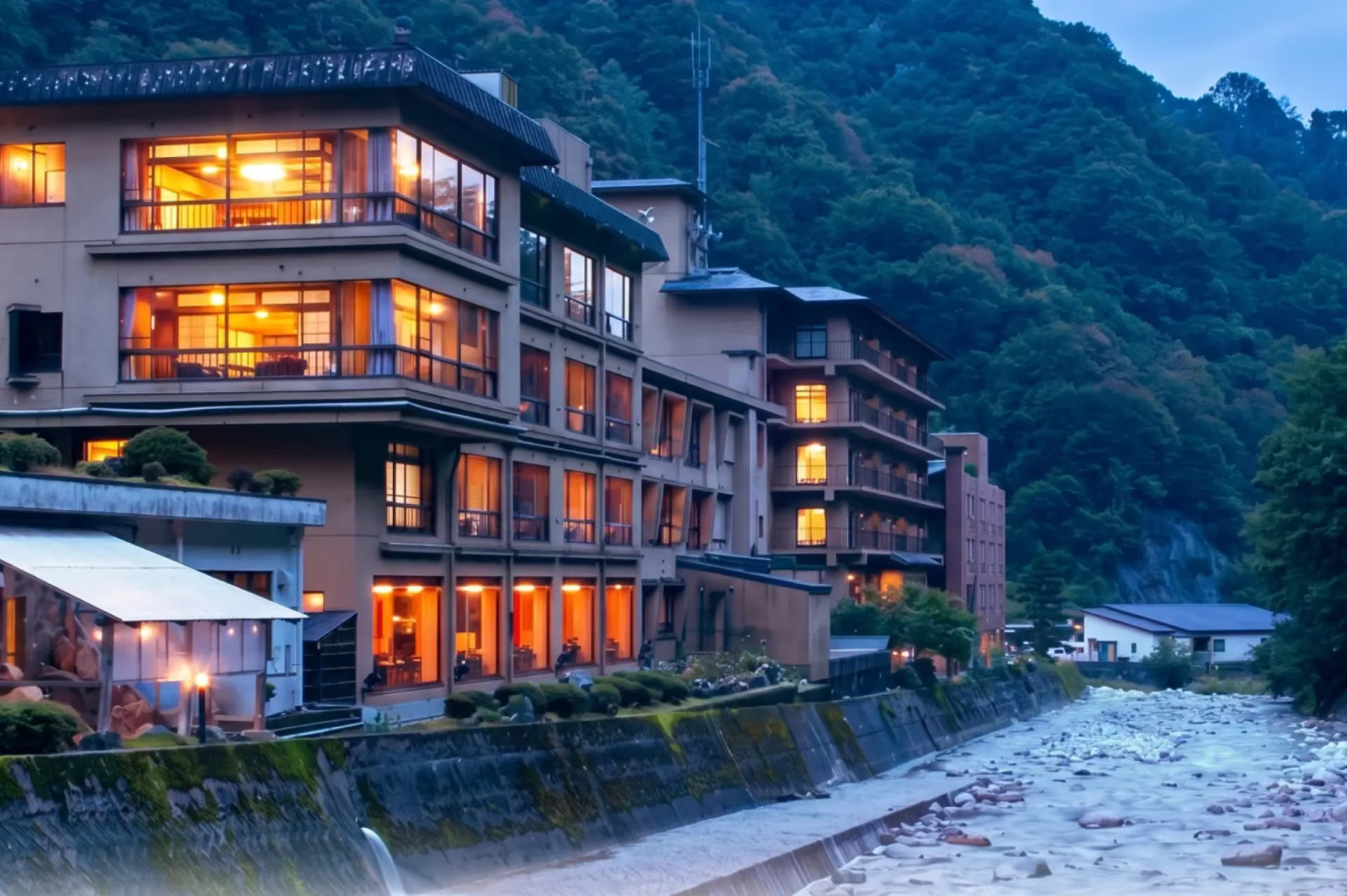
An onsen ryokan is a facility that combines lodging, hot springs, meals, and hospitality into one complete experience. After check-in, you can soak in the water again and again, enjoy local dishes in your room or at the dining area, and stroll through the hot spring town in a yukata. More than the bath itself, the entire stay becomes the feeling of having come to hot springs.
Because the price is included in the lodging fee, the range is wide, from budget-friendly inns to luxury ryokan. Many ryokan also accept day-use bathing, but their true value is easier to appreciate when you stay overnight. They are best for people who want hot springs to be the centerpiece of their trip and for those who want to experience hot spring towns and ryokan culture itself. JNTO also recommends staying at a ryokan for a full hot spring experience.
Day-Use Hot Springs: Easy Bathing Without an Overnight Stay
Day-use hot springs are facilities you can visit for bathing only, without staying overnight. They are centered on natural hot spring baths and open-air baths, making them convenient when you want to enjoy hot springs for a few hours between sightseeing or during a transfer. In hot spring areas, there are also many facilities designed for day visitors, such as ryokan outdoor baths and communal baths.
Fees are more affordable than onsen ryokan, and many facilities rent towels and amenities for an additional charge. For travelers who do not want to carry much luggage, whether you can drop in empty-handed is also an important factor. This is a good choice for people who do not plan to stay the night but do not want to miss natural hot springs.

Public Bathhouses: Community Baths Rooted in Daily City Life
Public bathhouses support the everyday bathing habits of local residents. They are often found in residential neighborhoods and older downtown districts, and their basic layout is simple, centered on bathtubs, washing areas, and changing rooms. The facilities may not be flashy, but they are also places where Japanese daily culture can be seen in its most unvarnished form. From Mt. Fuji painted on the wall to old-fashioned counters and modern design bathhouses, the local character is part of the fun.
Fees are low and almost uniform within each area because public bathhouses are designed as daily infrastructure with controlled pricing. For the policy background, see the difference between onsen and sento. They are ideal for people who want to enjoy a large bath in the middle of the city, side by side with local residents rather than in a tourist spot. Note that the water in public bathhouses is often heated tap water rather than natural hot spring water.
Super Sento: A Leisure Facility with Extensive Amenities
Super sento are large leisure bathing facilities that bring together multiple baths, various saunas, open-air baths, dining areas, and rest spaces in one place. With many types of baths, they are appealing because you can spend about half a day relaxing in indoor clothes. They are also popular with families and groups.
Prices are set freely by each facility. They are generally more expensive than public bathhouses but more affordable than onsen ryokan. Many facilities also include ganban yoku, usually for an additional fee. The features of ganban yoku are covered in What is ganban yoku?. This type is suited to people who value abundant amenities and comfortable stays, as well as those who want to try many kinds of baths at once.
Health Land: A Full-Day Comprehensive Facility
Health land is a larger, more comprehensive version of a super sento, where bathing, nap rooms, reclining chairs, dining, massage, and entertainment corners can all be enjoyed in one building. It is designed for all-day stays and, in some cases, long visits that include sleeping lightly.
The line between health land and super sento is blurry, and the naming is often based on each facility’s own branding. What they have in common is that they offer not just baths, but a full package of relaxation and time-killing options. They are suitable for people who want to take it easy for a whole day and for those who need a long stay on rainy days or between transfers.
Sauna-Focused Facilities: Sauna and Hot-Cold Cycling Take Center Stage
Sauna-focused facilities are designed around the sauna experience. They are characterized by carefully controlled sauna temperature and humidity, distinct löyly methods, and well-developed cold plunge bath and outdoor air rest areas. Rather than bathing, the main purpose is sauna and hot-cold cycling, the so-called state of perfect relaxation.
There are several sauna styles, such as dry, löyly, steam, and salt saunas, and the main offering differs by facility. The differences in experience are explained in detail in Types of Japanese Saunas. This type is best for people who want sauna to be the purpose of the trip and for those who seek a serious sauna rather than a bonus feature inside a bathing facility.
Spa and Bathing Resorts: Emphasis on Quality and Atmosphere
Spa and bathing resorts prioritize the quality of bathing and rest, as well as the atmosphere of the space. They may feature refined interiors, quiet relaxation lounges, and sometimes treatment or esthetic services. Rather than aiming to intensify the experience, they lean toward a gentle and unhurried kind of relaxation.
Prices tend to be higher than at super sento, but they are worthwhile for people who want to avoid crowds and spend time in a calmer environment. This type is suited to those who value quiet over liveliness and quality in every detail over sheer quantity of amenities.
Capsule Hotel Baths and Urban Large Baths: Easy and Close to the Station
In urban areas, many capsule hotels and business hotels have large baths and saunas attached. Their strengths are being close to stations, working together with lodging, and staying open late at night or early in the morning. They are convenient when you want to take care of both bathing and sauna in one go during a business trip, a layover, or a night after missing the last train.
Some facilities also accept bathing visits from non-guests. They are ideal for people who want to keep travel costs down while prioritizing transportation convenience, and for those who want to move lightly around the city as a sightseeing base. They are often heated water rather than natural hot spring water, but location and convenience more than make up for that.
Five Axes for Identifying Facility Types
You do not need to memorize every type name. If you look at the following five axes, you can tell what kind of facility you are dealing with.
- Water: natural hot spring water or heated water.
- Location: hot spring area and tourist area, or city center and near a station.
- Length of stay: short visit, or several hours to all day.
- Purpose: bathing, sauna, meals, and rest.
- Atmosphere: tourist-oriented, local everyday life, or quiet and premium.
If you apply these five points, you can make an educated guess: for example, natural hot spring water, hot spring area, overnight stay, full experience, and tourist-oriented points to an onsen ryokan, while heated water, near a station, short stay, bathing and sauna, and easy access points to a capsule hotel bath. If you want a private bath or a way to avoid being seen in public, see Hot spring options for people who do not want to bathe in front of others.
Frequently Asked Questions
Are all super sento natural hot springs?
No. Some facilities draw natural hot spring water, but many super sento use heated water. Whether a facility is a natural hot spring varies from place to place, so if that is your priority, it is best to check in advance.
What is the difference between a day-use hot spring and an onsen ryokan?
A day-use hot spring is a facility you visit for bathing only without staying overnight, while an onsen ryokan is a place where you stay overnight and enjoy the entire experience, including hot springs, meals, and hospitality. Even with the same natural hot spring water, the way you choose changes depending on whether you want only a bath or the trip itself to be centered around it. Many onsen ryokan also accept day-use bathing.
What is the difference between a super sento and a health land?
There is no clear line, and the naming depends on each facility’s own branding. In general, health lands tend to be more comprehensive, with nap spaces, entertainment, and dining, making it possible to spend the whole day there, but the boundary has become increasingly unclear in recent years.
Which facility is best if I only want to enjoy the sauna?
A sauna-focused facility is the best fit, but you can also use saunas at super sento, health lands, and capsule hotel baths. If you care most about the type of sauna room and the quality of the cold plunge bath and outdoor air rest, you are more likely to be satisfied with a sauna-focused facility.
How can I bathe easily and cheaply in the city?
A neighborhood public bathhouse or an urban large bath attached to a capsule hotel is convenient. Public bathhouses are inexpensive and let you experience local everyday culture, while capsule hotel baths are close to stations and easier to use late at night or early in the morning.
Conclusion
Japan’s bathing facilities are diverse: onsen ryokan, day-use hot springs, public bathhouses, super sento, health lands, sauna-focused facilities, spa and bathing resorts, and capsule hotel baths. Each differs in purpose, amenities, price range, and atmosphere. The five key axes for telling them apart are water, location, length of stay, purpose, and atmosphere.
The important thing is not to choose because a place is famous, but to decide first what you want to experience on this trip. Once your goal is clear, the right facility type naturally narrows down. If you find a type that interests you, search for real facilities from the facility list and choose one that fits your itinerary.