Japanese Onsen & Sauna Guide
All Articles
Explore our full library of guides on Japanese onsen and sauna culture, covering knowledge, enjoyment, etiquette, and history.
Japanese Onsen & Sauna Guide
All Articles
Explore our full library of guides on Japanese onsen and sauna culture, covering knowledge, enjoyment, etiquette, and history.
274 articles in total
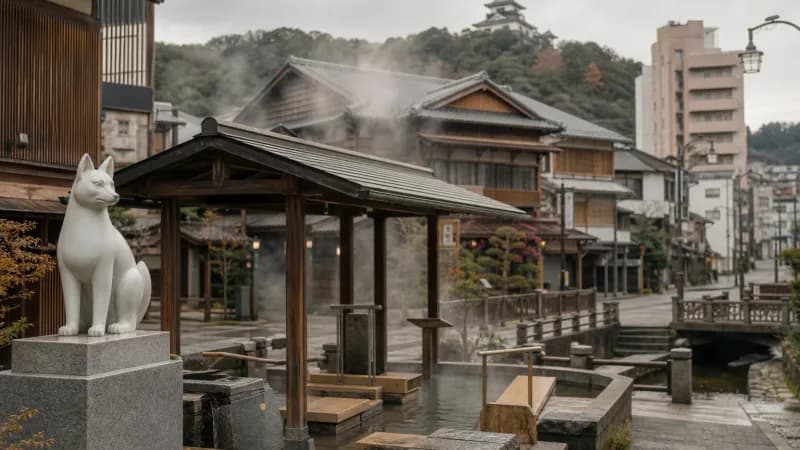
Yuda Onsen Guide: White Fox Legend and Soft Hot Spring Waters
Explore Yuda Onsen near central Yamaguchi City, from the white fox legend, silky alkaline simple spring water, and foot baths to its Bakumatsu ties, Chuya Nakahara, and access from Shin-Yamaguchi Station.
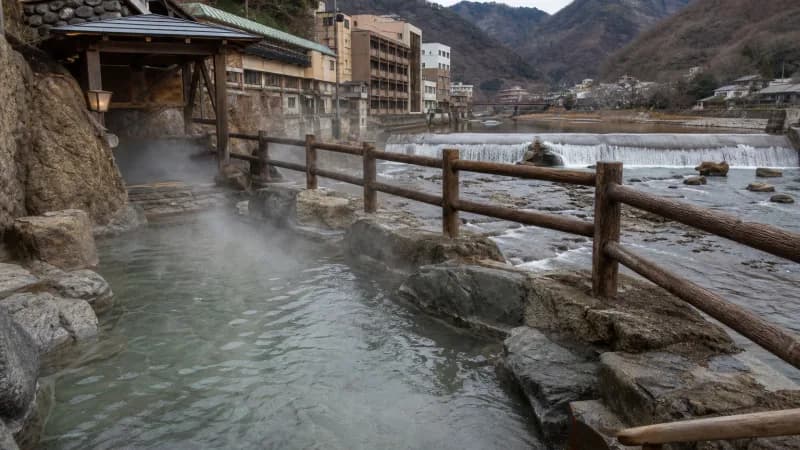
Yubara Onsen Guide: Sand Bath and Top-Ranked Open-Air Bath
Explore Yubara Onsen in Maniwa, Okayama. Learn about the famous Sand Bath, praised as the “West Yokozuna,” its soft alkaline simple spring water, Hanzaki Center, and access notes with official guidance.
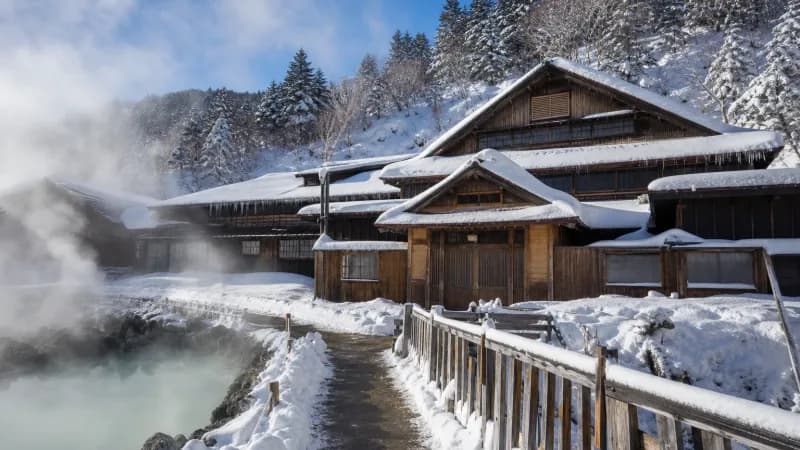
Sukayu Onsen Guide: Hiba Senninburo and Snowy Hakkoda
Explore Sukayu Onsen at the foot of Hakkoda in Aomori, known for Hiba Senninburo, a milky strong-acid sulfur spring, mixed bathing, women-only hours, heavy snow, and winter access tips.
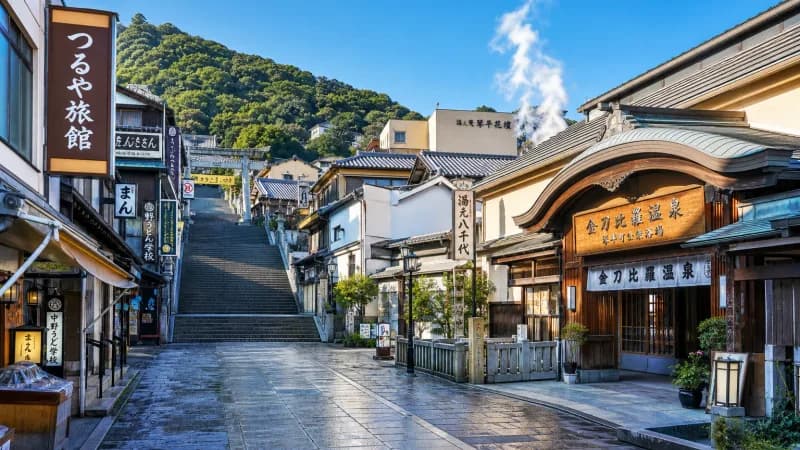
Kotohira Onsen Guide: Kagawa Hot Spring Town by Kotohira-gu Shrine
Explore Kotohira Onsen, the hot spring town in Kotohira, Kagawa, set in front of Kotohira-gu Shrine, also known as Kompira-san. From the 785 stone steps to Sanuki udon, Kanamaruza, and access via Kotohira Station, this guide covers what matters.
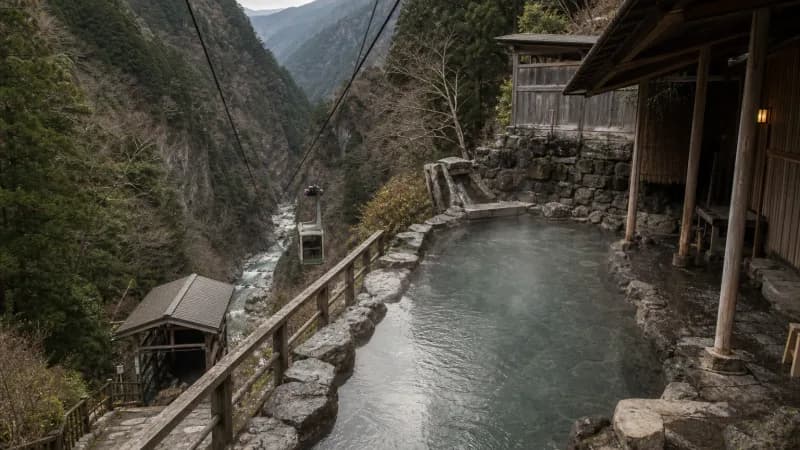
Iya Onsen Guide: Hidden Gorge & Cable Car Open-Air Bath
Explore Iya Onsen in Miyoshi, Tokushima, a hidden gem in the deep Iya Gorge of the Shikoku mountains. Learn about the gorge-side open-air bath reached by cable car, Iya Kazurabashi, Oboke and Koboke, soft alkaline sulfur spring water, and access via narrow mountain roads.
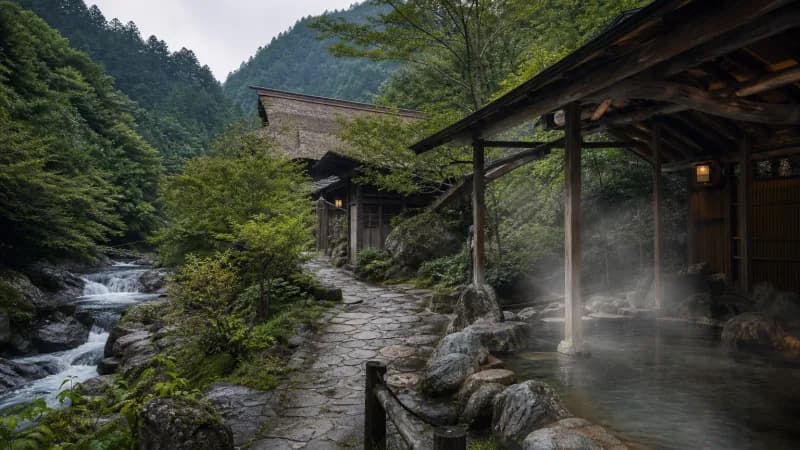
Ryujin Onsen Guide: Wakayama’s Hidden Beauty Bath
Explore Ryujin Onsen in Ryujin Village, Tanabe, Wakayama. Learn why it is counted among Japan’s three beauty baths, its silky sodium bicarbonate spring, the Kobo Daishi legend, and access via the scenic Koya-Ryujin Skyline.

Nikko Yumoto Onsen Guide: Oku-Nikko, Sulfur Springs
Explore Nikko Yumoto Onsen in Oku-Nikko, Tochigi, on the shores of Lake Yunoko at about 1,500 m. Learn about its milky sulfur springs, Yunotaira Marsh, Nikko National Park, the Nikko World Heritage shrines, winter snow views, and access via Irohazaka, based on official guidance.

Nanki-Katsuura Onsen Guide: Cave Baths and Nachi Falls
Explore Nanki-Katsuura Onsen in Nachikatsuura, Wakayama Prefecture: a seaside hot spring town facing the Pacific, famed for Hotel Urashima’s sea-cave baths Bokokudou and Genbudo, UNESCO-listed Kumano shrines, Katsuura Port’s fresh tuna, sulfur and sodium-chloride springs, and Kuroshio access.

Minakami Hot Spring Guide: 18 Baths and Outdoor Base
Explore Minakami Onsen in Minakami, Gunma, at the foot of Mt. Tanigawa along the upper Tone River. Discover area-by-area bath styles, Takaragawa Onsen, diverse spring types, rafting, Tanigawa Ropeway, and easy access from Tokyo.
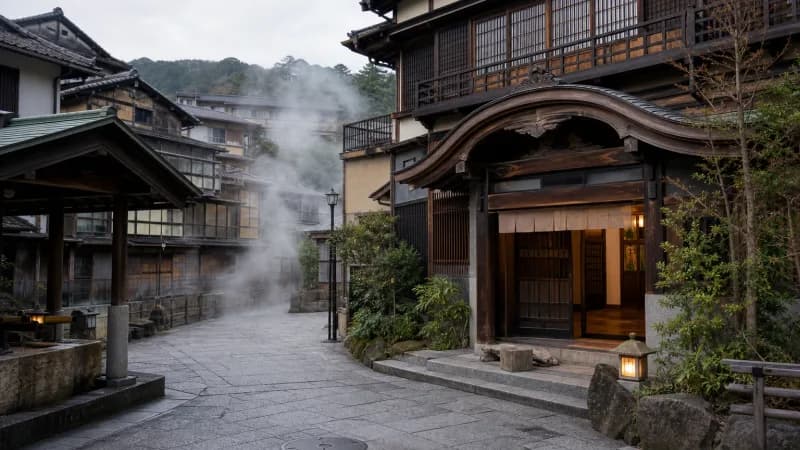
Awazu Onsen Guide: Kaga’s Ancient Hot Spring Inn
Explore Awazu Onsen in Komatsu, Ishikawa, from its legend of being discovered by Taicho around 1,300 years ago to Hoshi, a long-established ryokan once said to be the world’s oldest inn. See Soryu, the Oshobe Festival, sodium sulfate-chloride springs, Natadera, Kaga Onsenkyo routes, and access tips.