
Tips for a Successful TripAnxiety Relief
Why Japanese Hot Springs Are Nude, and When Swimsuits Are Allowed
Why do Japanese hot springs require nudity? Learn the hygiene and gender-separated design behind the rule, plus where swimsuits are allowed and options for shy first-timers.
Published: Apr 14, 2026
Tips for a Successful TripAnxiety Relief
Why Japanese Hot Springs Are Nude, and When Swimsuits Are Allowed
Why do Japanese hot springs require nudity? Learn the hygiene and gender-separated design behind the rule, plus where swimsuits are allowed and options for shy first-timers.
Published: Apr 14, 2026
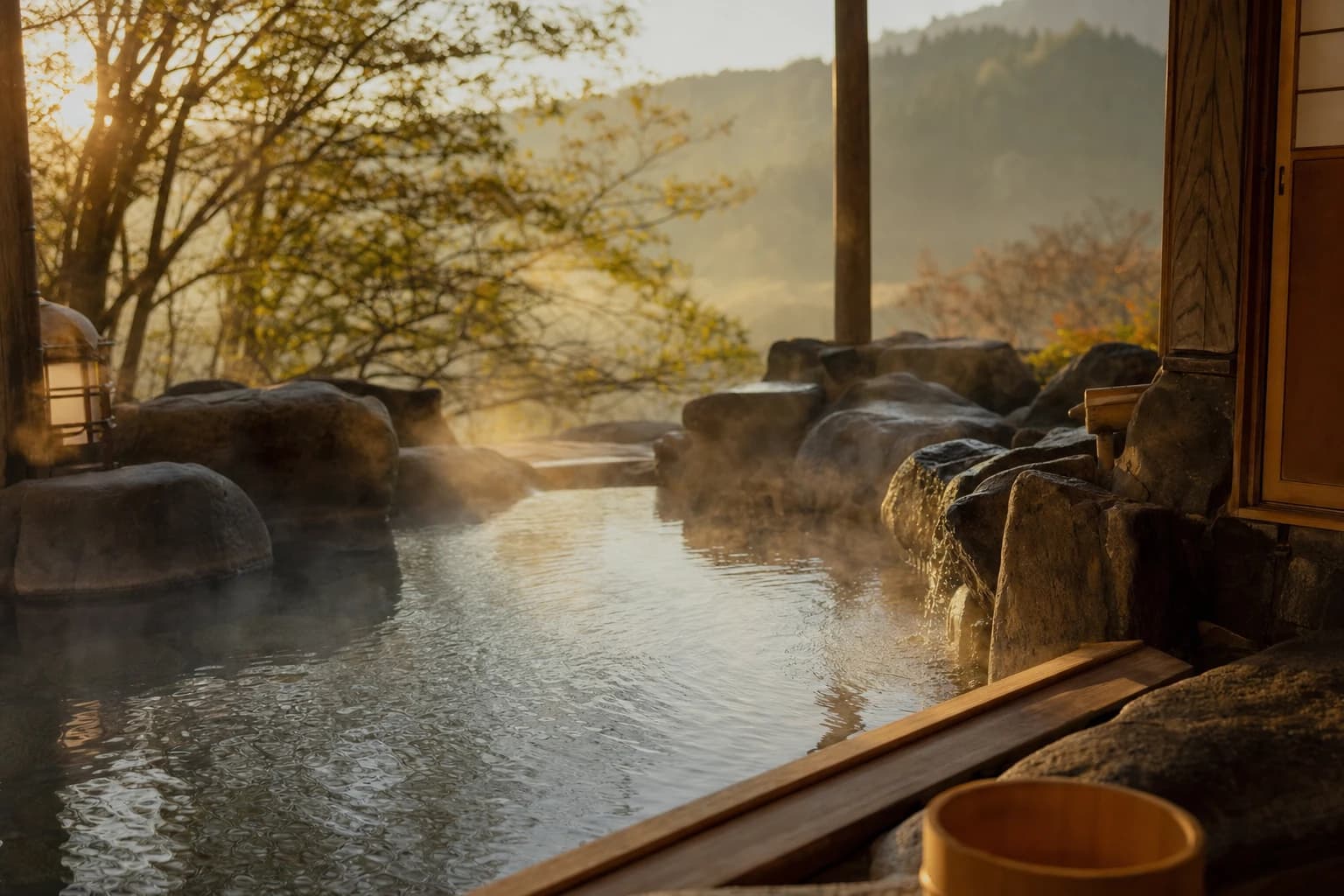
Japanese hot springs are basically enjoyed nude. For many visitors to Japan, this is one of the biggest cultural differences they notice.
In short, the reasons for nude bathing come down to two things. One is hygiene—washing your body and sharing clean water with others. The other is the gender-separated design. And not every facility is nude-only; some do allow swimsuits. Let’s break it down.
Reason 1: To share clean water with everyone
In Japan, the bath is not a place to wash your body, but a place to warm up after washing. That is why people rinse off with hot water before entering.
This is more than just a personal habit. Japan’s Ministry of Health, Labour and Welfare says in its sanitation guidelines for public baths that when sweat, sebum, and other organic matter are brought into the water, bacteria can multiply more easily by feeding on them, so bathwater should be kept clean. Keeping dirt out of the water is also important for preventing Legionnaires’ disease.
If you enter while wearing a swimsuit, sweat, fibers, and detergent residue trapped in the fabric are more likely to get into the water. Entering nude after washing is a rational system for sharing clean water among many people. We explain the custom of washing before bathing in more detail in Why Do Japanese People Wash Before Bathing?.
Reason 2: Gender separation makes nude bathing feel comfortable
Another basic assumption is gender separation. Many Japanese hot springs are designed with separate changing rooms, washing areas, and baths for men and women, so the space itself assumes nude bathing.
Historically, mixed bathing used to be common, but it was restricted during the Meiji era. In 1872, Tokyo Prefecture banned mixed bathing under the “Ishiki Kaigi Ordinance,” and in 1900, a Ministry of Home Affairs order effectively banned mixed bathing at public baths nationwide. Through this transition, the current norm of separate baths for men and women became established. For more details, see Why Are Japanese Hot Springs Usually Gender-Separated?.
Facilities where nude bathing is standard, and where swimsuits are allowed
Not all hot spring facilities are nude-only. The expected attire depends on the type of facility.
| Facility type | Attire | Notes |
|---|---|---|
| Large baths at hot spring inns, communal baths, sento | Nude, gender-separated | The standard form of Japanese bathing |
| Private baths / in-room open-air baths | Nude, without worrying about being seen | Good for families, couples, and people with tattoos |
| Swimsuit areas in spa facilities | Swimsuit | Separate from ordinary large baths |
| Surviving mixed-bathing baths | Bathing wear or towels allowed, depending on the facility | Numbers are declining. Check in advance |
In other words, “Japanese hot springs = always nude” is not quite accurate. If you remember that ordinary large baths and communal baths are usually nude-only, you will be less likely to get confused.
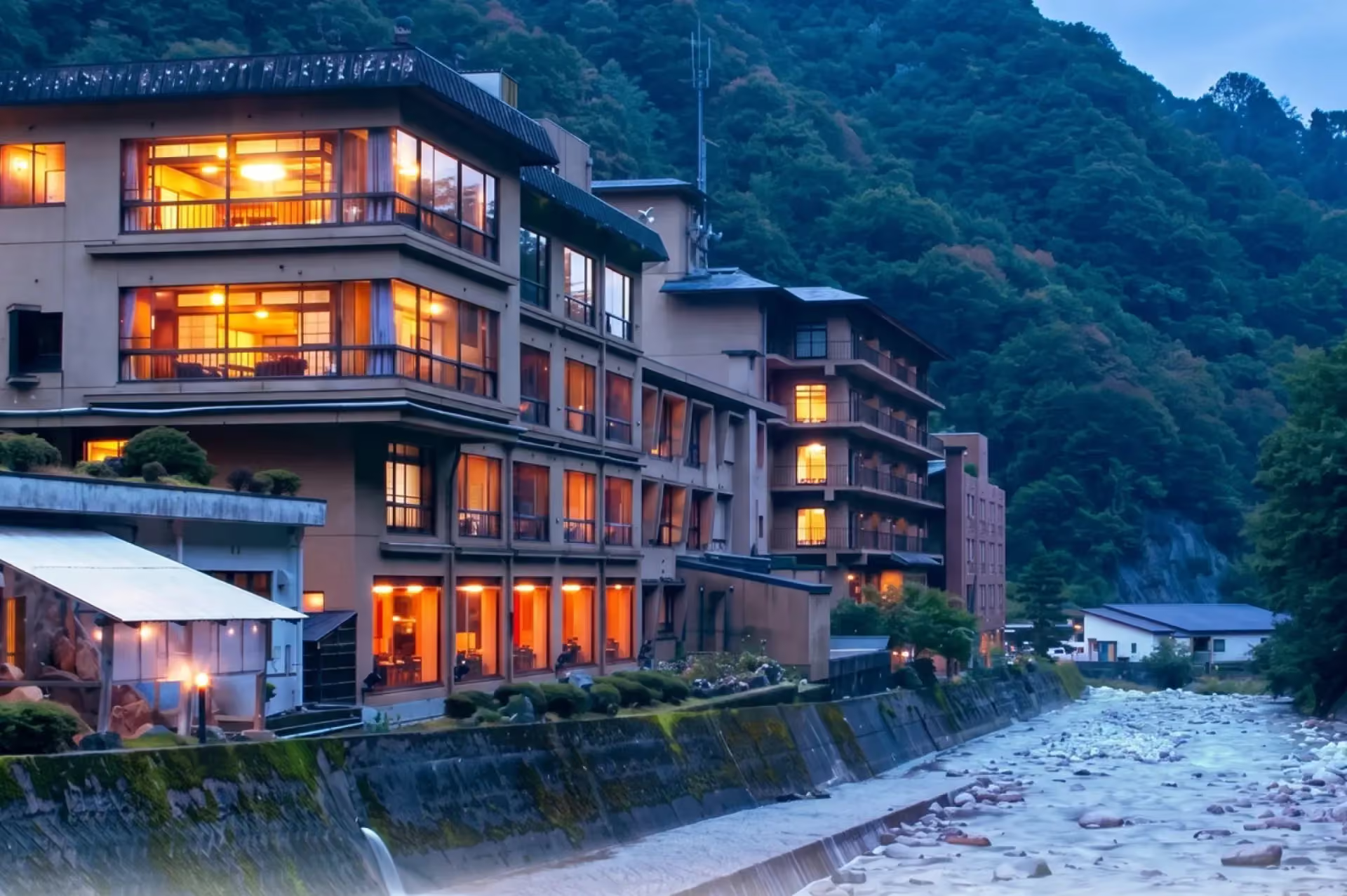
Options if you feel uncomfortable going nude
If you feel uneasy about entering a communal bath nude, there is no need to force yourself into a large bath. Private baths and in-room open-air baths let you relax without worrying about being seen, and there are also spa facilities where swimsuits are allowed. You can even start with alternatives for people who dislike public baths.
How to handle embarrassment is also covered in For People Who Feel Shy About Nudity. Starting with a format you can accept more easily often makes it easier to gradually get closer to Japanese hot spring culture.
Can you use a towel to cover yourself?
It is fine to bring a small towel into the bath area and use it to cover yourself while moving around. However, you must not put the towel into the bath. This is also part of the custom for keeping the water clean, and it is common to place the towel on your head or leave it on the edge of the tub (Why Can’t You Put a Towel in an Onsen?).
Frequently asked questions
Are there hot springs where swimsuits are allowed?
At ordinary hot spring inns and communal baths, swimsuits are usually not allowed. If you want to enjoy a swimsuit-friendly experience, choose a spa facility with a swimsuit area.
Do men and women bathe together?
The basic rule is separate baths for men and women. If families or couples want to bathe together, they can use private baths or in-room open-air baths. Mixed bathing survives only in a few places.
What should I do if I feel embarrassed about nudity?
You do not need to force yourself into a large bath. You can start with another option, such as a private bath, in-room open-air bath, swimsuit spa, or foot bath.
Can I cover my body with a towel when entering?
You can cover yourself with a small towel while walking to the bath area, but you should not put the towel into the bath.
Can children enter the opposite sex bath with adults?
The age limit varies by municipality, but in many areas it is generally set from before school age to the lower grades of elementary school. It is reassuring to check with the facility before using it.
Summary
Japanese hot springs are nude because the culture combines a hygiene-based system for sharing clean water with many people and a gender-separated design. However, not every facility is nude-only; there are also exceptions such as private baths and facilities with swimsuit areas. If you feel uncomfortable, start with a format that suits you and ease your way into Japanese hot spring culture.
