
Thematic GuidesFamous Japanese Hot Springs
Yubara Onsen Guide: Sand Bath and Top-Ranked Open-Air Bath
Explore Yubara Onsen in Maniwa, Okayama. Learn about the famous Sand Bath, praised as the “West Yokozuna,” its soft alkaline simple spring water, Hanzaki Center, and access notes with official guidance.
Published: Jun 28, 2026
Thematic GuidesFamous Japanese Hot Springs
Yubara Onsen Guide: Sand Bath and Top-Ranked Open-Air Bath
Explore Yubara Onsen in Maniwa, Okayama. Learn about the famous Sand Bath, praised as the “West Yokozuna,” its soft alkaline simple spring water, Hanzaki Center, and access notes with official guidance.
Published: Jun 28, 2026
Yubara Onsen is a hot spring area in Maniwa, Okayama Prefecture, spreading along the upper reaches of the Asahi River. Its defining feature is the riverside open-air bath called Sand Bath, where hot water rises from the riverbed. It sits directly below Yubara Dam and is said to be open to the public free of charge. Known as an open-air bath without a roof, it has long been counted among Okayama’s leading hot spring destinations.
What travelers should first understand is that Yubara Onsen is a hot spring area where the riverside open-air bath takes center stage. The famous Sand Bath is a mixed-gender outdoor bath, and usage methods and opening conditions can change, so it is wise to check the latest official information before visiting. In this article, we organize the reputation surrounding Sand Bath and the open-air bath rankings, the nature of the water, Hanzaki Center, known for the Japanese giant salamander, and access and sightseeing tips, based on official information from sources such as the Yubara Onsen Ryokan Cooperative, with appropriate caution.
What kind of hot spring area is Yubara Onsen?
Yubara Onsen is located in Maniwa City in northern Okayama Prefecture, with inns clustered along the upstream valley of the Asahi River. The Asahi River flows through the Okayama Plain and into the Seto Inland Sea, and Yubara Dam was built in its upper reaches. Yubara Onsen spreads just downstream from that dam. Its mountain-and-river setting has shaped its identity as a hot spring area where outdoor open-air baths play the lead role.
Rather than being a large hot spring town, it is often described as a calm area where inns and bathing facilities line the river. At its heart is the famous Sand Bath, whose riverside, nature-integrated setting has become a symbol of the hot spring area. Beyond Yubara Onsen itself, nearby baths such as Maga Onsen and Taru Onsen are also included in the broader Yubara Onsen area, but this guide focuses on Yubara Onsen itself, home of the Sand Bath.
The famous Sand Bath and riverside open-air baths
No discussion of Yubara Onsen is complete without Sand Bath, the open-air bath where hot water springs from the riverbed. It is a roofless outdoor bath set on the gravel bank of the Asahi River, in the distinctive location directly below Yubara Dam. The name is said to come from the spring water rising naturally through the sand at the bottom, and it is known for its open feel with views of the river flow and the dam. It is generally said to be open free of charge 24 hours a day, but there are times when it cannot be used because of cleaning or rising water levels, so please check the latest status on the official guidance from the Yubara Onsen Ryokan Cooperative or similar sources before using it.
It is also important to note that Sand Bath is known as a mixed-gender open-air bath. The modern etiquette and mindset required for mixed bathing are covered in Modern Mixed Bathing, so it is a good idea to read that before visiting. Whether bathwear is allowed and the exact rules can vary by facility and season, so we will not make a definitive claim here and recommend checking the official information. Guidance on how to enjoy outdoor open-air baths and what to watch for can be found in Outdoor Open-Air Baths in Nature.
Because it is a free riverside outdoor bath, safety awareness is essential. Riverbank baths can become dangerous when heavy rain continues or when water is released from a dam, and it is necessary to avoid use when water levels rise. In addition, river stones and wet surfaces can be slippery, and lighting may be limited at night. When enjoying Sand Bath, the basics are to check for rising water, the condition of the footing, and the time of day, and use it only within safe limits.
The “West Yokozuna” and open-air bath rankings
Yubara Onsen is known for being labeled the “West Yokozuna” in rankings that compare open-air baths as if they were sumo wrestlers. Its openness and location have been highly praised, and it has often been described as one of the top open-air baths in Japan. This reputation has played a major role in boosting Yubara Onsen’s recognition.
However, there are multiple bath rankings created by different authors at different times, and the targets and ranking criteria are not always the same. The label “West Yokozuna” is an evaluation in a specific ranking, not the only absolute ranking. How these rankings are made and how they should be read is explained in Onsen Rankings, so rather than taking the reputation at face value, it is better to understand it in its cultural context. With that in mind, it is enough to know that Yubara Onsen has long been highly regarded for its open-air baths.
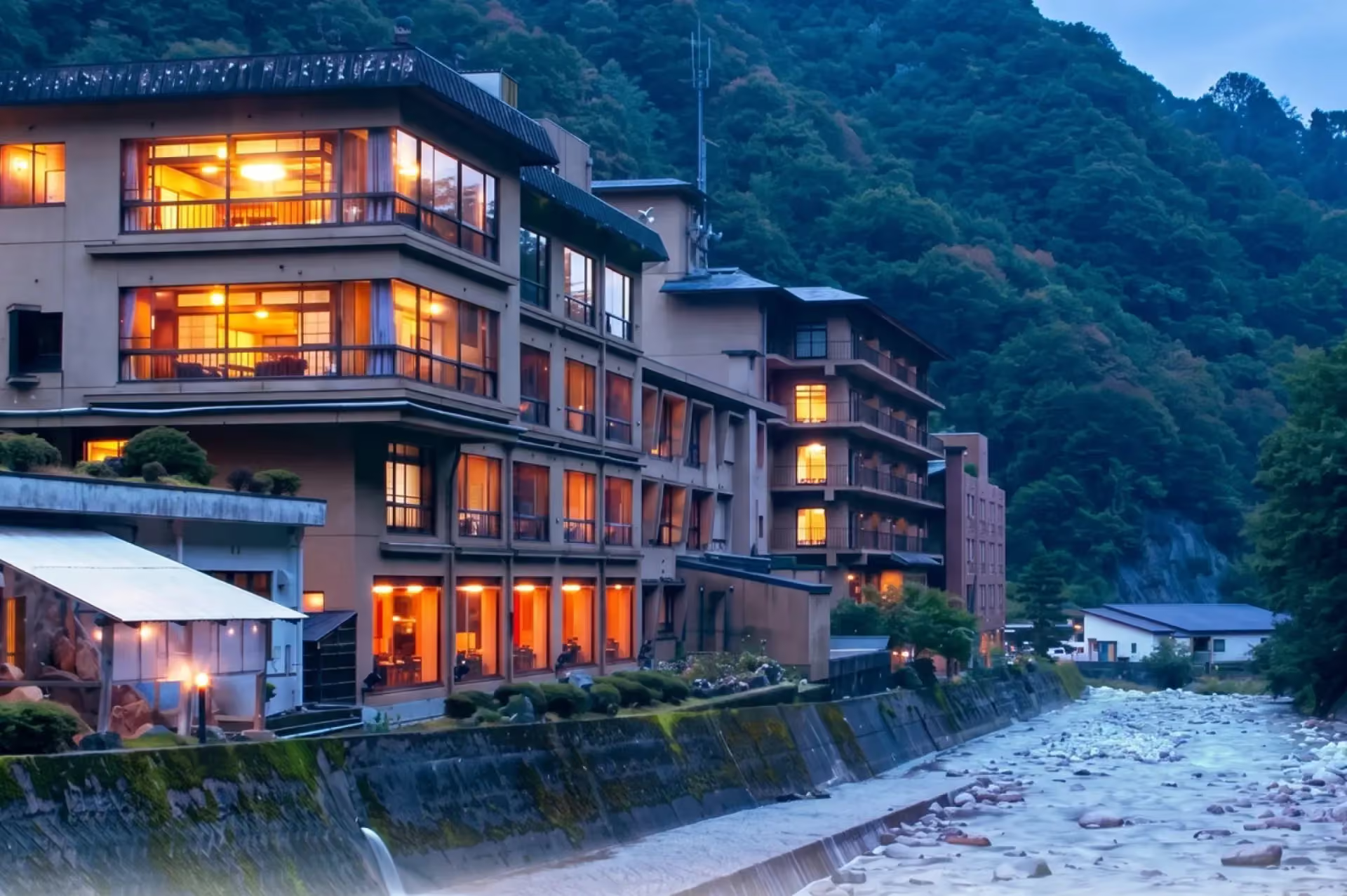
Quick look at Yubara Onsen highlights
Besides Sand Bath, there are several places around Yubara Onsen worth visiting. The table below summarizes the features of each spot and the approximate time needed. Since opening hours and conditions can change, please check the latest information on the official sites of each facility or the Yubara Onsen Ryokan Cooperative.
| Place | Features | Approx. time needed |
|---|---|---|
| Sand Bath | Riverside open-air bath where hot water rises from the riverbed. Said to be directly below Yubara Dam, mixed-gender, and free of charge | 30 minutes to 1 hour, depending on crowds and use conditions |
| Yubara Dam | A dam towering just above Sand Bath. Part of the view from the open-air bath | About 15 to 30 minutes for a walk |
| Hanzaki Center | Facility introducing the Japanese giant salamander, a Special Natural Monument | 30 minutes to 1 hour |
| Strolling through the hot spring town | A calm district of inns and bathing facilities along the Asahi River | 30 minutes to 1 hour |
This quick reference is only a guideline, and how you enjoy the area changes depending on the season, events, and the condition of the river and dam. In particular, because Sand Bath is a free outdoor bath, the hours of use and level of crowding can vary from day to day.
Soft water and spring quality
The water at Yubara Onsen is often introduced as a type of alkaline simple spring. Simple springs are those whose dissolved components do not meet certain thresholds, and they are known as easy-to-enter waters with little stimulation. Alkaline simple springs are often described as having a soft feel on the skin, but perceptions vary by person, and this article does not make any specific claims about effects.
The concept of simple springs is explained in detail in Simple Onsen. They are sometimes marketed as “beauty baths,” but that is only a common nickname and does not guarantee any effect. The quality of a bath is not determined only by how concentrated the minerals are; freshness of the source, whether water is added or heated, and the temperature range also affect the experience. If you want to know the exact spring name or ingredients, the most reliable source is the onsen analysis sheet posted in the changing room or bathing area of each facility. For an overview of the 10 types of therapeutic springs and the scientific classification of spring quality, see Onsen Spring Types Guide.
Please note that the labeling and numerical values may differ depending on the facility or source. Even within Yubara Onsen, the water conditions can vary from one inn or bathing facility to another, so if you want to know the character of the water, it is best to check the posted information on site.
Hanzaki Center and the Japanese giant salamander
Another highlight of Yubara Onsen is Hanzaki Center, which introduces the Japanese giant salamander. The Japanese giant salamander is a rare species designated as a Special Natural Monument of Japan, and it is known to inhabit the clear streams around Yubara Onsen. “Hanzaki” is the local name for the Japanese giant salamander, and it has long been loved as part of the region’s identity.
At Hanzaki Center, visitors can learn about the creature’s ecology and conservation through exhibits that include live Japanese giant salamanders. It is a popular stop not only for hot springs, but also for experiencing the region’s nature and culture, and many people visit it together with a walk through the hot spring town. Since opening hours, exhibits, and admission conditions can change, be sure to check the facility’s information or the Maniwa Tourism Bureau before visiting.
How to get around and access
The standard route to Yubara Onsen is by car via the Chugoku Expressway, then continuing on local roads from the nearest interchange. If using trains and buses, travelers are generally advised to combine the JR Kishin Line with buses from the Okayama or Yonago area toward Yubara Onsen. Because the area is in the mountains of northern Okayama Prefecture, the number of public transport services and travel times vary depending on the route, timetable, and season. Please be sure to check the latest schedules and service status on official sources before departure.
Once you arrive, the main activity is walking through the riverside hot spring town to visit Sand Bath and Hanzaki Center. Because Sand Bath is a free outdoor bath, it is best to plan your visit while checking crowd levels, usage status, and whether the river is rising. Since the area is mountainous, winter visits require preparation for snow and icy roads, so if you are going by car, be sure to check road conditions and dress warmly. If you are looking for inns or nearby bathing facilities in Yubara Onsen, we provide a facility list and a search page that let you filter by area and budget.
Who it is suitable for
Yubara Onsen is ideal for people who want to soak in an open-air bath integrated with the river, those who value scenic outdoor settings, and those who want to enjoy local nature along with hot springs. Sand Bath, where hot water rises from the riverbed, offers a completely different experience from an indoor bath with a roof, making it an attractive option for travelers who want open-air baths to be the main focus of their trip. If you want to compare famous hot springs across Japan, please also refer to Top Famous Hot Springs in Japan.
On the other hand, Sand Bath is a mixed-gender outdoor bath, and the usage method, opening status, and whether bathwear is allowed can change easily. If you are uneasy about mixed bathing or want to soak without worrying about being seen, it is a good idea to read Modern Mixed Bathing in advance and include inns with indoor baths or day-use facilities in your options. Because the experience centers on outdoor baths, weather, season, and river conditions can strongly affect plans, so be sure to account for that in advance.
Frequently asked questions
How can Sand Bath be used?
Sand Bath is a riverside open-air bath on the Asahi Riverbank, directly below Yubara Dam, and it is generally said to be open free of charge 24 hours a day. However, there are times when it cannot be used because of cleaning or rising water levels, and the fact that it is a mixed-gender outdoor bath, as well as whether bathwear is allowed, may vary depending on the season and operation. Please be sure to check the usage methods, opening conditions, and rules on official sources such as the Yubara Onsen Ryokan Cooperative. For mixed-bathing etiquette, see Modern Mixed Bathing.
What does “West Yokozuna” mean?
It means that Yubara Onsen is known for having been ranked as the “West Yokozuna” in an evaluation that compares open-air baths as if they were sumo wrestlers. However, there are multiple onsen rankings created by different authors at different times, and the targets and criteria are not the same, so it is not an absolute ranking. The background and how to read these rankings are explained in Onsen Rankings. It is best to understand it as one of several opinions.
What kind of spring quality does Yubara Onsen have?
It is often introduced as an alkaline simple spring, and its water is described as gentle with little stimulation. It is sometimes called a “beauty bath,” but that is only a common nickname and does not guarantee any effect. The idea of a simple spring is explained in Simple Onsen, and the overall classification of spring quality is covered in Onsen Spring Types Guide. Since labeling may differ depending on the facility or source, the on-site analysis sheet is the most reliable reference.
What safety precautions should I take when using Sand Bath?
Because Sand Bath is an outdoor riverbank bath, there is a risk of rising water when heavy rain continues or when water is released from the dam. If the water rises, it is necessary to avoid using the bath for safety. River stones and wet footing can also be slippery, and lighting may be limited at night. Please check for rising water, the condition of the footing, and the time of day, and use it only within safe limits.
What can I enjoy in Yubara Onsen besides the hot springs?
Hanzaki Center, which introduces the Japanese giant salamander, a Special Natural Monument, is well known and lets visitors experience the region’s nature and culture. The view of Yubara Dam towering just above Sand Bath and walks through the hot spring town along the Asahi River are also enjoyable. Since opening hours and exhibits may change, please check the information provided by the facility or the Maniwa Tourism Bureau.
Summary
Yubara Onsen is a hot spring area in Maniwa, Okayama Prefecture, along the upper reaches of the Asahi River, and its signature attraction is Sand Bath, a riverside open-air bath where hot water rises from the riverbed. Sand Bath is located directly below Yubara Dam and is generally said to be open free of charge 24 hours a day as a mixed-gender outdoor bath. It is also known for being ranked as the “West Yokozuna” in an evaluation that treats open-air baths like sumo rankings. Since rankings vary, and the usage, opening status, and bathwear rules for Sand Bath can change easily, checking official information is essential.
The water is often introduced as an alkaline simple spring and described as gentle, but its benefits cannot be stated definitively. There are also other attractions, such as Hanzaki Center, which introduces the Japanese giant salamander, and the view of Yubara Dam. At the same time, because the area centers on outdoor baths, plans should take into account weather, river conditions, safety during rising water, and consideration for mixed bathing. For travelers who want to build a trip around a spacious open-air bath integrated with nature, Yubara Onsen is a strong candidate.
