
Thematic GuidesFamous Japanese Hot Springs
Awazu Onsen Guide: Kaga’s Ancient Hot Spring Inn
Explore Awazu Onsen in Komatsu, Ishikawa, from its legend of being discovered by Taicho around 1,300 years ago to Hoshi, a long-established ryokan once said to be the world’s oldest inn. See Soryu, the Oshobe Festival, sodium sulfate-chloride springs, Natadera, Kaga Onsenkyo routes, and access tips.
Published: Jun 28, 2026
Thematic GuidesFamous Japanese Hot Springs
Awazu Onsen Guide: Kaga’s Ancient Hot Spring Inn
Explore Awazu Onsen in Komatsu, Ishikawa, from its legend of being discovered by Taicho around 1,300 years ago to Hoshi, a long-established ryokan once said to be the world’s oldest inn. See Soryu, the Oshobe Festival, sodium sulfate-chloride springs, Natadera, Kaga Onsenkyo routes, and access tips.
Published: Jun 28, 2026
Awazu Onsen is a hot spring area in Komatsu, Ishikawa Prefecture, and is regarded as the oldest of the four baths that make up Kaga Onsenkyo. Along with Yamanaka Onsen, Yamashiro Onsen, and Katayamazu Onsen, it forms part of Kaga Onsenkyo, and it is known for a legend of being opened about 1,300 years ago and for its long-established inns. For travelers seeking a hot spring destination in Hokuriku with a strong sense of history, it is one of the first names to consider.
What matters most for visitors is not just that it is one of the Kaga Onsenkyo resorts, but the sense of historical continuity symbolized by the opening legend and its long-established inns. Awazu Onsen is said to have been discovered by the monk Taicho, who is associated with opening Mount Haku, and the hot spring town has long preserved its bathing culture around the communal bath Soryu. This article organizes Awazu Onsen’s highlights, spring quality, the tradition surrounding the long-established inn Hoshi, Soryu and the Oshobe Festival, nearby sights such as Natadera, and access information, based on official sources such as the Awazu Onsen Tourism Association. Reading it together with the Yamanaka Onsen Guide and the Yamashiro Onsen Guide makes it easier to understand how the four hot spring areas differ.
Opening legend: the ancient hot spring said to have been discovered by Taicho
One of the essential stories in Awazu Onsen’s history is its opening legend. Awazu Onsen is said to have been discovered at this location by the monk Taicho, who is believed to have opened Mount Haku about 1,300 years ago, and the opening is also said to date to 718. The story that Taicho found the spring during his ascetic practices in the faith of Mount Haku is a common pattern among Japan’s old hot spring areas, where bathing and religion developed together.
That said, the date of the opening and Taicho’s involvement are more strongly preserved as legend than as something strictly verified by historical records. It is appropriate to treat the figures and the circumstances of the discovery with that caveat in mind. Even so, the opening legend itself is part of Awazu Onsen’s culture and has clearly helped shape the area’s identity. If you want to understand more about how hot springs developed alongside temples, shrines, and faith, The Relationship Between Hot Springs and Shinto/Buddhism also helps place the Taicho legend in context.
Hoshi, the long-established ryokan known for its long history
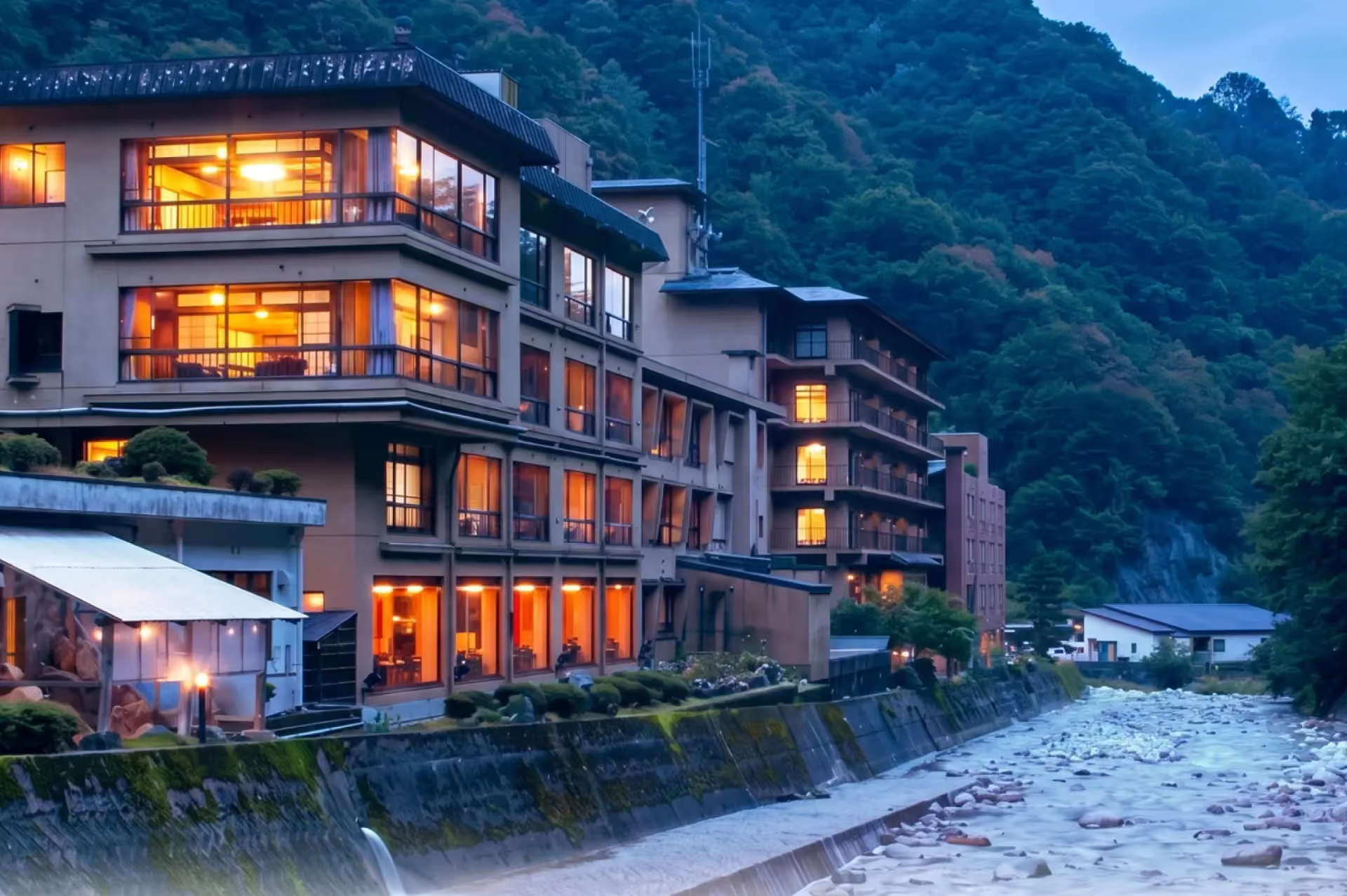
One of the names that made Awazu Onsen known nationwide is the long-established ryokan Hoshi. Hoshi is known as one of the world’s oldest inns, and its founding has been told as part of the opening legend of Awazu Onsen. It has also been described as having once been recognized by Guinness World Records as the world’s oldest inn, making it a symbol of the area’s deep history.
However, the status of any record related to the world’s oldest inn can change depending on the period, so it is best to confirm the current recognition officially. Regardless of record status, the fact that the inn has continued operating for such a long time speaks to the continuity of Awazu Onsen’s history. Many long-established ryokan like this preserve gardens, sukiya-style architecture, and other design elements shaped over many years. For a closer look at how hot spring inns are designed, Hot Spring Ryokan Architecture and Design offers useful context for viewing such historic properties.
Soryu and the Oshobe Festival: bathing culture and local ritual
The communal bath Soryu is a symbol of Awazu Onsen’s bathing culture. Soryu is the communal bath at the center of the area, where visitors can experience a bathing culture in which the hot water itself has long been shared by the community, separate from the baths inside ryokan. In Awazu Onsen, Soryu sits at the heart of the hot spring town, and the tradition of local people and travelers sharing the bath has been passed down for generations. Fees, opening hours, and facilities may change, so checking official information before use is the safest approach.
Among local festivals, the Oshobe Festival is well known. Based on a story about a woman named Oshobe passed down in Awazu Onsen, it is a festival in which dancing and other events take place in the hot spring town, connecting bathing culture with daily life in the community. Dates and details can vary from year to year, so please check the latest official information before your visit. If you time your stay to match the festival season, you may encounter a very different side of the hot spring town.
Spring quality: sodium sulfate-chloride spring
Awazu Onsen’s spring quality is mainly classified as a sodium sulfate-chloride spring. Chloride spring components are often said to form a thin film on the skin and help the warmth last after bathing, while the spring also contains sulfate spring components, making it a complex type of hot spring. The water is sometimes described as gentle, but, as with other areas of Kaga Onsenkyo, the sensation can vary depending on the source and the facility.
It is sometimes promoted as a “beauty bath” or a “gentle bath,” but it is better understood as having certain bathing and heat-retention characteristics rather than as something that guarantees dramatic beauty or health benefits. Because hot springs with strong heat retention can make long bathing sessions more likely to cause dizziness or fatigue, it is wiser to divide bathing into shorter periods and take breaks with hydration in between. For accurate confirmation of the spring quality, check the hot spring analysis sheet posted at each facility. If you want to learn more about sulfate springs themselves, see What Is a Sulfate Spring?, and for an overview of all 10 major spring types, see Beginner’s Guide to Hot Spring Types.
Natadera and the surrounding area: an ancient temple tied to Mount Haku faith
Near Awazu Onsen stands Natadera, an ancient temple associated with the faith of Mount Haku. It is known for its grounds filled with unusual rock formations and for its natural scenery, and it is often introduced as a place where visitors can enjoy the changing beauty of each season. If you extend your trip from a hot spring area linked to Taicho’s legend to a temple rooted in the same Mount Haku faith tradition, the connection between hot water and belief becomes clear. Hours and events can change, so it is best to check official information before visiting.
The sights around Natadera are easier to enjoy when combined not only with Awazu Onsen itself, but also with a tour through Kaga Onsenkyo or sightseeing in Komatsu. By centering your plan on the hot springs and weaving in temples, shrines, and natural scenery, you can build a stay around the theme of the history and faith that define Awazu Onsen.
Quick guide to the highlights
To help you move efficiently through the area, here is a summary of the main sights by location, features, and approximate time needed. These times are only general estimates, and festival or temple events may vary by season.
| Sight | Location | Features | Approx. time needed |
|---|---|---|---|
| Soryu | Center of the hot spring town | Communal bath shared by the local community | About 1 hour for bathing |
| Long-established ryokan Hoshi | Hot spring town | Known as an inn with a long history. Garden and architecture | Varies by overnight stay or visit |
| Oshobe Festival | Hot spring town | Festival based on the Oshobe legend. Check official information for dates | About half a day |
| Natadera | Around Awazu Onsen | Ancient temple tied to Mount Haku faith. Unusual rocks and natural scenery | About 1 to 2 hours |
Position within the four baths of Kaga Onsenkyo
To understand Awazu Onsen’s character, it helps to compare it with the other three hot spring areas of Kaga Onsenkyo. All four are in the Kaga region and relatively close to one another, but each has its own personality. Among them, Awazu is the one that most clearly highlights the old opening legend and the history of its long-established inns, making it ideal for travelers who want history and faith to be the main themes of their trip.
| Hot spring area | Location | Character |
|---|---|---|
| Awazu Onsen | Komatsu City | The oldest hot spring area in Kaga Onsenkyo according to legend. Opening legend and long-established inns |
| Yamanaka Onsen | Kaga City | Gorge scenery at Kakusenkei and Yamanaka lacquerware. Strong emphasis on nature |
| Yamashiro Onsen | Kaga City | Communal bath culture centered on the yu-no-gawa district and ties to Kutani ware |
| Katayamazu Onsen | Kaga City | A hot spring area on the shore of Lake Shibayamagata. Lake and sky views |
Because the four areas are close together, it is easy to plan a circuit that combines several of them. Whether you make Awazu the main destination or include it as part of a broader Kaga Onsenkyo tour will affect how you divide your time. If you want to compare Japan’s major hot spring destinations more broadly, Top 10 Famous Hot Springs in Japan is also helpful. If you are looking for inns or day-use bathing facilities in Awazu, we provide a facility list and a search page so you can narrow options by area or budget.
Access
The main gateways to Awazu Onsen are JR Kagaonsen Station and Komatsu Airport. With the Hokuriku Shinkansen extension between Kanazawa and Tsuruga in March 2024, Shinkansen trains now stop at Kagaonsen Station, shortening travel time from the Tokyo area. In principle, you travel to Awazu Onsen by bus or taxi from Kagaonsen Station or Komatsu Station. Because bus frequency, last departures, and travel times can change by season, please check the latest official timetable and fare information. After the Shinkansen extension, it is also a good idea to confirm connections again before departure.
If you travel by air, Komatsu Airport is nearby, and there is also a route to Awazu Onsen by bus or taxi from the airport. By car, the Hokuriku Expressway interchange serves as a base, making it easy to combine Awazu with other Kaga Onsenkyo areas such as Yamanaka Onsen, Yamashiro Onsen, and Katayamazu Onsen, as well as Natadera. Even if public transportation is enough for Awazu Onsen alone, if you plan to visit multiple hot spring areas and temples in one trip, checking travel times and bus service in advance will give you more flexibility.
Frequently asked questions
When did Awazu Onsen open?
It is said to date back about 1,300 years, and the story passed down says that Taicho, the monk who is believed to have opened Mount Haku, discovered it. The opening is also said to have been in 718, but the date and circumstances are more legend than something strictly verified by historical records, so it is best to treat them with that caveat.
Which inn is the “world’s oldest inn”?
The long-established ryokan Hoshi in Awazu Onsen is known as an inn with a long history, and it has been said that it was once recognized by Guinness World Records as the world’s oldest inn. However, the status of such records can change depending on the period, so it is safest to check the current recognition officially.
What is the spring quality of Awazu Onsen?
It is mainly classified as a sodium sulfate-chloride spring. It combines chloride spring components, which are often associated with a feeling of lasting warmth, with sulfate spring components, making it a complex spring type. The water is also sometimes described as gentle. The actual sensation varies by source and facility, and the best way to confirm the spring quality is by checking the hot spring analysis sheet posted at each facility.
How is it different from other Kaga Onsenkyo hot springs?
Awazu Onsen is the oldest hot spring area in Kaga Onsenkyo according to legend, and its defining features are the opening legend and the history of its long-established inns. Compared with Yamanaka Onsen’s gorge scenery, Yamashiro Onsen’s communal bath culture, and Katayamazu Onsen’s lakeside setting, Awazu is especially suited to travelers who want history and faith to be the central themes.
How do I get there from Kagaonsen Station?
The basic route is to take a local bus or taxi from Kagaonsen Station to Awazu Onsen. You can also travel from Komatsu Airport by bus or taxi. With the Hokuriku Shinkansen extension in March 2024, Shinkansen trains now stop at Kagaonsen Station. Because bus frequency, timetables, and travel time vary by season, please confirm the latest official information.
Summary
Awazu Onsen is an ancient hot spring area in Kaga Onsenkyo in Komatsu, Ishikawa Prefecture, and its greatest defining features are the opening legend said to involve Taicho about 1,300 years ago and the continuity of history symbolized by the long-established ryokan Hoshi. The bathing culture centered on the communal bath Soryu, the Oshobe Festival, and nearby sights such as Natadera, which is tied to Mount Haku faith, all connect through the themes of hot water and belief. The spring quality is mainly classified as a sodium sulfate-chloride spring, and the water is sometimes described as gentle.
Because the date of the opening, the record of the “world’s oldest inn,” and access after the Shinkansen extension are all areas where details can differ depending on tradition or time, it is safest to confirm them with the latest official information. For travelers who want to add a sense of history and faith to a Hokuriku trip, Awazu Onsen is a strong choice. Along with the Yamanaka Onsen Guide and the Yamashiro Onsen Guide in the same Kaga Onsenkyo, please consider how to tour the four hot spring areas.
