Thematic GuidesFamous Japanese Hot Springs
Ryujin Onsen Guide: Wakayama’s Hidden Beauty Bath
Explore Ryujin Onsen in Ryujin Village, Tanabe, Wakayama. Learn why it is counted among Japan’s three beauty baths, its silky sodium bicarbonate spring, the Kobo Daishi legend, and access via the scenic Koya-Ryujin Skyline.
Published: Jun 28, 2026
Thematic GuidesFamous Japanese Hot Springs
Ryujin Onsen Guide: Wakayama’s Hidden Beauty Bath
Explore Ryujin Onsen in Ryujin Village, Tanabe, Wakayama. Learn why it is counted among Japan’s three beauty baths, its silky sodium bicarbonate spring, the Kobo Daishi legend, and access via the scenic Koya-Ryujin Skyline.
Published: Jun 28, 2026
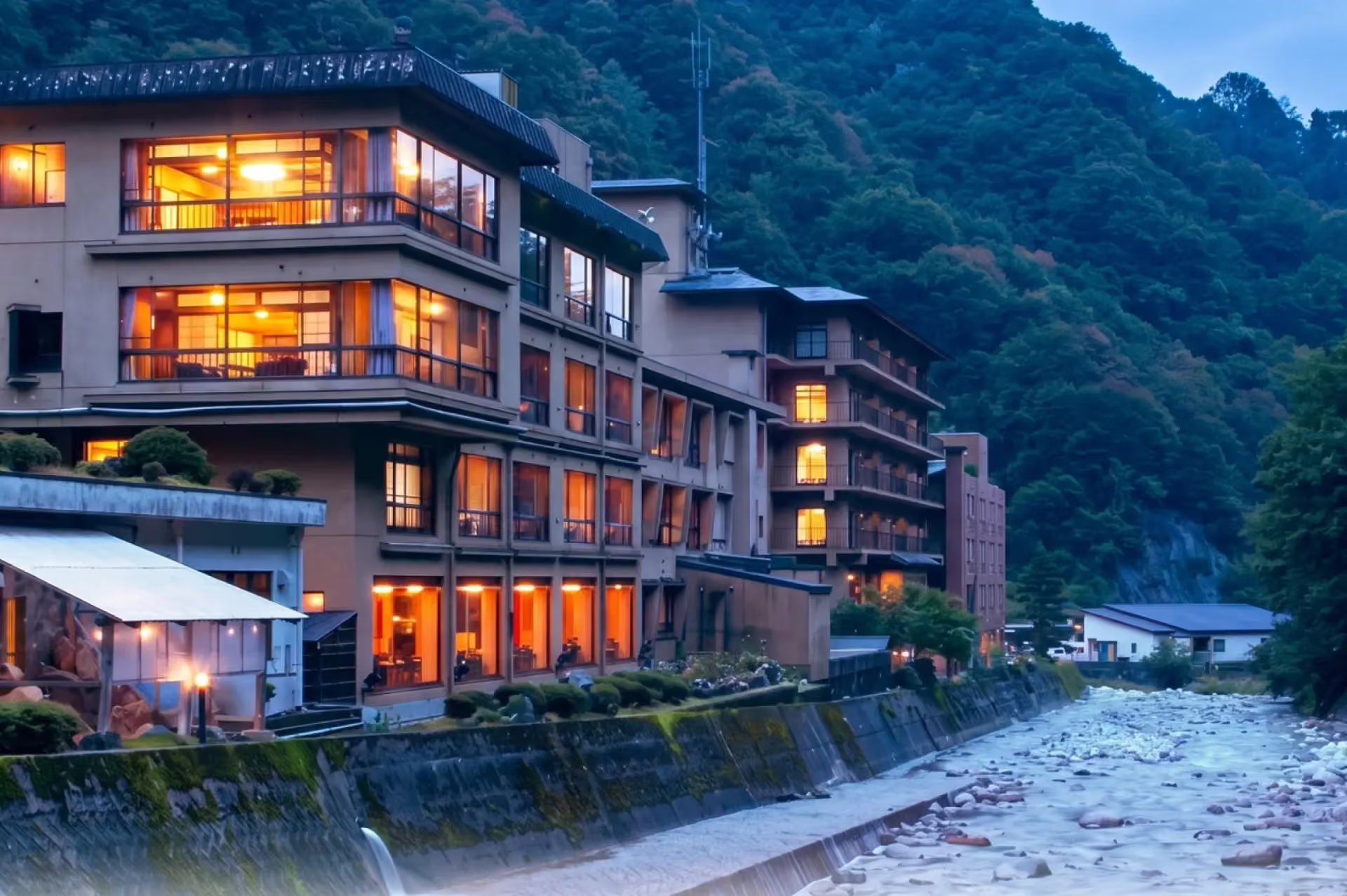
Ryujin Onsen is a hidden hot spring in the mountains upstream of the Hidaka River in Ryujin Village, Tanabe, Wakayama Prefecture. Known for its silky, smooth water and its reputation as one of Japan’s three beauty baths, it is a hot spring area where the water is often described as pleasantly viscous. The main spring type is said to be a sodium bicarbonate spring, and because bathers often feel their skin become smooth after bathing, it has long been called a beauty bath. Its mountain setting makes access less straightforward, but it lies along the Koya-Ryujin Skyline, the mountain route connecting Koyasan and Kumano, so it also serves as a stopover on trips between those sacred sites.
What matters most for travelers is not the title of a three-beauty-bath legend itself, but how to experience the silky water and combine it with the quiet atmosphere of the mountains. Ryujin Onsen is not a hot spring destination that relies on flashy scenery or large-scale facilities. Its appeal lies in the feel of the water and the calm of the mountain valley. This article objectively organizes Ryujin Onsen’s position, spring quality, the background behind its beauty-bath reputation, the legend of Kobo Daishi’s discovery of the spring, and its location and access, based on information from the Ryujin Tourism Association and other sources. References to the three beauty baths, beautiful skin, and the spring-opening legend are treated cautiously as reported tradition, commonly used names, or claims that are said to be true.
What Kind of Hot Spring Area Is Ryujin Onsen?
Ryujin Onsen is a hot spring area in Ryujin Village, Tanabe, Wakayama Prefecture, located in the mountainous interior of the upper Hidaka River basin in central Kii Peninsula. Surrounded by mountains and set in a quiet environment, it is often introduced as a hidden hot spring. The hot spring town is compactly arranged along the Hidaka River, with ryokan lined up around the main spring and public bath, and it is not large in scale.
Ryujin Village merged with Tanabe City in 2005 and is now part of Tanabe City. Tanabe City spans a broad area across both the sea and mountains of the Kii Peninsula, and Ryujin Onsen is located on the mountain side. In tourism terms, it has a strong role as a stop along the route connecting Koyasan and Kumano. Rather than treating Ryujin Onsen on its own, it becomes easier to understand when combined with nearby sacred-site visits and mountain drives. If you want to compare it with major hot spring areas across Japan, see 10 Famous Hot Springs in Japan.
Its Position as One of Japan’s Three Beauty Baths
Ryujin Onsen is often introduced as one of Japan’s three beauty baths. It is generally said to be counted together with Yunokawa Onsen in Shimane Prefecture and Kawanaka Onsen in Gunma Prefecture, but there are several versions of this combination, and the hot spring areas listed may differ depending on the source. The terms three beauty baths and three great beauty baths are not officially fixed designations, but common names that became widely used.
What is important here is that the phrase beauty bath describes the bathing experience, especially the smooth, silky feel of the water, and does not guarantee any specific cosmetic or health benefits. Soaking in a viscous spring may leave the skin feeling smoother afterward, but the experience varies from person to person, and the same result cannot be expected for everyone. The label three beauty baths should be understood as a way to appreciate the individuality of the water.
| Hot spring area | Location | Background for being called a beauty bath |
|---|---|---|
| Ryujin Onsen | Tanabe, Wakayama Prefecture | Said to feature a silky sodium bicarbonate spring |
| Yunokawa Onsen | Shimane Prefecture | Often listed as one of the beauty baths |
| Kawanaka Onsen | Gunma Prefecture | Often listed as one of the beauty baths |
This summary is only a commonly introduced example, and the combination itself is debated. If you want to learn more about the scientific background of the beauty-bath label, see The Relationship Between Bicarbonate Springs and Beautiful Skin, which explains the feel of sodium bicarbonate springs. If you want to compare it with another well-known beauty bath, also read Ureshino Onsen Guide, which is likewise called a beauty bath, to better understand Ryujin Onsen’s place among Japan’s famous silky springs.
Spring Quality: Silky Sodium Bicarbonate Spring
The water at Ryujin Onsen is said to be mainly a sodium bicarbonate spring. Springs rich in sodium bicarbonate are known for a slightly slippery, silky feel on the skin, and Ryujin Onsen is also described in this way. Rather than a spring with a strong color or smell, it is valued for the softness of its touch.
Sodium bicarbonate springs are generally said to soften old dead skin cells and sebum on the skin surface, making the skin feel smoother after bathing. This is the background behind the beauty-bath reputation, but here it should be understood only as a description of bathing comfort and skin feel, not as a claim of cosmetic or health effects. If you want to know more about why bicarbonate springs feel so smooth, see The Relationship Between Bicarbonate Springs and Beautiful Skin.
To confirm the spring quality accurately, check the hot spring analysis sheet posted at each facility. Even within the same hot spring area, the source spring and facility may differ in composition and temperature, and whether water is added or heated can also change the bathing impression. Spring names and component amounts are written according to the standards set out in the Ministry of the Environment’s guideline for mineral spring analysis methods, so if you are unsure how to read the posted information, it helps to know the standards. If you want a systematic overview of the differences between spring types, see Hot Spring Quality Guide, which makes Ryujin Onsen’s characteristics easier to understand.

How to Enjoy a Silky Spring and What to Watch For
A silky bicarbonate spring is gentle on the skin and easy to enjoy, but because it feels so smooth, bathers may stay in too long. Even though the skin may feel especially soft afterward, some people may also feel dry if sebum is removed. It is best to limit bathing time, avoid long soaks, and moisturize after getting out to reduce strain on the body.
The basic safety rules are the same as for other hot springs. Avoid bathing after drinking alcohol or when you are not feeling well, and if you have skin wounds or sensitive skin, enter carefully while checking for irritation. Because this is a hidden mountain hot spring, temperature differences can be large depending on the season, and in winter you should also be careful of the contrast between outdoor air and the bath area. If you want to experience the spring in its most natural state, you can choose facilities that emphasize minimal dilution and heating; the concept of spring use is explained in What Is Gensen Kakenagashi?.
The Legend of Kobo Daishi’s Discovery of the Spring
Ryujin Onsen is associated with a legend that Kobo Daishi, also known as Kukai, discovered the spring. According to the story, Kobo Daishi opened the hot spring after receiving a message from Nandaryu-o, and the place name Ryujin is said to come from the worship of this dragon king. Kukai is known as the founder of Koyasan, and the fact that Ryujin Onsen lies in the mountains leading to Koyasan is often connected to that history.
However, such legends of spring discovery are based on faith and oral tradition, so caution is needed when judging how much can be confirmed as historical fact. Many ancient hot springs across Japan preserve legends of Kobo Daishi opening them, and Ryujin Onsen should be understood in the same way. The connection between hot springs, shrines, temples, and religious belief is part of the cultural background seen throughout Japan, and the overall picture is organized in The Relationship Between Hot Springs and Shinto/Buddhism. Even if you do not verify the legend’s truth, knowing the origin of the name Ryujin and the dragon-king faith behind it changes how the hot spring area feels.
The hot spring town has a main bath and a public bath, so day visitors can also try Ryujin’s silky water. Hours, closing days, and fees may change, so it is best to check official information before visiting.
Location and Access: Along the Koya-Ryujin Skyline
The key to understanding Ryujin Onsen’s location is the Koya-Ryujin Skyline, the mountain route connecting Koyasan and Kumano. This road runs along the ridges of the Kii Peninsula and links the Koyasan area with Ryujin and Kumano. Since Ryujin Onsen lies along this route, it is often chosen as a stopover in itineraries that combine Koyasan, the Kumano Kodo, and the Kumano Sanzan. Because the route includes high-altitude mountain sections, you should check the season, weather, and whether the road is open before traveling.
One thing to note is that access is not especially easy because it is a hidden hot spring. It is not directly connected to a railway station, and the basic public-transport option is to take a bus from the Kii-Tanabe or Tanabe area into the mountains. However, buses are infrequent, and timetables and service availability can change by season, so you must check official information before making plans. If you travel by car or rental car, it is easier to combine Ryujin Onsen with Koyasan or Kumano on a circular trip, but you should keep in mind that you will be driving on mountain roads.
| Sights and features | Location / details | Approximate time / key points |
|---|---|---|
| Main bath and public bath | Center of the hot spring town along the Hidaka River | You can enjoy the silky spring on a day trip. Check hours on the official site |
| Koya-Ryujin Skyline | Mountain route connecting Koyasan with Ryujin and Kumano | Good for driving. Check weather and road status because it is a mountain section |
| Nearby sacred-site visits | Koyasan, Kumano Kodo, Kumano Sanzan | Easy to build an itinerary that uses Ryujin Onsen as a stopover |
If you are using public transportation, it is safer to plan by securing the outbound and return times first, given the limited number of buses. If you are looking for Ryujin Onsen accommodations or day-use bathing facilities, we provide a facility list and a search page so you can narrow results by area or budget.
Who It Is Best For
Ryujin Onsen is ideal for people who want to take their time enjoying smooth-feeling water, people who want to relax in a quiet mountain setting, and people who want to stop at a hot spring while visiting the sacred sites of Koyasan and Kumano. It is especially a good match for travelers who are drawn to the character of the silky beauty bath and to the calm stay that only a hidden hot spring can offer.
On the other hand, people who value easy access from a station, a strong scenic impact, or a sequence of large tourist facilities may find Ryujin alone somewhat lacking. In that case, satisfaction tends to increase if you combine it with Koyasan and Kumano, and position Ryujin Onsen as part of a mountain drive and sacred-site tour. Ryujin Onsen’s strength is not flashiness, but the texture of the water and the quiet of the mountains.
Frequently Asked Questions
Where are Japan’s three beauty baths?
They are generally said to refer to Ryujin Onsen in Wakayama, Yunokawa Onsen in Shimane, and Kawanaka Onsen in Gunma. However, there are several versions of this combination, and the hot spring areas listed may differ depending on the source. The three beauty baths are not an officially fixed system but a common name, and it is best understood as a phrase describing the bathing comfort and the silky feel of the water.
Why is Ryujin Onsen called a beauty bath?
It is said to be a sodium bicarbonate spring, and the silky, smooth water is thought to soften old dead skin cells and sebum, leaving the skin feeling smooth after bathing. However, this is only a description of bathing comfort and skin feel, not a guarantee of any specific cosmetic effect. Because the experience varies by person, it is best understood as guidance for enjoying the spring’s character.
What is the legend of Ryujin Onsen’s opening?
The story says Kobo Daishi, Kukai, opened the hot spring after receiving a message from Nandaryu-o, and that the name Ryujin also comes from the worship of this dragon king. However, the legend is based on faith and oral tradition, so it cannot be fully verified as historical fact. Similar legends remain at many old hot springs across Japan, and this one should be understood in the same way.
How do I get to Ryujin Onsen?
The basic public-transport route is to take a bus from the Kii-Tanabe or Tanabe area into the mountains, but buses are infrequent, and timetables and service availability can change by season, so be sure to check official information. If you go by car or rental car, it is easier to combine the trip with Koyasan and Kumano via the Koya-Ryujin Skyline, but keep in mind that you will be driving on mountain roads.
Can I visit Ryujin Onsen as a day trip?
Yes. The hot spring town has a main bath and a public bath, so you can enjoy Ryujin’s silky water on a day trip. The spring’s viscosity makes its character easy to feel even in a short bath, so it works well as a stop during sacred-site visits or driving tours. Hours, closing days, and fees may change, so it is reassuring to check official information before visiting.
Summary
Ryujin Onsen is a mountain hidden hot spring that bubbles up in the upper Hidaka River area of Ryujin Village, Tanabe, Wakayama Prefecture. It is known for its silky sodium bicarbonate spring and its reputation as one of Japan’s three beauty baths. The combination of the three beauty baths has several versions, and the term beauty bath simply conveys the bathing experience, not any guaranteed cosmetic effect. The legend that Kobo Daishi and Nandaryu-o opened the spring is also best understood as a faith-based tradition.
The key to its location is that it lies along the Koya-Ryujin Skyline, which connects Koyasan and Kumano, making it especially attractive as a stopover on sacred-site visits and mountain drives. At the same time, access is not easy because it is a hidden hot spring, and public transportation is limited by infrequent buses, so timetables and fares should always be checked in official information before planning. It is a hot spring area best suited to travelers who want a stay where the feel of the water and the quiet of the mountains come together. For a broader overview of spring types, see Hot Spring Quality Guide.