Thematic GuidesFamous Japanese Hot Springs
Minakami Hot Spring Guide: 18 Baths and Outdoor Base
Explore Minakami Onsen in Minakami, Gunma, at the foot of Mt. Tanigawa along the upper Tone River. Discover area-by-area bath styles, Takaragawa Onsen, diverse spring types, rafting, Tanigawa Ropeway, and easy access from Tokyo.
Published: Jun 28, 2026
Thematic GuidesFamous Japanese Hot Springs
Minakami Hot Spring Guide: 18 Baths and Outdoor Base
Explore Minakami Onsen in Minakami, Gunma, at the foot of Mt. Tanigawa along the upper Tone River. Discover area-by-area bath styles, Takaragawa Onsen, diverse spring types, rafting, Tanigawa Ropeway, and easy access from Tokyo.
Published: Jun 28, 2026
Minakami Onsen is the collective name for a group of hot springs spread across Minakami Town, Tone District, Gunma Prefecture, at the foot of Mt. Tanigawa in the upper reaches of the Tone River. It does not refer to a single hot spring town; in addition to the central Minakami Onsen, many different baths are scattered throughout the town, including Tanigawa, Yubiso, Takaragawa, Kamimoku, and Sarugakyo, and these are often collectively called the “18 baths of Minakami.” Because the atmosphere and water differ by area, the experience changes greatly depending on where you stay.
What travelers should first understand is that Minakami Onsen is not one hot spring resort, but a collection of varied hot spring areas scattered throughout the town. It is also a base for outdoor activities such as rafting on the Tone River, the Tanigawa Ropeway, and canyoning, and its relatively close access from Tokyo via the Joetsu Shinkansen and local trains is another major appeal. In this article, we organize the differences between each area’s baths, Takaragawa Onsen, famous for its riverside open-air baths, the different spring types found here, its role as an outdoor base, and access from Tokyo, based on official information from the Minakami Town Tourism Association.
What Kind of Hot Spring Area Is Minakami Onsen?
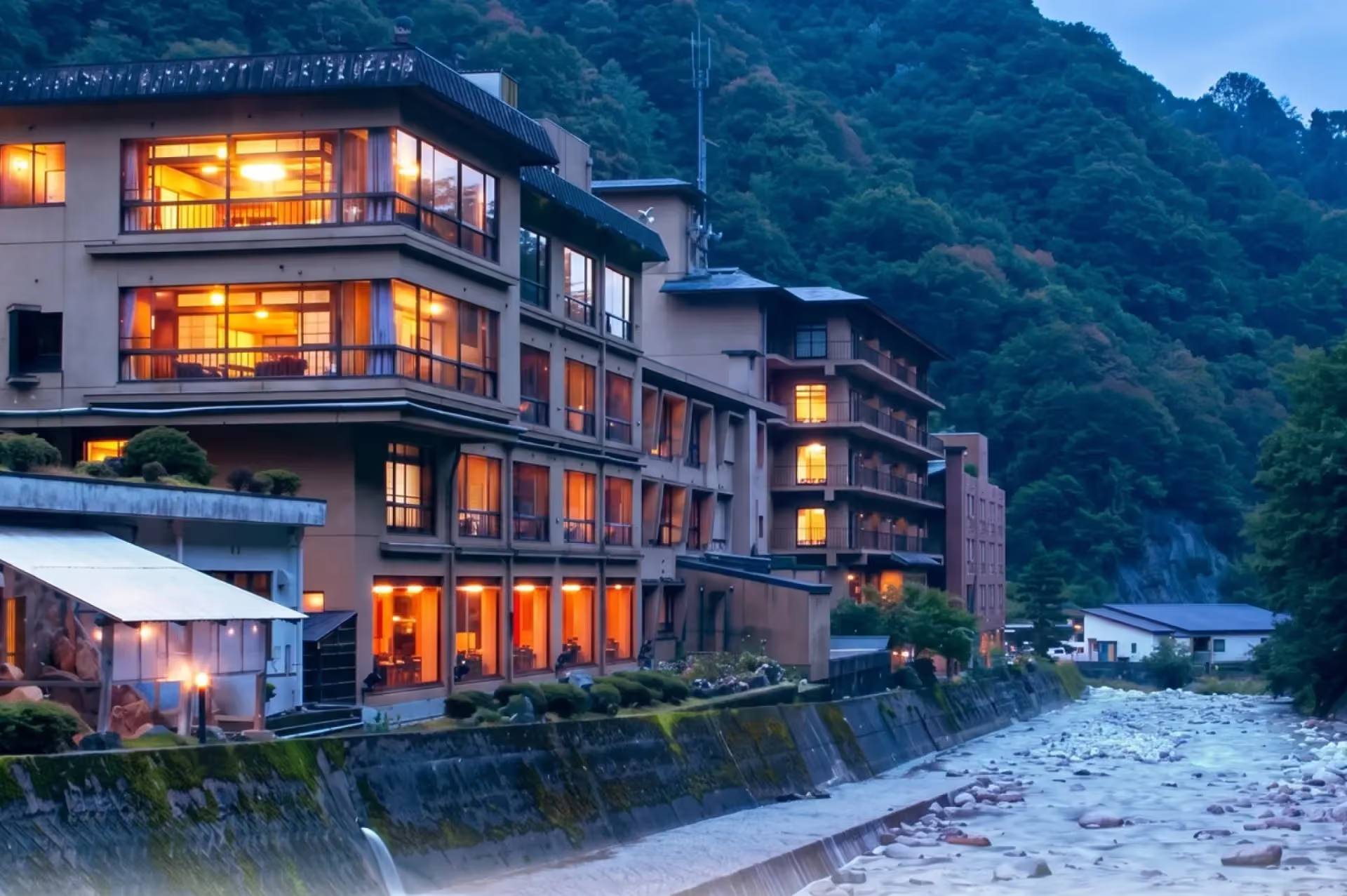
Minakami Onsen sits amid mountains including Mt. Tanigawa, with many hot springs scattered along the valleys carved by the Tone River and its tributaries. The central Minakami Onsen is known as a hot spring town with inns lined up along the Tone River, but a little farther away, in side valleys and mountain hollows, are other hot springs with different atmospheres. These are sometimes collectively called the “18 baths of Minakami,” though the count and scope vary by source, so here it is enough to understand that there is a diverse group of hot springs.
Each hot spring has its own source and location, ranging from Minakami Onsen, lively along the Tone River, to Tanigawa and Yubiso, bases for mountain climbing and skiing, to Takaragawa Onsen, known for its riverside open-air baths, and Sarugakyo Onsen, located in the highlands. Simply saying you are going to “Minakami Onsen” does not define the experience, so deciding which area to use as your base is the starting point of planning. For ideas on visiting multiple baths, see our guide to onsen hopping.
Quick Area Guide to Minakami Onsen
The hot springs that make up Minakami Onsen differ in location and atmosphere. The table below summarizes the characteristics and general tendencies of representative hot spring areas to help you choose where to stay. Because conditions, operations, and access methods can change, please check the latest information with each inn or the official Minakami Town Tourism Association.
| Area (Hot Spring) | Area Features | Tendency |
|---|---|---|
| Minakami Onsen | The center of the region. A hot spring town with inns along the Tone River | Often considered convenient as a base for access and stays |
| Tanigawa Onsen | A mountain area close to the trailhead for Mt. Tanigawa | Often described as quiet and nature-oriented |
| Yubiso Onsen | Along the Yubiso River. A starting point for Mt. Tanigawa and skiing areas | Often introduced as a base for climbing and skiing |
| Takaragawa Onsen | In the mountains along the Takaragawa River. Known for large riverside open-air baths | Often talked about for its scenic valley baths. Check official details before visiting |
| Kamimoku Onsen | A calm area along the Tone River | Often considered convenient as a place to stay near the station |
| Sarugakyo Onsen | A highland area near Lake Akaya | Often described for its lakeside views and quiet atmosphere |
This area breakdown and these tendencies are only general guidelines, and even within the same hot spring region, the experience can vary greatly depending on the inn or source. If you want to know the spring quality with certainty, check the hot spring analysis sheet posted at each inn. Also, there are other baths counted among the “18 baths of Minakami”; the ones listed here are only representative examples.
Takaragawa Onsen and Riverside Open-Air Baths
Among the many baths in Minakami Onsen, Takaragawa Onsen is located deep in the mountains along the Takaragawa River and is famous for its large riverside open-air baths. Its expansive outdoor baths, where you can look out over the river up close, often become a talking point, and it has also attracted attention from international travelers. However, the size of the baths, whether mixed bathing is allowed, reception hours, how to use them, and fees can change depending on the season and operation, so treat this as a guide only and be sure to check the official facility information before visiting.
Outdoor baths require attention to seasonal temperature differences and bathing methods, even as you enjoy the open scenery. For more on the unique precautions of open-air baths in nature, see Open-Air Baths in Nature. If you plan to make a riverside open-air bath the main attraction, it is worth reading that first. In particular, open-air baths in the mountains can be very cold in the morning and evening, and your body can cool quickly after getting out, so the basic approach is to take breaks and stay hydrated.

Diverse Spring Types That Differ by Bath
Another feature of Minakami Onsen is that the spring quality differs by hot spring and by area. Some baths are mild simple hot springs, while others have distinctive mineral compositions such as chloride or sulfate springs, so it cannot be grouped together as one single “Minakami water.” Even within the same hot spring region, the feel on the skin and how warmly the water lingers can change when the area or source changes. That is why visiting multiple areas lets you experience the differences in spring quality themselves.
Because the scientific classification and identification of spring types goes beyond the scope of this article, we will leave the full picture of the 10 types of therapeutic springs to Our Guide to Hot Spring Types. Here, the key idea is not to think of Minakami Onsen as one bath, but to enjoy each area and inn as having its own distinct water. Spring names and ingredient details can be checked on the hot spring analysis sheets posted in changing rooms or bathing areas, so looking at those signs on site is the most reliable way to learn the character of the water. This article does not make claims about specific health benefits. The quality of a bath is not determined only by the concentration of minerals; the freshness of the source, whether water is added or the water is heated, and the temperature range also affect the experience.
As an Outdoor Activity Base
Beyond the hot springs themselves, another major appeal of Minakami Onsen is its convenient location as an outdoor activity base. In the upper Tone River area, rafting is popular, and during the snowmelt season in spring, many companies are said to offer tours down the rapids. Activities that make use of the valley terrain, such as canyoning up tributaries of the Tone River, are also commonly introduced.
On the mountain side, the Tanigawa Ropeway serves as an entry point for climbing and scenic views. Because the operating schedule, prices, and whether service is suspended can change due to weather, season, or maintenance, treat this as a guideline and be sure to check the latest official information. In winter, the surrounding area becomes a ski destination, making it a place where you can also enjoy snow-view bathing. For tips on soaking in hot water during snowy seasons, see Snow-Viewing Baths. Since the season, age limits, and safety standards for activities differ by operator, check the organizer’s information before signing up.
How to Get Around and Access
The basic railway access to Minakami Onsen is via Jomo-Kogen Station on the Joetsu Shinkansen or JR Minakami Station on the local line. The relatively short travel time from the Tokyo area has long been one of this hot spring region’s attractions. From the station, it is common to continue by bus or taxi to each hot spring area, but travel times and service frequency vary by route, timetable, and season, so check the latest official information.
What to keep in mind is that even after arriving in the hot spring region, travel between areas is often necessary. From central Minakami Onsen to Takaragawa or Sarugakyo, the distances are significant, so if you plan to hop between baths across areas, you need to allow time for buses and transfers. If you are driving, Minakami is a snowy area, so winter travel requires preparation for snow, icy roads, and cold weather. Winter scenery is attractive, but road conditions and the operation of buses and ropeways are easily affected by the weather, so do not skip the pre-departure check. If you are looking for inns or nearby bathing facilities in Minakami Onsen, we offer a facility list and search page that let you filter by area and budget.
Who It’s Best For
Minakami Onsen is ideal for people who want to combine hot springs with outdoor activities, those looking for riverside open-air baths or quiet mountain bathing, and travelers who want a hot spring destination within a reasonable trip from Tokyo. From rafting and canyoning to the Tanigawa Ropeway, and from winter skiing to snow-view bathing, the range of things to do beyond the hot springs is part of what makes this region special. On the other hand, if you only expect a single lively hot spring town with lots of strolling and eating, you may feel a little unsatisfied because the areas are spread out.
For first-time visitors, it is easier to avoid disappointment if you first understand the differences between the areas using the quick guide, then decide which area to base yourself in and whether to prioritize hot springs or activities. If you want to compare famous hot springs across Japan, see our ranking of famous hot springs in Japan as well.
FAQ
What does “18 baths of Minakami” mean?
It is a collective term sometimes used for the many hot spring areas that make up Minakami Onsen. In addition to central Minakami Onsen, it includes Tanigawa, Yubiso, Takaragawa, Kamimoku, and Sarugakyo, but the count and scope vary by source, so here we simply understand it as a diverse group of hot springs. Because facilities and covered areas can change, check the latest official information from the Minakami Town Tourism Association.
How can I use the open-air baths at Takaragawa Onsen?
Takaragawa Onsen is in the mountains along the Takaragawa River and is known for its large riverside open-air baths. However, the size of the baths, whether mixed bathing is allowed, reception hours, usage methods, and fees change depending on the season and operation. Be sure to check the official facility information before visiting. For general tips on how to enter and what to watch out for in outdoor baths, see Open-Air Baths in Nature.
Do all the baths in Minakami Onsen have the same spring quality?
No. Minakami Onsen has diverse spring qualities, and the water differs by hot spring and area, ranging from mild simple hot springs to more distinctive chloride or sulfate springs. You can learn how to identify spring types in Our Guide to Hot Spring Types. If you want to know for sure, the most reliable source is the hot spring analysis sheet posted at each inn.
What outdoor activities can you enjoy in Minakami Onsen?
Activities introduced here include rafting in the upper Tone River area, canyoning that uses the valley terrain, climbing and sightseeing via the Tanigawa Ropeway, and winter skiing and snow-view bathing. Since the season, age limits, operation, suspension, and fees differ by operator and by the ropeway’s official information, check the organizer’s guidance before applying or visiting.
How do I get to Minakami Onsen from Tokyo?
By rail, the starting points are Jomo-Kogen Station on the Joetsu Shinkansen or JR Minakami Station on the local line, and it is said to be reachable in a relatively short time from Tokyo. From the station, buses and taxis are the usual way to reach each hot spring area. Travel times and service frequency vary by route, timetable, and season, so check the official timetable before planning your trip.
Summary
Minakami Onsen is the collective name for a diverse group of hot springs spread across Minakami Town in Gunma Prefecture, at the foot of Mt. Tanigawa in the upper reaches of the Tone River. In addition to central Minakami Onsen, areas such as Tanigawa, Yubiso, Takaragawa, Kamimoku, and Sarugakyo are scattered throughout the town and are often collectively called the “18 baths of Minakami.” Each area differs in location, atmosphere, and water, with Minakami Onsen along the Tone River, Tanigawa and Yubiso as bases for climbing and skiing, Takaragawa Onsen known for its riverside open-air baths, and Sarugakyo Onsen in the highlands.
It is more accurate to understand this as a collection of hot spring areas with different personalities than as a single hot spring town. It is easy to combine hot springs with outdoor activities such as rafting, the Tanigawa Ropeway, and winter snow-view bathing, and its close access from Tokyo is also appealing. On the other hand, because open-air bath use, mixed bathing, fees, schedules, activity availability, and winter access can change easily, checking the official information before planning helps avoid mistakes. For travelers who want both hot springs and nature activities, Minakami Onsen is a strong candidate.
Sources
- Minakami Town Tourism Association
- Minakami Town (refer to the official site homepage)
- Ministry of the Environment, “Guidelines for Mineral Spring Analysis Methods (Revised 2014)”