
Thematic GuidesFamous Japanese Hot Springs
Kotohira Onsen Guide: Kagawa Hot Spring Town by Kotohira-gu Shrine
Explore Kotohira Onsen, the hot spring town in Kotohira, Kagawa, set in front of Kotohira-gu Shrine, also known as Kompira-san. From the 785 stone steps to Sanuki udon, Kanamaruza, and access via Kotohira Station, this guide covers what matters.
Published: Jun 28, 2026
Thematic GuidesFamous Japanese Hot Springs
Kotohira Onsen Guide: Kagawa Hot Spring Town by Kotohira-gu Shrine
Explore Kotohira Onsen, the hot spring town in Kotohira, Kagawa, set in front of Kotohira-gu Shrine, also known as Kompira-san. From the 785 stone steps to Sanuki udon, Kanamaruza, and access via Kotohira Station, this guide covers what matters.
Published: Jun 28, 2026
Kotohira Onsen is a hot spring town in Kotohira, Nakatado District, Kagawa Prefecture, and its defining feature is that it spreads out in front of Kotohira-gu Shrine, affectionately known as Kompira-san. It is not a hot spring area that has long been known for natural springs. Instead, it is easier to understand as a hot spring town that was developed later in a temple approach area that once flourished as a post town for pilgrims. Rather than coming solely for the hot spring itself, visitors climb the long stone steps to pray at Kompira-san, walk through the town in front of the shrine, and relax in the inn’s large bath. The whole journey becomes the experience.
For travelers, the key point is not simply that it is a famous hot spring in Kagawa, but how to combine three elements: pilgrimage, walking around the shrine town, and hot springs. Kotohira-gu Shrine is widely revered throughout Japan as a guardian deity of the sea and of sailors, and its approach is lined with souvenir shops and Sanuki udon restaurants. This article organizes the history of Kotohira Onsen, how to think about its spring quality, worship at Kotohira-gu Shrine, how to explore the shrine town and enjoy Sanuki udon, highlights such as Kanamaruza, and access information, based on information from the Kotohira Town Tourism Association and the official Kotohira-gu Shrine website. If you want to pair it with another famous hot spring in Shikoku, see the Dogo Onsen Guide.
The Character of a Hot Spring Town Built Around a Shrine Approach
To understand Kotohira Onsen, it helps to start with the idea that this is a hot spring town opened in a pilgrimage approach town. Kotohira, the shrine town in front of Kotohira-gu Shrine, flourished throughout the Edo period as a post town visited by pilgrims making the Kompira pilgrimage, and that shrine-town culture, with its souvenir shops and inns, remains today. The hot springs are considered relatively new developments, giving this area a different origin from hot spring resorts that grew as traditional therapeutic bathing destinations.
For that reason, Kotohira Onsen is often positioned less as a place where the hot spring itself is the sole star of the trip, and more as one element that supports worship and strolling through the shrine town. Many inns have large public baths, and the hot springs function as a place to loosen up after walking to the shrine. If you are interested in the connection between long-standing pilgrimage culture and hot springs, reading Onsen and Shinto, Buddhism will help explain how hot springs took root in shrine towns. If you want to compare it with representative hot spring destinations across Japan, 10 Famous Hot Springs in Japan is also useful.
Pilgrimage to Kotohira-gu Shrine and the Long Stone Steps
No discussion of Kotohira Onsen is complete without the pilgrimage to Kotohira-gu Shrine. Kotohira-gu Shrine is a shrine that has long attracted worship as a deity of the sea and a guardian of sailors, and it serves as the head shrine for shrines named Kotohira or Kompira across Japan. It is widely beloved as a deity of safe voyages, fishing, traffic safety, and business success, and it stands at the center of the pilgrimage culture expressed in the phrase, “a Kompira pilgrimage once in a lifetime.”
Kotohira-gu Shrine is famous for the long stone stairway leading to the main sanctuary. From the entrance of the approach to the main sanctuary, it is said to be 785 steps, and continuing on to the inner sanctuary brings the total to 1368 steps. Since the number of steps may be written differently depending on the guide, please check the official information for the exact count and current conditions on site. Either way, it is a substantial climb, and the pilgrimage itself becomes the main activity of the day.
| Section | Approximate number of steps | Approximate time and features |
|---|---|---|
| Entrance to Daimon Gate | About 365 steps | A stretch lined with souvenir shops and udon restaurants |
| Daimon Gate to the main sanctuary | A total of 785 steps to the main sanctuary | The main sanctuary is the usual destination for worship |
| Main sanctuary to the inner sanctuary | A further climb from the main sanctuary, totaling 1368 steps | For visitors with enough stamina and time |
The basic rule is to climb at a comfortable pace and rest frequently. There are tea houses and places to take a break along the way, and the views from the approach are part of the appeal. Because the stairs require real effort, a typical Kotohira experience is to worship first and then relax at the inn’s large bath afterward. Whether to turn back at the main sanctuary or continue to the inner sanctuary should be decided in advance based on your stamina and time, so it is easier to manage your day. Comfortable shoes and easy-to-move-in clothing are recommended.
Enjoying the Hot Springs in the Inn’s Large Bath
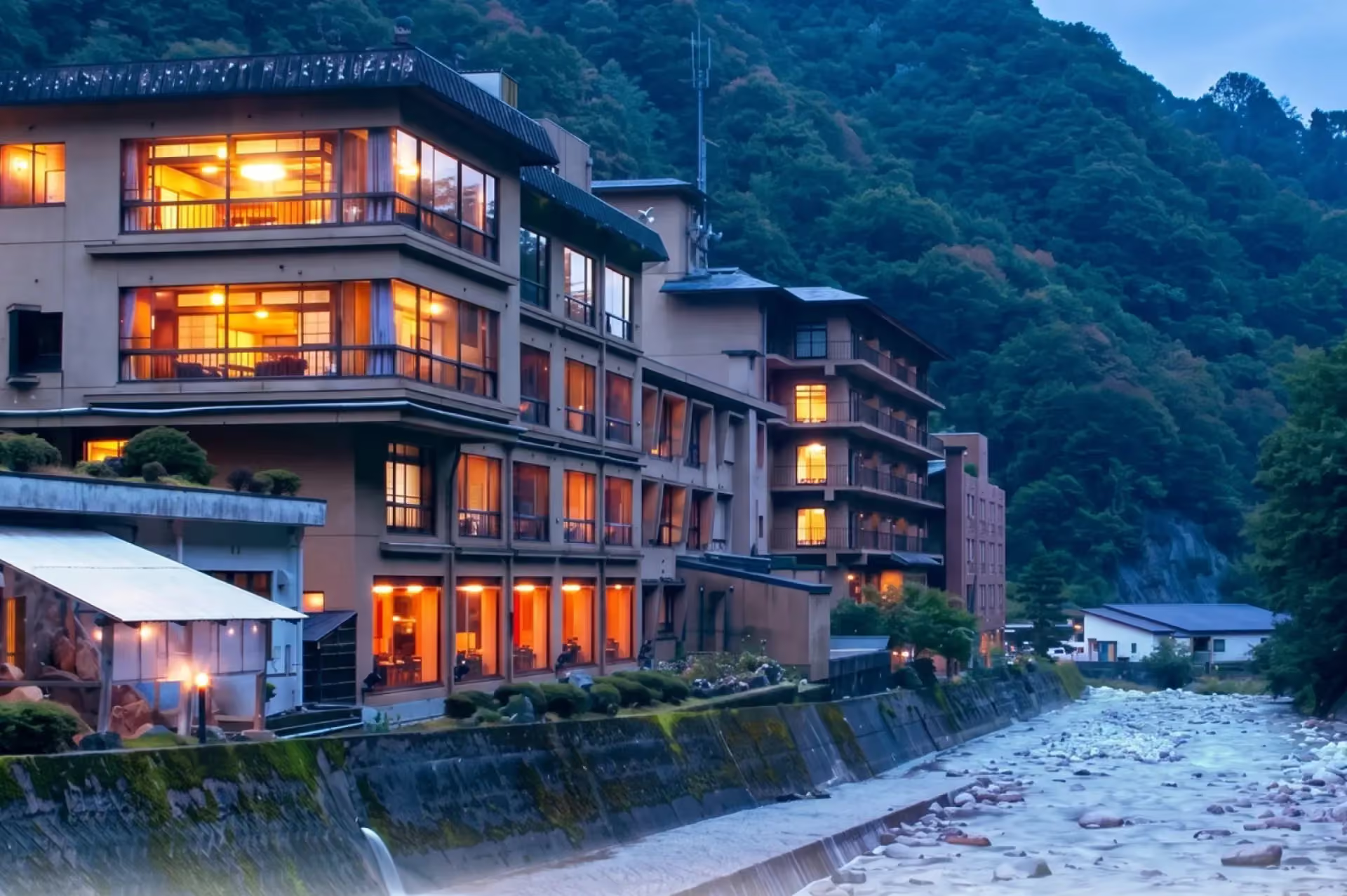
At Kotohira Onsen, the standard way to enjoy the hot springs is to stay at an inn and soak in its large bath, rather than touring public baths. The hot springs are considered relatively new developments, and the spring quality and source may differ from one inn to another. Some facilities use heating or added water, so if you want detailed information about the bath water, it is best to check the inn’s notices or official website.
If you want to read a spring analysis yourself, look for the onsen analysis chart posted in the changing room or elsewhere. A guide to reading spring names and ingredient labels is available in How to Read an Onsen Analysis. If you want to understand the scientific classification of spring types, such as simple springs or chloride springs, refer to Onsen Spring Types for Beginners. Since conditions vary by inn at Kotohira Onsen, visitors are often more satisfied by choosing based on the facility, the view, and the walking route connected to worship rather than expecting one specific spring type.
After a long walk to the shrine, your body is often tired. Rather than taking a very long bath at once, it is better to bathe in shorter sessions, with rest and hydration in between. Avoid bathing after drinking alcohol or when you are not feeling well. Since the hot spring here is less the main destination than the final reward that supports the pilgrimage, this helps define the best way to enjoy the baths at Kotohira Onsen.
Strolling Through the Shrine Town and Enjoying Sanuki Udon
At Kotohira Onsen, walking through the shrine town before and after worship is part of the experience. Souvenir shops and restaurants line the approach, preserving the lively atmosphere of a shrine town that has long welcomed pilgrims. Changing into a yukata at the inn and strolling through the streets is also part of the enjoyment. For tips on walking in geta and wandering a hot spring town in yukata, see Yukata Strolling in a Hot Spring Town if you want to explore the shrine town in traditional clothing.
If you visit Kagawa, one thing you should not miss is Sanuki udon. There are udon shops along the approach and in the shrine town, so you can enjoy it before or after worship. Known for its firm, chewy noodles, Sanuki udon is one of Kagawa’s signature foods, and many travelers combine it with a Kompira pilgrimage. Since business hours and closing days differ from shop to shop, it is best to check in advance if there is a place you especially want to visit.
| Highlight | Location and features | Approximate time needed |
|---|---|---|
| Kotohira-gu Shrine main sanctuary | The main sanctuary at the top of the long stone steps | Plan for about half a day round trip |
| Omotesando and shrine town | An approach lined with souvenir shops and Sanuki udon restaurants | About 1 to 2 hours for walking and meals |
| Former Konpira Grand Kabuki Theatre, Kanamaruza | Said to be one of the oldest surviving playhouses | About 30 minutes to 1 hour for a visit |
| Inn’s large bath | Hot springs to loosen up after worship | Time should be set aside during your stay |
Because the shrine town is organized along the pilgrimage route, getting around on foot is easy. Instead of carrying heavy luggage up the approach, it is more comfortable to leave your bags at the inn first and then head out for worship and sightseeing.
Former Konpira Grand Kabuki Theatre and the Culture of Kabuki
Another highlight of Kotohira Onsen, in addition to pilgrimage, hot springs, and udon, is the former Konpira Grand Kabuki Theatre, Kanamaruza. Kanamaruza is known as one of the oldest surviving playhouses and as a building that preserves the structure of Edo-period playhouses to the present day. It is usually open for interior visits, and one of its charms is being able to see the revolving stage and stage-under area up close.
Every spring, this Kanamaruza is also the stage for the performance known as the Shikoku Kompira Kabuki Grand Theatre. The event is popular as a chance to see authentic kabuki performed in a historic playhouse. However, the performance schedule, admission method, and whether it is held at all can change from year to year, so if seeing the play is the purpose of your trip, please check the latest official information. Even outside the performance period, the building itself offers a way to experience the performing arts culture rooted in the shrine town, adding depth to this hot spring destination.
Access
The main gateways to Kotohira Onsen and Kotohira are Kotohira Station on the JR Dosan Line and Kotoden Kotohira Station on the Takamatsu-Kotohira Electric Railroad. The two stations are close to each other, and both are within walking distance of the approach to Kotohira-gu Shrine, the shrine town, and the area where many inns are located. Being a hot spring destination that is easy to reach by train is a reassuring point for a regional trip.
From the Takamatsu area in Kagawa Prefecture, you can reach Kotohira by JR or the Takamatsu-Kotohira Electric Railroad. From the Okayama area as well, it is possible to access Kotohira by rail connecting Honshu and Shikoku. Specific transfers, travel times, and timetables vary by season, so please check the latest schedule. From the station, the entrance to the Kotohira-gu Shrine approach is within walking distance, and beyond that the pilgrimage continues up the long stone steps. Since the area is best explored on foot, it is convenient to leave your luggage at the inn first and then head out light for worship and a walk through the shrine town. For tourism and access information across Kagawa, you can also check Udon-ken Travel Net, the Kagawa Prefecture Tourism Association website.
Frequently Asked Questions
How many steps are there at Kompira-san?
At Kotohira-gu Shrine, it is said to be 785 steps from the entrance of the approach to the main sanctuary, and 1368 steps if you continue to the inner sanctuary. However, the way the steps are written may differ depending on the guide, and the conditions on site may also change, so please check the official information from Kotohira-gu Shrine for the exact number. In any case, it is a serious climb, so comfortable shoes and a steady pace are recommended.
Where can I soak in the hot springs at Kotohira Onsen?
In general, the main way is to stay at an inn and enjoy its large bath. The hot springs at Kotohira Onsen are considered relatively new developments, and the spring quality, source, and whether heating or added water is used may differ by inn. If you want to know the conditions in detail, please check the inn’s notices or official information. It is easiest to understand it as a hot spring that helps loosen your body after walking for worship.
Should I climb to the main sanctuary or the inner sanctuary?
The usual destination for worship is the main sanctuary, which is said to be 785 steps away. The climb to the inner sanctuary is said to be 1368 steps, and it is for visitors with enough stamina and time. Since the stair climb takes energy, it is best to decide ahead of time whether to turn back at the main sanctuary or continue to the inner sanctuary based on your condition that day and the time you have.
What else can I enjoy together with the Kompira pilgrimage?
A classic choice is to browse the souvenir shops along the approach and in the shrine town, and to taste Kagawa’s famous Sanuki udon. Other highlights include a visit to Kanamaruza, said to be one of the oldest surviving playhouses, and the Shikoku Kompira Kabuki Grand Theatre held in spring. If you stay overnight, you can also relax in the large bath after worship and enjoy strolling through the shrine town in a yukata.
How do I get to Kotohira?
Kotohira Station on the JR Dosan Line and Kotoden Kotohira Station on the Takamatsu-Kotohira Electric Railroad are the main gateways. You can access the area by train from Takamatsu or Okayama, and the approach and inn district are within walking distance from the stations. Since transfers and timetables change depending on the season, please check the latest schedule.
Summary
Kotohira Onsen is a hot spring town in Kotohira, Kagawa Prefecture, spreading out in front of Kotohira-gu Shrine, affectionately known as Kompira-san, the deity of the sea and guardian of sailors. The core of the trip is the pilgrimage up the long stone stairway, said to be 785 steps to the main sanctuary and 1368 steps to the inner sanctuary. The hot springs are relatively new developments and serve to relax the body in the inn’s large bath after worship. Along the approach and in the shrine town, souvenir shops and Sanuki udon restaurants line the streets, and cultural depth is added by Kanamaruza, said to be one of the oldest surviving playhouses, and by the Shikoku Kompira Kabuki tradition.
If you are visiting for the first time, the easiest flow is to leave your luggage at the inn, head to Kotohira-gu Shrine, enjoy Sanuki udon in the shrine town, and finish in the inn’s large bath. It is an easy destination to choose for travelers who want to enjoy pilgrimage, shrine-town strolling, and hot springs all at once, but since the number of steps, spring quality, and kabuki performance schedule can change, please check the latest official information before you go.

