Thematic GuidesFamous Japanese Hot Springs
Yuda Onsen Guide: White Fox Legend and Soft Hot Spring Waters
Explore Yuda Onsen near central Yamaguchi City, from the white fox legend, silky alkaline simple spring water, and foot baths to its Bakumatsu ties, Chuya Nakahara, and access from Shin-Yamaguchi Station.
Published: Jun 28, 2026
Thematic GuidesFamous Japanese Hot Springs
Yuda Onsen Guide: White Fox Legend and Soft Hot Spring Waters
Explore Yuda Onsen near central Yamaguchi City, from the white fox legend, silky alkaline simple spring water, and foot baths to its Bakumatsu ties, Chuya Nakahara, and access from Shin-Yamaguchi Station.
Published: Jun 28, 2026
Yuda Onsen is a hot spring area that rises near the urban center of Yamaguchi City in Yamaguchi Prefecture. It is known for the legend that a white fox healed its wounds in the water, and for its silky alkaline simple spring water. The nickname “White Fox Spring,” fox statues placed around the spa town, and easy-to-use foot baths all shape the area’s character.
To put it simply for travelers, Yuda Onsen is not a remote hidden hot spring, but an urban hot spring area where you can enjoy both convenience next to the city and sightseeing in Yamaguchi’s castle-town history. It is easy to reach from Shin-Yamaguchi Station by train or bus, and it pairs well with a day trip to Yamaguchi City sights such as the Ruriko-ji Five-Story Pagoda, a National Treasure. In this article, we objectively organize Yuda Onsen’s position, the white fox discovery legend, the quality of its alkaline simple spring water, its identity as a footbath town, its Bakumatsu and Restoration-era ties, its connection to poet Chuya Nakahara, and access, based on Yamaguchi City tourism information and other sources. Note that references to the discovery legend, Restoration-era ties, and beauty-skin benefits are treated cautiously as legends, associations, or common nicknames.
What kind of hot spring area is Yuda Onsen?
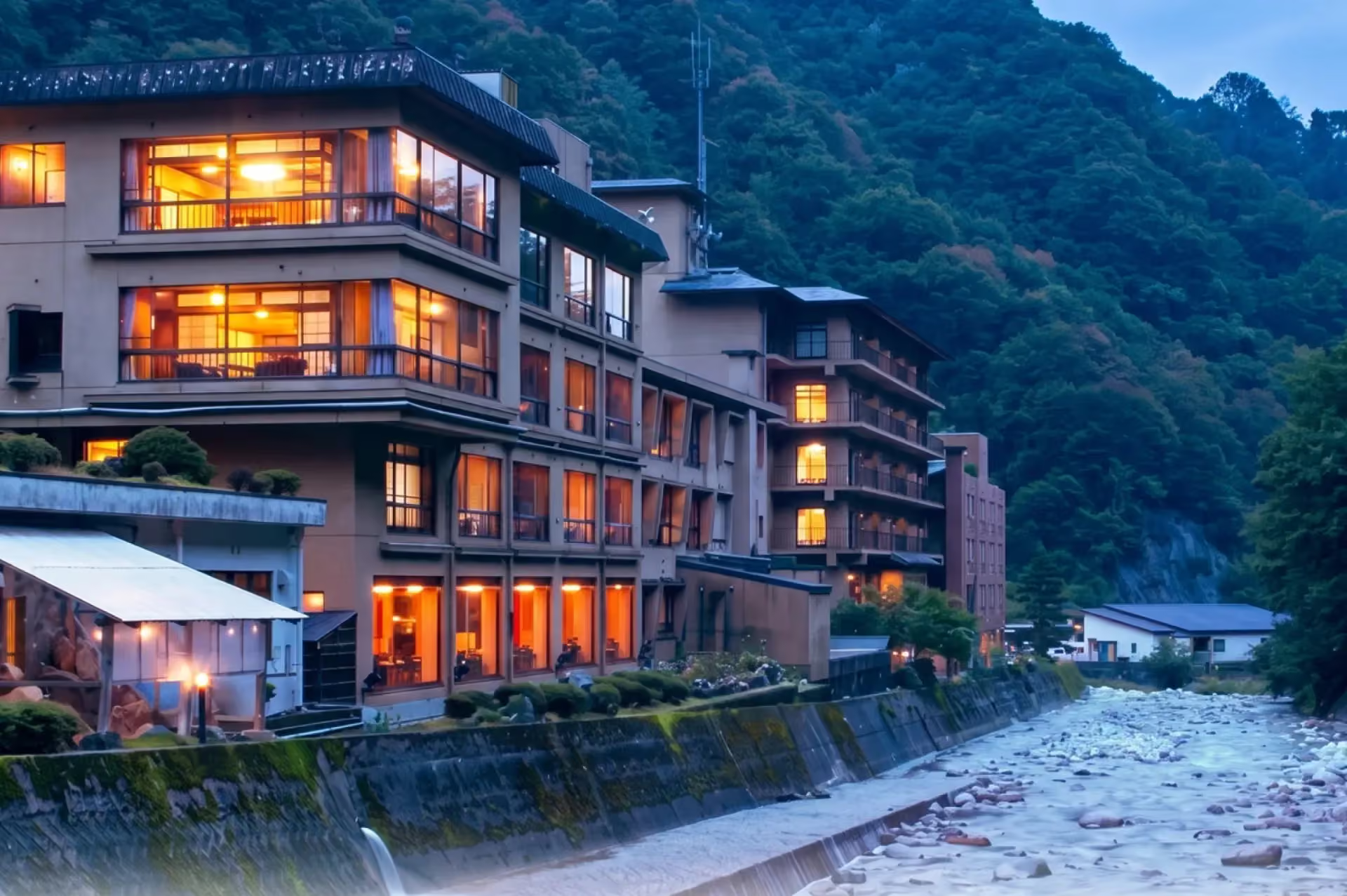
Yuda Onsen is located in Yamaguchi City, the capital of Yamaguchi Prefecture, with the hot spring district spread close to the city center. Rather than a hidden mountain spring, it is an urban-adjacent hot spring area where inns, day-use bathhouses, and foot baths are scattered among shops and restaurants. One of its defining features is that sightseeing and everyday city life coexist side by side.
Yamaguchi City is also known as the “Kyoto of the West” because the Ouchi clan developed it during the Muromachi period to resemble Kyoto, and it has many historical highlights such as the Ruriko-ji Five-Story Pagoda. Because Yuda Onsen sits within this city area, it makes more sense to view it together with castle-town walks and temple visits than as a destination that stands alone. If you want to compare it with representative hot spring areas across Japan, see 10 Famous Hot Springs in Japan.
The discovery legend of the white fox healing its wounds
Yuda Onsen is said to have been discovered when people noticed an injured white fox bathing in the water every night to heal its wounds. From this legend, Yuda Onsen is also called “White Fox Spring,” and fox statues and monuments are placed throughout the spa town. The story is sometimes linked to the appearance of a Yakushi Nyorai statue that emerged from the water.
That said, this kind of discovery legend is based on faith and oral tradition, so it must be treated cautiously as historical fact. Many old hot springs in Japan have animal-discovery tales, in which a hot spring is found after animals bathe in it. Yuda Onsen’s white fox legend is best understood in that context. The connection between hot springs, temples, shrines, and religious belief is a cultural background seen throughout Japan, and the overall picture is summarized in The Relationship Between Hot Springs and Shinto/Buddhism. Even without proving the legend, knowing the source of the white fox symbol changes how the fox statues scattered around town feel to visitors.
Water quality: silky alkaline simple spring water
The waters of Yuda Onsen are mainly classified as alkaline simple spring water. Simple springs are hot springs whose dissolved mineral content does not meet the standard for therapeutic springs. Because no single ingredient stands out, they are often described as gentle and mild on the skin. In Yuda Onsen, the more alkaline water is said to create a silky texture, which is why it is sometimes nicknamed a “beauty-skin spring.”
What you should keep in mind here is that descriptions such as silky texture and beauty-skin spring refer to the feel of the water, not guaranteed cosmetic or health effects. Alkaline water is often described as feeling smooth or slightly slippery, and skin may feel softer after bathing, but experiences vary from person to person, and this article does not make any definitive claims about benefits. For a clearer explanation of why alkaline water feels silky, see A Hot Spring Guide Explained by pH. For a detailed look at simple springs themselves, see What Is a Simple Spring?.
The best way to confirm the water quality is to check the hot spring analysis sheet posted by each facility. Even within the same hot spring area, the source, composition, and water temperature can differ by facility, and whether the water is diluted or heated also affects the bathing experience. Mineral names and concentrations are displayed according to the standards set by the Ministry of the Environment’s Guidelines for Mineral Spring Analysis, so if you are unsure how to read the posted analysis, it helps to understand the standards first. If you want a systematic overview of spring types, Hot Spring Water Types Guide will also help you understand where Yuda Onsen’s water fits.

Enjoying Yuda Onsen as a footbath town
Another face of Yuda Onsen is the network of foot baths scattered throughout the hot spring district. Several foot baths are maintained in plazas and around inns in the town, making it easy to stop by during a walk. Some are set up alongside white fox statues, adding to the hot spring atmosphere of the area.
A foot bath is a partial bath where you soak only up to around the lower legs. You do not need to remove your clothes, and you can use it in a short amount of time. For travelers who do not have time for a full bath, or who are not used to public bathing, it is an easy way to try the feel of Yuda’s water. If you want to know the basics, such as how to enter, recommended temperatures and time, and etiquette for stopping by, see Foot Bath Basics. Before combining it with a walk around town, it is worth reading. Note that locations, hours, and whether a foot bath is free or paid can change, so it is best to confirm with official information before visiting.
Ties to the Bakumatsu, the Restoration, and poets
Yuda Onsen and the surrounding area are also spoken of as a stage for history from the end of the Edo period through the Meiji Restoration. Choshu, now Yamaguchi Prefecture, was one of the central regions of the Restoration, and figures such as Takasugi Shinsaku, Kido Takayoshi (Katsura Kogoro), and even people from other domains such as Saigo Takamori are sometimes introduced as having ties to Yuda Onsen. Stories remain that these patriots stayed at inns in Yuda, but because sources differ on details such as who stayed where and when, it is best to treat these as associations rather than exact facts.
In literature, Yuda Onsen is known as the hometown of poet Chuya Nakahara. Nakahara was born and raised in Yamaguchi and Yuda, and the Chuya Nakahara Memorial Museum near the hot spring district allows visitors to learn about his life and works. The connection between hot spring areas and literary figures can be seen in many places, and the background is summarized in The Relationship Between Literary Giants and Hot Springs. Learning this history and literary context before and after bathing adds depth to a stroll through town.
Quick look at the main highlights
The main highlights of Yuda Onsen and the surrounding area can be organized by location, features, and approximate time needed as follows. Since hours and visiting conditions can change, it is best to check official information before visiting.
| Highlight / Feature | Location / Details | Approximate time / point |
|---|---|---|
| Foot-bath hopping around the spa town | Various places in Yuda Onsen district | You can stop by several spots during a walk. Check locations and hours officially |
| White fox statues and monuments | Various places in the spa town | Symbols tied to the discovery legend. Useful landmarks while walking |
| Chuya Nakahara Memorial Museum | Near Yuda Onsen | Literary museum dedicated to poet Chuya Nakahara. Check opening hours officially |
| Ruriko-ji Five-Story Pagoda (National Treasure) | Yamaguchi City area, close to Yuda Onsen | One of Yamaguchi City’s signature sights. Ideal for a day trip with the hot spring |
The foot baths and white fox statues are clustered along walking routes through the spa town, and if you extend your trip to the Chuya Nakahara Memorial Museum and the Ruriko-ji Five-Story Pagoda, it becomes easy to connect hot springs, literature, and history in a single day. If you are looking for inns or day-use bathhouses, we also provide a facility list and a search page so you can narrow your options by area and budget.
Location and access: from Shin-Yamaguchi Station into the city
The key to understanding Yuda Onsen’s location is that it is close to the city center. The basic access route is to travel from Shin-Yamaguchi Station, served by the Sanyo Shinkansen and conventional rail lines, toward central Yamaguchi City by JR train or bus. Because Yuda Onsen is part of the Yamaguchi city area, getting from the station to the hot spring district is relatively straightforward, and unlike a hidden mountain spring, there is no need to venture deep into mountain roads.
That said, travel times, service frequency, and whether transfers are needed vary depending on the season and timetable, so be sure to check official information before making plans. If you go by car or rental car, Yuda Onsen is a convenient base for visiting sights such as the Ruriko-ji Five-Story Pagoda in central Yamaguchi. Either way, its proximity to the city center makes it easy to include both hot springs and city walking in a one-day itinerary.
Who is it best for?
Yuda Onsen is a good choice for travelers who want to enjoy soft, silky water and historical sightseeing while still benefiting from the convenience of a city area. It is especially well suited to people who want to casually experience the atmosphere of a hot spring town through foot-bath hopping, or who want to explore the temples and shrines of castle-town Yamaguchi and literary sites connected to Chuya Nakahara. Because it is easy to reach from Shin-Yamaguchi Station and pairs well with nearby attractions such as the Ruriko-ji Five-Story Pagoda, you can enjoy it without making the hot spring the entire center of your trip.
On the other hand, people looking for remote quiet, the otherworldly feel of a mountain hidden spring, or strongly distinctive cloudy or strongly scented waters may find Yuda’s urban alkaline simple springs a little understated. In that case, combining it with a hot spring area known for a more distinctive water quality, or treating Yuda Onsen as a base for history and city walks, will likely improve satisfaction. Yuda Onsen’s strength lies less in a sense of isolation and more in the easy convenience of a town hot spring and the softness of its water.
FAQ
Why is Yuda Onsen called “White Fox Spring”?
Because there is a legend that people discovered the hot spring after noticing an injured white fox bathing in the water to heal its wounds. From this story, the spring is commonly called “White Fox Spring,” and fox statues are placed throughout the hot spring district. However, the legend is based on faith and oral tradition, so it must be treated cautiously as historical fact. Similar animal-bathing discovery stories exist at old hot springs across Japan, and Yuda’s tale is one of them.
What kind of water does Yuda Onsen have?
It is mainly classified as alkaline simple spring water and is known for its silky, gentle feel. It is sometimes nicknamed a “beauty-skin spring,” but this describes the bathing sensation rather than guaranteeing any specific cosmetic effect. Because experiences vary from person to person, it is best understood as a way to enjoy the character of the water. Please confirm the exact spring quality using each facility’s hot spring analysis sheet.
Can you enjoy foot baths at Yuda Onsen?
Yes. Foot baths are maintained throughout the spa town, so you can easily stop by during a walk. A foot bath is a partial bath where you soak your lower legs without removing your clothes, making it possible to try Yuda’s water even if you do not have time for a full bath. Since locations, hours, and whether they are free or paid can change, please check official information before visiting. A basic foot-bath guide is also helpful for learning the etiquette.
How is Yuda Onsen connected to history and literature?
Choshu, now Yamaguchi Prefecture, was one of the central regions of the Bakumatsu and Restoration period, and it is introduced as a place connected to figures such as Takasugi Shinsaku, Kido Takayoshi, and Saigo Takamori. It is also known as the hometown of poet Chuya Nakahara, and the Chuya Nakahara Memorial Museum is nearby. However, because sources differ on individual stories such as who stayed there and when, it is best to treat these as associations rather than exact facts.
How do I get to Yuda Onsen?
The basic route is to travel from Shin-Yamaguchi Station by JR train or bus toward central Yamaguchi City. Yuda Onsen is close to the city center, so unlike a hidden mountain spring, there is no need to go far into the mountains. Travel time, frequency, and whether transfers are needed vary by timetable, so please check official information. If you use a car or rental car, it is easy to combine the hot spring with sights such as the Ruriko-ji Five-Story Pagoda.
Summary
Yuda Onsen is a hot spring area that rises near the urban center of Yamaguchi City in Yamaguchi Prefecture. It is known for the legend that a white fox healed its wounds in the water and for its silky alkaline simple spring water. The discovery legend should be understood as a faith-based oral tradition, while the nickname “beauty-skin spring” should be taken as a description of bathing sensation. Foot baths and white fox statues are scattered through the spa town, making it easy to sample the feel of the water during a casual walk.
As a local area, it is spoken of as a place tied to Bakumatsu patriots and as the hometown of poet Chuya Nakahara, and it is easy to connect in a single day with Yamaguchi’s signature sights, such as the Ruriko-ji Five-Story Pagoda in the “Kyoto of the West.” Its greatest strength is its convenience as a town hot spring close to Shin-Yamaguchi Station, and it is best suited to travelers who want to enjoy soft water together with history and literary sightseeing rather than a sense of remoteness. For the broader picture of spring quality, please see Hot Spring Water Types Guide.
Sources
- Yamaguchi City Tourism Information Site, “The Kyoto of the West, Yamaguchi”
- Yuda Onsen Ryokan Cooperative Association (Yuda Onsen tourism information)
- Ministry of the Environment, “Guidelines for Mineral Spring Analysis (Revised in 2014)”