JAPAN ONSEN COLLECTION

When your heart unwinds,

The Finest Moment

A journey through 43 renowned hot springs and saunasJAPAN ONSEN & SAUNA GUIDE

Japan's Finest Onsen & Sauna

43 Extraordinary Destinations

43

A curator who has visited over 300 facilities nationwide handpicks 43 exceptional ones they wholeheartedly recommend. The only guidebook that deeply explores the allure of onsen and sauna—plus culture and etiquette.

Read a free preview
Japan Onsen & Sauna Guide
Find Sauna & Onsen FacilitiesOnsen & Sauna Guides

JAPAN ONSEN COLLECTION

When your heart unwinds,

The Finest Moment

A journey through 43 renowned hot springs and saunasJAPAN ONSEN & SAUNA GUIDE

Japan's Finest Onsen & Sauna

43 Extraordinary Destinations

43

A curator who has visited over 300 facilities nationwide handpicks 43 exceptional ones they wholeheartedly recommend. The only guidebook that deeply explores the allure of onsen and sauna—plus culture and etiquette.

Read a free preview
Japan Onsen & Sauna Guide

Find Facilities

  • Facility List
  • Search by Area
  • Featured Collections
  • Search by Onsen Area

Guides

  • Basic Knowledge and Introduction
  • The Appeal of Japan's Hot Springs and Saunas
  • Health & Benefits
  • Spring Quality & Science
  • Thematic Guides
  • Tips for a Successful Trip

Editor's Journal

  • Sauna & Onsen Trips

Support

  • Privacy Policy
  • Terms of Service
  • Commercial disclosure
  • Contact

© 2025-2026 Japan Onsen & Sauna Guide All rights reserved.

Unauthorized reproduction of content is prohibited.

Thematic GuidesFamous Japanese Hot Springs

Yamanaka Onsen Guide: Kakusenkei Gorge and Kiku no Yu

Explore Yamanaka Onsen in Kaga, Ishikawa, with Kakusenkei Gorge along the Daishoji River, Korogi Bridge and Ayatori Bridge, the famed spring praised by Matsuo Basho, Kiku no Yu, Yamanaka lacquerware, Kutani ware, water quality, and access from Kaga Onsen Station.

Published: Jun 28, 2026

Thematic GuidesFamous Japanese Hot Springs

Yamanaka Onsen Guide: Kakusenkei Gorge and Kiku no Yu

Explore Yamanaka Onsen in Kaga, Ishikawa, with Kakusenkei Gorge along the Daishoji River, Korogi Bridge and Ayatori Bridge, the famed spring praised by Matsuo Basho, Kiku no Yu, Yamanaka lacquerware, Kutani ware, water quality, and access from Kaga Onsen Station.

Published: Jun 28, 2026

  1. Home
  2. >Guide TOP
  3. >Thematic Guides
  4. >Famous Japanese Hot Springs
  5. >Yamanaka Onsen Guide: Kakusenkei Gorge and Kiku no Yu

Table of Contents

  1. 1Kakusenkei Gorge: Gorge Beauty Beside the Hot Spring Town
  2. 2Matsuo Basho and the Link to Oku no Hosomichi
  3. 3Kiku no Yu: The Main Public Bath with Separate Buildings for Men and Women
  4. 4Spring Quality: Calcium-Sodium Sulfate-Chloride Spring Type
  5. 5Yamanaka Lacquerware and Kutani Ware: A Town of Hot Springs and Crafts
Thematic GuidesFamous Japanese Hot Springs

Yamanaka Onsen Guide: Kakusenkei Gorge and Kiku no Yu

Explore Yamanaka Onsen in Kaga, Ishikawa, with Kakusenkei Gorge along the Daishoji River, Korogi Bridge and Ayatori Bridge, the famed spring praised by Matsuo Basho, Kiku no Yu, Yamanaka lacquerware, Kutani ware, water quality, and access from Kaga Onsen Station.

Published: Jun 28, 2026

Thematic GuidesFamous Japanese Hot Springs

Yamanaka Onsen Guide: Kakusenkei Gorge and Kiku no Yu

Explore Yamanaka Onsen in Kaga, Ishikawa, with Kakusenkei Gorge along the Daishoji River, Korogi Bridge and Ayatori Bridge, the famed spring praised by Matsuo Basho, Kiku no Yu, Yamanaka lacquerware, Kutani ware, water quality, and access from Kaga Onsen Station.

Published: Jun 28, 2026

  1. Home
  2. >Guide TOP
  3. >Thematic Guides
  4. >Famous Japanese Hot Springs
  5. >Yamanaka Onsen Guide: Kakusenkei Gorge and Kiku no Yu

Table of Contents

  1. 1Kakusenkei Gorge: Gorge Beauty Beside the Hot Spring Town
  2. 2Matsuo Basho and the Link to Oku no Hosomichi
  3. 3Kiku no Yu: The Main Public Bath with Separate Buildings for Men and Women
  4. 4Spring Quality: Calcium-Sodium Sulfate-Chloride Spring Type
  5. 5Yamanaka Lacquerware and Kutani Ware: A Town of Hot Springs and Crafts
  • 6Quick Sightseeing Table
  • 7How to Walk Around the Hot Spring Town
  • 8Access
  • 9FAQ
  • 10Summary
  • 11Sources
  • Yamanaka Onsen is a hot spring area in Kaga, Ishikawa Prefecture, best known for the scenery of Kakusenkei Gorge, formed by the Daishoji River, right beside the hot spring town. Together with Yamashiro Onsen, Katayamazu Onsen, and Awazu Onsen, it makes up Kaga Onsen Village, where hot springs, gorge scenery, and crafts such as Yamanaka lacquerware all lie within walking distance. If you are looking for a hot spring resort in natural surroundings in Hokuriku, this is one of the first places to consider.

    For travelers, the key point is less that it is one of the Kaga Onsen areas and more that the town is built around the riverside promenade and two bridges, Korogi Bridge and Ayatori Bridge. It is also closely linked to literature, as Matsuo Basho is said to have stayed here during his journey on Oku no Hosomichi and praised the spring. This article organizes the highlights, spring quality, Kiku no Yu public bath, how to walk around the hot spring town, and access based on official information from the Yamanaka Onsen Tourism Association and others. Reading it together with the nearby Yamashiro Onsen Guide makes it easier to understand how the character of each area differs within Kaga Onsen Village.

    Kakusenkei Gorge: Gorge Beauty Beside the Hot Spring Town

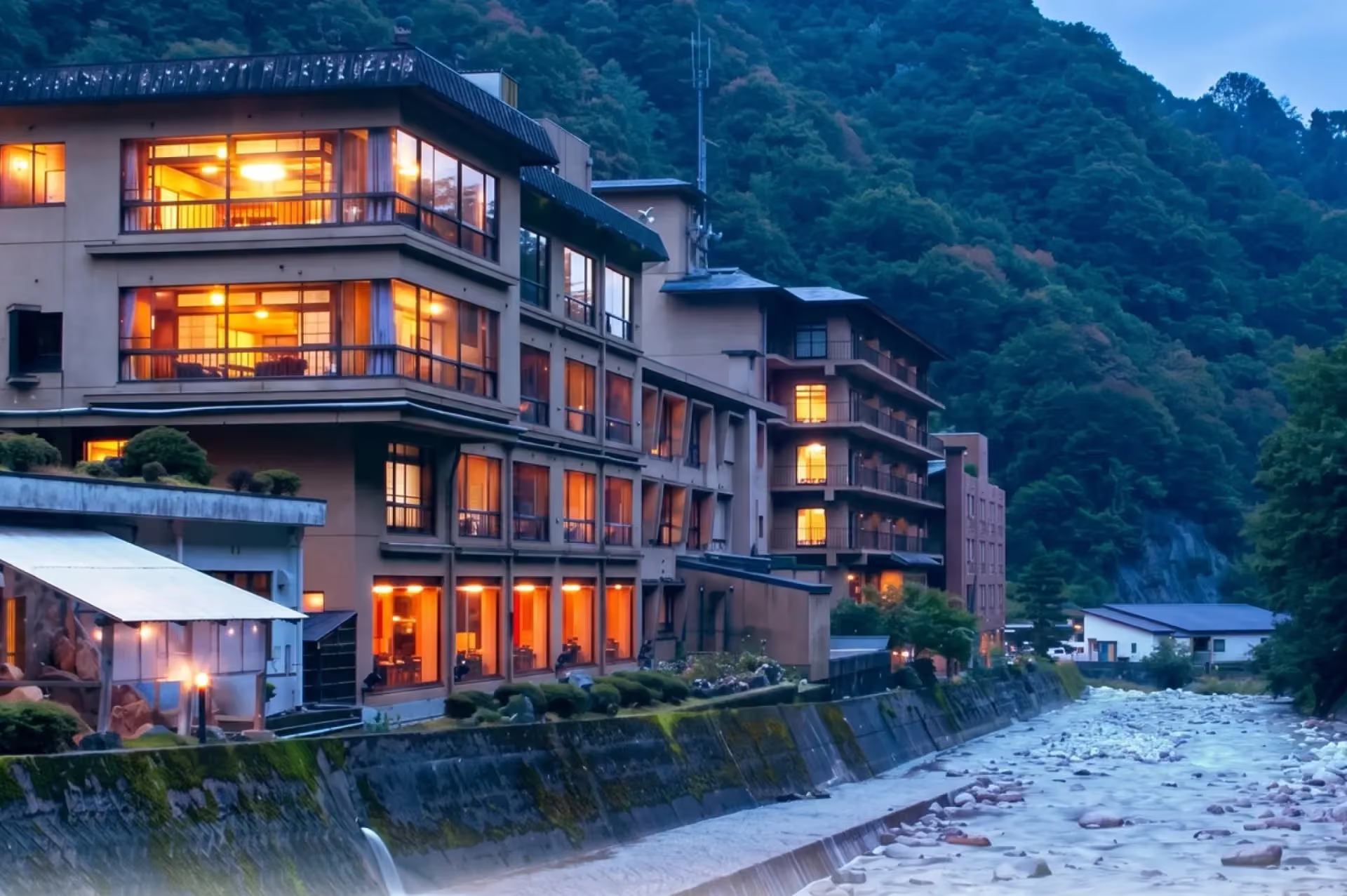
    At the heart of Yamanaka Onsen lies Kakusenkei Gorge, the gorge carved by the Daishoji River. A promenade extends for about 1.3 km from Korogi Bridge to Ayatori Bridge, and the chance to walk close to the sound of the river, dramatic rocks, and seasonal trees is what sets Yamanaka apart from other hot spring areas in Kaga Onsen Village. A mountain gorge landscape right next to the hot spring town gives it a distinct character that differs from Katayamazu Onsen by the lakeside and Yamashiro Onsen with its preserved Yuno-kura streetscape.

    The two bridges spanning the gorge are also major sights. Korogi Bridge is said to be a wooden bridge made entirely of Japanese cypress and is built on the upstream side of the gorge, making it a famous photo spot in autumn foliage and fresh greenery seasons. Downstream, Ayatori Bridge is said to have been designed by Hiroshi Teshigahara, the third headmaster of the Sogetsu school of ikebana, and its distinctive S-shaped form, created with the gorge view in mind, stands out. Being able to compare a classical wooden bridge and a modern, avant-garde bridge in one gorge is something unique to Yamanaka Onsen.

    Along the gorge, seasonal kawadoko riverside platforms are sometimes set up, allowing visitors to enjoy drinks and more right above the water. Because kawadoko and the promenade depend on weather, season, and river conditions, please check the latest official information from the Yamanaka Onsen Tourism Association for opening periods and availability.

    Matsuo Basho and the Link to Oku no Hosomichi

    No discussion of Yamanaka Onsen is complete without Matsuo Basho. It is said that Basho stayed here during his 1689 journey on Oku no Hosomichi and held the Yamanaka spring in especially high regard. Yamanaka Onsen is considered one of the springs Basho praised as among Japan’s finest, and the hot spring town has many stone monuments and historical sites connected to this association.

    That said, there are various views on which spring Basho valued most and how exactly that praise is recorded, so part of the story remains traditional lore. Even without verifying every historical detail, Yamanaka’s appeal comes through clearly, but walking along the gorge and stopping at Basho-related sites reveals the depth of this hot spring town, where bathing culture and literature overlap. Whether you make the literary connection the center of your trip or put the gorge scenery first, the shape of your stay will change accordingly.

    Kiku no Yu: The Main Public Bath with Separate Buildings for Men and Women

    The symbol of Yamanaka Onsen is Kiku no Yu, the communal bath known locally as the soyu. In Yamanaka Onsen, the central public bath serving the community is called the soyu, and Kiku no Yu fills that role. Its distinctive feature is that the men’s bath and women’s bath are housed in separate buildings, arranged to face each other. While communal baths are usually split by gender within a single building, this separate-building layout is uniquely Yamanaka.

    A communal bath is a place to experience a bathing culture rooted in the local community, different from a ryokan indoor bath or a day-use bath facility. In Yamanaka Onsen, cultural facilities are also gathered around bathing, including a theater building near the women’s bath side. Since fees, opening hours, and facilities can change, it is best to confirm details with official sources before visiting. As the relationship between communal baths, ryokan, and day-use facilities differs from one hot spring area to another, it is helpful to check the local signs and information boards as well.

    Spring Quality: Calcium-Sodium Sulfate-Chloride Spring Type

    The water of Yamanaka Onsen is mainly a calcium-sodium sulfate-chloride spring type. Chloride spring components are often said to form a thin film on the skin and help warmth last after bathing, while the spring also contains sulfate components, making it a complex water quality. As in other parts of Kaga Onsen Village, the actual feel can vary depending on the source and facility.

    It is sometimes introduced as a beauty bath, but it is more accurate to understand that as an impression of comfort and warmth retention rather than a guaranteed cosmetic effect. Because highly warming water can lead to overheating or fatigue if you stay in too long, it is safer to bathe in timed intervals and take breaks with hydration in between. For the most reliable confirmation of spring quality, check the hot spring analysis sheet posted at each facility. If you want to learn more about sulfate springs themselves, see What Is a Sulfate Spring?, and for the full picture of the 10 spring types, see Beginner’s Guide to Hot Spring Water Types.

    Yamanaka Lacquerware and Kutani Ware: A Town of Hot Springs and Crafts

    Yamanaka Onsen is also known as a town of traditional crafts. In particular, Yamanaka lacquerware is said to be highly regarded for woodturning techniques that shape the wood while it spins on a lathe. The making of wooden lacquerware such as bowls and tea utensils has continued here as a local industry, and shops and workshops dealing in lacquerware can be found in the hot spring town, making it enjoyable to encounter crafts after bathing.

    The Kaga region is also famous as the home of Kutani ware, a colored porcelain. If you extend your trip from Yamanaka Onsen to other parts of Kaga Onsen Village or nearby kilns, you can compare lacquerware and porcelain, two very different crafts, in a single journey. Making crafts as well as hot springs the theme of your trip makes it easier to plan a wider tour of Kaga Onsen Village. In terms of crafts, it is also worth reading this together with the Yamashiro Onsen Guide, which discusses links to Kitaoji Rosanjin and Kutani ware, to appreciate the cultural richness of Kaga more fully.

    Quick Sightseeing Table

    To walk the hot spring town efficiently, here is a simple guide to the main sights by location, features, and approximate time needed. These times are only rough estimates, and please note that use of the riverside platforms and gorge promenade depends on the season and weather.

    SightLocationFeatureApprox. time
    Kakusenkei PromenadeKorogi Bridge to Ayatori BridgeAbout 1.3 km of walking path along the Daishoji River gorge40 minutes to 1 hour one way
    Korogi BridgeUpstream side of the gorgeWooden bridge said to be made entirely of Japanese cypress. Famous for autumn leaves and fresh greenery10 to 20 minutes
    Ayatori BridgeDownstream side of the gorgeS-shaped bridge said to have been designed by Hiroshi Teshigahara10 to 20 minutes
    Kiku no Yu (soyu)Center of the hot spring townCommunal bath with separate buildings for men and womenAbout 1 hour for bathing
    Riverside platformAlong Kakusenkei GorgeSeasonal attraction. Check official sources for opening periods30 minutes or more

    How to Walk Around the Hot Spring Town

    The main axis for exploring Yamanaka Onsen on foot is the combination of the gorge and the town center. First, get a feel for the baths and townscape in the center where Kiku no Yu stands, then walk the Kakusenkei promenade from Korogi Bridge to Ayatori Bridge. This covers the essence of Yamanaka fairly well. It is easy to build an itinerary that walks one way through the gorge, pauses to enjoy the view from the bridges, then returns to the hot spring town to visit the public bath and lacquerware shops.

    Because the hot spring town is not huge, it is easy to reserve time for staying at your inn as well. A practical plan is to walk the gorge on the afternoon of arrival, then visit Kiku no Yu, craft shops, and possibly other Kaga Onsen Village areas the next day. If Yamashiro is a town to experience through its communal bath culture and Yamanaka is a town to experience through gorge scenery and crafts, it becomes easier to decide how to tour Kaga Onsen Village. If you are looking for inns or day-use bathing facilities in Yamanaka, we have prepared a facility list and search page so you can narrow options by area and budget. If you want to compare Japan’s most famous hot spring areas more broadly, Top 10 Famous Hot Springs in Japan is also useful.

    Access

    The main gateway to Yamanaka Onsen is JR Kaga Onsen Station. With the March 2024 extension of the Hokuriku Shinkansen from Kanazawa to Tsuruga, Shinkansen service began stopping at Kaga Onsen Station, shortening travel time from the Tokyo area. In general, you enter Yamanaka Onsen by local bus or taxi from Kaga Onsen Station. Since bus frequency, last departures, and travel time vary by season, please check the latest official timetables and fares. After the Shinkansen extension, it is also a good idea to confirm the connection again before departure.

    By car, the Hokuriku Expressway interchanges serve as the main base, making it easy to visit other areas of Kaga Onsen Village such as Yamashiro Onsen, Katayamazu Onsen, and Awazu Onsen, as well as nearby kilns. Even by public transportation, Yamanaka Onsen is fairly manageable on its own, but if you want to visit multiple hot spring towns and craft villages in one trip, checking travel time and bus service in advance will give you more flexibility. If you plan to combine it with sightseeing in Kanazawa, deciding in advance whether Yamanaka will be the main destination or part of a wider loop will make it easier to manage your stay.

    FAQ

    What is the main highlight of Yamanaka Onsen?

    The scenery of Kakusenkei Gorge along the Daishoji River. A 1.3 km promenade runs from Korogi Bridge to Ayatori Bridge, letting you walk close to the gorge beauty. Another highlight is the chance to compare Korogi Bridge, said to be made entirely of Japanese cypress, with Ayatori Bridge, said to have been designed by Hiroshi Teshigahara. Since use of the riverside platform and promenade depends on the season and weather, please check official information.

    What is its connection to Matsuo Basho?

    Basho is said to have stayed in Yamanaka Onsen during his 1689 Oku no Hosomichi journey and to have highly praised the spring. It is considered one of the springs he admired as among Japan’s finest, and the hot spring town has many stone monuments and historical sites connected to him. However, the wording of the praise and the source materials vary, and some parts are based on tradition.

    What is Kiku no Yu?

    It is the communal bath, or soyu, of Yamanaka Onsen, and its distinctive feature is that the men’s bath and women’s bath are built as separate buildings. It is a place to experience a bathing culture rooted in the local community, and the area around the women’s bath includes a theater building and other cultural facilities gathered around bathing. Fees and opening hours may change, so please confirm with official information.

    What is the spring quality of Yamanaka Onsen?

    It is mainly a calcium-sodium sulfate-chloride spring type. This is a complex spring quality containing both chloride spring components, which are associated with a lasting warm feel, and sulfate spring components. The feel can differ depending on the source and facility, and the most reliable way to confirm the quality is to check the hot spring analysis sheet posted at each facility.

    How do I get there from Kaga Onsen Station?

    The basic route is to take a local bus or taxi from Kaga Onsen Station to Yamanaka Onsen. With the March 2024 Shinkansen extension, Shinkansen trains now stop at Kaga Onsen Station. Since bus frequency, timetable, and travel time vary by season, please check the latest official information.

    Summary

    Yamanaka Onsen is a famous hot spring area in Kaga, Ishikawa Prefecture, with Kakusenkei Gorge right beside the hot spring town along the Daishoji River. Centered on the gorge scenery of the promenade connecting Korogi Bridge and Ayatori Bridge, it combines literary associations said to be praised by Matsuo Basho, the communal bath Kiku no Yu with separate buildings for men and women, and crafts such as Yamanaka lacquerware and Kutani ware all within walking distance. Its spring quality is mainly a calcium-sodium sulfate-chloride spring type, giving it a stronger emphasis on natural scenery than many other areas in Kaga Onsen Village.

    If this is your first visit, it is a good idea to decide in advance whether you want to focus on the gorge promenade or Kiku no Yu, then walk in a way that connects the town center and Kakusenkei. For travelers who want to include hot springs, gorge beauty, and crafts in one Hokuriku trip, this is a strong choice. Along with the nearby Yamashiro Onsen Guide, consider how you want to tour Kaga Onsen Village.

    Sources

    • Yamanaka Onsen Tourism Association
    • Kaga City Tourism and Exchange Organization (KAGA Tabi-Machi Net)
    • Ministry of the Environment, Guidelines for Mineral Spring Analysis (Revised in 2014)

    Hotels & Facilities in This Onsen Town

    Back to Articles

    Category

    Thematic GuidesFamous Japanese Hot Springs

    More in This Category

    • Yuda Onsen Guide: White Fox Legend and Soft Hot Spring Waters

      Jun 28, 2026

    • Yubara Onsen Guide: Sand Bath and Top-Ranked Open-Air Bath

      Jun 28, 2026

    • Kotohira Onsen Guide: Kagawa Hot Spring Town by Kotohira-gu Shrine

      Jun 28, 2026

    • Iya Onsen Guide: Hidden Gorge & Cable Car Open-Air Bath

      Jun 28, 2026

    • Sukayu Onsen Guide: Hiba Sennin Buro & Snowy Hakkoda

      Jun 28, 2026

    See All

    Related Articles

    • Awazu Onsen Guide: Kaga's Ancient Hot Spring Inn

      Jun 28, 2026

    • Minakami Hot Spring Guide: 18 Baths and Outdoor Base

      Jun 28, 2026

    • Ryujin Onsen Guide: Wakayama's Hidden Beauty Bath

      Jun 28, 2026

  • 6Quick Sightseeing Table
  • 7How to Walk Around the Hot Spring Town
  • 8Access
  • 9FAQ
  • 10Summary
  • 11Sources
  • Yamanaka Onsen is a hot spring area in Kaga, Ishikawa Prefecture, best known for the scenery of Kakusenkei Gorge, formed by the Daishoji River, right beside the hot spring town. Together with Yamashiro Onsen, Katayamazu Onsen, and Awazu Onsen, it makes up Kaga Onsen Village, where hot springs, gorge scenery, and crafts such as Yamanaka lacquerware all lie within walking distance. If you are looking for a hot spring resort in natural surroundings in Hokuriku, this is one of the first places to consider.

    For travelers, the key point is less that it is one of the Kaga Onsen areas and more that the town is built around the riverside promenade and two bridges, Korogi Bridge and Ayatori Bridge. It is also closely linked to literature, as Matsuo Basho is said to have stayed here during his journey on Oku no Hosomichi and praised the spring. This article organizes the highlights, spring quality, Kiku no Yu public bath, how to walk around the hot spring town, and access based on official information from the Yamanaka Onsen Tourism Association and others. Reading it together with the nearby Yamashiro Onsen Guide makes it easier to understand how the character of each area differs within Kaga Onsen Village.

    Kakusenkei Gorge: Gorge Beauty Beside the Hot Spring Town

    At the heart of Yamanaka Onsen lies Kakusenkei Gorge, the gorge carved by the Daishoji River. A promenade extends for about 1.3 km from Korogi Bridge to Ayatori Bridge, and the chance to walk close to the sound of the river, dramatic rocks, and seasonal trees is what sets Yamanaka apart from other hot spring areas in Kaga Onsen Village. A mountain gorge landscape right next to the hot spring town gives it a distinct character that differs from Katayamazu Onsen by the lakeside and Yamashiro Onsen with its preserved Yuno-kura streetscape.

    The two bridges spanning the gorge are also major sights. Korogi Bridge is said to be a wooden bridge made entirely of Japanese cypress and is built on the upstream side of the gorge, making it a famous photo spot in autumn foliage and fresh greenery seasons. Downstream, Ayatori Bridge is said to have been designed by Hiroshi Teshigahara, the third headmaster of the Sogetsu school of ikebana, and its distinctive S-shaped form, created with the gorge view in mind, stands out. Being able to compare a classical wooden bridge and a modern, avant-garde bridge in one gorge is something unique to Yamanaka Onsen.

    Along the gorge, seasonal kawadoko riverside platforms are sometimes set up, allowing visitors to enjoy drinks and more right above the water. Because kawadoko and the promenade depend on weather, season, and river conditions, please check the latest official information from the Yamanaka Onsen Tourism Association for opening periods and availability.

    Matsuo Basho and the Link to Oku no Hosomichi

    No discussion of Yamanaka Onsen is complete without Matsuo Basho. It is said that Basho stayed here during his 1689 journey on Oku no Hosomichi and held the Yamanaka spring in especially high regard. Yamanaka Onsen is considered one of the springs Basho praised as among Japan’s finest, and the hot spring town has many stone monuments and historical sites connected to this association.

    That said, there are various views on which spring Basho valued most and how exactly that praise is recorded, so part of the story remains traditional lore. Even without verifying every historical detail, Yamanaka’s appeal comes through clearly, but walking along the gorge and stopping at Basho-related sites reveals the depth of this hot spring town, where bathing culture and literature overlap. Whether you make the literary connection the center of your trip or put the gorge scenery first, the shape of your stay will change accordingly.

    Kiku no Yu: The Main Public Bath with Separate Buildings for Men and Women

    The symbol of Yamanaka Onsen is Kiku no Yu, the communal bath known locally as the soyu. In Yamanaka Onsen, the central public bath serving the community is called the soyu, and Kiku no Yu fills that role. Its distinctive feature is that the men’s bath and women’s bath are housed in separate buildings, arranged to face each other. While communal baths are usually split by gender within a single building, this separate-building layout is uniquely Yamanaka.

    A communal bath is a place to experience a bathing culture rooted in the local community, different from a ryokan indoor bath or a day-use bath facility. In Yamanaka Onsen, cultural facilities are also gathered around bathing, including a theater building near the women’s bath side. Since fees, opening hours, and facilities can change, it is best to confirm details with official sources before visiting. As the relationship between communal baths, ryokan, and day-use facilities differs from one hot spring area to another, it is helpful to check the local signs and information boards as well.

    Spring Quality: Calcium-Sodium Sulfate-Chloride Spring Type

    The water of Yamanaka Onsen is mainly a calcium-sodium sulfate-chloride spring type. Chloride spring components are often said to form a thin film on the skin and help warmth last after bathing, while the spring also contains sulfate components, making it a complex water quality. As in other parts of Kaga Onsen Village, the actual feel can vary depending on the source and facility.

    It is sometimes introduced as a beauty bath, but it is more accurate to understand that as an impression of comfort and warmth retention rather than a guaranteed cosmetic effect. Because highly warming water can lead to overheating or fatigue if you stay in too long, it is safer to bathe in timed intervals and take breaks with hydration in between. For the most reliable confirmation of spring quality, check the hot spring analysis sheet posted at each facility. If you want to learn more about sulfate springs themselves, see What Is a Sulfate Spring?, and for the full picture of the 10 spring types, see Beginner’s Guide to Hot Spring Water Types.

    Yamanaka Lacquerware and Kutani Ware: A Town of Hot Springs and Crafts

    Yamanaka Onsen is also known as a town of traditional crafts. In particular, Yamanaka lacquerware is said to be highly regarded for woodturning techniques that shape the wood while it spins on a lathe. The making of wooden lacquerware such as bowls and tea utensils has continued here as a local industry, and shops and workshops dealing in lacquerware can be found in the hot spring town, making it enjoyable to encounter crafts after bathing.

    The Kaga region is also famous as the home of Kutani ware, a colored porcelain. If you extend your trip from Yamanaka Onsen to other parts of Kaga Onsen Village or nearby kilns, you can compare lacquerware and porcelain, two very different crafts, in a single journey. Making crafts as well as hot springs the theme of your trip makes it easier to plan a wider tour of Kaga Onsen Village. In terms of crafts, it is also worth reading this together with the Yamashiro Onsen Guide, which discusses links to Kitaoji Rosanjin and Kutani ware, to appreciate the cultural richness of Kaga more fully.

    Quick Sightseeing Table

    To walk the hot spring town efficiently, here is a simple guide to the main sights by location, features, and approximate time needed. These times are only rough estimates, and please note that use of the riverside platforms and gorge promenade depends on the season and weather.

    SightLocationFeatureApprox. time
    Kakusenkei PromenadeKorogi Bridge to Ayatori BridgeAbout 1.3 km of walking path along the Daishoji River gorge40 minutes to 1 hour one way
    Korogi BridgeUpstream side of the gorgeWooden bridge said to be made entirely of Japanese cypress. Famous for autumn leaves and fresh greenery10 to 20 minutes
    Ayatori BridgeDownstream side of the gorgeS-shaped bridge said to have been designed by Hiroshi Teshigahara10 to 20 minutes
    Kiku no Yu (soyu)Center of the hot spring townCommunal bath with separate buildings for men and womenAbout 1 hour for bathing
    Riverside platformAlong Kakusenkei GorgeSeasonal attraction. Check official sources for opening periods30 minutes or more

    How to Walk Around the Hot Spring Town

    The main axis for exploring Yamanaka Onsen on foot is the combination of the gorge and the town center. First, get a feel for the baths and townscape in the center where Kiku no Yu stands, then walk the Kakusenkei promenade from Korogi Bridge to Ayatori Bridge. This covers the essence of Yamanaka fairly well. It is easy to build an itinerary that walks one way through the gorge, pauses to enjoy the view from the bridges, then returns to the hot spring town to visit the public bath and lacquerware shops.

    Because the hot spring town is not huge, it is easy to reserve time for staying at your inn as well. A practical plan is to walk the gorge on the afternoon of arrival, then visit Kiku no Yu, craft shops, and possibly other Kaga Onsen Village areas the next day. If Yamashiro is a town to experience through its communal bath culture and Yamanaka is a town to experience through gorge scenery and crafts, it becomes easier to decide how to tour Kaga Onsen Village. If you are looking for inns or day-use bathing facilities in Yamanaka, we have prepared a facility list and search page so you can narrow options by area and budget. If you want to compare Japan’s most famous hot spring areas more broadly, Top 10 Famous Hot Springs in Japan is also useful.

    Access

    The main gateway to Yamanaka Onsen is JR Kaga Onsen Station. With the March 2024 extension of the Hokuriku Shinkansen from Kanazawa to Tsuruga, Shinkansen service began stopping at Kaga Onsen Station, shortening travel time from the Tokyo area. In general, you enter Yamanaka Onsen by local bus or taxi from Kaga Onsen Station. Since bus frequency, last departures, and travel time vary by season, please check the latest official timetables and fares. After the Shinkansen extension, it is also a good idea to confirm the connection again before departure.

    By car, the Hokuriku Expressway interchanges serve as the main base, making it easy to visit other areas of Kaga Onsen Village such as Yamashiro Onsen, Katayamazu Onsen, and Awazu Onsen, as well as nearby kilns. Even by public transportation, Yamanaka Onsen is fairly manageable on its own, but if you want to visit multiple hot spring towns and craft villages in one trip, checking travel time and bus service in advance will give you more flexibility. If you plan to combine it with sightseeing in Kanazawa, deciding in advance whether Yamanaka will be the main destination or part of a wider loop will make it easier to manage your stay.

    FAQ

    What is the main highlight of Yamanaka Onsen?

    The scenery of Kakusenkei Gorge along the Daishoji River. A 1.3 km promenade runs from Korogi Bridge to Ayatori Bridge, letting you walk close to the gorge beauty. Another highlight is the chance to compare Korogi Bridge, said to be made entirely of Japanese cypress, with Ayatori Bridge, said to have been designed by Hiroshi Teshigahara. Since use of the riverside platform and promenade depends on the season and weather, please check official information.

    What is its connection to Matsuo Basho?

    Basho is said to have stayed in Yamanaka Onsen during his 1689 Oku no Hosomichi journey and to have highly praised the spring. It is considered one of the springs he admired as among Japan’s finest, and the hot spring town has many stone monuments and historical sites connected to him. However, the wording of the praise and the source materials vary, and some parts are based on tradition.

    What is Kiku no Yu?

    It is the communal bath, or soyu, of Yamanaka Onsen, and its distinctive feature is that the men’s bath and women’s bath are built as separate buildings. It is a place to experience a bathing culture rooted in the local community, and the area around the women’s bath includes a theater building and other cultural facilities gathered around bathing. Fees and opening hours may change, so please confirm with official information.

    What is the spring quality of Yamanaka Onsen?

    It is mainly a calcium-sodium sulfate-chloride spring type. This is a complex spring quality containing both chloride spring components, which are associated with a lasting warm feel, and sulfate spring components. The feel can differ depending on the source and facility, and the most reliable way to confirm the quality is to check the hot spring analysis sheet posted at each facility.

    How do I get there from Kaga Onsen Station?

    The basic route is to take a local bus or taxi from Kaga Onsen Station to Yamanaka Onsen. With the March 2024 Shinkansen extension, Shinkansen trains now stop at Kaga Onsen Station. Since bus frequency, timetable, and travel time vary by season, please check the latest official information.

    Summary

    Yamanaka Onsen is a famous hot spring area in Kaga, Ishikawa Prefecture, with Kakusenkei Gorge right beside the hot spring town along the Daishoji River. Centered on the gorge scenery of the promenade connecting Korogi Bridge and Ayatori Bridge, it combines literary associations said to be praised by Matsuo Basho, the communal bath Kiku no Yu with separate buildings for men and women, and crafts such as Yamanaka lacquerware and Kutani ware all within walking distance. Its spring quality is mainly a calcium-sodium sulfate-chloride spring type, giving it a stronger emphasis on natural scenery than many other areas in Kaga Onsen Village.

    If this is your first visit, it is a good idea to decide in advance whether you want to focus on the gorge promenade or Kiku no Yu, then walk in a way that connects the town center and Kakusenkei. For travelers who want to include hot springs, gorge beauty, and crafts in one Hokuriku trip, this is a strong choice. Along with the nearby Yamashiro Onsen Guide, consider how you want to tour Kaga Onsen Village.

    Sources

    • Yamanaka Onsen Tourism Association
    • Kaga City Tourism and Exchange Organization (KAGA Tabi-Machi Net)
    • Ministry of the Environment, Guidelines for Mineral Spring Analysis (Revised in 2014)

    Hotels & Facilities in This Onsen Town

    Back to Articles

    Category

    Thematic GuidesFamous Japanese Hot Springs

    More in This Category

    • Yuda Onsen Guide: White Fox Legend and Soft Hot Spring Waters

      Jun 28, 2026

    • Yubara Onsen Guide: Sand Bath and Top-Ranked Open-Air Bath

      Jun 28, 2026

    • Kotohira Onsen Guide: Kagawa Hot Spring Town by Kotohira-gu Shrine

      Jun 28, 2026

    • Iya Onsen Guide: Hidden Gorge & Cable Car Open-Air Bath

      Jun 28, 2026

    • Sukayu Onsen Guide: Hiba Sennin Buro & Snowy Hakkoda

      Jun 28, 2026

    See All

    Related Articles

    • Awazu Onsen Guide: Kaga's Ancient Hot Spring Inn

      Jun 28, 2026

    • Minakami Hot Spring Guide: 18 Baths and Outdoor Base

      Jun 28, 2026

    • Ryujin Onsen Guide: Wakayama's Hidden Beauty Bath

      Jun 28, 2026

    Yamanaka Onsen Kajikaso
    Yamanaka Onsen

    Yamanaka Onsen Kajikaso

    ♨️Natural Hot Spring
    🔥Sauna Available
    ❄️Cold Bath Available
    📍〒922-0126 Ishikawa Prefecture, Kaga City, Yamanaka Onsen, Kajikamachi Ho-100
    Hours🕐:15:00〜00:00, 04:00〜10:00
    Yamanaka Onsen Yubatake no Yado Hanatsubaki
    Yamanaka Onsen

    Yamanaka Onsen Yubatake no Yado Hanatsubaki

    ♨️Natural Hot Spring
    ♨️Free-flow from source
    📍〒922-0138 Ishikawa Prefecture, Kaga City, Yamanaka Onsen, Kayano-machi Ha-36
    Hours🕐:15:00〜00:00, 05:00〜10:00
    Shirasagiyu Tawaraya
    Yamanaka Onsen

    Shirasagiyu Tawaraya

    ♨️Natural Hot Spring
    ♨️Free-flow from source
    🔥Sauna Available
    ❄️Cold Bath Available
    📍〒922-0114 2-1 H, Yamanaka Onsen Higashimachi, Kaga City, Ishikawa Prefecture
    Hours🕐:15:00〜00:00, 05:00〜11:00
    Yamanaka Onsen Kajikaso
    Yamanaka Onsen

    Yamanaka Onsen Kajikaso

    ♨️Natural Hot Spring
    🔥Sauna Available
    ❄️Cold Bath Available
    📍〒922-0126 Ishikawa Prefecture, Kaga City, Yamanaka Onsen, Kajikamachi Ho-100
    Hours🕐:15:00〜00:00, 04:00〜10:00
    Yamanaka Onsen Yubatake no Yado Hanatsubaki
    Yamanaka Onsen

    Yamanaka Onsen Yubatake no Yado Hanatsubaki

    ♨️Natural Hot Spring
    ♨️Free-flow from source
    📍〒922-0138 Ishikawa Prefecture, Kaga City, Yamanaka Onsen, Kayano-machi Ha-36
    Hours🕐:15:00〜00:00, 05:00〜10:00
    Shirasagiyu Tawaraya
    Yamanaka Onsen

    Shirasagiyu Tawaraya

    ♨️Natural Hot Spring
    ♨️Free-flow from source
    🔥Sauna Available
    ❄️Cold Bath Available
    📍〒922-0114 2-1 H, Yamanaka Onsen Higashimachi, Kaga City, Ishikawa Prefecture
    Hours🕐:15:00〜00:00, 05:00〜11:00