Tips for a Successful TripChoosing Hot Springs by Region
Hokkaido Onsen Guide: Volcano, Snow & Lake Hot Springs
Explore Hokkaido’s best hot springs, from Noboribetsu and Jozankei to Lake Toya, Sounkyo, Tokachigawa, Niseko, and Lake Akan. Find quick guides and access tips.
Published: Jun 28, 2026
Tips for a Successful TripChoosing Hot Springs by Region
Hokkaido Onsen Guide: Volcano, Snow & Lake Hot Springs
Explore Hokkaido’s best hot springs, from Noboribetsu and Jozankei to Lake Toya, Sounkyo, Tokachigawa, Niseko, and Lake Akan. Find quick guides and access tips.
Published: Jun 28, 2026
Hokkaido is a region rich in hot springs, with many volcanoes and diverse baths found across the island. Its hot spring towns are widely spread in places tied to grand nature, including lakesides, valleys, snowfields, and ski resort areas. The key point is simple: Hokkaido onsen are easiest to choose when you first decide which area and which kind of nature you want to enjoy with your bath.
This article gives an overview of Hokkaido’s representative hot spring areas and serves as a hub linking to detailed complete guides and related articles. It presents major destinations and their characteristics by area in a quick-reference table, then organizes the appeal of famous spots such as Noboribetsu and Jozankei. Travel times, access, and opening hours can change easily, and winter is especially affected by weather and transport conditions, so please check official information from local tourism associations and transportation providers before you plan.
Why Hokkaido Has So Many Hot Springs
Hokkaido has so many hot springs because of its volcanic origins. Active volcanoes are scattered across the island, and many places lie close to underground heat sources, making hot springs more likely to emerge. Volcanic activity has also created dramatic landscapes such as Noboribetsu’s Jigokudani. For a deeper look at the link between volcanoes and hot springs, see the relationship between volcanoes and onsen, which is useful when you want to understand Hokkaido onsen through its terrain.
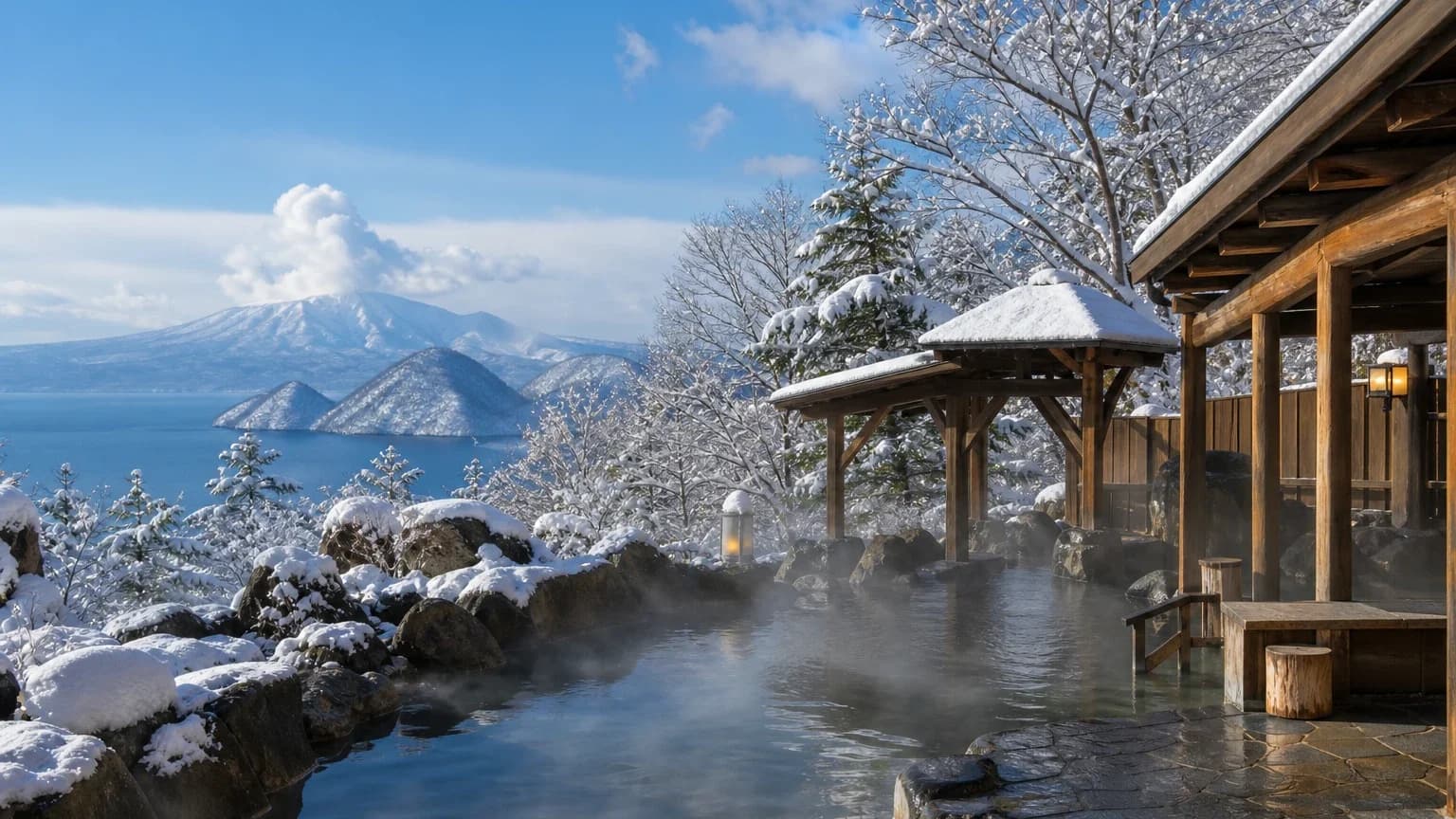
Another defining feature is that its hot springs are closely tied to grand nature, lakes, and snow. From lakeside baths like Lake Toya and Lake Akan, to valley onsen like Sounkyo, to mountain baths enjoyed with skiing in Niseko, the settings and ways to stay are very varied. In winter especially, open-air baths surrounded by snow become a major attraction. The experience of soaking in a bath while snow falls around you is covered in snow-view baths.
For a broader classification of hot spring towns, see types of onsen destinations. It helps when deciding which Hokkaido hot spring area best fits your trip.
Hokkaido by Area: Quick Reference to Major Hot Springs
To help you grasp the overall picture, here is a list of Hokkaido’s main areas, representative hot spring towns, and their features. The destinations listed here are only a small part of Hokkaido’s onsen map, and the descriptions are general tendencies. Please check the linked complete guides where available.
| Area | Representative hot spring towns | Features (general tendencies) |
|---|---|---|
| Central Hokkaido / Near Sapporo | Jozankei Onsen | A valley hot spring resort often called Sapporo’s inner retreat. Easy access from the city |
| Southern Hokkaido / Noboribetsu area | Noboribetsu Onsen | Famous for Jigokudani steam vents and known as a “department store of hot springs” for its many spring qualities |
| Southern Hokkaido / Lake Toya area | Lake Toya Onsen | A lakeside hot spring town. Enjoy it together with volcanic scenery such as Mt. Usu |
| Central Hokkaido / Niseko | Niseko hot springs | A mountain hot spring area enjoyed together with a ski resort |
| Northern Hokkaido / Daisetsuzan area | Sounkyo Onsen | A valley-side hot spring town with the nature of Daisetsuzan and Mt. Asahi as its backdrop |
| Eastern Hokkaido / Tokachi | Tokachigawa Onsen | A flatland hot spring town known for its Moor springs, said to contain plant-derived components |
| Eastern Hokkaido / Akan | Lake Akan Onsen | A lakeside hot spring town. Stay while enjoying the nature of Lake Akan, famous for marimo |
This table is only a guide to help you understand the differences in character. Many other hot spring towns exist in each area. Below, we take a closer look at the character of the representative destinations.
Central Hokkaido: Jozankei, Sapporo’s Inner Retreat
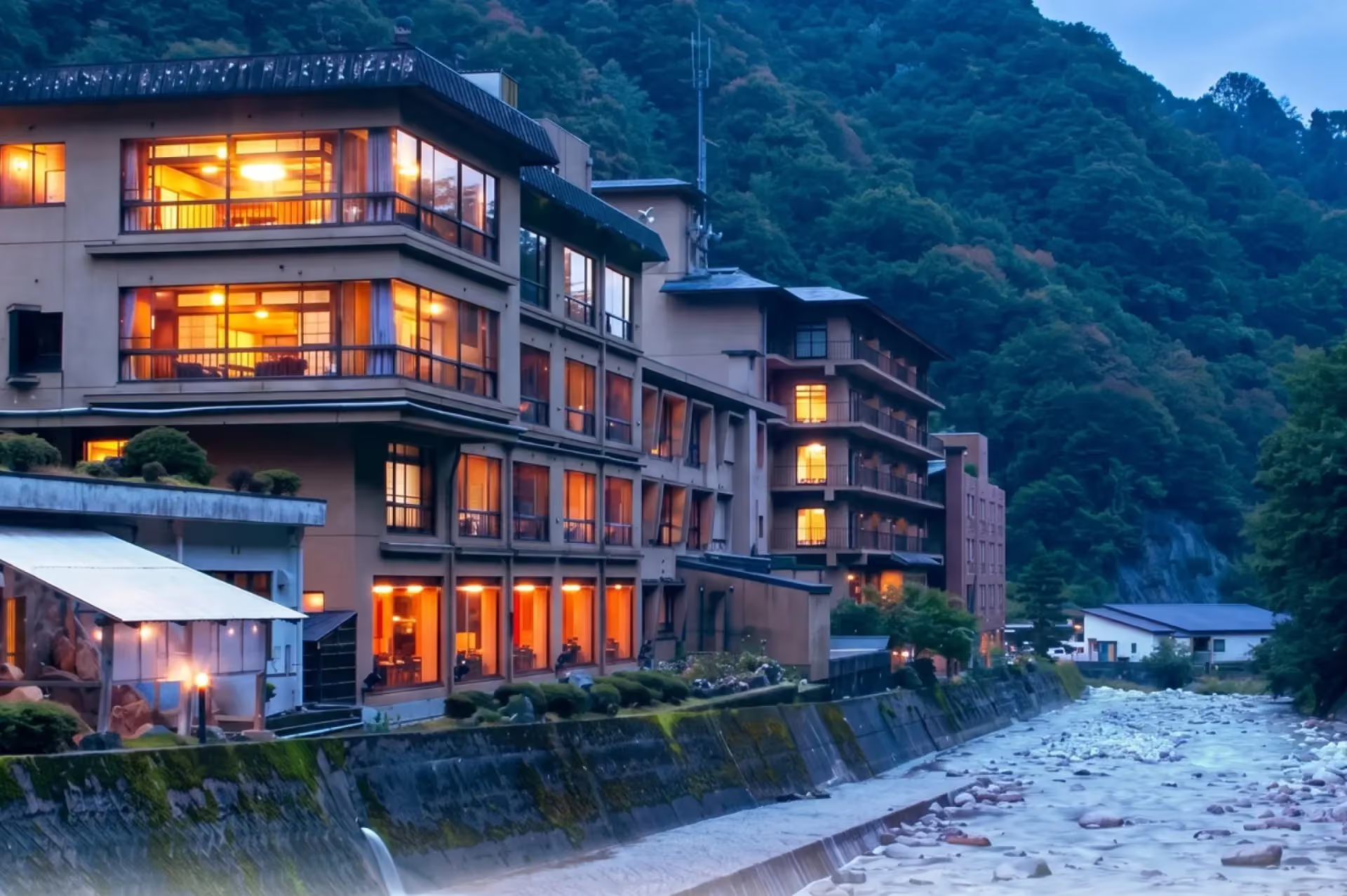
One of the most frequently mentioned hot spring areas in central Hokkaido is Jozankei Onsen, located relatively close to downtown Sapporo. Inns line the Toyohira River valley, and the area has long been called Sapporo’s inner retreat. It is easy to reach from a major city, yet still offers a calm atmosphere surrounded by valley nature.
Jozankei can be enjoyed in many ways, from day trips to overnight stays. It is also known for its scenic riverside setting and as a famous autumn leaves destination. It is a strong option when you want to extend a trip from Sapporo into hot springs, and its short travel burden makes it easy to fit into your itinerary. The full picture is summarized in Jozankei Onsen complete guide.
In the Niseko area of central Hokkaido, there are also hot spring groups that are enjoyed together with ski resorts. In winter they are popular as a base for skiing and snowboarding, while in other seasons they are loved as baths set against mountain scenery.

Southern Hokkaido: Noboribetsu and Lake Toya, Famous Volcano and Lake Hot Springs
Southern Hokkaido has two major hot spring destinations with very different characters: Noboribetsu Onsen, known for volcanic scenery, and Lake Toya Onsen, which opens onto the lakeshore.
Noboribetsu Onsen is widely known for the steam-filled scenery of Jigokudani, and because many different spring qualities are gathered in one place, it is often called a “department store of hot springs.” It combines the rugged terrain created by volcanic activity with the convenience of being able to enjoy many bath styles in one visit. Among Hokkaido’s hot springs, it is one of the most iconic destinations for volcanic landscapes. More details are covered in Noboribetsu Onsen complete guide.
Lake Toya Onsen, by contrast, is a hot spring town on the shore of Lake Toya, and its style of stay is quite different from Noboribetsu. The main appeal is a relaxed trip centered on lake views and the surrounding volcanic scenery, including Mt. Usu. While rooted in a volcanic area, it offers a calm atmosphere overlooking the lake. Noboribetsu and Lake Toya are relatively close, making it easy to combine the dramatic Jigokudani and a lakeside stay into one trip.
Northern Hokkaido: Sounkyo and the Nature of Daisetsuzan
Sounkyo Onsen, located in a valley of the Daisetsuzan mountain range, is one of the best-known hot spring areas in northern Hokkaido. Surrounded by steep cliffs, it is backed by the grand nature of Daisetsuzan and Mt. Asahi. It is a hot spring town that makes good use of its valley scenery, and it is also used as a base for hiking and the ropeway.
Sounkyo is a good fit for travelers who want to enjoy bathing in the middle of nature. The surrounding area offers waterfall scenery and other valley beauty, with different faces in each season. Mt. Asahi is known as the highest mountain in Hokkaido, and together with its natural setting, it makes for a rewarding hot spring trip in northern Hokkaido. Because it is in the mountains, it is best to plan transportation in advance. At present, there is no separate complete guide for Sounkyo Onsen or Mt. Asahi, so this article introduces them briefly only.
Eastern Hokkaido: Tokachigawa’s Moor Springs and Lake Akan
Eastern Hokkaido has two representative hot spring destinations with contrasting settings: Tokachigawa Onsen in the Tokachi Plain, and lakeside Lake Akan Onsen.
Tokachigawa Onsen is widely known for its Moor springs, said to contain plant-derived components. Rather than sitting at the foot of a volcano, it is located on the plains, and it is often described in terms of its distinctive water character. For more on what Moor springs are, see what Moor springs are, which is useful if you want to understand the background of Tokachigawa’s baths. Sensations in the bath and effects on the skin vary from person to person, and this article does not make any medical claims.
Lake Akan Onsen, on the other hand, sits on the shore of Lake Akan, known for marimo, and the stay centers on lake-and-forest scenery. In contrast to Tokachigawa’s plains, it offers a distinctly lakeside landscape. Eastern Hokkaido often involves long distances, so it is wise to leave extra time in your schedule and check travel times through official transport information.
How to Enjoy Hokkaido Hot Springs by Season and Access
One of the most important ways to enjoy Hokkaido’s hot springs is to think by season. In winter especially, open-air baths surrounded by snow are a major attraction, but cold weather and heavy snowfall can also make travel more difficult. For how to enjoy and what to watch for when bathing in snow, see snow-view baths. If you are planning a winter hot spring trip in Hokkaido, it is worth reading.
Many travelers use Sapporo as their starting point. For how to reach hot spring areas from Sapporo and how to choose where to go, see hot springs from Sapporo. If you plan to tour Hokkaido’s hot springs from Sapporo, this is a useful reference. For the general idea of traveling from airports to hot spring towns, see hot springs from major airports.
Winter travel requires special care. Snowfall and bad weather can cause delays or cancellations in transportation, and travel times from airports to hot spring areas can change depending on the season. Whatever area you choose, the premise is to check the latest transport and road information from official sources before you go. If you want to build your trip around hot spring town types, types of onsen destinations will also help you understand Hokkaido’s onsen landscape.
FAQ
Why are there so many hot springs in Hokkaido?
It is largely due to the island’s volcanic origins. Active volcanoes are scattered across Hokkaido, and many places lie near underground heat sources, which makes hot springs more likely to emerge. Volcanic activity has also created landscapes such as Noboribetsu’s Jigokudani. The connection between volcanoes and hot springs is explained in the relationship between volcanoes and onsen.
If it is my first time visiting a hot spring in Hokkaido, where should I go?
It depends on what kind of hot spring experience you want. If you want easy access from Sapporo and prefer a valley hot spring town, Jozankei Onsen is a good choice. If you want to experience volcanic steam vents and a wide variety of spring qualities in one place, Noboribetsu Onsen is a strong candidate. It becomes easier to choose once you decide which kind of nature you want to enjoy with your bath. For classification, see types of onsen destinations.
Can I enjoy snow-view baths in Hokkaido?
Yes. Hokkaido gets a lot of snow, and in winter the open-air baths surrounded by snow become a major attraction. However, cold weather and snowfall can make travel difficult, and transport delays or cancellations can happen. For how to enjoy bathing in snow and what to watch for, see snow-view baths. Checking the latest transport and road information from official sources before you go is the safest approach.
Where can I try Moor springs?
Tokachigawa Onsen in eastern Hokkaido is widely known for its Moor springs, said to contain plant-derived components. It is a hot spring town on the plains rather than at the foot of a volcano, and it is often described by its unique bath character. For more on what Moor springs are, see what Moor springs are. Since bath sensations and skin effects vary from person to person, the basic approach is to enjoy them without making fixed assumptions about their benefits.
Can I tour Hokkaido’s hot springs from Sapporo?
Yes. Sapporo is often chosen as a base for travel in Hokkaido, and there are nearby hot spring towns such as Jozankei. For how to reach hot spring areas from Sapporo and how to choose where to go, see hot springs from Sapporo. If you are traveling from airports to each hot spring area, also see hot springs from major airports. Travel times can change, especially in winter, so please check official transport information before planning.
Summary
Hokkaido is a region rich in hot springs, shaped by its volcanic origins and offering a wide variety of baths across the island. Each area has representative hot spring towns, and famous destinations such as Jozankei in central Hokkaido, Noboribetsu and Lake Toya in the south, Sounkyo in the north, and Tokachigawa and Lake Akan in the east each have distinct character, from Jigokudani scenery and lakeside settings to valleys and Moor springs.
The key to a Hokkaido hot spring trip is not to choose only by name recognition, but to first decide which area and which kind of nature you want to enjoy with your bath. For details on each destination, see the complete guides linked from this article. For the relationship with volcanoes, see the relationship between volcanoes and onsen. For snow-view bathing, see snow-view baths. For hot spring town types, see types of onsen destinations. Access and facility hours can change easily, and winter is especially affected by weather and transport conditions, so checking official information from local tourism associations and transportation providers is essential.
Sources
- Ministry of the Environment, Japan: Protection and Use of Hot Springs
- Official Hokkaido Tourism Site, HOKKAIDO LOVE!
- Noboribetsu International Tourism and Convention Association
- Jozankei Tourism Association
- Lake Toya Onsen Tourism Association
- Tokachigawa Onsen Ryokan Cooperative
- Akan Tourism Association Town Development Promotion Organization