
Tips for a Successful TripChoosing Hot Springs by Region
Easy Hot Springs from Major Airports: Add to Arrival, Departure
Plan easy hot spring stops near Japan’s major airports for arrival or departure days. Compare Hakone, Atami, Kusatsu, Noboribetsu, Jozankei, Yufuin, and Beppu with access tips and cautions.
Published: Jun 28, 2026
Tips for a Successful TripChoosing Hot Springs by Region
Easy Hot Springs from Major Airports: Add to Arrival, Departure
Plan easy hot spring stops near Japan’s major airports for arrival or departure days. Compare Hakone, Atami, Kusatsu, Noboribetsu, Jozankei, Yufuin, and Beppu with access tips and cautions.
Published: Jun 28, 2026
If you want to add a Japanese hot spring area to your Japan trip, it helps to place an airport-accessible hot spring on your arrival or departure day. By handling the long transfer on the first or last day, you can spend the middle of the trip on city sightseeing or touring without overloading the itinerary.
In short, hot spring areas you can reach from the airport with few transfers by limited express, limousine bus, or direct bus are easy to slot into an arrival or departure day. By contrast, areas that require multiple transfers from the airport can easily eat up your whole first day. This article organizes easy-to-reach hot spring areas by major airport and shows how to fit them into your plan. Note that travel times, fares, and service availability are only estimates, and you should always check the latest official information from each airport, railway, or bus company.
Why add an airport-area hot spring on the arrival or departure day?
A common problem in Japan trip planning is repeatedly inserting long-distance travel in the middle of the trip. If you go back and forth between city sightseeing and hot spring areas, you end up carrying luggage more often and wasting both energy and time.
That is why placing a relatively close hot spring area on the arrival or departure day is useful. If you go directly from the airport to a hot spring area on arrival, you can soothe the fatigue of the long journey in the bath before starting sightseeing. If you spend the night before departure in a hot spring area near the airport, you can move with more flexibility for your return flight. The key point is whether the transfer from the airport to the hot spring area can be completed with few changes. Regions with good limousine bus, limited express, or direct bus connections are especially suitable.
However, if your arrival is late at night, you may miss the last limited express or bus to the hot spring area. Conversely, if your departure is very early in the morning, the issue is whether you can reach the airport from the hot spring area on the first train or bus. When adding a hot spring stay to your arrival or departure day, check the flight time and the last and first connections first.
Easy hot spring areas from Haneda and Narita, Tokyo
From Haneda Airport and Narita Airport, Japan’s main gateways to Tokyo, it is easy to include Hakone, Atami, and Kusatsu, three representative hot spring areas in the Kanto region. In all cases, the basic pattern is to travel via central Tokyo by rail.
For Hakone, the advantage is that you can ride the Odakyu Romancecar from Shinjuku to Hakone-Yumoto without changing trains. You must first get into central Tokyo from the airport, but after that a single railway line takes you to the entrance of the hot spring area. Because the region is large and attractions are spread out, it is best to decide on your lodging and transport method in advance. The differences between Hakone areas are summarized in Hakone Hot Springs Complete Guide.
Atami is accessible from Tokyo by the Tokaido Shinkansen Kodama without changing trains, and there are many accommodations around the station. Once you reach the Shinkansen station in central Tokyo from the airport, the remaining trip is short, so it is easy to fit into either an arrival or departure day. We cover Atami in Atami Hot Springs Complete Guide.
Kusatsu Onsen requires taking the JR bus from Naganohara-Kusatsuguchi Station, the nearest rail station, to the bus terminal in the center of the hot spring town. There are also direct highway bus services from Tokyo to Kusatsu Onsen, but either way the travel time from central Tokyo is fairly long, so it may be easier to place it in the middle of your trip rather than cramming it into the arrival day. See Kusatsu Hot Springs Complete Guide for the full picture. Since travel time and frequency vary by time of day and season, check the official information from each railway or bus company.
Easy hot spring areas from New Chitose, Hokkaido
From New Chitose Airport, Noboribetsu Onsen and Jozankei Onsen are the two most representative choices. Hokkaido involves large travel distances, but these hot spring areas are among the easier ones to access from the airport.
To reach Noboribetsu Onsen, the usual route is to take JR or a highway bus from the airport toward the Noboribetsu area and then continue by bus into the hot spring town. Because services connecting the airport and the hot spring area are available, it is relatively easy to plan a direct arrival-day transfer. Noboribetsu is known as a hot spring area with many different spring qualities centered around Jigokudani. See Noboribetsu Hot Springs Complete Guide for more details.
Jozankei Onsen is known as Sapporo’s inner retreat and is reached via Sapporo city from New Chitose Airport. It is convenient to combine with sightseeing in Sapporo, and buses to Jozankei also run from the city. Since you first need to get to Sapporo from the airport, it works well before or after a stay in Sapporo and avoids wasted movement. The area overview is in Jozankei Hot Springs Complete Guide. In Hokkaido, winter cancellations and timetable changes are common, so check the latest service information officially.
Easy hot spring areas from Fukuoka
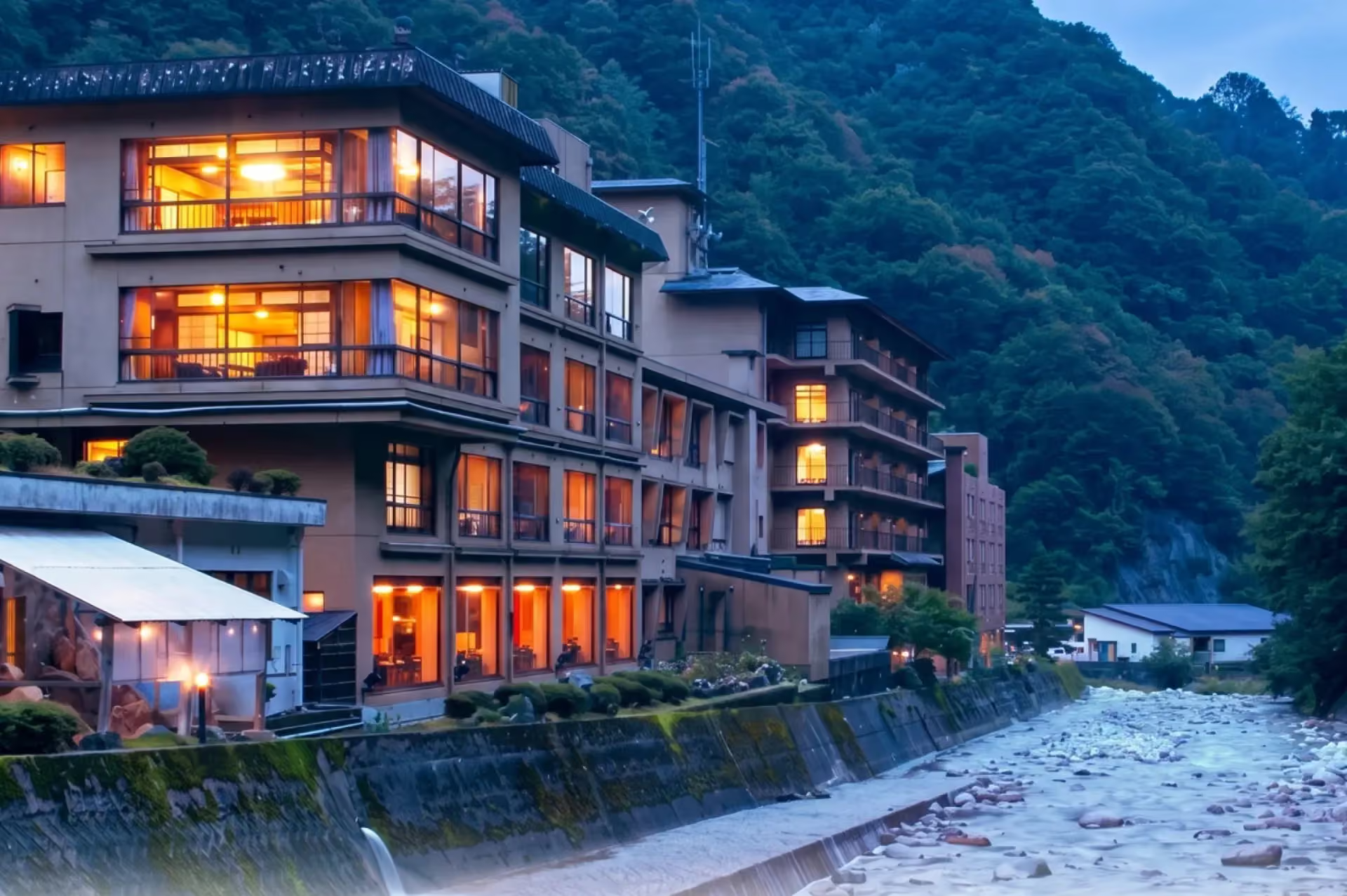
Fukuoka Airport is close to the city center and is a convenient starting point for hot spring areas in Kyushu. Yufuin and Beppu are the main destinations.
For Yufuin Onsen, the best-known routes are the limited express Yufuin no Mori or Yufu from Hakata, and there are also direct highway buses from central Fukuoka. Because Yufuin Station is within walking distance of the hot spring town, the final transfer is short. The ride itself, especially on a sightseeing train, is part of the trip’s appeal, so it is easy to include on either an arrival or departure day. How to enjoy Yufuin is covered in Yufuin Hot Springs Complete Guide.
Beppu Onsen has one of the largest numbers of springs and the largest volume of hot water in Japan, and it brings together multiple hot spring districts. There are highway bus and limited express routes from the Fukuoka area, and it is easy to combine Beppu with Yufuin in a Kyushu hot spring tour. See Beppu Hot Springs Complete Guide for the overall picture. Since limited express operations and highway bus frequency vary by season, check official information before traveling.
Easy hot spring areas from Kansai: Kansai Airport and Itami Airport
From Kansai International Airport and Osaka International Airport, Itami, it is easy to include Kansai hot spring areas such as Arima, Nanki-Shirahama, and Kinosaki. The basic pattern is to travel via Osaka or Kobe.
Arima Onsen is known as Kobe’s inner retreat and is usually reached via Osaka or Kobe. It has a long history as a traditional therapeutic hot spring town and is easy to combine with urban sightseeing in Kansai. The area overview is in Arima Hot Springs Complete Guide.
Nanki-Shirahama is commonly reached by limited express Kuroshio from Shin-Osaka, and there is also Nanki Shirahama Airport, so flying in part of the way is another option. As a seaside hot spring area, it is well suited to a slower stay-oriented trip. To reach Kinosaki Onsen, the usual routes are limited express Kounotori from Osaka or limited express Kinosaki from Kyoto. Once you leave the station, the hot spring town with its public baths and ryokan spreads out naturally, and bathing in yukata while visiting the public baths has become a classic experience. Walking around Kinosaki is summarized in Kinosaki Hot Springs Complete Guide.
If you are using Osaka as your base, see Hot Springs Accessible from Osaka, and if you are starting from Kyoto, see Hot Springs Accessible from Kyoto. The travel time and transfer burden differ depending on which airport or city you depart from, even for the same hot spring area.
Easy hot spring areas from Centrair, Chubu
From Chubu Centrair International Airport, it is easy to build routes via Nagoya to Gero Onsen and Okuhida Onsen Village. In both cases, the assumption is that you first travel via Nagoya rather than going directly from the airport.
Gero Onsen is known for routes from Nagoya by limited express toward the Takayama Main Line. It has long been loved as one of Japan’s famous hot spring areas, and the flow is to leave the airport for Nagoya and then enter by rail. Okuhida Onsen Village is a mountain hot spring area reached by bus via Nagoya and the Takayama area, with several hot spring spots scattered around. Because it is farther from the airport, it is less strenuous to include it after a Nagoya stop rather than directly on the arrival day. Departures from Chubu often involve more transfer points, so check travel times and connections with the official information from each railway or bus company.
Quick reference: easy hot spring areas from major airports
The table below summarizes representative hot spring areas that are easy to reach from each major airport, along with a rough idea of access and how to fit them into your itinerary. It does not list estimated travel times or fares. Since service, schedules, and fares vary greatly by time of day, season, and route, always check the official information from each airport, railway, and bus company.
| Airport | Easy hot spring area | Main access method (guide) | Best way to fit it in |
|---|---|---|---|
| Haneda and Narita, Tokyo | Hakone | Via central Tokyo, Odakyu Romancecar from Shinjuku | Easy to combine before or after city sightseeing |
| Haneda and Narita, Tokyo | Atami | Via central Tokyo, Tokaido Shinkansen Kodama from Tokyo | Few transfers, ideal for arrival or departure day |
| Haneda and Narita, Tokyo | Kusatsu Onsen | Rail plus JR bus, or direct highway bus | Travel is long. Can also be placed in the middle |
| New Chitose, Hokkaido | Noboribetsu Onsen | JR or highway bus plus bus to the hot spring town | Easy to enter directly on arrival day |
| New Chitose, Hokkaido | Jozankei Onsen | Via Sapporo, bus from the city | Easy to combine before or after a Sapporo stay |
| Fukuoka | Yufuin | Limited express Yufuin no Mori or Yufu, or highway bus | Walking distance from station. Good for arrival or departure day |
| Fukuoka | Beppu Onsen | Highway bus or limited express | Easy to tour together with Yufuin |
| Kansai, Kansai Airport and Itami | Arima Onsen | Via Osaka or Kobe | Easy to combine with Kansai city sightseeing |
| Kansai, Kansai Airport and Itami | Nanki-Shirahama | Limited express Kuroshio, and Nanki Shirahama Airport also available | Suited to a longer stay |
| Kansai, Kansai Airport and Itami | Kinosaki Onsen | Limited express Kounotori from Osaka, etc. | Good for one night. Public bath hopping |
| Chubu, Centrair | Gero Onsen | Via Nagoya, limited express toward the Takayama Main Line | Best to include after a Nagoya stop |
| Chubu, Centrair | Okuhida Onsen Village | Via Nagoya and Takayama area plus bus | Farther away. Better in the middle of the trip |
This table shows the general tendency by airport. Even for the same hot spring area, conditions change depending on the lodging and route. Rather than deciding by place name alone, it is better to check whether the timing and fewest transfers match the purpose of your trip.
Check the flight time and the last and first connections first
What is easy to overlook when adding a hot spring to the arrival or departure day is the connection between the flight time and transportation to the hot spring area. If your arrival is late at night, you may miss the last limited express, limousine bus, or direct bus to the hot spring area. Conversely, if your departure is early in the morning, the question is whether you can reach the airport from the hot spring area on the first train or bus.
So if you plan to go directly to a hot spring area on arrival, first check whether there is transport that can get you there the same day. If you plan to spend the night before departure in a hot spring area, make sure there is first-thing-in-the-morning transport that reaches the airport in time for your flight. Hot spring areas that can be reached from the airport without changing trains are easier to read and less likely to fail.
The general idea of using public transportation to reach a hot spring area, especially how to think about the final movement from the station to the lodging, is explained in more detail in How to Choose Car-Free Hot Spring Destinations. Even for airport-based trips, the shorter this final transfer is, the easier the trip is to plan. If you are unsure where to place a hot spring in your itinerary for your first trip to Japan, How to Add a Hot Spring to Your First Japan Trip is also worth reading.
FAQ
Is it better to go directly from the airport to a hot spring area, or stay one night in a city first?
It depends on your itinerary and arrival time. If you arrive during the day and can reach the hot spring area with few transfers, going straight there lets you relieve the fatigue of the long journey in the bath. If you arrive late at night, you may miss the last service to the hot spring area, so staying one night in a city near the airport and leaving the next day can be more practical.
How can I tell whether I can reach a hot spring area on the arrival day?
Check first whether there is a limited express, limousine bus, or direct bus that can get you to the hot spring area the same day as your arrival. Since the last service time changes by time of day and season, confirm it on the official websites of the railway or bus company. Routes with fewer transfers are easier to understand and are better for arrival-day plans.
If I spend the night before departure in a hot spring area, can I still make my return flight?
Yes, if the first bus or train of the day reaches the airport in time for your flight. For early morning flights, check the first departure time and total travel time from the hot spring area to the airport first, and plan with extra margin. If it looks tight, it is safer to stay in a city or facility closer to the airport the night before departure.
Where can I check estimated travel times and fares?
The travel times and services in this article are only rough guides. For accurate travel times, fares, and service availability, check the official websites of the relevant airport, railway company, or bus company. For broader tourism information, official sources from the Japan Tourism Agency and the Japan National Tourism Organization (JNTO) are also useful.
Are hot spring areas easy to reach from airports in Hokkaido or Kyushu as well?
Yes, there are easy options. From New Chitose Airport, Noboribetsu Onsen and Jozankei Onsen are representative examples that can be reached with relatively few transfers. From Fukuoka Airport, Yufuin and Beppu are also major destinations. However, winter cancellations and seasonal changes in service frequency do happen, so check the latest official operations before traveling.
Summary
Hot spring areas that are easy to reach from major airports are less likely to complicate your overall itinerary when you place them on the arrival or departure day. From Haneda and Narita, the main choices are Hakone, Atami, and Kusatsu. From New Chitose, Noboribetsu and Jozankei. From Fukuoka, Yufuin and Beppu. From Kansai, Arima, Nanki-Shirahama, and Kinosaki. From Chubu, Gero and Okuhida.
The key questions are whether you can reach the hot spring area from the airport with few transfers, and whether the flight time connects well with the last or first transportation to that area. If you concentrate the long-distance travel at both ends of the trip, the middle of the stay is easier to use for sightseeing and touring. Travel times, fares, and services are all only guides, so be sure to check the official information from each airport, railway, and bus company before you make your plan.
