JAPAN ONSEN COLLECTION

When your heart unwinds,

The Finest Moment

A journey through 43 renowned hot springs and saunasJAPAN ONSEN & SAUNA GUIDE

Japan's Finest Onsen & Sauna

43 Extraordinary Destinations

43

A curator who has visited over 300 facilities nationwide handpicks 43 exceptional ones they wholeheartedly recommend. The only guidebook that deeply explores the allure of onsen and sauna—plus culture and etiquette.

Read a free preview
Japan Onsen & Sauna Guide
Find Sauna & Onsen FacilitiesOnsen & Sauna Guides

JAPAN ONSEN COLLECTION

When your heart unwinds,

The Finest Moment

A journey through 43 renowned hot springs and saunasJAPAN ONSEN & SAUNA GUIDE

Japan's Finest Onsen & Sauna

43 Extraordinary Destinations

43

A curator who has visited over 300 facilities nationwide handpicks 43 exceptional ones they wholeheartedly recommend. The only guidebook that deeply explores the allure of onsen and sauna—plus culture and etiquette.

Read a free preview
Japan Onsen & Sauna Guide

Find Facilities

  • Facility List
  • Search by Area
  • Featured Collections
  • Search by Onsen Area

Guides

  • Basic Knowledge and Introduction
  • The Appeal of Japan's Hot Springs and Saunas
  • Health & Benefits
  • Spring Quality & Science
  • Thematic Guides
  • Tips for a Successful Trip

Editor's Journal

  • Sauna & Onsen Trips

Support

  • Privacy Policy
  • Terms of Service
  • Commercial disclosure
  • Contact

© 2025-2026 Japan Onsen & Sauna Guide All rights reserved.

Unauthorized reproduction of content is prohibited.

Tips for a Successful TripChoosing Hot Springs by Region

Kyushu Hot Spring Guide: Top Prefectures and Routes

A hub overview of Kyushu’s hot springs, a region famed for abundant volcanoes, spring sources, and water output. Compare Beppu, Yufuin, Kurokawa, Unzen, Ibusuki, Kirishima, Ureshino, and Takeo at a glance, and explore their unique appeal from hell tours and sand baths to beauty waters and valleys, plus links to full guides.

Published: Jun 28, 2026

Tips for a Successful TripChoosing Hot Springs by Region

Kyushu Hot Spring Guide: Top Prefectures and Routes

A hub overview of Kyushu’s hot springs, a region famed for abundant volcanoes, spring sources, and water output. Compare Beppu, Yufuin, Kurokawa, Unzen, Ibusuki, Kirishima, Ureshino, and Takeo at a glance, and explore their unique appeal from hell tours and sand baths to beauty waters and valleys, plus links to full guides.

Published: Jun 28, 2026

  1. Home
  2. >Guide TOP
  3. >Tips for a Successful Trip
  4. >Choosing Hot Springs by Region
  5. >Kyushu Hot Spring Guide: Top Prefectures and Routes

Table of Contents

  1. 1Why is Kyushu called a hot spring paradise?
  2. 2Kyushu prefecture-by-prefecture hot spring quick guide
  3. 3Oita Prefecture: Beppu and Yufuin, two contrasting major hot springs
  4. 4Kumamoto Prefecture: Kurokawa Onsen, mountain baths framed by valley scenery
  5. 5Nagasaki Prefecture: Unzen Onsen, volcanic hell and highland sulfur springs
Tips for a Successful TripChoosing Hot Springs by Region

Kyushu Hot Spring Guide: Top Prefectures and Routes

A hub overview of Kyushu’s hot springs, a region famed for abundant volcanoes, spring sources, and water output. Compare Beppu, Yufuin, Kurokawa, Unzen, Ibusuki, Kirishima, Ureshino, and Takeo at a glance, and explore their unique appeal from hell tours and sand baths to beauty waters and valleys, plus links to full guides.

Published: Jun 28, 2026

Tips for a Successful TripChoosing Hot Springs by Region

Kyushu Hot Spring Guide: Top Prefectures and Routes

A hub overview of Kyushu’s hot springs, a region famed for abundant volcanoes, spring sources, and water output. Compare Beppu, Yufuin, Kurokawa, Unzen, Ibusuki, Kirishima, Ureshino, and Takeo at a glance, and explore their unique appeal from hell tours and sand baths to beauty waters and valleys, plus links to full guides.

Published: Jun 28, 2026

  1. Home
  2. >Guide TOP
  3. >Tips for a Successful Trip
  4. >Choosing Hot Springs by Region
  5. >Kyushu Hot Spring Guide: Top Prefectures and Routes

Table of Contents

  1. 1Why is Kyushu called a hot spring paradise?
  2. 2Kyushu prefecture-by-prefecture hot spring quick guide
  3. 3Oita Prefecture: Beppu and Yufuin, two contrasting major hot springs
  4. 4Kumamoto Prefecture: Kurokawa Onsen, mountain baths framed by valley scenery
  5. 5Nagasaki Prefecture: Unzen Onsen, volcanic hell and highland sulfur springs
  • 6Kagoshima Prefecture: Ibusuki’s sand bath and Kirishima’s mountain baths
  • 7Saga Prefecture: Ureshino and Takeo, beauty baths and historic baths
  • 8How to enjoy the diversity of Kyushu hot springs
  • 9FAQ
  • 10Summary
  • 11Sources
  • Kyushu is often called a hot spring paradise, with some of Japan’s highest numbers of spring sources and water output. Thanks to its volcanic landscape, the region offers distinct famous baths in every prefecture, from city-style springs known for hell tours to seaside sand-burying baths and mountain hot springs set in scenic valleys. In short, Kyushu hot springs are easiest to choose once you decide which prefecture and which type of hot spring area should anchor your trip.

    This article is a hub that gives a bird’s-eye view of Kyushu’s 대표적인 hot spring areas and links to detailed full guides for each one. It presents each prefecture’s representative destinations and features in a quick-reference table, then organizes the character of famous baths such as Beppu, Yufuin, Kurokawa, Unzen, Ibusuki, Kirishima, Ureshino, and Takeo. Spring-source counts and water output should be treated only as rough indicators; for travel time and access, always check the latest official information from each hot spring area and transport provider.

    Why is Kyushu called a hot spring paradise?

    Kyushu’s abundance of hot springs is closely tied to its volcanic geography. The island has multiple active volcanoes, and many areas lie near underground heat sources, making hot spring water easier to find throughout the region. Oita Prefecture in particular is often described as one of Japan’s leaders in both spring-source count and water output, symbolizing this richness. Because figures vary by survey and year, this article uses only the broad label of “one of the nation’s best.”

    The volcanic connection itself is covered in detail in the relationship between volcanoes and hot springs, but what matters most when traveling through Kyushu is that volcanic baths tend to vary widely in character. Some hot spring areas feature volcanic scenery such as steam vents and hell landscapes, while others are known for a gentler bathing feel despite drawing on the same volcanic blessings.

    Another major feature is the diversity of hot spring destinations. From Beppu, where hot water wells up in a city center, to highland and mountain resorts, to seaside baths where visitors are buried in sand, the settings and ways to enjoy them vary greatly. For a broader classification of hot spring destination types, see types of hot spring destinations; it can help you decide which Kyushu destination best fits your trip.

    Kyushu prefecture-by-prefecture hot spring quick guide

    To help you grasp the overall picture, here is a list of representative hot spring areas in each prefecture. The destinations listed here are only a small sample of Kyushu’s hot springs, and the features are general trends. For details on each destination, please refer to the full guide linked in the table.

    PrefectureRepresentative hot spring areaFeatures (commonly described tendencies)
    Oita PrefectureBeppu OnsenA major hot spring area with one of the highest spring-source counts and water output in Japan. Known for hell tours
    Oita PrefectureYufuin OnsenA highland hot spring area with views of Mount Yufu. Popular for strolling and art-filled stays
    Kumamoto PrefectureKurokawa OnsenA mountain hot spring area along a valley. Unified scenery and open-air bath hopping
    Nagasaki PrefectureUnzen OnsenSteam from Unzen Hell and cloudy acidic sulfur springs. A highland national park area
    Kagoshima PrefectureIbusuki OnsenA seaside hot spring area famous for its sand bath, where guests are buried in warm sand
    Kagoshima PrefectureKirishima Onsen

    This table is only a guide to differences in character. Even within the same prefecture, there are many other hot spring areas. Below, we look a little more closely at the representative destinations in each prefecture.

    Oita Prefecture: Beppu and Yufuin, two contrasting major hot springs

    Oita Prefecture is especially well known as one of Kyushu’s richest hot spring prefectures, with some of Japan’s highest spring-source counts and water output. Its two signature destinations are Beppu and Yufuin, each with a very different character.

    Beppu Onsen is a large-scale hot spring area where many sources are concentrated in the city center, and the famous “hell tours” of steam vents and colorful ponds are a major sightseeing draw. Countless baths are spread throughout the city, offering a wide range of waters. Its appeal lies in combining dramatic volcanic scenery with the convenience of soaking in town. An overview is available in the Beppu Onsen Complete Guide.

    By contrast, Yufuin Onsen is a highland hot spring area opening onto views of Mount Yufu, and the experience differs greatly from urban Beppu. It is popular as a place to enjoy walking routes, galleries, and relaxed stays at inns. It suits travelers who value quiet scenery and the stay itself more than busy sightseeing. See the Yufuin Onsen Complete Guide for details. Beppu and Yufuin are relatively close, so they can easily be combined in a trip that compares two very different styles.
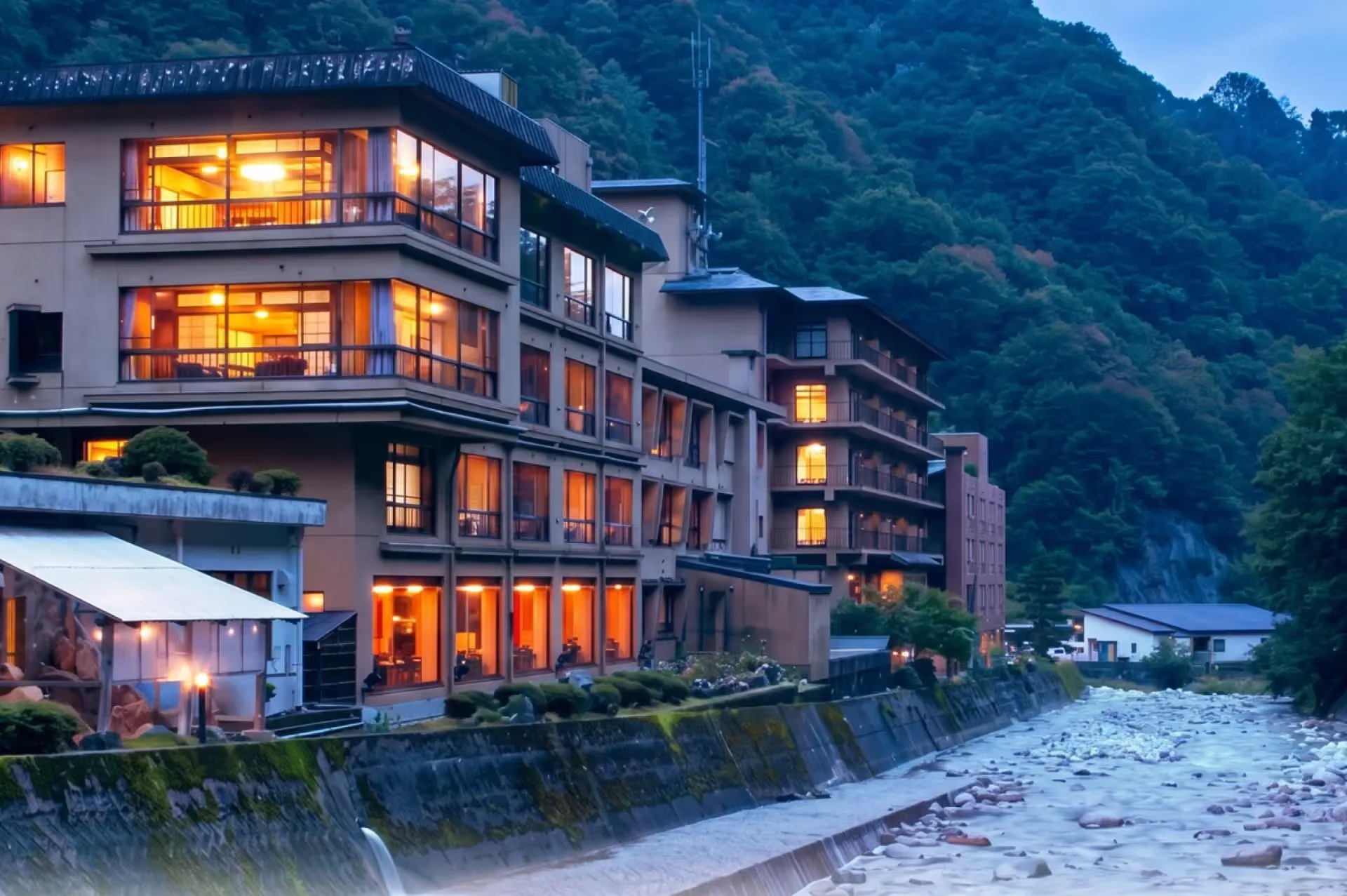
    Kumamoto Prefecture: Kurokawa Onsen, mountain baths framed by valley scenery

    One of Kumamoto Prefecture’s most often mentioned hot spring areas is Kurokawa Onsen, located in the mountains north of Aso. Kurokawa is known for its inns lining a valley and for preserving a unified visual atmosphere across the whole town. Rather than flashy entertainment, it emphasizes a calm mood that blends into nature.

    A common highlight of Kurokawa is the enjoyment of hopping between multiple open-air baths. Many baths take advantage of the valley setting, making it ideal for travelers who want to soak while surrounded by nature. Because it is in the mountains, it is wise to plan transport in advance. Details are in the Kurokawa Onsen Complete Guide. It can be seen as a representative mountain hot spring destination in Kyushu, distinct from urban Beppu and seaside Ibusuki.

    Nagasaki Prefecture: Unzen Onsen, volcanic hell and highland sulfur springs

    Nagasaki Prefecture’s representative hot spring area is Unzen Onsen, spread across the highlands of the Shimabara Peninsula. Located at a high elevation, it is known for the steam-filled scenery of “Unzen Hell” and for its cloudy acidic sulfur springs. The area is part of one of Japan’s earliest designated national parks and has a strong identity as a highland resort surrounded by volcanoes and forests.

    Unzen Onsen is best enjoyed by combining a visit to the hell area, bathing in sulfur springs, and taking in the surrounding mountain scenery. Its atmosphere differs from city-style hell tours in Beppu, offering a closer encounter with volcanic activity in crisp highland air. See the Unzen Onsen Guide for details. It is a good choice for travelers seeking a strongly distinctive sulfur spring and volcanic landscape in Kyushu.

    Kagoshima Prefecture: Ibusuki’s sand bath and Kirishima’s mountain baths

    Kagoshima Prefecture has two major hot spring areas with very different characters: seaside Ibusuki Onsen and mountain Kirishima Onsen.

    Ibusuki Onsen sits on the southern tip of the Satsuma Peninsula by the sea and is widely known for its “sand bath,” in which visitors lie down and are buried in sand. This unusual experience, warmed by geothermal heat, becomes the centerpiece of the trip. Another attraction is the chance to enjoy it with ocean views. See the Ibusuki Onsen Complete Guide for details.

    Meanwhile, Kirishima Onsen is a cluster of hot springs scattered through the Kirishima mountain range, with waters set against volcanic and mountain scenery. In contrast to seaside Ibusuki, the main experience here is soaking in the mountains. See the Kirishima Onsen Guide for details. If you are traveling in Kagoshima, combining sea-facing Ibusuki and mountain-based Kirishima makes it easier to feel the full range of Kyushu’s hot springs.

    Saga Prefecture: Ureshino and Takeo, beauty baths and historic baths

    Saga Prefecture has two representative hot spring areas with relatively easy access from the Fukuoka and Nagasaki areas: Ureshino Onsen and Takeo Onsen.

    Ureshino Onsen is known for its smooth, silky water and is often introduced as a beauty bath. That said, skin effects vary from person to person and by condition, so this article does not claim medical benefits. It is a hot spring area where you can enjoy the feel of the water together with the local identity as a tea-producing region. See the Ureshino Onsen Complete Guide for details.

    Takeo Onsen is known as a hot spring area with a long history, and its town gate and public bathhouses are symbolic landmarks. Its appeal lies in the historic atmosphere of the hot spring town and the convenience of bathing in town. See the Takeo Onsen Complete Guide for details. Ureshino and Takeo are relatively close, making them easy to combine in a Saga hot spring trip.

    How to enjoy the diversity of Kyushu hot springs

    As seen above, Kyushu hot springs offer an exceptionally wide range of experiences, true to their reputation as a hot spring paradise. Some destinations, like Beppu’s hell tours and Unzen’s steam vents, showcase volcanic scenery, while others, like Ibusuki’s sand bath, offer distinctive bathing shaped by their location. Still others, like Ureshino, are known for the feel of the water, or like Kurokawa, for valley scenery.

    Given this diversity, a Kyushu hot spring trip is not just about deeply savoring one destination, but also about combining hot spring areas with different characters. For example, pairing city-style Beppu with highland Yufuin, seaside Ibusuki with mountain Kirishima, or beauty-focused Ureshino with historic Takeo makes it easy to travel between contrasting styles within the same prefecture or nearby areas. If you want to build your trip around destination types, see types of hot spring destinations; if you want to understand hot springs through their volcanic background, see the relationship between volcanoes and hot springs. Together, they provide a clearer map of Kyushu’s hot spring landscape.

    Many travelers also begin their Kyushu journey in Fukuoka. For how to reach hot spring areas from Fukuoka and how to choose where to go, see hot springs from Fukuoka. If you plan to tour Kyushu’s hot springs with Fukuoka as your base, this guide is a helpful companion. Travel times, access, and facility operations can change, so always check official information from local tourism offices and transport providers before making plans.

    FAQ

    Why are there so many hot springs in Kyushu?

    Kyushu’s geography, shaped by many volcanoes, plays the biggest role. The island has several active volcanoes and many places close to underground heat sources, which makes hot springs easier to find across the region. Oita Prefecture in particular is often described as one of Japan’s leaders in spring-source count and water output, symbolizing Kyushu’s hot spring richness. However, figures vary by survey and year, so please treat them as rough indicators. The volcanic connection is explained in detail in the relationship between volcanoes and hot springs.

    If I’m visiting a hot spring in Kyushu for the first time, where should I go?

    It depends on the kind of stay you want. If you want to casually enjoy hell tours and bathing in town, Beppu Onsen is a strong choice. If you want a quiet stay in the highlands, Yufuin Onsen is a good fit. If you want open-air bath hopping in a valley setting, Kurokawa Onsen is another option. Deciding first how you want to spend your time makes the choice easier. For destination type categories, see types of hot spring destinations.

    Where can I try a sand bath hot spring?

    Kagoshima Prefecture’s Ibusuki Onsen is widely known for its sand bath, where your body is buried in sand. It is an unusual bathing style in which you lie in sand warmed by seaside geothermal heat, offering an experience rarely found in other hot spring areas. Because business hours and reception methods can change, please check the official information from Ibusuki tourism offices or facilities before visiting.

    Can I visit hot spring areas with very different characters on one Kyushu trip?

    Yes, very easily. Kyushu’s prefectures are home to hot spring areas with contrasting personalities, so you can combine city-style Beppu with highland Yufuin, seaside Ibusuki with mountain Kirishima, or beauty-focused Ureshino with historic Takeo. If your schedule allows, combining different styles makes it easier to experience the breadth of Kyushu’s hot springs. Check travel times and access through the official information of each transport provider.

    Can I use Fukuoka as a base for touring Kyushu hot springs?

    Yes. Fukuoka is often chosen as a starting point for Kyushu travel and serves as a convenient hub for reaching many hot spring areas. For how to get to hot springs from Fukuoka and how to choose destinations, see hot springs from Fukuoka. Even for the same hot spring area, travel time and transfers vary depending on which city you depart from, so it is easier to compare options after deciding on your base.

    Summary

    Kyushu is a “hot spring paradise” supported by its volcanic geography and is said to rank among Japan’s best in both spring-source count and water output. Each prefecture has representative hot spring areas, and famous destinations such as Beppu and Yufuin in Oita, Kurokawa in Kumamoto, Unzen in Nagasaki, Ibusuki and Kirishima in Kagoshima, and Ureshino and Takeo in Saga each have distinct identities, from hell landscapes and sand baths to beauty waters and valley scenery.

    The key to enjoying Kyushu hot springs is not simply choosing by fame, but first deciding which prefecture and which type of hot spring area should be the center of your trip. By combining destinations with different characters, you can enjoy the full range of Kyushu’s hot springs in a more three-dimensional way. For details on each hot spring area, see the full guides linked from this article. For destination types, refer to types of hot spring destinations, and for the volcanic background, see the relationship between volcanoes and hot springs. Spring-source counts and water output are only rough indicators, and travel access and facility operations should always be checked through official information from local tourism offices and transport providers.

    Sources

    • Ministry of the Environment, Japan: “Protection and Use of Hot Springs”
    • Kyushu Tourism Organization
    • Oita Prefecture Tourism Official Site (Tourism Oita)
    • Kumamoto Prefecture Tourism Federation (More, More! Kumamoto.)
    • Kagoshima Prefecture Tourism Federation (Kagoshima Travel)
    • Saga Prefecture Tourism Federation (Asobo! Saga)
    • Nagasaki Prefecture Tourism Federation (Nagasaki Tabinet)
    Back to Articles

    Category

    Tips for a Successful TripChoosing Hot Springs by Region

    More in This Category

    • Which Hakone Area Should You Stay In? Area-by-Area Guide

      Jun 28, 2026

    • Izu Hot Springs Guide: Coastal Peninsula Spots Near Tokyo

      Jun 28, 2026

    • Hokkaido Onsen Guide: Volcano, Snow & Lake Hot Springs

      Jun 28, 2026

    • Tohoku Hot Spring Guide: Top Hidden Baths by Prefecture

      Jun 28, 2026

    • Choose Hot Springs by Direction from Sendai

      Jun 28, 2026

    See All

    Related Articles

    • Yuda Onsen Guide: White Fox Legend and Soft Hot Spring Waters

      Jun 28, 2026

    • Yubara Onsen Guide: Sand Bath and Top-Ranked Open-Air Bath

      Jun 28, 2026

    • Kotohira Onsen Guide: Kagawa Hot Spring Town by Kotohira-gu Shrine

      Jun 28, 2026

  • 6Kagoshima Prefecture: Ibusuki’s sand bath and Kirishima’s mountain baths
  • 7Saga Prefecture: Ureshino and Takeo, beauty baths and historic baths
  • 8How to enjoy the diversity of Kyushu hot springs
  • 9FAQ
  • 10Summary
  • 11Sources
  • Kyushu is often called a hot spring paradise, with some of Japan’s highest numbers of spring sources and water output. Thanks to its volcanic landscape, the region offers distinct famous baths in every prefecture, from city-style springs known for hell tours to seaside sand-burying baths and mountain hot springs set in scenic valleys. In short, Kyushu hot springs are easiest to choose once you decide which prefecture and which type of hot spring area should anchor your trip.

    This article is a hub that gives a bird’s-eye view of Kyushu’s 대표적인 hot spring areas and links to detailed full guides for each one. It presents each prefecture’s representative destinations and features in a quick-reference table, then organizes the character of famous baths such as Beppu, Yufuin, Kurokawa, Unzen, Ibusuki, Kirishima, Ureshino, and Takeo. Spring-source counts and water output should be treated only as rough indicators; for travel time and access, always check the latest official information from each hot spring area and transport provider.

    Why is Kyushu called a hot spring paradise?

    Kyushu’s abundance of hot springs is closely tied to its volcanic geography. The island has multiple active volcanoes, and many areas lie near underground heat sources, making hot spring water easier to find throughout the region. Oita Prefecture in particular is often described as one of Japan’s leaders in both spring-source count and water output, symbolizing this richness. Because figures vary by survey and year, this article uses only the broad label of “one of the nation’s best.”

    The volcanic connection itself is covered in detail in the relationship between volcanoes and hot springs, but what matters most when traveling through Kyushu is that volcanic baths tend to vary widely in character. Some hot spring areas feature volcanic scenery such as steam vents and hell landscapes, while others are known for a gentler bathing feel despite drawing on the same volcanic blessings.

    Another major feature is the diversity of hot spring destinations. From Beppu, where hot water wells up in a city center, to highland and mountain resorts, to seaside baths where visitors are buried in sand, the settings and ways to enjoy them vary greatly. For a broader classification of hot spring destination types, see types of hot spring destinations; it can help you decide which Kyushu destination best fits your trip.

    Kyushu prefecture-by-prefecture hot spring quick guide

    To help you grasp the overall picture, here is a list of representative hot spring areas in each prefecture. The destinations listed here are only a small sample of Kyushu’s hot springs, and the features are general trends. For details on each destination, please refer to the full guide linked in the table.

    PrefectureRepresentative hot spring areaFeatures (commonly described tendencies)
    Oita PrefectureBeppu OnsenA major hot spring area with one of the highest spring-source counts and water output in Japan. Known for hell tours
    Oita PrefectureYufuin OnsenA highland hot spring area with views of Mount Yufu. Popular for strolling and art-filled stays
    Kumamoto PrefectureKurokawa OnsenA mountain hot spring area along a valley. Unified scenery and open-air bath hopping
    Nagasaki PrefectureUnzen OnsenSteam from Unzen Hell and cloudy acidic sulfur springs. A highland national park area
    Kagoshima PrefectureIbusuki OnsenA seaside hot spring area famous for its sand bath, where guests are buried in warm sand
    Kagoshima PrefectureKirishima Onsen

    This table is only a guide to differences in character. Even within the same prefecture, there are many other hot spring areas. Below, we look a little more closely at the representative destinations in each prefecture.

    Oita Prefecture: Beppu and Yufuin, two contrasting major hot springs

    Oita Prefecture is especially well known as one of Kyushu’s richest hot spring prefectures, with some of Japan’s highest spring-source counts and water output. Its two signature destinations are Beppu and Yufuin, each with a very different character.

    Beppu Onsen is a large-scale hot spring area where many sources are concentrated in the city center, and the famous “hell tours” of steam vents and colorful ponds are a major sightseeing draw. Countless baths are spread throughout the city, offering a wide range of waters. Its appeal lies in combining dramatic volcanic scenery with the convenience of soaking in town. An overview is available in the Beppu Onsen Complete Guide.

    By contrast, Yufuin Onsen is a highland hot spring area opening onto views of Mount Yufu, and the experience differs greatly from urban Beppu. It is popular as a place to enjoy walking routes, galleries, and relaxed stays at inns. It suits travelers who value quiet scenery and the stay itself more than busy sightseeing. See the Yufuin Onsen Complete Guide for details. Beppu and Yufuin are relatively close, so they can easily be combined in a trip that compares two very different styles.

    Kumamoto Prefecture: Kurokawa Onsen, mountain baths framed by valley scenery

    One of Kumamoto Prefecture’s most often mentioned hot spring areas is Kurokawa Onsen, located in the mountains north of Aso. Kurokawa is known for its inns lining a valley and for preserving a unified visual atmosphere across the whole town. Rather than flashy entertainment, it emphasizes a calm mood that blends into nature.

    A common highlight of Kurokawa is the enjoyment of hopping between multiple open-air baths. Many baths take advantage of the valley setting, making it ideal for travelers who want to soak while surrounded by nature. Because it is in the mountains, it is wise to plan transport in advance. Details are in the Kurokawa Onsen Complete Guide. It can be seen as a representative mountain hot spring destination in Kyushu, distinct from urban Beppu and seaside Ibusuki.

    Nagasaki Prefecture: Unzen Onsen, volcanic hell and highland sulfur springs

    Nagasaki Prefecture’s representative hot spring area is Unzen Onsen, spread across the highlands of the Shimabara Peninsula. Located at a high elevation, it is known for the steam-filled scenery of “Unzen Hell” and for its cloudy acidic sulfur springs. The area is part of one of Japan’s earliest designated national parks and has a strong identity as a highland resort surrounded by volcanoes and forests.

    Unzen Onsen is best enjoyed by combining a visit to the hell area, bathing in sulfur springs, and taking in the surrounding mountain scenery. Its atmosphere differs from city-style hell tours in Beppu, offering a closer encounter with volcanic activity in crisp highland air. See the Unzen Onsen Guide for details. It is a good choice for travelers seeking a strongly distinctive sulfur spring and volcanic landscape in Kyushu.

    Kagoshima Prefecture: Ibusuki’s sand bath and Kirishima’s mountain baths

    Kagoshima Prefecture has two major hot spring areas with very different characters: seaside Ibusuki Onsen and mountain Kirishima Onsen.

    Ibusuki Onsen sits on the southern tip of the Satsuma Peninsula by the sea and is widely known for its “sand bath,” in which visitors lie down and are buried in sand. This unusual experience, warmed by geothermal heat, becomes the centerpiece of the trip. Another attraction is the chance to enjoy it with ocean views. See the Ibusuki Onsen Complete Guide for details.

    Meanwhile, Kirishima Onsen is a cluster of hot springs scattered through the Kirishima mountain range, with waters set against volcanic and mountain scenery. In contrast to seaside Ibusuki, the main experience here is soaking in the mountains. See the Kirishima Onsen Guide for details. If you are traveling in Kagoshima, combining sea-facing Ibusuki and mountain-based Kirishima makes it easier to feel the full range of Kyushu’s hot springs.

    Saga Prefecture: Ureshino and Takeo, beauty baths and historic baths

    Saga Prefecture has two representative hot spring areas with relatively easy access from the Fukuoka and Nagasaki areas: Ureshino Onsen and Takeo Onsen.

    Ureshino Onsen is known for its smooth, silky water and is often introduced as a beauty bath. That said, skin effects vary from person to person and by condition, so this article does not claim medical benefits. It is a hot spring area where you can enjoy the feel of the water together with the local identity as a tea-producing region. See the Ureshino Onsen Complete Guide for details.

    Takeo Onsen is known as a hot spring area with a long history, and its town gate and public bathhouses are symbolic landmarks. Its appeal lies in the historic atmosphere of the hot spring town and the convenience of bathing in town. See the Takeo Onsen Complete Guide for details. Ureshino and Takeo are relatively close, making them easy to combine in a Saga hot spring trip.

    How to enjoy the diversity of Kyushu hot springs

    As seen above, Kyushu hot springs offer an exceptionally wide range of experiences, true to their reputation as a hot spring paradise. Some destinations, like Beppu’s hell tours and Unzen’s steam vents, showcase volcanic scenery, while others, like Ibusuki’s sand bath, offer distinctive bathing shaped by their location. Still others, like Ureshino, are known for the feel of the water, or like Kurokawa, for valley scenery.

    Given this diversity, a Kyushu hot spring trip is not just about deeply savoring one destination, but also about combining hot spring areas with different characters. For example, pairing city-style Beppu with highland Yufuin, seaside Ibusuki with mountain Kirishima, or beauty-focused Ureshino with historic Takeo makes it easy to travel between contrasting styles within the same prefecture or nearby areas. If you want to build your trip around destination types, see types of hot spring destinations; if you want to understand hot springs through their volcanic background, see the relationship between volcanoes and hot springs. Together, they provide a clearer map of Kyushu’s hot spring landscape.

    Many travelers also begin their Kyushu journey in Fukuoka. For how to reach hot spring areas from Fukuoka and how to choose where to go, see hot springs from Fukuoka. If you plan to tour Kyushu’s hot springs with Fukuoka as your base, this guide is a helpful companion. Travel times, access, and facility operations can change, so always check official information from local tourism offices and transport providers before making plans.

    FAQ

    Why are there so many hot springs in Kyushu?

    Kyushu’s geography, shaped by many volcanoes, plays the biggest role. The island has several active volcanoes and many places close to underground heat sources, which makes hot springs easier to find across the region. Oita Prefecture in particular is often described as one of Japan’s leaders in spring-source count and water output, symbolizing Kyushu’s hot spring richness. However, figures vary by survey and year, so please treat them as rough indicators. The volcanic connection is explained in detail in the relationship between volcanoes and hot springs.

    If I’m visiting a hot spring in Kyushu for the first time, where should I go?

    It depends on the kind of stay you want. If you want to casually enjoy hell tours and bathing in town, Beppu Onsen is a strong choice. If you want a quiet stay in the highlands, Yufuin Onsen is a good fit. If you want open-air bath hopping in a valley setting, Kurokawa Onsen is another option. Deciding first how you want to spend your time makes the choice easier. For destination type categories, see types of hot spring destinations.

    Where can I try a sand bath hot spring?

    Kagoshima Prefecture’s Ibusuki Onsen is widely known for its sand bath, where your body is buried in sand. It is an unusual bathing style in which you lie in sand warmed by seaside geothermal heat, offering an experience rarely found in other hot spring areas. Because business hours and reception methods can change, please check the official information from Ibusuki tourism offices or facilities before visiting.

    Can I visit hot spring areas with very different characters on one Kyushu trip?

    Yes, very easily. Kyushu’s prefectures are home to hot spring areas with contrasting personalities, so you can combine city-style Beppu with highland Yufuin, seaside Ibusuki with mountain Kirishima, or beauty-focused Ureshino with historic Takeo. If your schedule allows, combining different styles makes it easier to experience the breadth of Kyushu’s hot springs. Check travel times and access through the official information of each transport provider.

    Can I use Fukuoka as a base for touring Kyushu hot springs?

    Yes. Fukuoka is often chosen as a starting point for Kyushu travel and serves as a convenient hub for reaching many hot spring areas. For how to get to hot springs from Fukuoka and how to choose destinations, see hot springs from Fukuoka. Even for the same hot spring area, travel time and transfers vary depending on which city you depart from, so it is easier to compare options after deciding on your base.

    Summary

    Kyushu is a “hot spring paradise” supported by its volcanic geography and is said to rank among Japan’s best in both spring-source count and water output. Each prefecture has representative hot spring areas, and famous destinations such as Beppu and Yufuin in Oita, Kurokawa in Kumamoto, Unzen in Nagasaki, Ibusuki and Kirishima in Kagoshima, and Ureshino and Takeo in Saga each have distinct identities, from hell landscapes and sand baths to beauty waters and valley scenery.

    The key to enjoying Kyushu hot springs is not simply choosing by fame, but first deciding which prefecture and which type of hot spring area should be the center of your trip. By combining destinations with different characters, you can enjoy the full range of Kyushu’s hot springs in a more three-dimensional way. For details on each hot spring area, see the full guides linked from this article. For destination types, refer to types of hot spring destinations, and for the volcanic background, see the relationship between volcanoes and hot springs. Spring-source counts and water output are only rough indicators, and travel access and facility operations should always be checked through official information from local tourism offices and transport providers.

    Sources

    • Ministry of the Environment, Japan: “Protection and Use of Hot Springs”
    • Kyushu Tourism Organization
    • Oita Prefecture Tourism Official Site (Tourism Oita)
    • Kumamoto Prefecture Tourism Federation (More, More! Kumamoto.)
    • Kagoshima Prefecture Tourism Federation (Kagoshima Travel)
    • Saga Prefecture Tourism Federation (Asobo! Saga)
    • Nagasaki Prefecture Tourism Federation (Nagasaki Tabinet)
    Back to Articles

    Category

    Tips for a Successful TripChoosing Hot Springs by Region

    More in This Category

    • Which Hakone Area Should You Stay In? Area-by-Area Guide

      Jun 28, 2026

    • Izu Hot Springs Guide: Coastal Peninsula Spots Near Tokyo

      Jun 28, 2026

    • Hokkaido Onsen Guide: Volcano, Snow & Lake Hot Springs

      Jun 28, 2026

    • Tohoku Hot Spring Guide: Top Hidden Baths by Prefecture

      Jun 28, 2026

    • Choose Hot Springs by Direction from Sendai

      Jun 28, 2026

    See All

    Related Articles

    • Yuda Onsen Guide: White Fox Legend and Soft Hot Spring Waters

      Jun 28, 2026

    • Yubara Onsen Guide: Sand Bath and Top-Ranked Open-Air Bath

      Jun 28, 2026

    • Kotohira Onsen Guide: Kagawa Hot Spring Town by Kotohira-gu Shrine

      Jun 28, 2026

    A cluster of hot springs scattered through the Kirishima mountain range. Volcanic and mountain scenery
    Saga PrefectureUreshino OnsenOften introduced as a beauty bath thanks to its smooth, silky water feel
    Saga PrefectureTakeo OnsenA hot spring area with a long history. Iconic gate and public bathhouses in town
    A cluster of hot springs scattered through the Kirishima mountain range. Volcanic and mountain scenery
    Saga PrefectureUreshino OnsenOften introduced as a beauty bath thanks to its smooth, silky water feel
    Saga PrefectureTakeo OnsenA hot spring area with a long history. Iconic gate and public bathhouses in town