JAPAN ONSEN COLLECTION

When your heart unwinds,

The Finest Moment

A journey through 43 renowned hot springs and saunasJAPAN ONSEN & SAUNA GUIDE

Japan's Finest Onsen & Sauna

43 Extraordinary Destinations

43

A curator who has visited over 300 facilities nationwide handpicks 43 exceptional ones they wholeheartedly recommend. The only guidebook that deeply explores the allure of onsen and sauna—plus culture and etiquette.

Read a free preview
Japan Onsen & Sauna Guide
Find Sauna & Onsen FacilitiesOnsen & Sauna Guides

JAPAN ONSEN COLLECTION

When your heart unwinds,

The Finest Moment

A journey through 43 renowned hot springs and saunasJAPAN ONSEN & SAUNA GUIDE

Japan's Finest Onsen & Sauna

43 Extraordinary Destinations

43

A curator who has visited over 300 facilities nationwide handpicks 43 exceptional ones they wholeheartedly recommend. The only guidebook that deeply explores the allure of onsen and sauna—plus culture and etiquette.

Read a free preview
Japan Onsen & Sauna Guide

Find Facilities

  • Facility List
  • Search by Area
  • Featured Collections
  • Search by Onsen Area

Guides

  • Basic Knowledge and Introduction
  • The Appeal of Japan's Hot Springs and Saunas
  • Health & Benefits
  • Spring Quality & Science
  • Thematic Guides
  • Tips for a Successful Trip

Editor's Journal

  • Sauna & Onsen Trips

Support

  • Privacy Policy
  • Terms of Service
  • Commercial disclosure
  • Contact

© 2025-2026 Japan Onsen & Sauna Guide All rights reserved.

Unauthorized reproduction of content is prohibited.

Tips for a Successful TripChoosing Hot Springs by Region

Choose Hot Springs by Direction from Sendai

Planning a hot spring trip from Sendai? Compare nearby Akiu and Sakunami, the diverse springs of Naruko Onsen, and Zao's strong waters and juhyo, plus how to plan by transit.

Published: Jun 28, 2026

Tips for a Successful TripChoosing Hot Springs by Region

Choose Hot Springs by Direction from Sendai

Planning a hot spring trip from Sendai? Compare nearby Akiu and Sakunami, the diverse springs of Naruko Onsen, and Zao's strong waters and juhyo, plus how to plan by transit.

Published: Jun 28, 2026

  1. Home
  2. >Guide TOP
  3. >Tips for a Successful Trip
  4. >Choosing Hot Springs by Region
  5. >Choose Hot Springs by Direction from Sendai

Table of Contents

  1. 1How to choose a hot spring from Sendai
  2. 2The nearest inner retreats to Sendai: Akiu and Sakunami
  3. 3For varied spring qualities: Naruko Onsen
  4. 4For powerful waters and juhyo: Zao
  5. 5Quick reference for hot spring areas easily reached from Sendai
Tips for a Successful TripChoosing Hot Springs by Region

Choose Hot Springs by Direction from Sendai

Planning a hot spring trip from Sendai? Compare nearby Akiu and Sakunami, the diverse springs of Naruko Onsen, and Zao's strong waters and juhyo, plus how to plan by transit.

Published: Jun 28, 2026

Tips for a Successful TripChoosing Hot Springs by Region

Choose Hot Springs by Direction from Sendai

Planning a hot spring trip from Sendai? Compare nearby Akiu and Sakunami, the diverse springs of Naruko Onsen, and Zao's strong waters and juhyo, plus how to plan by transit.

Published: Jun 28, 2026

  1. Home
  2. >Guide TOP
  3. >Tips for a Successful Trip
  4. >Choosing Hot Springs by Region
  5. >Choose Hot Springs by Direction from Sendai

Table of Contents

  1. 1How to choose a hot spring from Sendai
  2. 2The nearest inner retreats to Sendai: Akiu and Sakunami
  3. 3For varied spring qualities: Naruko Onsen
  4. 4For powerful waters and juhyo: Zao
  5. 5Quick reference for hot spring areas easily reached from Sendai
6
Judge by season and transfers, not distance alone
  • 7How to plan with public transportation
  • 8FAQ
  • 9Summary
  • 10Sources
  • If you're heading to hot springs from Sendai, it's easier to choose by what you want from each direction than by the resort's fame. Sendai is a transport hub for Tohoku travel, giving you radial access to different hot spring areas, from nearby inner retreats to mineral-rich spa towns and mountain baths with powerful waters. First decide whether you want a short soak near Sendai or a longer stay to enjoy the onsen town and its atmosphere.

    This article focuses on access from Sendai. If you want an overview of hot springs across all of Tohoku, see the Tohoku Onsen Guide. Please note that travel times, fares, fees, and opening status are only estimates, and you should check the latest official information for each facility or hot spring area, as well as train and bus operations.

    How to choose a hot spring from Sendai

    When choosing a hot spring trip from Sendai, the first question is whether you want a quick soak between sightseeing stops or a full overnight stay to enjoy the atmosphere of the hot spring area. If you leave this vague and search only by place name, both travel and stay can end up feeling half-finished.

    If you want a short soak from Sendai or the surrounding area, Akiu Onsen and Sakunami Onsen are practical choices. They are relatively close to the city and work well as an extension of city sightseeing, with many facilities offering day-use bathing. On the other hand, if you want to enjoy an onsen ryokan, a hot spring town, dinner, yukata, and even a morning bath, you'll be more satisfied by heading out for an overnight stay in a place like Naruko Onsen or Zao. If your goal is to compare different spring qualities or experience juhyo and mountain scenery, it helps to leave enough time for both travel and your stay.

    Hot springs from Sendai differ greatly by direction. If you want something close to Sendai, choose Akiu or Sakunami. If you want varied spring qualities, choose Naruko. If you want powerful waters and juhyo, choose Zao. Decide what you want first, then pick the direction.

    The nearest inner retreats to Sendai: Akiu and Sakunami

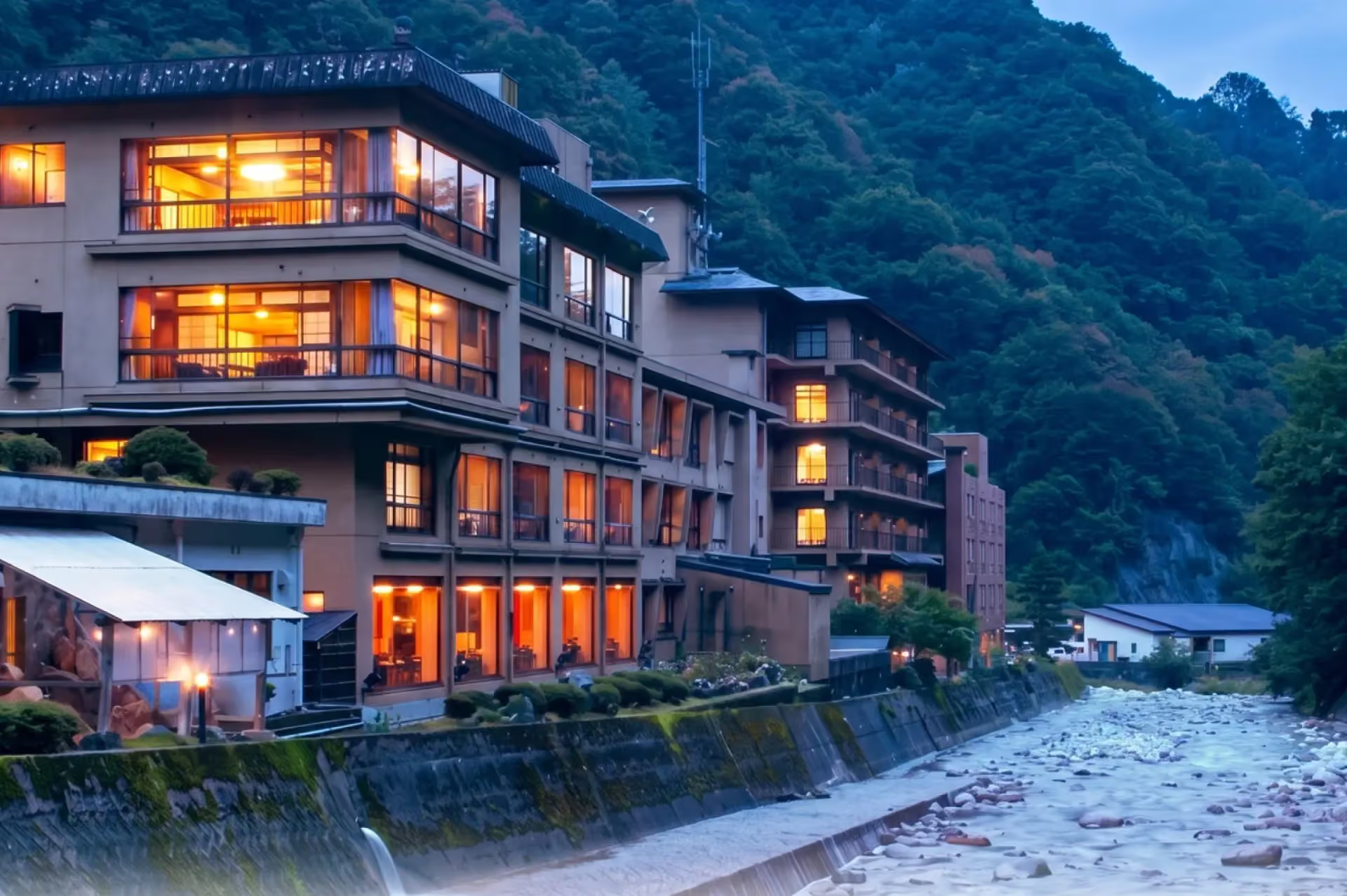
    The easiest hot spring areas to reach from Sendai are Akiu Onsen and Sakunami Onsen, both located in the western part of the city. Long known as Sendai's inner retreats, they are easy to include before or after city sightseeing.

    Akiu Onsen can be reached from Sendai in a relatively short time, and is accessible by car as well as local bus. It ranges from large ryokan to facilities that offer day-use bathing, and can be enjoyed together with nearby nature such as waterfalls and gorges. For the overall area and the style of accommodations, see the Complete Guide to Akiu Onsen. It is a strong candidate if you want to stay in Sendai while also enjoying hot springs.

    Sakunami Onsen is a hot spring area on the way from Sendai Station toward Yamagata via the Senzan Line, and is known for its quiet gorge-side setting. Because it can be reached by train, it is convenient for travelers without a car. Since both Akiu and Sakunami are close to Sendai, they work well for a day trip between sightseeing stops or for a relaxed overnight stay. Day-use hours, regular closing days, and service frequency vary by facility and route, so check the latest official information before you go.

    For varied spring qualities: Naruko Onsen

    If you want to enjoy the diversity of hot springs themselves, Naruko Onsen in northern Miyagi is the place to go. Naruko Onsen is a collective name for Naruko Onsen, Higashi-Naruko Onsen, Kawatabi Onsen, and other nearby bath areas. It is famous for having a wide variety of spring qualities in a compact area, and many visitors come specifically for hot spring hopping.

    From Sendai, the usual rail route is to take the Tohoku Main Line toward Kogota, then transfer to the Rikuu East Line to Naruko Onsen Station. Because this requires a transfer, it takes longer than nearby Akiu or Sakunami, so an overnight stay is usually better than a same-day round trip. For the history of the onsen town, the characteristics of the spring waters, and how to enjoy bathing from place to place, see the Complete Guide to Naruko Onsen. Train frequency can be limited depending on the time of day, so it's wise to plan your entire trip, including the return leg.

    For powerful waters and juhyo: Zao

    At the foot of the Zao mountain range, which stretches across the border between Miyagi and Yamagata, you'll find several hot spring areas with very different characters. Togatta Onsen and Aone Onsen on the Miyagi side are known as hot spring areas at the foot of Mount Zao, and are commonly reached from Sendai by local bus or car. Togatta has a larger onsen town, while Aone is known for its quiet mountain setting. They are good options if you want to combine hot springs with mountain sightseeing in Zao.

    On the Yamagata side, Zao Onsen is known for its highly acidic sulfur spring and is also a mountain resort famous for its winter juhyo. Although it is on the Yamagata side, it is often introduced as an easy destination from Sendai by highway bus and other means. It suits travelers who want strong bathwater, as well as those aiming for winter juhyo and skiing. For spring characteristics and seasonal ways to enjoy the area, see the Complete Guide to Zao Onsen. Because the Zao area is at high elevation and winter conditions can change road and transit status quickly, please check the latest official information for the season you plan to visit.

    Quick reference for hot spring areas easily reached from Sendai

    The table below organizes representative hot spring areas that are easy to plan from Sendai, with access estimates, whether they are better for day trips or overnight stays, and their main characteristics. Travel times are approximate and vary depending on your departure point, the type of train or bus, time of day, and season. Please check the latest official information for the status of specific facilities and fares.

    Hot spring areaAccess from Sendai (approx.)Better for day trip / overnight stayFeatures
    Akiu Onsen (Miyagi)Car, local bus, etc.Either is fine (very close to Sendai)Sendai's inner retreat, good with waterfalls and gorges
    Sakunami Onsen (Miyagi)Senzan Line toward YamagataEither is fine (very close to Sendai)Gorge-side setting, easy to reach by train
    Naruko Onsen (Miyagi)Tohoku Main Line + Rikuu East LineBetter for overnight stayDiverse spring qualities, ideal for hot spring hopping
    Togatta & Aone Onsen (Miyagi)Local bus, car, etc.Either is fineFoot of Mount Zao, good with mountain sightseeing
    Zao Onsen (Yamagata)Highway bus, etc.Better for overnight stayStrong sulfur spring, winter juhyo and skiing

    This table shows general trends by direction, but conditions differ by facility and inn even within the same area. Rather than deciding by name alone, choose based on your purpose: a short stop during a Sendai stay, or a longer trip to enjoy spring quality and mountain scenery in depth.

    Judge by season and transfers, not distance alone

    When choosing hot springs from Sendai, it's more practical to consider not only distance but also transfers and seasonal conditions. Akiu and Sakunami are easy to fit in because they are close to Sendai, but Naruko requires transfers, and the Zao area sits at higher elevation where winter transport conditions can change easily.

    For example, if you spend the whole day sightseeing in Sendai, then start transferring to Naruko in the evening, the burden may be greater than the distance suggests. By contrast, if you finish sightseeing lightly in the morning, adding an afternoon soak at Akiu or Sakunami usually won't disrupt the flow. When heading to Naruko or Zao for an overnight stay, it's better not to overpack your Sendai sightseeing and instead leave time for both travel and the stay. In winter, snow can lengthen travel times or change service, so it's best to plan with the season's conditions in mind.

    In other words, choosing a hot spring from Sendai is less about the place name and more about how you arrange your Sendai days, your hot spring day, and the season and transfers.

    How to plan with public transportation

    If you're traveling from Sendai to a hot spring area by public transportation, it's safest to think all the way through to the final transfer from the station or bus stop to your inn. Some hot spring areas, like Sakunami, are easy to build around a train station, while others, like Naruko, require transfers, and areas like Zao are mainly reached by highway bus.

    Train and bus frequency can be limited depending on the time of day, and in mountain areas the last service may be early. When planning sightseeing and bathing, be sure to check not only the outbound trip but also your return. For a general guide to planning hot spring trips by public transportation, see How to Choose Hot Spring Destinations Without a Car.
    FAQ

    Which hot spring area is easiest to reach from Sendai?

    Akiu Onsen and Sakunami Onsen are the first candidates because they are relatively close to central Sendai. Both are known as Sendai's inner retreats and are easy to add before or after city sightseeing. Akiu is commonly reached by car or local bus, while Sakunami is known for access via the Senzan Line. Day-use hours and service frequency vary by facility and route, so please check the latest official information before you go.

    How long does it take to get to Naruko Onsen from Sendai?

    By train, the usual route is to take the Tohoku Main Line toward Kogota, then transfer to the Rikuu East Line to Naruko Onsen Station, which takes longer than Akiu or Sakunami because of the transfer. Travel time and frequency vary by service, so please check the latest official information from the rail operators or the Naruko Onsen tourist office. Because it is farther away, an overnight stay to enjoy multiple spring qualities is usually a better fit than a same-day round trip.

    Zao Onsen is in Yamagata Prefecture. Can I still go there from Sendai?

    Yes. Zao Onsen is in Yamagata Prefecture, but it is often presented as an easy destination from Sendai by highway bus and other means. It is known for its strong sulfur spring and winter juhyo, and has the character of a mountain resort. Because it is at high elevation and winter transport and road conditions can change easily, please check the latest official information for the season you plan to visit.

    Which area is best if I want to enjoy different spring qualities?

    Naruko Onsen is the best fit. It is a collective name for areas such as Naruko Onsen, Higashi-Naruko Onsen, and Kawatabi Onsen, and many visitors come specifically for hot spring hopping. For the characteristics of the spring waters and how to enjoy bathing from place to place, see the Complete Guide to Naruko Onsen.

    What if I want to learn about other hot spring destinations in Tohoku?

    This article focuses on access from Sendai. If you want an overview of hot spring destinations across Tohoku, see the Tohoku Onsen Guide. For general advice on destinations that are easy to reach by public transportation, see How to Choose Hot Spring Destinations Without a Car.

    Summary

    When heading to hot springs from Sendai, you're less likely to get lost if you choose by the character of each direction rather than by fame. If you want a short soak near Sendai, choose Akiu or Sakunami. If you want to enjoy a variety of spring qualities, choose Naruko Onsen. If you want powerful waters and juhyo, choose Zao. Decide what you want first, then choose the direction.

    The key points are not only distance, but also transfers, seasonal effects, and how you divide your Sendai days and hot spring days. Travel times, fares, and facility hours are only estimates, and train and bus service changes with the season, so please check the latest official information from each hot spring area's tourist association or railway operator before you go. If you want a broader view of Tohoku, see the Tohoku Onsen Guide, and if you're planning a car-free trip, also see How to Choose Hot Spring Destinations Without a Car.

    Sources

    • Sendai Tourism, Convention and International Association: Sendai Travel Diary
    • Miyagi Prefecture Tourism Promotion Office: Miyagi Tour Guide
    • Akiu Onsenkyo Tourist Association
    • Naruko Onsenkyo Tourist Association
    • Zao Onsen Tourist Association
    • Japan Tourism Agency
    Back to Articles

    Category

    Tips for a Successful TripChoosing Hot Springs by Region

    More in This Category

    • Which Hakone Area Should You Stay In? Area-by-Area Guide

      Jun 28, 2026

    • Izu Hot Springs Guide: Coastal Peninsula Spots Near Tokyo

      Jun 28, 2026

    • Hokkaido Onsen Guide: Volcano, Snow & Lake Hot Springs

      Jun 28, 2026

    • Tohoku Hot Spring Guide: Top Hidden Baths by Prefecture

      Jun 28, 2026

    • Kyushu Hot Spring Guide: Top Prefectures and Routes

      Jun 28, 2026

    See All

    Related Articles

    • Yuda Onsen Guide: White Fox Legend and Soft Hot Spring Waters

      Jun 28, 2026

    • Yubara Onsen Guide: Sand Bath and Top-Ranked Open-Air Bath

      Jun 28, 2026

    • Kotohira Onsen Guide: Kagawa Hot Spring Town by Kotohira-gu Shrine

      Jun 28, 2026

    6
    Judge by season and transfers, not distance alone
  • 7How to plan with public transportation
  • 8FAQ
  • 9Summary
  • 10Sources
  • If you're heading to hot springs from Sendai, it's easier to choose by what you want from each direction than by the resort's fame. Sendai is a transport hub for Tohoku travel, giving you radial access to different hot spring areas, from nearby inner retreats to mineral-rich spa towns and mountain baths with powerful waters. First decide whether you want a short soak near Sendai or a longer stay to enjoy the onsen town and its atmosphere.

    This article focuses on access from Sendai. If you want an overview of hot springs across all of Tohoku, see the Tohoku Onsen Guide. Please note that travel times, fares, fees, and opening status are only estimates, and you should check the latest official information for each facility or hot spring area, as well as train and bus operations.

    How to choose a hot spring from Sendai

    When choosing a hot spring trip from Sendai, the first question is whether you want a quick soak between sightseeing stops or a full overnight stay to enjoy the atmosphere of the hot spring area. If you leave this vague and search only by place name, both travel and stay can end up feeling half-finished.

    If you want a short soak from Sendai or the surrounding area, Akiu Onsen and Sakunami Onsen are practical choices. They are relatively close to the city and work well as an extension of city sightseeing, with many facilities offering day-use bathing. On the other hand, if you want to enjoy an onsen ryokan, a hot spring town, dinner, yukata, and even a morning bath, you'll be more satisfied by heading out for an overnight stay in a place like Naruko Onsen or Zao. If your goal is to compare different spring qualities or experience juhyo and mountain scenery, it helps to leave enough time for both travel and your stay.

    Hot springs from Sendai differ greatly by direction. If you want something close to Sendai, choose Akiu or Sakunami. If you want varied spring qualities, choose Naruko. If you want powerful waters and juhyo, choose Zao. Decide what you want first, then pick the direction.

    The nearest inner retreats to Sendai: Akiu and Sakunami

    The easiest hot spring areas to reach from Sendai are Akiu Onsen and Sakunami Onsen, both located in the western part of the city. Long known as Sendai's inner retreats, they are easy to include before or after city sightseeing.

    Akiu Onsen can be reached from Sendai in a relatively short time, and is accessible by car as well as local bus. It ranges from large ryokan to facilities that offer day-use bathing, and can be enjoyed together with nearby nature such as waterfalls and gorges. For the overall area and the style of accommodations, see the Complete Guide to Akiu Onsen. It is a strong candidate if you want to stay in Sendai while also enjoying hot springs.

    Sakunami Onsen is a hot spring area on the way from Sendai Station toward Yamagata via the Senzan Line, and is known for its quiet gorge-side setting. Because it can be reached by train, it is convenient for travelers without a car. Since both Akiu and Sakunami are close to Sendai, they work well for a day trip between sightseeing stops or for a relaxed overnight stay. Day-use hours, regular closing days, and service frequency vary by facility and route, so check the latest official information before you go.

    For varied spring qualities: Naruko Onsen

    If you want to enjoy the diversity of hot springs themselves, Naruko Onsen in northern Miyagi is the place to go. Naruko Onsen is a collective name for Naruko Onsen, Higashi-Naruko Onsen, Kawatabi Onsen, and other nearby bath areas. It is famous for having a wide variety of spring qualities in a compact area, and many visitors come specifically for hot spring hopping.

    From Sendai, the usual rail route is to take the Tohoku Main Line toward Kogota, then transfer to the Rikuu East Line to Naruko Onsen Station. Because this requires a transfer, it takes longer than nearby Akiu or Sakunami, so an overnight stay is usually better than a same-day round trip. For the history of the onsen town, the characteristics of the spring waters, and how to enjoy bathing from place to place, see the Complete Guide to Naruko Onsen. Train frequency can be limited depending on the time of day, so it's wise to plan your entire trip, including the return leg.

    For powerful waters and juhyo: Zao

    At the foot of the Zao mountain range, which stretches across the border between Miyagi and Yamagata, you'll find several hot spring areas with very different characters. Togatta Onsen and Aone Onsen on the Miyagi side are known as hot spring areas at the foot of Mount Zao, and are commonly reached from Sendai by local bus or car. Togatta has a larger onsen town, while Aone is known for its quiet mountain setting. They are good options if you want to combine hot springs with mountain sightseeing in Zao.

    On the Yamagata side, Zao Onsen is known for its highly acidic sulfur spring and is also a mountain resort famous for its winter juhyo. Although it is on the Yamagata side, it is often introduced as an easy destination from Sendai by highway bus and other means. It suits travelers who want strong bathwater, as well as those aiming for winter juhyo and skiing. For spring characteristics and seasonal ways to enjoy the area, see the Complete Guide to Zao Onsen. Because the Zao area is at high elevation and winter conditions can change road and transit status quickly, please check the latest official information for the season you plan to visit.

    Quick reference for hot spring areas easily reached from Sendai

    The table below organizes representative hot spring areas that are easy to plan from Sendai, with access estimates, whether they are better for day trips or overnight stays, and their main characteristics. Travel times are approximate and vary depending on your departure point, the type of train or bus, time of day, and season. Please check the latest official information for the status of specific facilities and fares.

    Hot spring areaAccess from Sendai (approx.)Better for day trip / overnight stayFeatures
    Akiu Onsen (Miyagi)Car, local bus, etc.Either is fine (very close to Sendai)Sendai's inner retreat, good with waterfalls and gorges
    Sakunami Onsen (Miyagi)Senzan Line toward YamagataEither is fine (very close to Sendai)Gorge-side setting, easy to reach by train
    Naruko Onsen (Miyagi)Tohoku Main Line + Rikuu East LineBetter for overnight stayDiverse spring qualities, ideal for hot spring hopping
    Togatta & Aone Onsen (Miyagi)Local bus, car, etc.Either is fineFoot of Mount Zao, good with mountain sightseeing
    Zao Onsen (Yamagata)Highway bus, etc.Better for overnight stayStrong sulfur spring, winter juhyo and skiing

    This table shows general trends by direction, but conditions differ by facility and inn even within the same area. Rather than deciding by name alone, choose based on your purpose: a short stop during a Sendai stay, or a longer trip to enjoy spring quality and mountain scenery in depth.

    Judge by season and transfers, not distance alone

    When choosing hot springs from Sendai, it's more practical to consider not only distance but also transfers and seasonal conditions. Akiu and Sakunami are easy to fit in because they are close to Sendai, but Naruko requires transfers, and the Zao area sits at higher elevation where winter transport conditions can change easily.

    For example, if you spend the whole day sightseeing in Sendai, then start transferring to Naruko in the evening, the burden may be greater than the distance suggests. By contrast, if you finish sightseeing lightly in the morning, adding an afternoon soak at Akiu or Sakunami usually won't disrupt the flow. When heading to Naruko or Zao for an overnight stay, it's better not to overpack your Sendai sightseeing and instead leave time for both travel and the stay. In winter, snow can lengthen travel times or change service, so it's best to plan with the season's conditions in mind.

    In other words, choosing a hot spring from Sendai is less about the place name and more about how you arrange your Sendai days, your hot spring day, and the season and transfers.

    How to plan with public transportation

    If you're traveling from Sendai to a hot spring area by public transportation, it's safest to think all the way through to the final transfer from the station or bus stop to your inn. Some hot spring areas, like Sakunami, are easy to build around a train station, while others, like Naruko, require transfers, and areas like Zao are mainly reached by highway bus.

    Train and bus frequency can be limited depending on the time of day, and in mountain areas the last service may be early. When planning sightseeing and bathing, be sure to check not only the outbound trip but also your return. For a general guide to planning hot spring trips by public transportation, see How to Choose Hot Spring Destinations Without a Car.

    FAQ

    Which hot spring area is easiest to reach from Sendai?

    Akiu Onsen and Sakunami Onsen are the first candidates because they are relatively close to central Sendai. Both are known as Sendai's inner retreats and are easy to add before or after city sightseeing. Akiu is commonly reached by car or local bus, while Sakunami is known for access via the Senzan Line. Day-use hours and service frequency vary by facility and route, so please check the latest official information before you go.

    How long does it take to get to Naruko Onsen from Sendai?

    By train, the usual route is to take the Tohoku Main Line toward Kogota, then transfer to the Rikuu East Line to Naruko Onsen Station, which takes longer than Akiu or Sakunami because of the transfer. Travel time and frequency vary by service, so please check the latest official information from the rail operators or the Naruko Onsen tourist office. Because it is farther away, an overnight stay to enjoy multiple spring qualities is usually a better fit than a same-day round trip.

    Zao Onsen is in Yamagata Prefecture. Can I still go there from Sendai?

    Yes. Zao Onsen is in Yamagata Prefecture, but it is often presented as an easy destination from Sendai by highway bus and other means. It is known for its strong sulfur spring and winter juhyo, and has the character of a mountain resort. Because it is at high elevation and winter transport and road conditions can change easily, please check the latest official information for the season you plan to visit.

    Which area is best if I want to enjoy different spring qualities?

    Naruko Onsen is the best fit. It is a collective name for areas such as Naruko Onsen, Higashi-Naruko Onsen, and Kawatabi Onsen, and many visitors come specifically for hot spring hopping. For the characteristics of the spring waters and how to enjoy bathing from place to place, see the Complete Guide to Naruko Onsen.

    What if I want to learn about other hot spring destinations in Tohoku?

    This article focuses on access from Sendai. If you want an overview of hot spring destinations across Tohoku, see the Tohoku Onsen Guide. For general advice on destinations that are easy to reach by public transportation, see How to Choose Hot Spring Destinations Without a Car.

    Summary

    When heading to hot springs from Sendai, you're less likely to get lost if you choose by the character of each direction rather than by fame. If you want a short soak near Sendai, choose Akiu or Sakunami. If you want to enjoy a variety of spring qualities, choose Naruko Onsen. If you want powerful waters and juhyo, choose Zao. Decide what you want first, then choose the direction.

    The key points are not only distance, but also transfers, seasonal effects, and how you divide your Sendai days and hot spring days. Travel times, fares, and facility hours are only estimates, and train and bus service changes with the season, so please check the latest official information from each hot spring area's tourist association or railway operator before you go. If you want a broader view of Tohoku, see the Tohoku Onsen Guide, and if you're planning a car-free trip, also see How to Choose Hot Spring Destinations Without a Car.

    Sources

    • Sendai Tourism, Convention and International Association: Sendai Travel Diary
    • Miyagi Prefecture Tourism Promotion Office: Miyagi Tour Guide
    • Akiu Onsenkyo Tourist Association
    • Naruko Onsenkyo Tourist Association
    • Zao Onsen Tourist Association
    • Japan Tourism Agency
    Back to Articles

    Category

    Tips for a Successful TripChoosing Hot Springs by Region

    More in This Category

    • Which Hakone Area Should You Stay In? Area-by-Area Guide

      Jun 28, 2026

    • Izu Hot Springs Guide: Coastal Peninsula Spots Near Tokyo

      Jun 28, 2026

    • Hokkaido Onsen Guide: Volcano, Snow & Lake Hot Springs

      Jun 28, 2026

    • Tohoku Hot Spring Guide: Top Hidden Baths by Prefecture

      Jun 28, 2026

    • Kyushu Hot Spring Guide: Top Prefectures and Routes

      Jun 28, 2026

    See All

    Related Articles

    • Yuda Onsen Guide: White Fox Legend and Soft Hot Spring Waters

      Jun 28, 2026

    • Yubara Onsen Guide: Sand Bath and Top-Ranked Open-Air Bath

      Jun 28, 2026

    • Kotohira Onsen Guide: Kagawa Hot Spring Town by Kotohira-gu Shrine

      Jun 28, 2026