Thematic GuidesFamous Japanese Hot Springs
Complete Guide to Kirishima Hot Springs: Volcanic Baths, Ryoma’s Honeymoon, and Kirishima Jingu
A clear guide to the Kirishima hot spring area at the foot of Kagoshima’s Kirishima Mountains. Learn its many spring types, the Ryoma honeymoon legend, Kirishima Jingu, nearby sights, and access from Kagoshima Airport.
Published: Jun 28, 2026
Thematic GuidesFamous Japanese Hot Springs
Complete Guide to Kirishima Hot Springs: Volcanic Baths, Ryoma’s Honeymoon, and Kirishima Jingu
A clear guide to the Kirishima hot spring area at the foot of Kagoshima’s Kirishima Mountains. Learn its many spring types, the Ryoma honeymoon legend, Kirishima Jingu, nearby sights, and access from Kagoshima Airport.
Published: Jun 28, 2026
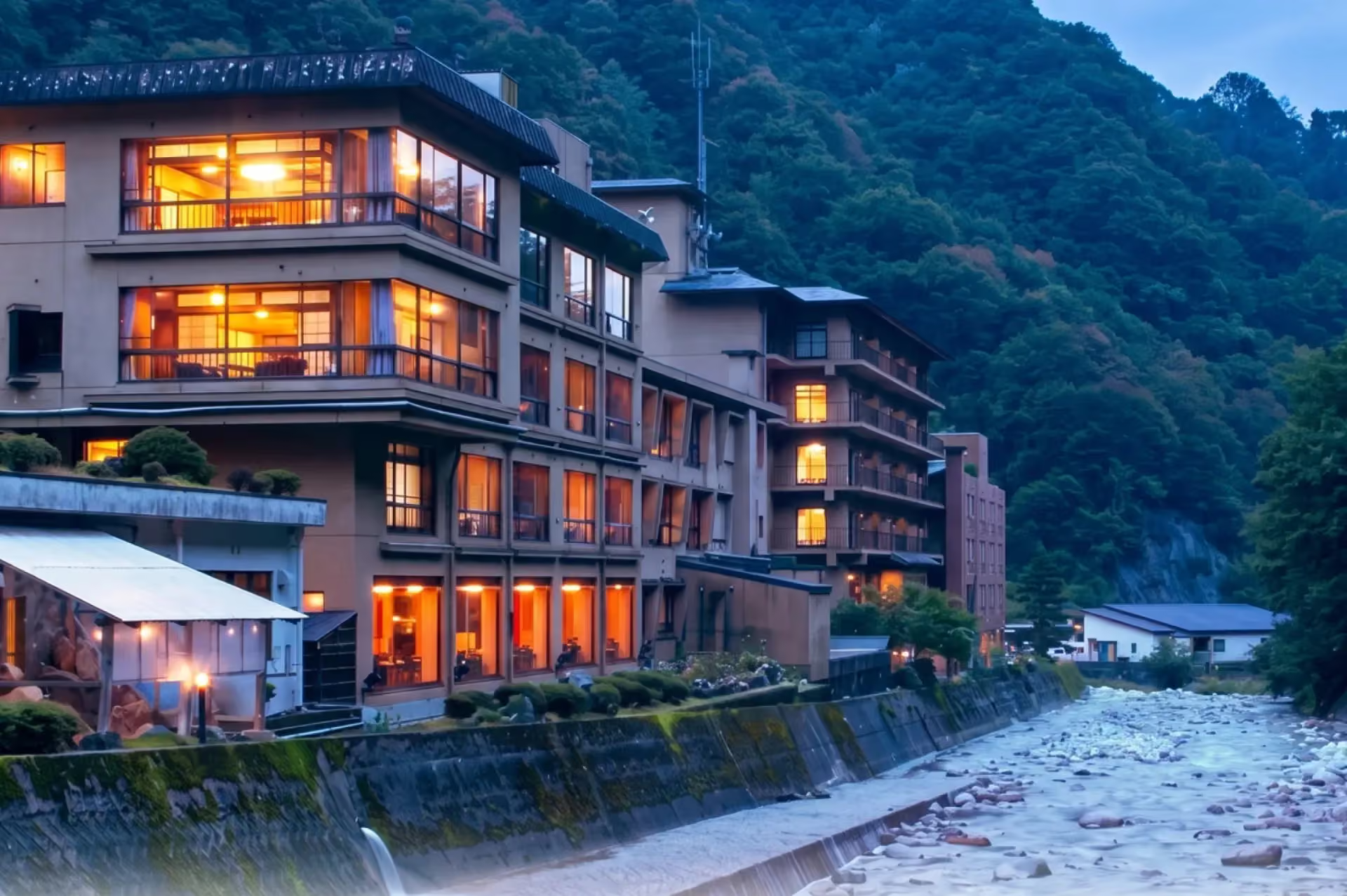
Kirishima Onsenkyo is a hot spring area spread across the foothills of the volcanic Kirishima Mountains in Kirishima, Kagoshima Prefecture. It is not a single hot spring, but a collective name for several hot spring areas scattered throughout the region. Maruo Onsen, Iodani, Einoo, Hayashida, and Shinyu each spring up in different places, and the spring quality differs from bath to bath. The character of this destination as a trip comes from combining the waters shaped by volcanoes with the mythic landscape represented by Kirishima Jingu and the mountain scenery of Ebino Kogen and Mt. Karakuni into a single itinerary.
In short, Kirishima is not one famous inn with a celebrated bath, but a hot spring area where baths are scattered at the foot of a volcano. It is easier to plan your trip if you first decide which hot spring area to use as your base and which non-onsen attractions to combine with it, such as shrines, hikes, or waterfalls. This article provides an objective overview of Kirishima Onsenkyo, covering its location and origins, its varied spring types, the Ryoma legend, Kirishima Jingu and nearby highlights, and access. Detailed explanations of the link between volcanoes and hot springs, as well as individual spring types, are left to dedicated articles; here, the focus is on mapping the entire hot spring area.
This article provides general sightseeing and hot spring information and is not medical advice. Prices, operating schedules, facility and ropeway status, volcanic activity, hiking restrictions, and stories related to the opening of the hot springs or local history can change or are subject to differing interpretations, so please check official sources before visiting. It is not intended to claim any health benefits.
What kind of place is Kirishima Onsenkyo?
Kirishima Onsenkyo is a hot spring area in Kirishima, Kagoshima Prefecture, where baths spring up from the mountainside to the foothills of the Kirishima Mountains. The Kirishima Mountains are a volcanic group including Mt. Shinmoe and Mt. Karakuni, and this volcanic activity is the source of the hot spring area. Because it sits in mountainous terrain at a relatively high elevation, its atmosphere is very different from seaside hot spring resorts, and the impression of a mountain hot spring area wrapped in forest and steam vents is especially strong.
The key point here is that Kirishima Onsenkyo is not a single hot spring town, but a collective name for several hot spring areas such as Maruo Onsen, Iodani, Einoo, Hayashida, and Shinyu. Each springs up a little apart from the others, and inns and day-use facilities are scattered throughout. This is not the kind of place where you walk from bath to bath within a compact district. Instead, it is better to choose one base area and then travel by car or similar means to combine nearby sights. As a central area, the Maruo Onsen district, where tourist information and souvenirs are concentrated, is easy to use as a base.
A hot spring area shaped by volcanoes
The waters of Kirishima come from the volcanic activity of the Kirishima Mountains. In volcanic regions, magma heat warms groundwater, which then rises to the surface as hot springs. The sulfur scent you may notice in Kirishima and the landscape with rising steam are signs that this land sits at the foot of an active volcano. If you want to understand how volcanoes and hot springs are connected before visiting, reading the relationship between volcanoes and hot springs will help you understand the background of Kirishima’s waters.
Because this is a volcanic hot spring area, it is important to plan with volcanic activity in mind. Mt. Shinmoe in the Kirishima Mountains is an active volcano, and depending on its activity, hiking trails and surrounding areas may be restricted. Even if the hot springs themselves are not directly affected, it is safer to check the latest volcanic information before planning hikes or walks on the plateau. Since volcanic activity, hiking restrictions, and the current status of Mt. Shinmoe can change quickly, please be sure to check the latest official information.
The spring types of Kirishima Onsenkyo
The spring types in Kirishima Onsenkyo are diverse, and each bath has its own character. Sulfur springs are well known as typical volcanic waters, but simple springs and chloride springs can also be found, making it hard to sum up Kirishima’s waters with just one label. This reflects the fact that it is a collective name for multiple hot spring areas, and it is easiest to understand by thinking that the character of the baths changes as you change your base area.
Among the spring types often associated with volcanic regions, sulfur springs have clear characteristics such as milky water and a distinctive smell. If you want to understand what sulfur springs are, how they feel, and what to watch out for before bathing, see What is a sulfur onsen?. If you want a broader overview of spring types, start with the hot spring types guide to understand how each type fits into the picture in Kirishima.
Even within the same hot spring area, the composition varies by source, and the name of the spring type, concentration, and whether water is added or heated differ from one inn to another. The most reliable way to confirm the spring type is to check the hot spring analysis sheet posted in the changing room or bathing area.
One safety note related to sulfur springs: in volcanic areas, gases such as hydrogen sulfide can be generated, so caution is needed near steam vents and in poorly ventilated places. Indoor baths are usually well ventilated, but you should not approach places where gas smells linger or steam vent areas with restricted access, and if you feel dizzy or unwell, leave the area immediately.

The Ryoma and Oryo honeymoon legend
Kirishima is known as the place that Sakamoto Ryoma and Oryo are said to have visited on Japan’s first honeymoon. It is generally said that the two toured the hot springs of Kirishima in 1866, including Shibitashi Onsen. Letters Ryoma wrote to his sister are also said to describe his time in Kirishima, and this story has become the basis for introducing Kirishima as the birthplace of the honeymoon.
However, there are differing views on the claim that this was Japan’s first honeymoon, as well as on the details of the places visited and the route taken, so this article treats it only as a legend. Historical events can be interpreted in different ways, so it is best to avoid making definitive claims. As part of the journey’s charm, it is enough to enjoy this as a land with stories connected to Ryoma. Facilities and monuments related to Ryoma and Oryo have been established at Shibitashi Onsen, but the current status and business hours can change, so please check before visiting.
Kirishima Jingu and nearby highlights
A trip to Kirishima becomes richer when you combine the hot springs with mythic landscapes and mountain scenery rather than treating the baths alone as the destination. The centerpiece is Kirishima Jingu, a shrine said to be connected to the myth of the descent of the heavenly grandson. It is known for its vivid vermilion shrine buildings, and the main hall is designated a National Treasure. Surrounded by forest, the grounds are one of the symbolic sights of Kirishima tourism, and many visitors pair it with a hot spring stay.
Other representative sights include Mt. Karakuni and Oonaminoike in the Kirishima Mountains, Mt. Shinmoe, known for its volcanic activity, Ebino Kogen with its open plateau scenery, Maruo Falls, and Kirishima Onsen Market, where souvenirs and dining are gathered. It is easier to get around by car, but when planning, please treat travel times only as a rough estimate.
| Sight | Features | Approximate time needed |
|---|---|---|
| Kirishima Jingu | An old shrine associated with the myth of the heavenly grandson’s descent. Its vivid vermilion buildings are a National Treasure. Grounds surrounded by forest | About 1 hour for a visit |
| Ebino Kogen | A plateau spread across the Kirishima Mountains. A base for walks and crater lake sightseeing. Volcanic restrictions must be checked first | About half a day |
| Mt. Karakuni and Oonaminoike | The main peak of the Kirishima Mountains and a crater lake. Suitable for hiking and trekking. Checking restriction status is essential | Hiking takes half a day or more |
| Mt. Shinmoe | An active volcano in the Kirishima Mountains. Restrictions may be placed on nearby areas depending on volcanic activity (check whether hiking is allowed) | — |
| Maruo Falls | A waterfall said to be fed by water containing hot spring components. Easy to view from the roadside | Short stop |
| Kirishima Onsen Market | A food and souvenir spot around Maruo Onsen. Steamed hot spring eggs are a local specialty | About 1 hour |
Mt. Karakuni, Oonaminoike, Ebino Kogen, and Mt. Shinmoe all showcase scenery unique to volcanic regions, but trails and access may be restricted depending on volcanic activity. If you plan to include hiking or plateau walks in your itinerary, be sure to check the latest official volcanic information and hiking restrictions before you go.
How to combine it with other areas in Kagoshima
Kirishima becomes even more rewarding when combined with other sights in Kagoshima rather than visited on its own. Because it is close to Kagoshima Airport, it is especially convenient as the first or last stop on a southern Kyushu trip.
It is contrasting in character to Ibusuki Onsen, another well-known hot spring area in Kagoshima. Kirishima is in the mountains and offers a wide variety of waters including sulfur springs, while Ibusuki lies along the coast at the southern tip of the Satsuma Peninsula and is famous for chloride springs and sand baths. Because the two sit on opposite sides of the peninsula and bay, trying to visit both in one day can make the travel feel long. If you split Kirishima, with its mountain and volcanic baths, and Ibusuki Onsen, with its seaside sand baths, into separate days, you can enjoy both without rushing. For anyone comparing spring types, this also creates a clear and useful contrast.
Kirishima also stands out even when compared with famous hot spring destinations across Japan. If you want to compare it with other well-known baths before choosing where to travel, reading Top 10 Famous Hot Springs in Japan will help you understand Kirishima’s position.
Access
One major advantage of Kirishima Onsenkyo is its proximity to Kagoshima Airport. From the airport to the central Kirishima area, the drive is generally about 40 minutes, making it one of the easier hot spring areas in southern Kyushu to access from the airport. It is easy to plan a trip by flying into Kagoshima, staying first in Kirishima, and then moving on to other areas, or ending your trip in Kirishima.
If you use the train, JR Kirishima-Jingu Station, the nearest station to Kirishima Jingu, is one starting point. However, the distance from the station to the hot spring area and the various sights is significant, so some form of onward transport is often necessary. Since the facilities in the hot spring area are scattered, having a rental car expands the range of places you can visit if you want to see multiple areas and attractions. Travel times, timetables, and bus routes can change, so please check official rail, bus, and airport access information when planning.
Best season
Kirishima is a mountain hot spring area whose appearance changes with the seasons. Spring, with its fresh green growth, and autumn, when the mountains change color, are generally comfortable periods that work well for combining walks, hikes, and hot springs. Winter brings the cold typical of a mountain area, and there is a special appeal to bathing in hot springs surrounded by snow, but you should also pay attention to road and trail conditions.
Summer is appealing for the coolness of the plateau, but mountain weather changes quickly, so checking equipment and the forecast is essential if your itinerary includes hiking. In any season, the volcanic activity of the Kirishima Mountains and hiking restrictions should be checked separately from the weather. If you are committed to outdoor walks or hiking, it is reassuring to check both volcanic and weather information in advance.
FAQ
What kind of hot spring area is Kirishima Onsenkyo?
It is a collective name for several hot spring areas spread across the foothills of the volcanic Kirishima Mountains. Maruo Onsen, Iodani, Einoo, Hayashida, and Shinyu are scattered throughout the area, and the spring quality differs from one bath to another. Rather than visiting a single famous bath, it is better to choose a base area and combine the trip with Kirishima Jingu and mountain scenery.
What is the spring quality of Kirishima Onsen?
It has diverse spring types derived from volcanic activity, and sulfur springs, simple springs, and chloride springs vary depending on the bath. It is difficult to sum up with just one label such as “this is Kirishima’s spring type.” For details on sulfur springs, see What is a sulfur onsen?, and for an overview of spring types, see the hot spring types guide. Since the composition differs by source, checking the local hot spring analysis sheet is the surest method.
Is it true that this was the site of Ryoma’s honeymoon?
It is said that Sakamoto Ryoma and Oryo visited Kirishima on Japan’s first honeymoon, and that they toured places such as Shibitashi Onsen in 1866. However, there are different views on the claim that it was the first honeymoon in Japan and on the details of the route, so it cannot be stated definitively. It is best to enjoy it as a land with legends connected to Ryoma. Facility conditions can change, so please check before visiting.
What is Kirishima Jingu like?
It is an old shrine said to be associated with the myth of the heavenly grandson’s descent, and its vivid vermilion shrine buildings are designated a National Treasure. The forested grounds are one of the symbolic sights of Kirishima tourism, and many visitors pair it with a hot spring stay. The visit usually takes about 1 hour, though this can vary depending on crowds and other factors.
Are there places I cannot visit because of volcanic activity?
Mt. Shinmoe in the Kirishima Mountains is an active volcano, and depending on its activity, nearby trails and areas may be subject to access restrictions. If you plan to hike or walk on the plateau, always check the latest official volcanic information and hiking restrictions. Also, because volcanic gases such as hydrogen sulfide may be generated, do not approach steam vent areas or poorly ventilated places.
Conclusion
Kirishima Onsenkyo is a collective name for several hot spring areas scattered across the foothills of the Kirishima Mountains in Kagoshima Prefecture. It has a wide variety of spring types shaped by volcanoes, and its appeal goes far beyond the baths themselves, with sights such as Kirishima Jingu, said to be connected to the heavenly grandson’s descent, mountain scenery like Ebino Kogen and Mt. Karakuni, and the legend that Sakamoto Ryoma and Oryo came here for their honeymoon.
If it is your first visit, it is easier to plan by first deciding on a base hot spring area and then choosing whether to combine it with a shrine, a hike, or a waterfall. Take advantage of its convenient location near Kagoshima Airport, and if you separate it from seaside Ibusuki Onsen into different days, you can enjoy two very different kinds of baths. Because this is a volcanic region, caution regarding volcanic activity, hiking restrictions, and volcanic gas is essential. After checking the background of the waters in the relationship between volcanoes and hot springs, and the spring types in What is a sulfur onsen? and the hot spring types guide, please confirm prices, schedules, facility status, and the latest volcanic conditions with official sources before planning your trip.