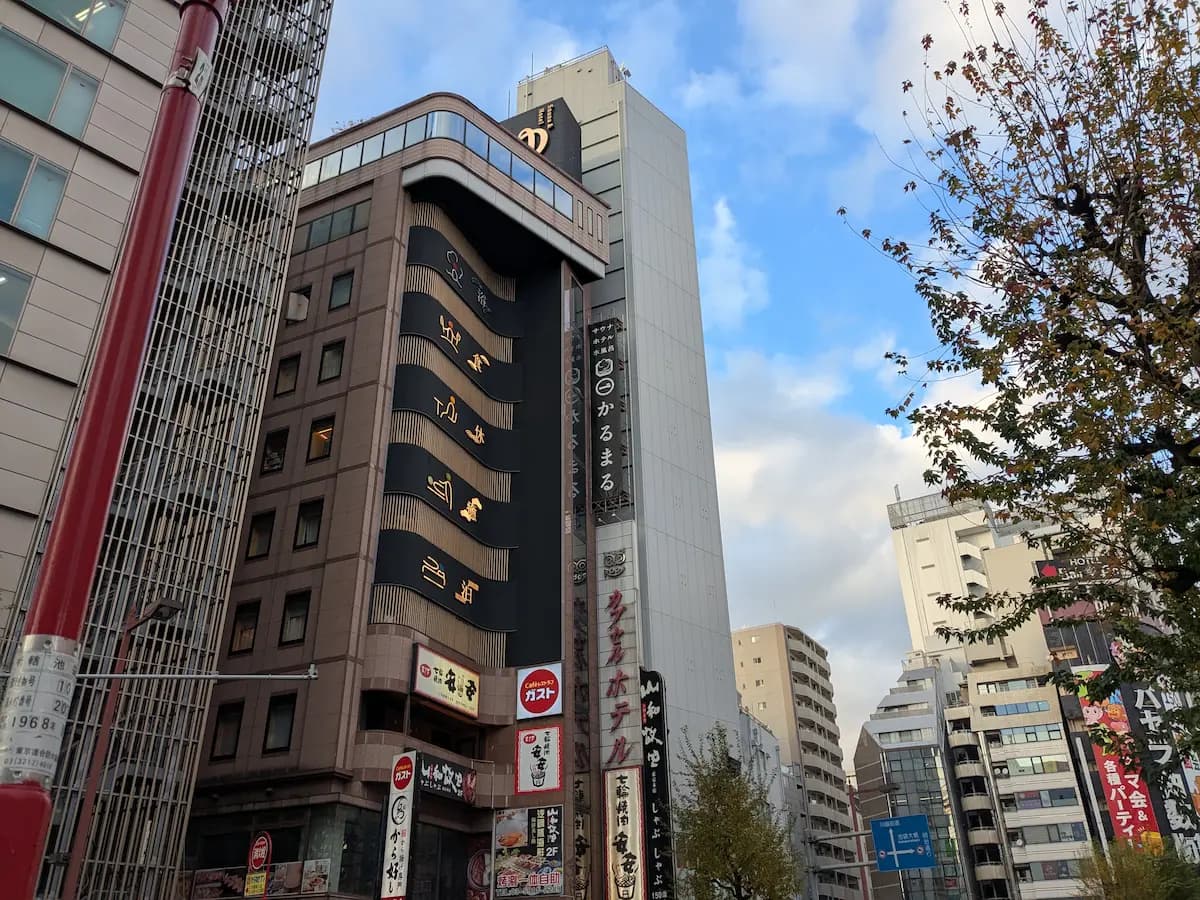
After visiting Soka Health Center in Saitama Prefecture in the morning, I arrived at Ikebukuro Station at 3 p.m. Can you guess where I was headed? Karumaru Ikebukuro.
Karumaru Ikebukuro is famous as a facility that has pursued an obsessive commitment to saunas and cold plunge baths. It is also well known for being produced by Hiroshi Ota, known in Japan as the Sauna King.
After about a ten-minute walk from Ikebukuro Station, Karumaru Ikebukuro came into view. I would be staying the night here. Taking the elevator up to the reception floor, I found rows of autographed boards from sauna-loving celebrities. I told the front desk I was checking in for a stay and received my indoor wear. I dropped my bags in the room and took a breather. My plan was to head out afterward for some sightseeing around Tokyo — but now that I had checked in, I arrived at the obvious conclusion: the right move was to get into the sauna first.
I stepped into the sacred bathhouse. To the right upon entering were the Rock Sauna and the Kelo Sauna, and beyond them stood the signature Thunder Tornado — a cold plunge bath at 7°C — alongside a gentler cold bath at 25°C.
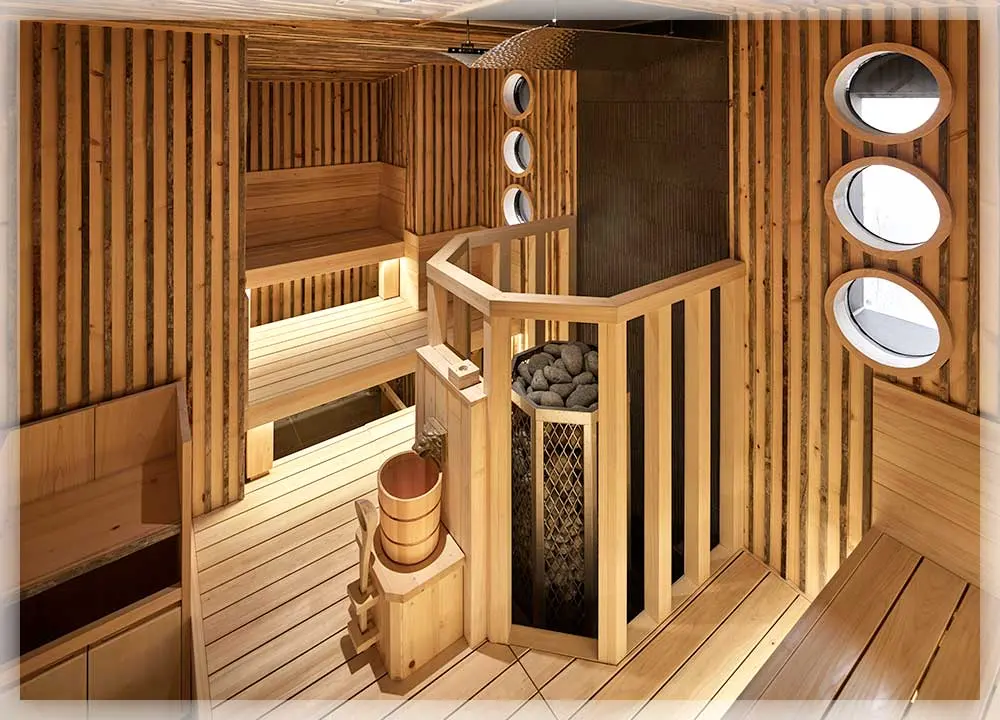
I rinsed off in the shower and stepped into the Kelo Sauna. There is something irresistible about entering a sauna built with kelo wood, the so-called jewel of timber. The interior has benches on either side of the sauna stove with seating for about eight people. Whether only part of the interior uses kelo wood, I'm not sure, but the distinctive scent was barely noticeable — a slight disappointment. Someone who had entered at the same time as me poured löyly, and steam filled the room in no time. Knowing I was about to face the 7°C cold bath, I stayed in longer than usual to heat my body thoroughly.
After leaving the Kelo Sauna, I moved to the Thunder Tornado cold bath. Why is it called the Thunder Tornado? Because a powerful jet current churns clockwise through the water. It is a whirlpool. Once you are pulled into it, combined with the extreme cold of 7°C, there is nothing a human being can do. Without gripping the handrail, you genuinely feel your life is at risk. My body was chilled in an instant. Coming to Karumaru Ikebukuro, experiencing the Thunder Tornado was something I had wanted to do — and now that wish was granted.
With Tokyo sightseeing time approaching, I wrapped up after one set. The rest would have to wait until that evening or the next morning.
Since I had visited Toshimaen Niwa no Yu during my Tokyo sightseeing the previous night, I picked up where I left off with a morning sauna session. I woke up at 6 a.m. and headed straight to the bathhouse. Despite the early hour, plenty of people were already enjoying the morning sauna. I washed up and entered the Rock Sauna. It has four tiers of benches; I settled onto the second level. A minty aroma drifted through the air — perhaps they use mint in the morning to give your body a bit of a jolt. Morning sauna sessions take longer to get the sweat going; the body might still be half asleep. After a while, warmth gradually seeped in and sweat began to flow. My heart rate started to climb. Time to get out.
Since jumping straight into a 7°C cold bath first thing in the morning felt like too much, I slipped into the 25°C bath instead. Temperature-wise, it felt a little lacking. At 25°C, you don't really snap awake — the refreshing sensation just isn't there. I found myself wishing there were another bath somewhere in the 14–16°C range. On the second floor with the wood-fired sauna, there is a cold bath called the Acrylic Avant — a single-person bath at 14°C — but walking there from the first floor means your body cools down along the way, making it a less-than-practical option.
Speaking of the wood-fired sauna, Karumaru Ikebukuro has one — a rare thing in the city. I really wanted to try it, but it was not operating during the morning session. Even during my sauna visit the previous afternoon, I had spotted it, but since entry required a lottery and sessions ran on a fixed schedule, I had given up.
City saunas offer many enticing facilities, yet the crowds, the inability to get into the sauna you want, the long queues just to enter, the lotteries, the fixed time slots — it was a world I had never encountered back in the rural area where I live. This is purely my personal view, but I can't help feeling it's counterproductive to come to a sauna to unwind from fatigue and stress, only to accumulate more stress from the crowds. If I lived in the city, I think I would keep my distance from the famous spots and focus on finding hidden-gem saunas instead.
After finishing the morning sauna, I had breakfast at the facility's restaurant and checked out. The final day had arrived. I was booked on a 3 p.m. flight back to Tokushima. The next stop would likely be my last. I boarded the JR Shonan-Shinjuku Line Rapid from Ikebukuro Station, bound for Yokohama. Any sauna enthusiast would know exactly which facility comes to mind when you say sauna in Yokohama. The place that would close out my Kanto sauna journey: Sky Spa YOKOHAMA.