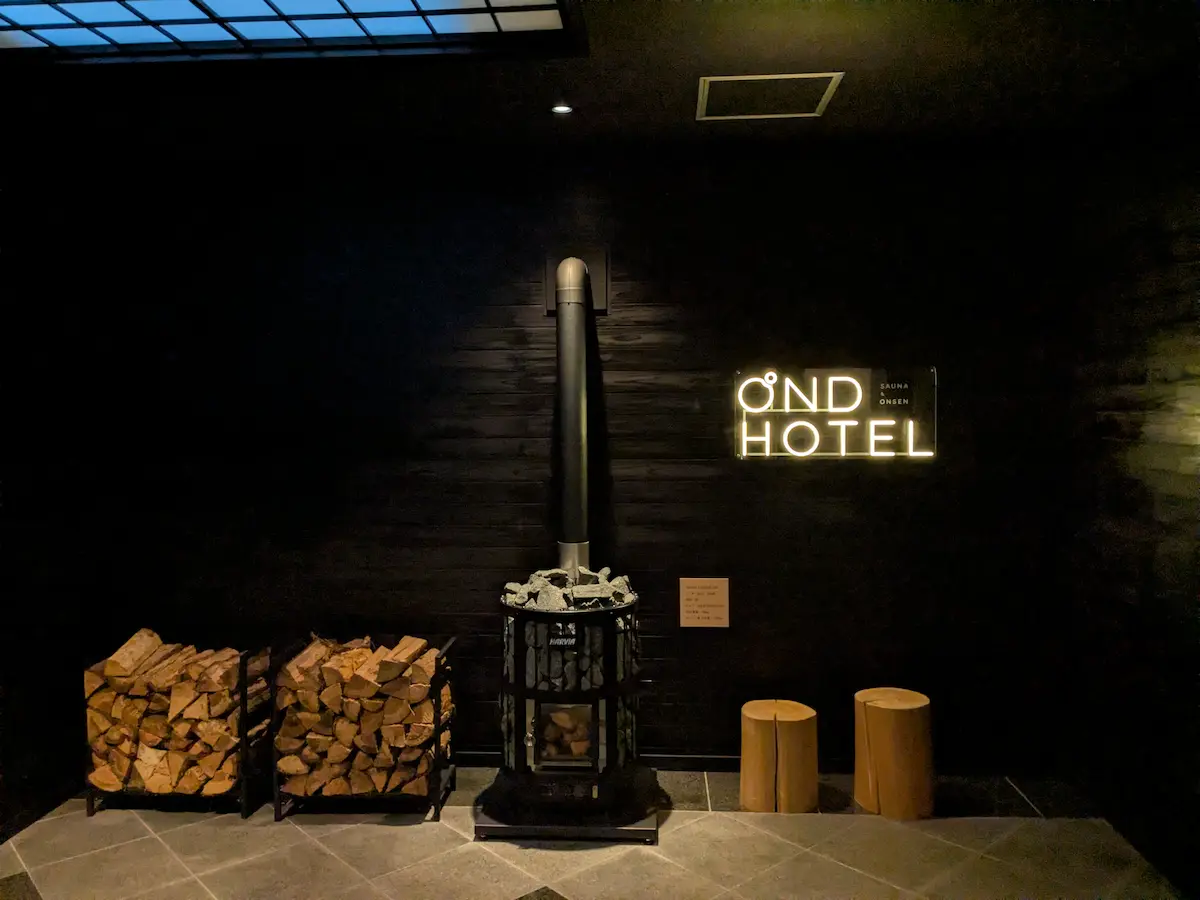
There are moments when even a devoted sauna lover has to shake their head at themselves.
The final day of my Fukuoka-Saga sauna trip. The moment I woke up at 7 a.m., I got ready and jumped into a taxi in front of Takeo Onsen Station. My destination: OND HOTEL. I wonder what the driver made of me — a guy hailing a cab first thing in the morning just to go to a sauna. Actually, let’s not think about that. For a sauna enthusiast, 7 a.m. is not early at all. I told myself exactly that as I settled into the back seat.
A few minutes from Takeo Onsen Station, past the edge of a pond, up a gentle slope. As we crested a small rise, OND HOTEL came into view. It has a contemporary look, yet it blends naturally into the wooded hillside of Takeo. Stepping into the refined lobby, a faint scent of aroma drifted through the air. I checked in and headed down to the large communal bath.
The locker room greeted me with warm wood interiors — high ceilings, generous space, spotless lockers. It felt like walking into the spa of a top-tier hotel. The moment I stepped through into the bathing area after changing, I caught my breath. There was no one else. I had the entire place to myself.
The indoor bath was filled with the source water of Takeo Onsen, and a view of the Takeo forest spread out before me. Flanking the corridor between the entrance and the indoor bath were two doors — the entrances to the saunas. One led to a mist sauna, the other to a Tonbai sauna. Outside, more than ten reclining chairs lined the open-air area, and a deep cold plunge bath sat quietly waiting.
I washed off first, then eased myself slowly into the indoor Takeo Onsen bath. The moment it touched my skin, a velvety softness came through. There is a particular pleasure to a morning hot spring that is different from the night. All I could hear was birdsong and the sound of water flowing from the spout. Everything else was silence. Every cell in my body was slowly waking up.
For the first set, I went to the mist sauna.
Steam wrapped around my entire body. The temperature was not particularly high, but the radiant heat from the ceramic panels seeped steadily into the core of me. I closed my eyes, enveloped in steam, in a space entirely my own. When I had worked up a good sweat, I moved to the cold plunge. The indoor bath uses groundwater, at 16°C. The groundwater in Takeo carries the faintest hint of a hot-spring scent — a mellow, somehow refined kind of cold. Coming out of the plunge, I sat in a chair inside and gazed at the Takeo forest. The entire space belonged to me alone.
For the second set, I headed to the Tonbai sauna.
The moment I opened the door, an involuntary “oh” escaped my lips. Every wall was covered in Tonbai — the refractory bricks that were actually used in the climbing kilns of Kuromuta-yaki. Kuromuta-yaki is a ceramic tradition with 430 years of history in Takeo City, and Tonbai refers to the refractory bricks used inside those kilns to fire the pottery. The shelf boards that once supported the pieces inside the kiln are also used as wall material here; they hold heat exceptionally well and radiate it powerfully. Each brick has its own expression, catching the light and glowing quietly. This is, all at once, a sauna room, a work of art, and a living piece of Takeo’s history.
When the automatic löyly activated, steam spread evenly through the room, and the radiant heat stored in the Tonbai bricks and shelf boards enveloped my body. Not a piercing heat — an embracing heat. The benches are angled at the back, so you can recline deeply, like a reclining chair. Sitting there, I found myself completely absorbed. Through all three sets, every time I entered the Tonbai sauna, its beauty took hold of me.
The outdoor cold plunge was around 10°C, with a maximum depth of 150 cm. With each step down, the chill of the groundwater climbed up from below. This water too carried a faint hint of hot-spring scent, and its quality was remarkably soft. A wave of exhilaration swept across every inch of my skin. Was it really acceptable to experience something this extraordinary first thing in the morning?
I stepped out of the cold plunge and sank deeply into one of the more than ten reclining chairs. Somewhere, a bird called. Water fell from the hot-spring spout. Beyond that, nothing. Only my own breathing and heartbeat, unmistakably present.
For the third set, I returned to the Tonbai sauna. Once again, the beauty of the room made me sigh with quiet wonder. When the automatic löyly started, steam rose and the radiant heat of the Tonbai bricks warmed me deeply. I leaned back and closed my eyes. Then I took one last cold plunge, and my morning sauna was done.
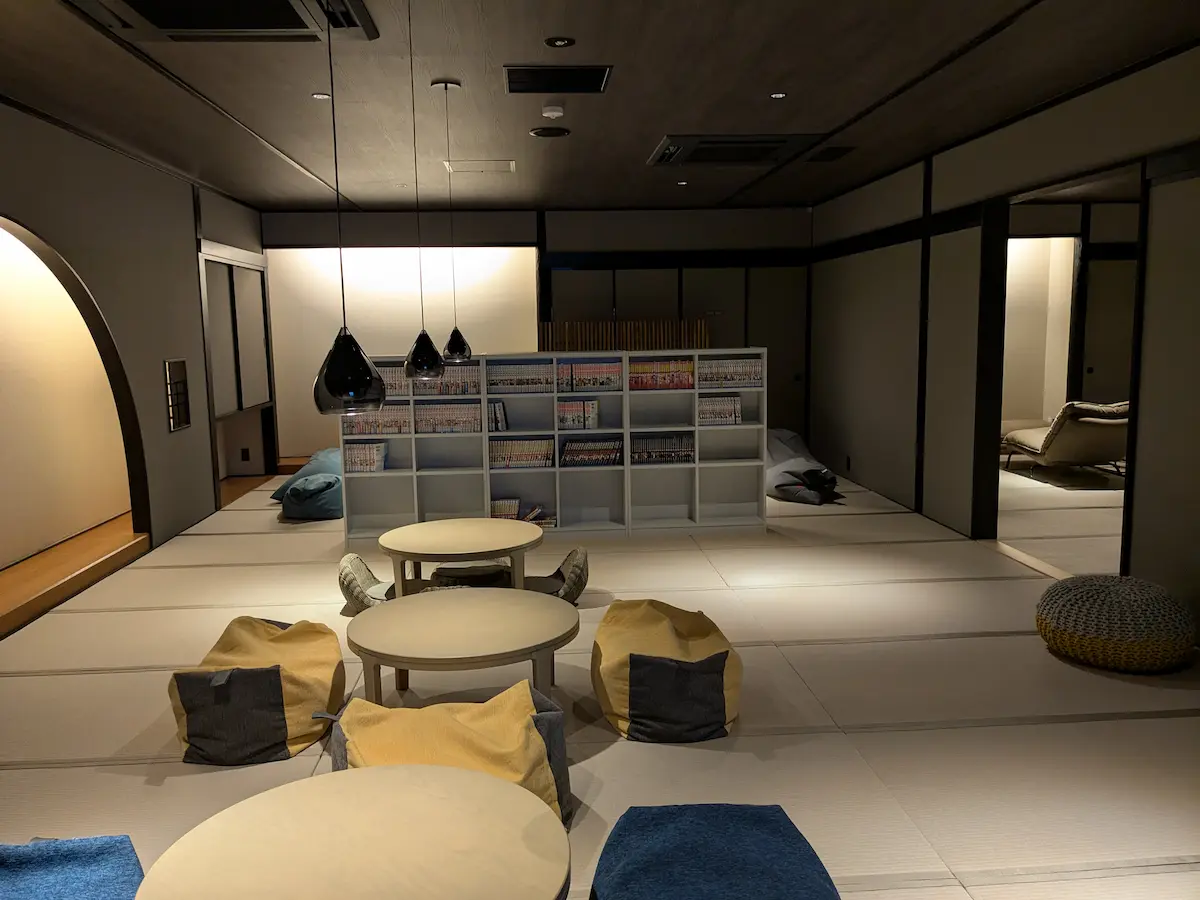
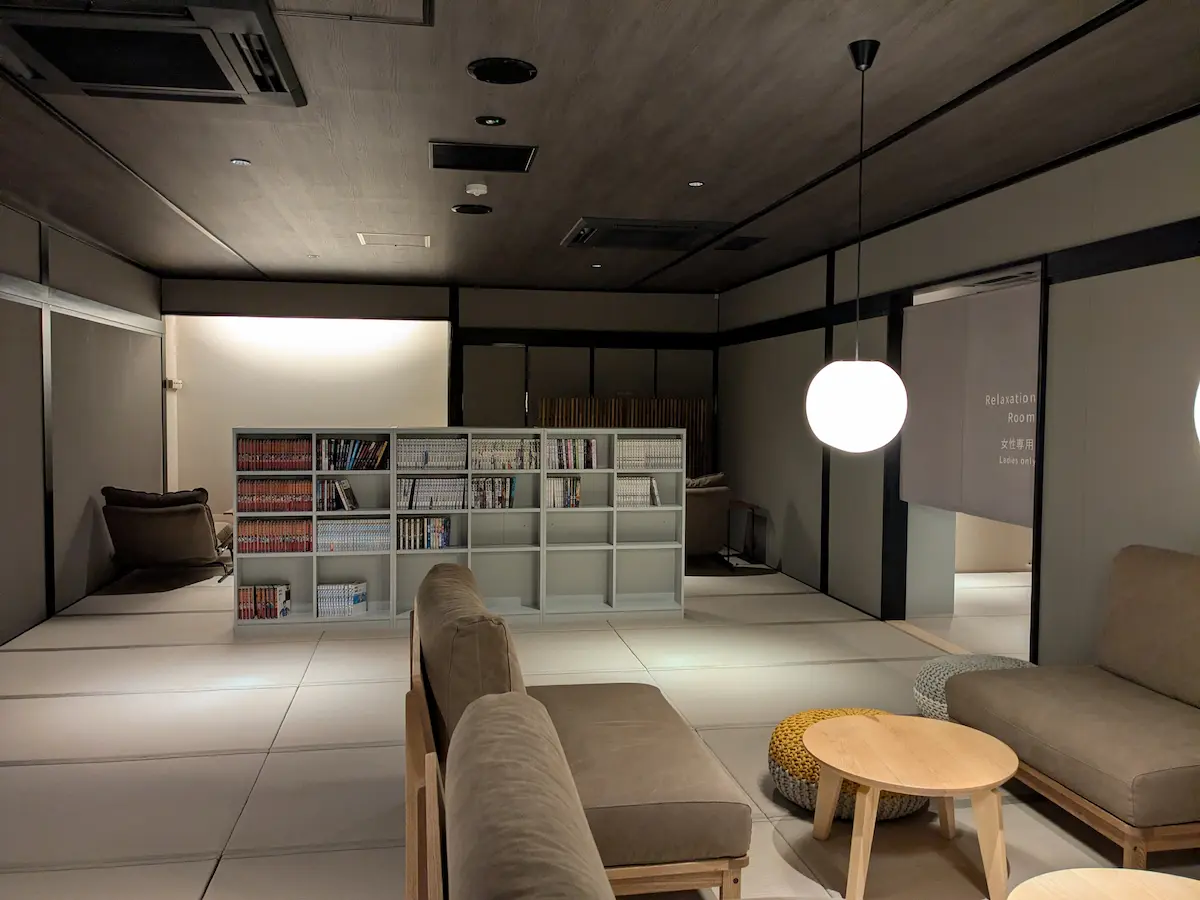
Stillness — that’s the most accurate word for what I felt. The clutter of everyday life, the fatigue of travel, the weight of whatever lay ahead — all of it drifted somewhere far away in the heat. A sauna is a device for stopping thought, and at the same time, a device for making thought clear.
After finishing the morning sauna, I returned to my hotel and took my time over breakfast. The Fukuoka-Saga sauna trip wasn’t over yet. From here, I would head back to Fukuoka, where one more facility drawing attention from across the country was waiting for me — Tenpai no Sato in Chikushino City. At the end of one journey, another begins. That’s just the life of someone who loves saunas.

