
Tips for a Successful TripChoosing Hot Springs by Region
Famous Hot Springs or Hidden Gems: Which to Choose
Differences between famous hot spring areas and hidden or secluded spots go beyond name recognition to planning ease, lodging choices, access, and quiet. This neutral guide compares the key factors for first trips and beyond.
Published: Apr 13, 2026
Tips for a Successful TripChoosing Hot Springs by Region
Famous Hot Springs or Hidden Gems: Which to Choose
Differences between famous hot spring areas and hidden or secluded spots go beyond name recognition to planning ease, lodging choices, access, and quiet. This neutral guide compares the key factors for first trips and beyond.
Published: Apr 13, 2026
When searching for Japanese hot spring destinations, many travelers wonder whether to visit a famous, well-known area or choose a lesser-known hidden gem or secluded spring. The answer is that the difference is not just popularity. It shows up in several practical dimensions: how easy it is to plan, how many inns you can choose from, how difficult the access is, and how quiet the area feels. Which one suits you depends less on prestige and more on your travel experience and what you want to prioritize on that trip.
There are two common assumptions worth setting aside. One is that famous places are safe and always the right choice. The other is that hidden gems and secluded springs are more authentic and therefore better. In reality, famous hot spring areas also have quiet inns, and lesser-known places can still offer very convenient stays. Rather than judging by superiority, it is more satisfying to choose based on whether the trip fits your schedule and whether it matches the experience you want. This article focuses on one axis only: famous versus hidden, to help you decide. For broader destination types such as hot spring town areas or secluded one-inn locations, see Types of Hot Spring Destinations. For the conditions that make a destination beginner-friendly, see How Beginners Can Choose a Hot Spring Town. To avoid overlap, this guide keeps to the comparison itself.
The real difference is not popularity, but travel difficulty
What separates famous hot spring areas from hidden gems and secluded springs is not popularity itself, but the ease of getting there and managing the trip that popularity creates. The more people visit a destination, the more organized the transport information, lodging details, reviews, and photos tend to be. Areas with abundant information make it easier to research access, compare inns, and act on arrival.
By contrast, hidden gems and secluded springs have less information accumulated around them. Transportation may be limited, routes from the nearest station or bus stop can be complicated, and there may be fewer lodging options to compare. This is not necessarily a flaw, but a difference in character. It helps to think of quietness and difficulty as two sides of the same coin: the very lack of crowds that creates peace can also make the place harder to research.
In other words, famous versus hidden is not a scale of good versus bad hot springs. It is a scale that affects how much effort the trip requires and how quiet the experience will be. The right choice depends on your comfort level with travel planning and the kind of experience you want.
Famous hot spring areas vs. hidden gems and secluded springs
Comparing the two by the factors that matter most for decision-making makes the picture clearer. The following tendencies are general only; even within the same category, conditions vary by region and by inn.
| Factor | Famous hot spring area | Hidden gem or secluded spring |
|---|---|---|
| Amount of information | Plenty of transport, lodging, reviews, and photos. Multilingual info is easier to find | Less information, harder to compare options, and multilingual support is often limited |
| Lodging choices | Many inns and easier to choose by price, room type, or private bath | Fewer inns, and preferred dates or conditions may fill up quickly |
| Access | Many places are easy to reach with direct routes or few transfers, making them simple to fit into an itinerary | Transport can be complicated or infrequent, making travel harder to plan |
| Quietness | More people and more bustle. Can be crowded in busy seasons | Fewer people, with a calmer atmosphere and a more distinctive feel |
| Best for | First-time hot spring travelers, those who want less planning stress, and groups needing flexible coordination | Those who value quiet over convenience and travelers with some experience |
This table is not meant to rank one above the other. It is a guide for deciding which factor matters most to you. If information and lodging choice matter most, a famous hot spring area is often better. If quietness is the top priority, a hidden gem or secluded spring may be the better fit.
When a famous hot spring area is the better choice
The strength of a famous hot spring area is that it is easier to navigate at every stage of the trip. Access is easier to research, lodging options are broader, and third-party information is plentiful, so even travelers who are not yet used to hot spring trips can plan with confidence. Some regions also offer many day-use bathing facilities, making them easy to fit into either an overnight stay or a day trip.
A wide range of accommodations is especially helpful for travelers who want to choose by conditions. It is easier to find an inn that matches your needs, whether you want a private bath, an in-room bath, beds in the room, or a specific meal style. If you want to enjoy the water without worrying about other guests and prefer to travel only with family or companions, having more options makes it easier to find the right place.
One thing to keep in mind is that popularity often comes with crowds and seasonal fluctuations. During holidays and peak travel periods, visitor numbers rise and rooms are more likely to sell out. If you want to stay relaxed in a famous hot spring area, you may need to compensate by choosing the timing and the inn carefully.
When a hidden gem or secluded spring is the better choice
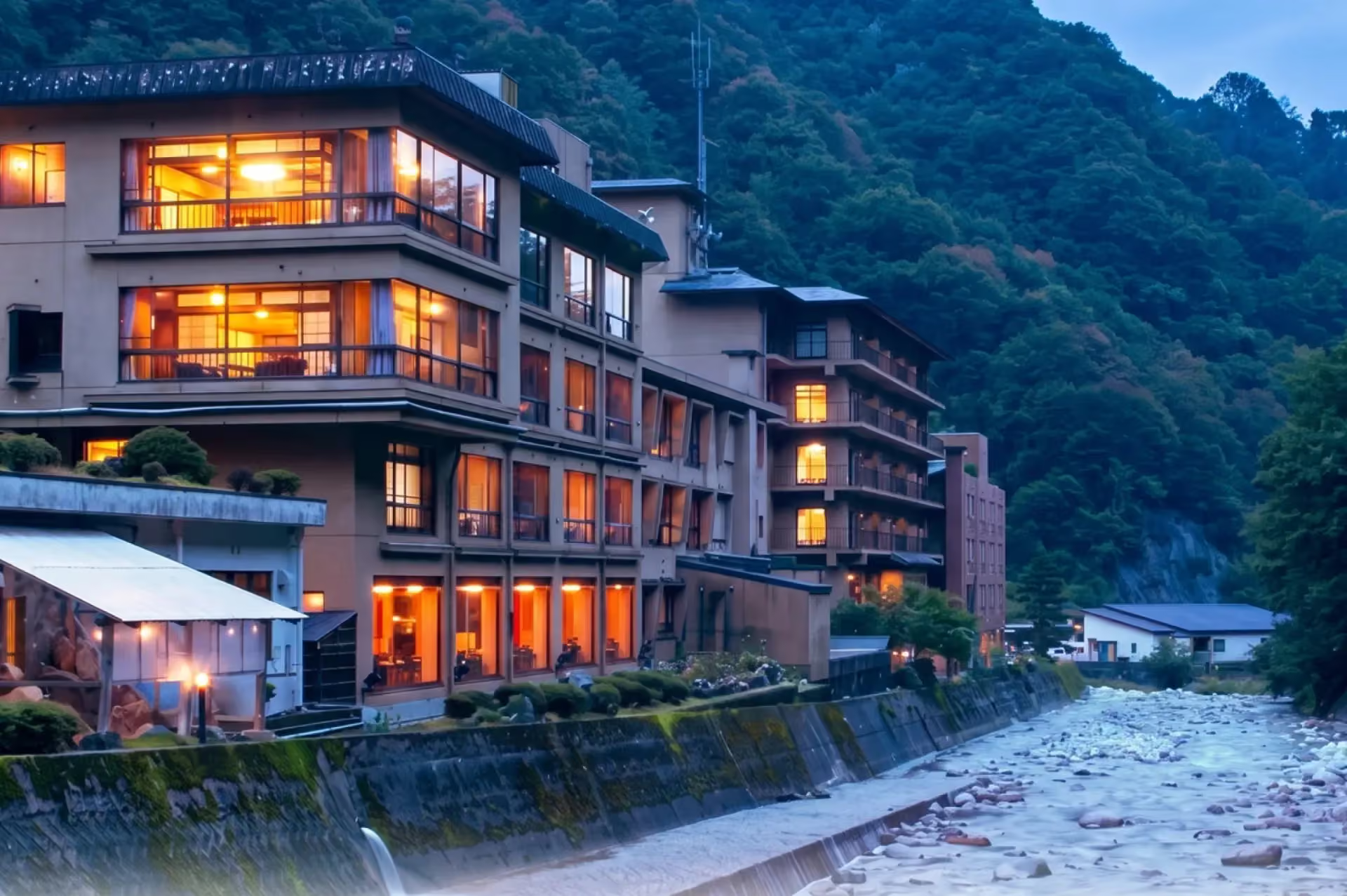
The value of a hidden gem or secluded spring lies in the quietness created by fewer visitors and the atmosphere unique to that place. With fewer shops and less bustle, there is less of a touristy feel, and it becomes easier to spend time simply facing the water and the surrounding nature. These destinations are a good match for trips where the goal is not to pack in sightseeing, but to spend time in a calm environment.
That uniqueness also brings difficulty. Transport may be complicated or infrequent, lodging information and multilingual guidance may be limited, and it can be hard to predict the trip or booking process. For hidden gems and secluded springs, the key question is whether you can accept this inconvenience as the price of quietness and a distinctive atmosphere.
A common misunderstanding is to think of these places as something only advanced travelers can visit. In reality, it is not about skill. It is about whether you want to accept some inconvenience in exchange for peace and atmosphere. For travelers who can enjoy inconvenience as part of the experience, these destinations can be highly satisfying.
Start with famous, then expand to hidden spots when you are used to it
If you are not yet used to hot spring travel, starting with a hidden gem or secluded spring can make transport and booking uncertainty feel like a barrier. This is especially true for a first stay at a Japanese hot spring inn, where unfamiliar elements such as check-in procedures, meal arrangements, yukata, and how to use the building all appear at once. Add complicated access and limited information, and you may feel worn out before you even get into the bath.
For that reason, it is often less stressful to choose a famous hot spring area for your first trip, where there is abundant information and many lodging options, and use that trip to get familiar with the ryokan experience itself. Japanese hot spring travel is not a one-time experience, so it is natural to start with a clear, easy-to-understand area and then expand to hidden gems and secluded springs on your second trip and beyond. Hidden spots are not necessarily the best place to start; they are often more enjoyable once you are used to the rhythm of hot spring travel. For the specific conditions that make a destination suitable for a first trip, see How Beginners Can Choose a Hot Spring Town.
Choose by your own conditions, not by the image of the region
What matters most is this: if you decide only by the image of a region as famous or hidden, the choice can easily drift away from your own needs. Even in famous hot spring areas, you can find quiet stays by choosing inns slightly away from the center or visiting at calmer times. Even in hidden spots, there are comfortable inns with private baths and practical facilities. On the other hand, a famous place can still feel too lively, and a secluded destination can still turn out to be more rustic than expected.
Rather than relying on the impression of the destination name, it is more reliable to organize your priorities first. Specifically, decide what matters most among easy access, the number and variety of inns, whether there is a bathing style that lets only family or companions enter, and the quietness of the town. Comparing destinations by those priorities makes it easier to find a hot spring area that truly suits your trip, beyond the famous-versus-hidden label. If you want a more systematic overview of destination character, Types of Hot Spring Destinations is also helpful.
FAQ
For a first hot spring trip, should I choose a famous area or a hidden one?
In general, a famous hot spring area is less stressful. Transport and lodging information is abundant, planning is easier, and there are more accommodation choices, so even travelers who are new to hot spring trips are less likely to feel lost. Hidden gems and secluded springs are appealing for their quietness and uniqueness, but because they add uncertainty in access and information, they are usually better enjoyed after you are used to the flow of travel.
Are hidden gems and secluded springs only for advanced travelers?
It is less about skill and more about preference and priorities. Hidden gems and secluded springs can be inconvenient in terms of transport and information, but the question is whether you are willing to accept that inconvenience in exchange for quietness and atmosphere. They are suitable for travelers who want peace more than convenience, and they do not require any special level of experience.
Aren’t famous hot spring areas crowded and hard to relax in?
It depends on the season and the exact location. Because they are well known, they do tend to get busier and rooms are more likely to fill up during holidays and peak travel periods. That said, even famous hot spring areas have quieter options if you choose an inn away from the center or travel during a calm period. If you want to avoid the bustle, look not only at the destination name, but also at the inn’s location and the timing of your visit.
How can I find a hidden hot spring destination?
Because hidden destinations tend to have less information, it is wise to check access and travel time using official transport and tourism information, and confirm the number of inns and whether day-use bathing is available. Travel times and schedules can change, so you should rely on the latest information during planning. Start by deciding how much you value quietness, then judge whether the destination’s inconvenience is worth it for you.
So how should I decide between famous and hidden?
The practical way is to decide based on your own priorities, not the image of the region. First sort out what matters most to you: easy access, a wide range of lodging choices, whether there is a bathing style for just family or companions, or the quietness of the town. Then compare destinations using those factors. Famous places can still have quiet inns, and hidden places can still be easy to use, so matching your conditions is more important than the category itself.
Summary
The difference between famous hot spring areas and hidden gems or secluded springs is not simply popularity. It appears in the difficulty of the trip and the style of experience: information volume, lodging choices, access, and quietness. Famous areas are easier to plan and offer more options, but they are also more likely to be crowded. Hidden gems and secluded springs offer quietness and uniqueness, but they come with more inconvenience in transport and information.
Which one suits you depends not on regional prestige, but on your travel experience and the kind of experience you want to prioritize. For a first trip, it is often easier to start with a famous hot spring area, get used to the ryokan flow, and then expand to hidden gems and secluded springs. In the end, rather than asking whether a place is famous or hidden, it is more reliable to choose based on your own conditions: access, number of inns, bathing style, and quietness. If you want to understand destination character more deeply, Types of Hot Spring Destinations is useful, and for first-trip decision-making, How Beginners Can Choose a Hot Spring Town gives you a solid framework.
