
Tips for a Successful TripIndividual Concerns & Considerations
Can You Visit Hot Springs While Pregnant? Put Health First
Pregnant and considering a hot spring visit? Learn why Japan’s Environment Ministry removed pregnancy from the general contraindications, plus tips to avoid overheating, dehydration, and falls, choose private baths, and consult your doctor.
Published: Apr 16, 2026
Tips for a Successful TripIndividual Concerns & Considerations
Can You Visit Hot Springs While Pregnant? Put Health First
Pregnant and considering a hot spring visit? Learn why Japan’s Environment Ministry removed pregnancy from the general contraindications, plus tips to avoid overheating, dehydration, and falls, choose private baths, and consult your doctor.
Published: Apr 16, 2026
Whether to visit a Japanese hot spring while pregnant should depend first on how you feel now, not on the spring’s mineral content. In its 2014 revision, Japan’s Environment Ministry removed pregnancy from the general contraindications, but that does not mean pregnant travelers may use hot springs without limits. Because each body is different, safety cannot be determined from general advice alone. In the end, the stage of pregnancy, your condition, and your doctor’s judgment matter most.
For visitors to Japan, the question often becomes, “Can I go to a hot spring while pregnant?” In reality, concerns such as overheating, dehydration, and falling still remain, and the answer varies by person. This article explains what to prioritize so a hot spring trip in Japan is less stressful during pregnancy.
This article provides general information only and is not medical advice. During pregnancy, decisions should change according to your stage and condition. Do not push yourself based on your own judgment. If you have concerns, or if your doctor has given instructions about bathing or travel, follow those instructions first.
Pregnancy was removed from the contraindications for hot springs
In the past, it was widely believed that pregnant women should not use hot springs. This comes from the fact that pregnancy, especially in the early and late stages, had long been included in the contraindications set by Japan’s Environment Agency, now the Environment Ministry, under the Hot Springs Act.
However, in its 2014 revision, the Environment Ministry removed pregnancy from the general contraindications based on the latest medical findings. This was because no scientific evidence had confirmed a causal link between bathing in simple hot springs and miscarriage or premature birth. In other words, there is no official rule saying hot springs are prohibited during pregnancy, and it is also inaccurate to say that hot springs are legally banned in early pregnancy.
That said, this does not mean hot springs are automatically recommended. Even after pregnancy was removed from the contraindications, continued caution is needed regarding overheating, dehydration, and slipping in bathing areas. For an overall safety guide on who should avoid bathing and what kinds of bathing are risky, see Hot Spring Safety Tips.
Your condition matters more than the spring water itself
When using hot springs during pregnancy, it is better to think first about whether your body can handle it, rather than focusing on the spring water’s mineral composition. Susceptibility to overheating, fatigue, and travel strain varies greatly from person to person, and even the same pregnancy can feel very different depending on the stage. Early pregnancy, the stable middle stage, and the final month all bring different conditions.
Instead of making a blanket decision about Japanese hot springs, it is more practical to ask whether the trip feels manageable for you right now. Choosing not to bathe on a day when you do not feel well is also a perfectly natural decision.
Points to consider during pregnancy
Even though pregnancy was removed from the contraindications, the body may still feel more strain than usual. The following points are useful to keep in mind, along with the basic approach. These are only general guidelines, not absolute rules.
| Consideration | What can happen | Approach |
|---|---|---|
| Water temperature | Hot water raises body temperature and can easily cause overheating or palpitations | Choose lukewarm water and avoid very hot baths |
| Bathing time | Long baths can lead to overheating and dehydration | Keep it short and do not stay in too long |
| Hydration | Sweating can lead to dehydration and lightheadedness | Drink water before and after bathing |
| Bathroom floor | Wet floors are slippery, and a larger belly can make falls more likely | Use handrails, move slowly, and walk only where footing is secure |
| Standing up | Standing up suddenly can cause dizziness and falls | Stand up slowly and ask for help if needed |
| Crowds and movement | Simply moving around while worrying about others can be tiring | Choose quieter times and layouts with less walking |
Among these, falls are especially important to avoid during pregnancy. Bathing areas are often wet and slippery, and as the belly grows larger it becomes harder to see your feet, while your center of gravity also changes. Moving slowly, choosing places with handrails, and avoiding slippery areas are basic precautions.
To prevent overheating and dehydration, the key is to keep the water temperature and bathing time under control. A short soak in lukewarm water, with water intake before and after, is less burdensome than a long bath in hot water. For general guidance on bathing time and frequency, see How Long and How Often to Use Hot Springs.
Private baths or in-room baths may be easier than public baths
During pregnancy, simply moving around while being mindful of other guests can feel tiring. In a crowded public bath, you may have to wait for an open washing area or hurry to keep up with the flow of people, which can also increase the risk of falls or overheating.
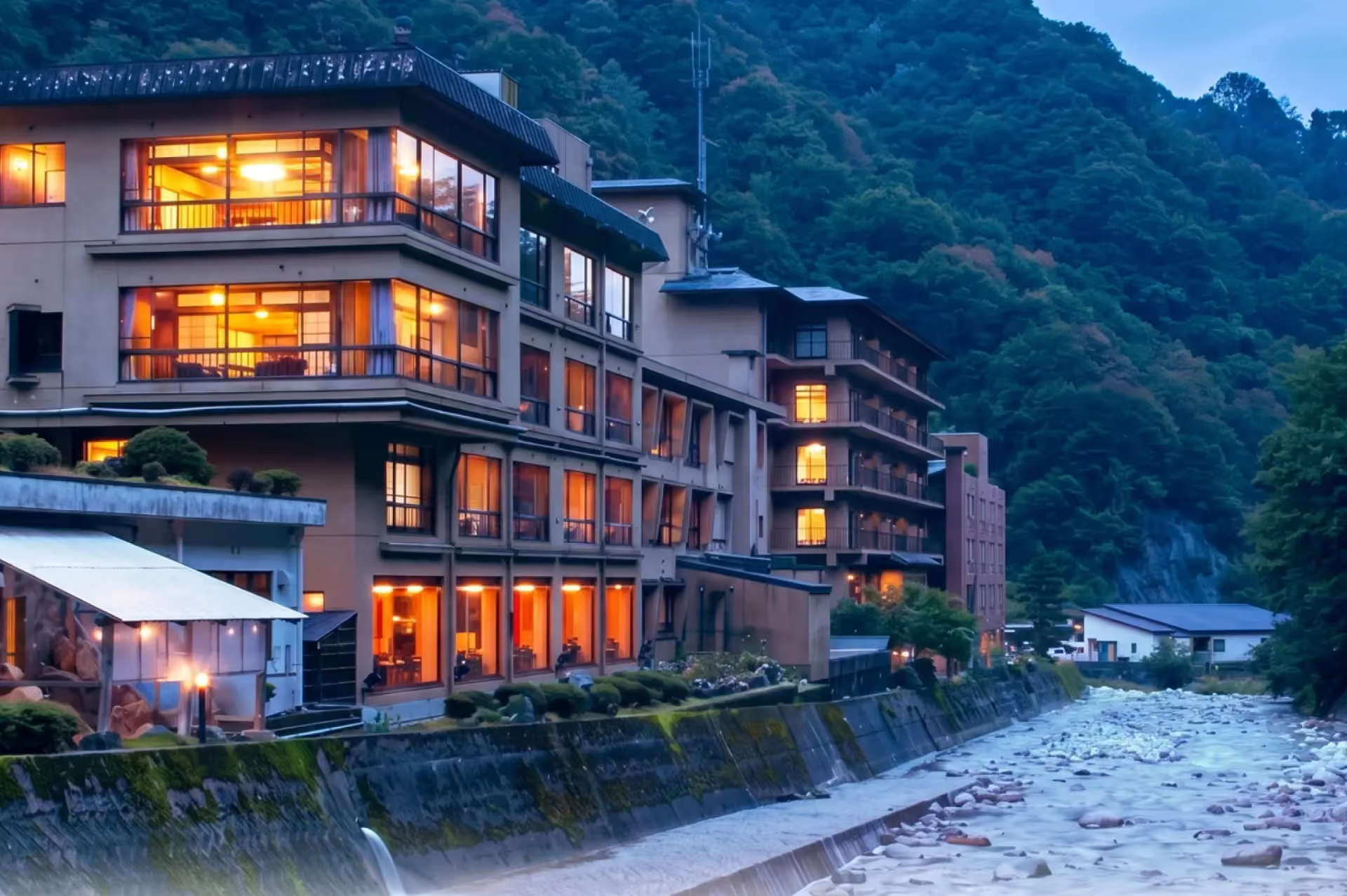
An environment where you can bathe on your own schedule, get out right away, and rest in your room immediately can feel much safer. For that reason, at Japanese ryokan, a private bath or an in-room bath may be more convenient than a large public bath. Simply not relying on communal bathing can greatly reduce the difficulty of a hot spring trip during pregnancy.
For tips on choosing accommodations with private baths or open-air baths in the room, see Ryokan with Private Baths for Two. For booking tips, see How to Book a Private Bath.
Choose accommodations with less travel burden
On a hot spring trip during pregnancy, travel to the resort, steps inside the building, and the distance to the dining area can also become burdensome. Even if a Japanese ryokan has a wonderful atmosphere, some properties are large, with long walking routes from the room to the bath or restaurant.
It is better to prioritize conditions such as being close to the station, having shuttle service, short walking distances from the room to the bath and dining area, and fewer steps inside the building. More than the hot spring itself, what matters is whether you can spend your stay comfortably after arrival.
Make your doctor’s advice the top priority
If you feel uncertain, consult your doctor before traveling. Pregnancy stage, progress, and condition can all change the answer, and general guides may not be enough. This is especially important if you have signs of threatened miscarriage or threatened premature labor, or if your doctor has instructed you to rest or limit travel. In such cases, your doctor’s instructions come first.
A travel guide cannot replace medical advice. When planning a hot spring trip in Japan, it is important to base your final decision on your own condition and your doctor’s judgment.
Choosing not to bathe is also natural
During pregnancy, it may feel easier to stay at the inn without using the hot spring bath. Japanese ryokan offer value not only through bathing, but also through meals and rest, so the stay is not meaningless if you do not bathe.
You can also enjoy a short foot bath or simply relax in your room. Rather than forcing yourself to make bathing happen, prioritizing a low-stress stay is more likely to leave a good overall impression of the trip.
Frequently asked questions
Is it okay to use a hot spring while pregnant?
The Environment Ministry removed pregnancy from the general contraindications in its 2014 revision, so there is no blanket official ban. However, caution is still needed regarding overheating, dehydration, and falls, and the answer depends on your stage and condition. Because general advice cannot guarantee safety, please consult your doctor if you have concerns.
Should hot springs be avoided in early pregnancy?
There is no law or official standard that says hot springs are prohibited in early pregnancy. That understanding spread as a remnant of the old contraindications that included pregnancy. At the same time, early pregnancy is also a period when nausea and physical changes can be more likely, so it is safest to prioritize how you feel and check with your doctor before deciding whether it is manageable.
Should I avoid hot water and long baths?
That is the safer choice. Hot water and long baths are thought to make it easier for body temperature to rise and to cause overheating or dehydration. Keep baths short, use lukewarm water, drink water before and after, and stop immediately if you feel even slightly unwell.
Which is better, a public bath or a private bath?
If you want to bathe and rest on your own schedule without worrying about crowds, a private bath or an in-room bath may be easier to use. However, this also depends on your condition. In some cases, avoiding busy times and choosing a layout with less walking is even more important.
What should I check before traveling?
Consult your doctor about your pregnancy progress and condition, and follow any instructions regarding travel or bathing. It is also helpful to check the travel time to the inn, steps and walking routes inside the building, and whether private baths are available, so you are less likely to overdo it on the day.
Summary
Pregnancy was removed from the general contraindications in the Environment Ministry’s revision, but that does not mean hot springs are automatically allowed without limits. During pregnancy, what matters more than the type of bath is choosing a way to bathe that avoids overheating, dehydration, and falls, along with planning a stay that involves less travel strain. Lukewarm water, short baths, private baths or in-room baths, and accommodations with less movement are the easiest choices.
Because each body is different, general advice alone cannot guarantee safety. If you are unsure, consult your doctor and put your own condition and your doctor’s judgment first. Choosing not to bathe is also a perfectly natural way to enjoy a hot spring trip.
