
Thematic GuidesFamous Japanese Hot Springs
Yunomine Onsen Guide: World Heritage Tsuboyu and Kumano Pilgrimage Bath
Explore Yunomine Onsen in Tanabe, Wakayama, as a Kumano pilgrimage purification bath near Hongu Taisha, home to the World Heritage natural rock bath Tsuboyu, 90°C spring cooking pools, sulfurous waters, Kumano Kodo links, nearby Kawayu and Watarase onsen, and access details.
Published: Jun 28, 2026
Thematic GuidesFamous Japanese Hot Springs
Yunomine Onsen Guide: World Heritage Tsuboyu and Kumano Pilgrimage Bath
Explore Yunomine Onsen in Tanabe, Wakayama, as a Kumano pilgrimage purification bath near Hongu Taisha, home to the World Heritage natural rock bath Tsuboyu, 90°C spring cooking pools, sulfurous waters, Kumano Kodo links, nearby Kawayu and Watarase onsen, and access details.
Published: Jun 28, 2026
Yunomine Onsen is a mountain hot spring area in Hongu, Tanabe, Wakayama Prefecture. Located near Kumano Hongu Taisha, it is known for Tsuboyu, a natural rock bath registered as part of a World Heritage site, where you can actually bathe in a World Heritage property. That makes it one of Japan’s most distinctive hot spring destinations. It has long been cherished as a place for Kumano pilgrims to purify themselves before worship, and it is said to be one of the oldest hot springs in Japan, though there are various theories and no definitive date has been established.
For travelers, the key point is not only the appeal of being able to bathe in a World Heritage site, but also that Yunomine Onsen is positioned within the culture of healing, pilgrimage, and Kumano faith. In addition to Tsuboyu, there is the local specialty Yudutsu, a high-temperature spring around 90°C where visitors can boil hot spring eggs and vegetables. The onsen town is small and tucked into a valley. This article organizes the history and water quality of Yunomine Onsen, its two main highlights, Tsuboyu and Yudutsu, its connection to Kumano Kodo and Kumano belief, nearby hot spring areas, and access, based on information from sources such as the Tanabe City Kumano Tourism Bureau.
Yunomine Onsen as a purification bath for Kumano pilgrims
Yunomine Onsen lies in the mountains near Kumano Hongu Taisha, one of the Kumano Sanzan, and has long been known as a place where pilgrims to Kumano purified themselves before heading to Hongu. Yugo refers to the practice of cleansing body and mind with hot water or cold water before visiting a sacred site, and Yunomine’s waters are said to have served that role. The spring is considered to have opened very long ago and is sometimes called one of the oldest hot springs in Japan, though this cannot be stated with certainty because there are multiple theories.
The legends are also rich. One famous story tells of Oguri Hangan, who was revived by the waters of Yunomine after falling ill; this tale of the “reviving bath of Oguri Hangan” has been handed down, but it is only a legend and has not been confirmed as historical fact. With this background of faith and legend, Yunomine becomes more than just a mountain hot spring; it is a therapeutic and pilgrimage bath embedded in the Kumano context. If you are interested in the connection between hot springs and faith, see The Relationship Between Hot Springs and Faith. For the cultural background of therapeutic bathing, What Is Toji? is helpful.
Even without tracing every legend or historical claim, Yunomine’s charm comes through clearly. If you visit with the old flow of worship at Hongu Taisha and purification through bathing in mind, the small scale and simplicity of the onsen town itself feel like part of its sacred atmosphere.
Understanding Tsuboyu, the World Heritage bath
The symbol of Yunomine Onsen is Tsuboyu. Tsuboyu is a natural rock bath registered as part of the 2004 World Heritage site “Sacred Sites and Pilgrimage Routes in the Kii Mountain Range,” and it is introduced as a rare place in the world where you can actually bathe in a World Heritage site. Spring water bubbles up in a small rock hollow by the river, and it is so tiny that only two or three people can fit at once.
A commonly mentioned feature of Tsuboyu is that the color of the water is said to change throughout the day. Depending on the time and conditions, it is said to shift from milky white to bluish tones, but this is only a general description and is not guaranteed to happen every time. Because the appearance also changes with water volume and weather, you should not expect to experience a definite color change.
Because Tsuboyu is so small, it is used as a rotating private bath rather than a shared simultaneous bath. The usage method, available hours, reception process, and fees may vary depending on operations, so be sure to check the official information before you visit. Since it is a World Heritage bath, it is wise to plan for possible waiting time during busy periods.
| Highlight | Location | Features | Approximate time needed |
|---|---|---|---|
| Tsuboyu | By the river in the center of the onsen town | A natural rock bath registered as World Heritage. Used as a rotating private bath | About 30 minutes for bathing, excluding waiting time |
| Yudutsu | Spring source near Tsuboyu | High-temperature spring around 90°C. Eggs and vegetables can be boiled here | About 10–15 minutes for eggs |
| Public bath | Inside the onsen town | A general bath where you can enjoy sulfur-scented water | About 30–60 minutes for bathing |
The times and operations listed above are only rough guidelines and may change depending on the season, crowd levels, and facility conditions. Tsuboyu, in particular, is one of the world’s rare bathable World Heritage sites, so it is best to leave plenty of time in your schedule.
Boiling hot spring eggs at Yudutsu
Another signature attraction of Yunomine is Yudutsu. Yudutsu is a high-temperature spring source around 90°C that bubbles up along the river in the onsen town. If you place raw eggs or vegetables in a net and lower them into the water, you can make hot spring eggs and boiled vegetables. A classic experience is to buy eggs at a nearby shop and boil them on the spot before tasting them.
Because you are dealing directly with a very hot spring source, you need to be extremely careful to avoid burns. The recommended boiling time depends on the ingredients and conditions, and eggs are often said to take about 10–15 minutes, but that is only one example. If you are traveling with children, make sure they do not go too close to the hot water. Yudutsu is also a scene closely tied to daily life in Yunomine, and when combined with worship or bathing, it gives you a more layered view of the hot spring area.
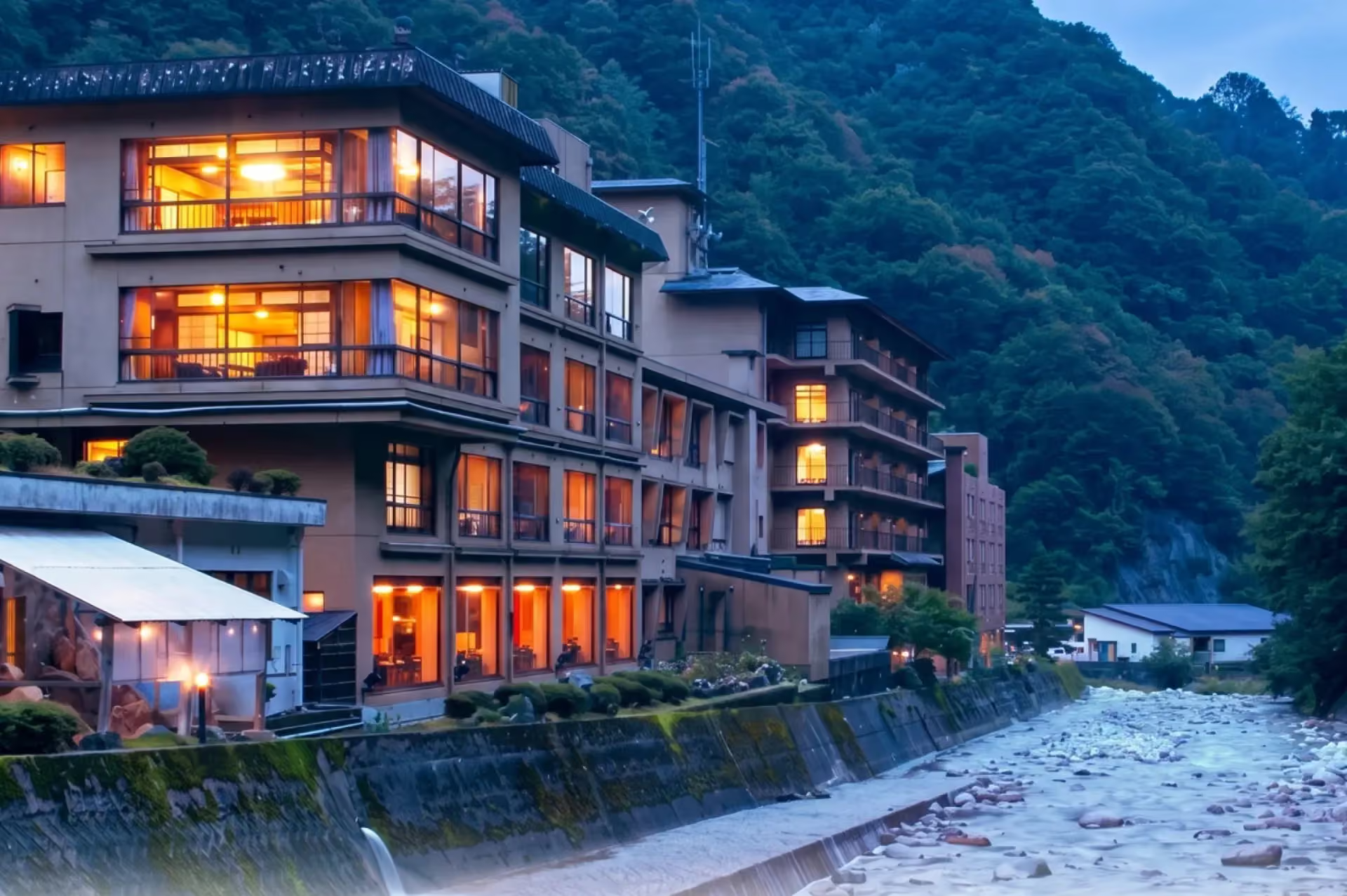
Sulfur-scented water quality
The water of Yunomine Onsen is often described as a sodium bicarbonate and chloride spring containing sulfur, and its hallmark is said to be a distinctive sulfur scent. The official spring classification posted on site may differ depending on the source or facility, and some are labeled as compound springs with multiple components, so the most reliable way to confirm the exact water quality is to check the local analysis sheet or display.
For a deeper look at what sulfur-containing springs are like, see What Is a Sulfur Onsen?. If you want a beginner-friendly overview of spring types first, Onsen Spring Types for Beginners is a good starting point. In addition, the standards for spring classifications and components are based on the Ministry of the Environment’s Guidelines for Mineral Spring Analysis Methods, and the facility displays follow that framework.
The sulfur scent gives Yunomine its distinctive character, but it is also a strong and individualistic bath. The basic advice is to begin with a short soak, avoid long bathing, and not push yourself if you are feeling unwell. You may also see claims about health or beauty benefits, but this article does not make any such claims.
Pairing Yunomine with Kumano Kodo and nearby hot springs
Many travelers visit Yunomine Onsen together with worship at Kumano Hongu Taisha or a walk along the Kumano Kodo. A natural itinerary is to center the trip around Hongu Taisha, then stop at Yunomine before or after to experience the flow of purification bathing. Some sections of the ancient pilgrimage routes also lead to Yunomine, and some travelers even arrive on foot.
Nearby are Kawayu Onsen, where a river is dug to release hot spring water, and Watarase Onsen, both of which are often grouped with Yunomine as the Hongu Onsen area. Because these three distinct hot spring areas are close together, staying overnight and comparing them is part of the appeal. If you want to compare them with famous hot spring destinations across Japan, 10 Famous Hot Springs in Japan is also useful.
Because the onsen town is compact, Yunomine is often more satisfying as part of a broader visit to Hongu Taisha, Kumano Kodo, and the surrounding hot springs rather than as a place for a very long standalone stay. If you are looking for lodging or day-use baths, we provide Facility Listings and a Search Page so you can filter by area and conditions.
Access
Yunomine Onsen is located in the mountains, so by public transportation the bus is the basic option. The usual route is to take a local bus from Kii-Tanabe Station on the Kisei Main Line or from Shingu Station, transferring toward Kumano Hongu Taisha. The route from the Hongu Taisha bus stop to Yunomine Onsen is easy to understand, and it is less confusing if you combine your visit with worship at Hongu Taisha.
Because there are fewer buses than in urban areas, it is important to check departure and return times in advance. Especially after late afternoon, the number of services may be limited, so be sure to check the day’s timetable in the official information. If you are coming by car, keep in mind that the onsen town is narrow, and it is easier to park at your inn or a parking lot and move around mostly on foot. Since Kumano has many attractions spread over a wide area, it helps to decide in advance whether Yunomine will be the main focus or part of a wider tour including Hongu Taisha and the surrounding hot springs.
Frequently asked questions
Can anyone enter Tsuboyu?
Tsuboyu is a natural rock bath registered as World Heritage and is generally open to the public, but because it is very small, it is used as a rotating private bath. The reception process, available hours, and fees may vary depending on operations, so be sure to check the official information before visiting. Waiting time may occur during busy periods.
Does the color of Tsuboyu’s water really change?
It is said that the color of the water changes throughout the day, shifting from milky white to bluish tones. However, this is only a commonly told story and is not guaranteed to happen. Because the appearance changes depending on water volume, weather, and time of day, you should not expect to experience a definite color change.
What kind of water quality does Yunomine Onsen have?
It is often described as a sodium bicarbonate and chloride spring containing sulfur, and it is said to have a distinctive sulfur scent. Because the official spring name posted at each source or facility may differ and some are labeled as compound springs, the most reliable way to confirm the exact quality is to check the local analysis sheet or display. The nature of sulfur springs is covered in What Is a Sulfur Onsen?.
What can you do at Yudutsu?
Yudutsu is a high-temperature spring around 90°C where you can place raw eggs or vegetables in a net and lower them into the water to make hot spring eggs or boiled vegetables. A popular activity is to buy eggs at a nearby shop and boil them on the spot. Because the water is very hot, be careful to avoid burns, and note that boiling times vary depending on the ingredients and conditions.
Can I combine it with Kumano Hongu Taisha?
Yes. Yunomine Onsen is close to Hongu Taisha and has long been cherished as a purification bath for Kumano pilgrims. The route from the Hongu Taisha bus stop is easy to follow, and many visitors enjoy worship and hot springs as a set. You can also combine it with nearby Kawayu Onsen and Watarase Onsen to explore the Hongu hot spring area.
Conclusion
Yunomine Onsen is a mountain hot spring area in Hongu, Tanabe, Wakayama Prefecture, close to Kumano Hongu Taisha and long cherished as a sacred bath for purification on Kumano pilgrimages. Its greatest feature is that you can bathe in Tsuboyu, a natural rock bath registered as part of the World Heritage site “Sacred Sites and Pilgrimage Routes in the Kii Mountain Range,” making it one of the world’s rare bathable World Heritage attractions. Together with the local specialty of boiling hot spring eggs at Yudutsu, a spring source around 90°C, and the sulfur-scented water, it conveys the character of a hot spring town deeply intertwined with Kumano faith.
If this is your first visit, it is best to keep in mind the old flow of worship at Kumano Hongu Taisha and purification through bathing, experience both Tsuboyu and Yudutsu, and tour the area together with nearby Kawayu Onsen and Watarase Onsen. Because the usage method, fees, and bus timetable for Tsuboyu may change, it is safest to check the official information in advance before you go.
